What a Conveyor Idler Frame Does
A conveyor idler frame is the structural support that holds the idler rollers in position along a belt conveyor. It keeps each roller at the correct height, angle and spacing so the conveyor belt runs smoothly from the tail pulley to the drive pulley. In a quarry, a coal washing plant or a cement kiln feed line, the frame is the quiet workhorse that determines how well the belt is supported and how evenly the load is carried.
Also called a roller support frame or idler bracket assembly, this component is usually bolted to the conveyor stringer or steel structure. Its geometry directly affects belt tracking, the trough profile and the service life of both the idlers and the belt itself.
How the Frame Is Built
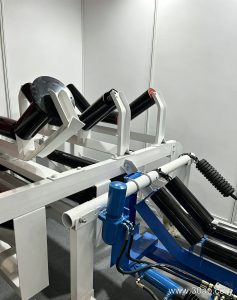
Most frames are fabricated from angle steel, channel steel or folded steel plate. The crossbeam length and mounting hole spacing are determined by belt width, trough angle and the roller diameter selected for the duty. A typical carry-side frame uses three or five rollers to form a trough, while a return-side frame may be flat or V-shaped to support the empty belt.
Common belt widths include B500, B650, B800, B1000, B1200, B1400, B1600, B1800, B2000, B2200. Trough angles are commonly 20, 30, 35 or 45 degrees, and roller diameters such as Ø89, Ø108, Ø133, Ø159 and Ø194 are widely used. These values are reference data, not fixed pairings — a B800 conveyor may run 30 or 35 degrees depending on the material and belt speed.
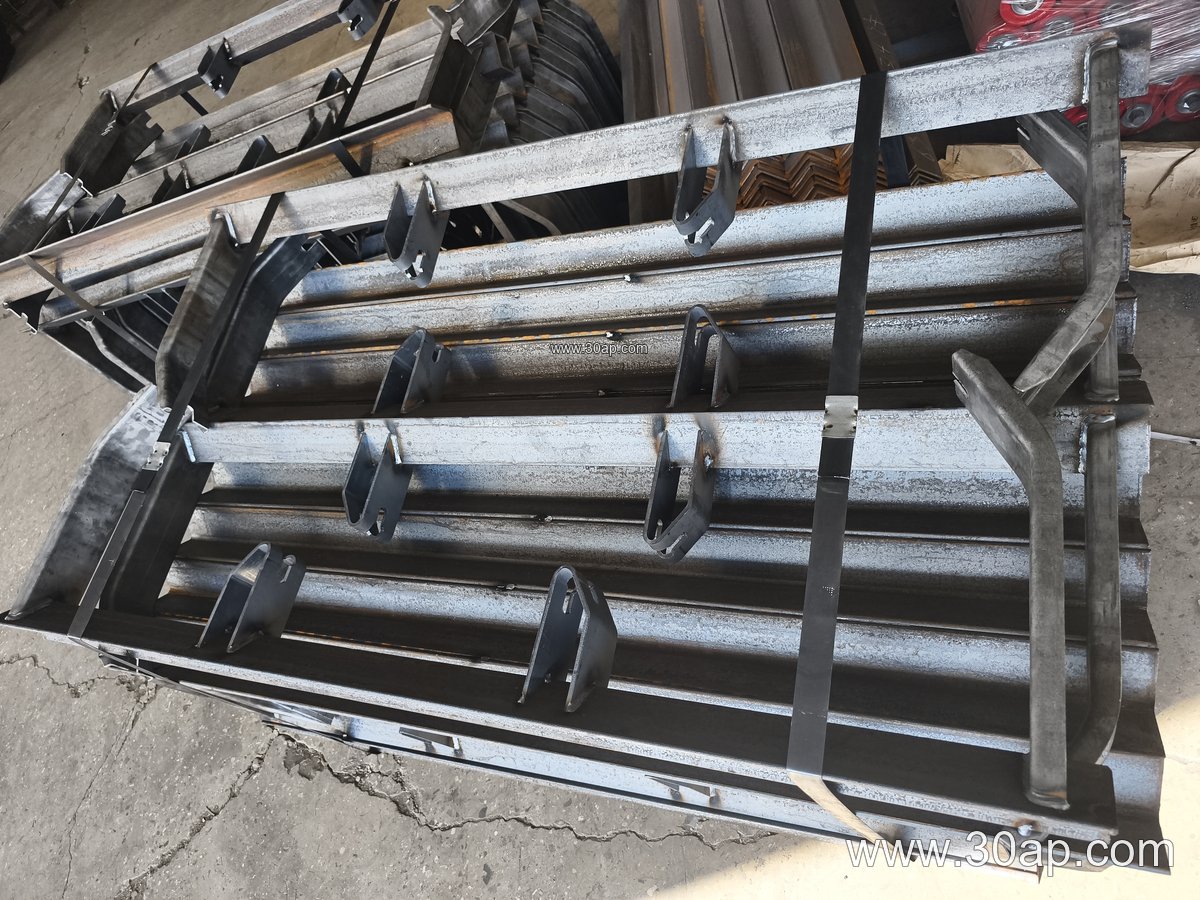
| Frame Type | Typical Position | Common Trough Angle |
|---|---|---|
| Troughing frame | Carry side | 20°–45° |
| Transition frame | Near pulleys | Reduced angle |
| Flat return frame | Return side | Flat |
| V-return frame | Return side | V-shaped |
| Impact frame | Load point | 20°–35° |
| Self-aligning frame | Tracking zones | 20°–35° |
Where It Fits in the Conveyor Line
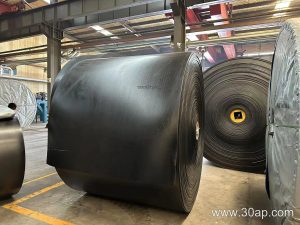
In a stone crushing plant, troughing frames carry a heavy-duty mining conveyor belt loaded with aggregate. At a power plant coal yard, impact frames sit under the loading chute to absorb shock before a flame retardant conveyor belt moves the coal onward. In a port ship-loading system, self-aligning frames help a wide conveyor belt stay centered over long spans.
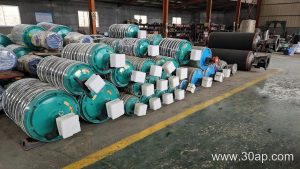
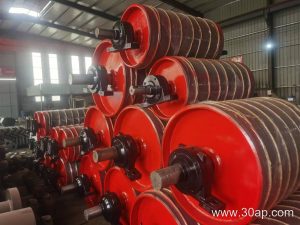
The frame must work together with the conveyor pulley, the conveyor bracket and the idler roller. A misaligned frame will push the belt sideways no matter how well the pulleys are set. On the return run, a V-return frame helps shed loose material and reduces belt wander.
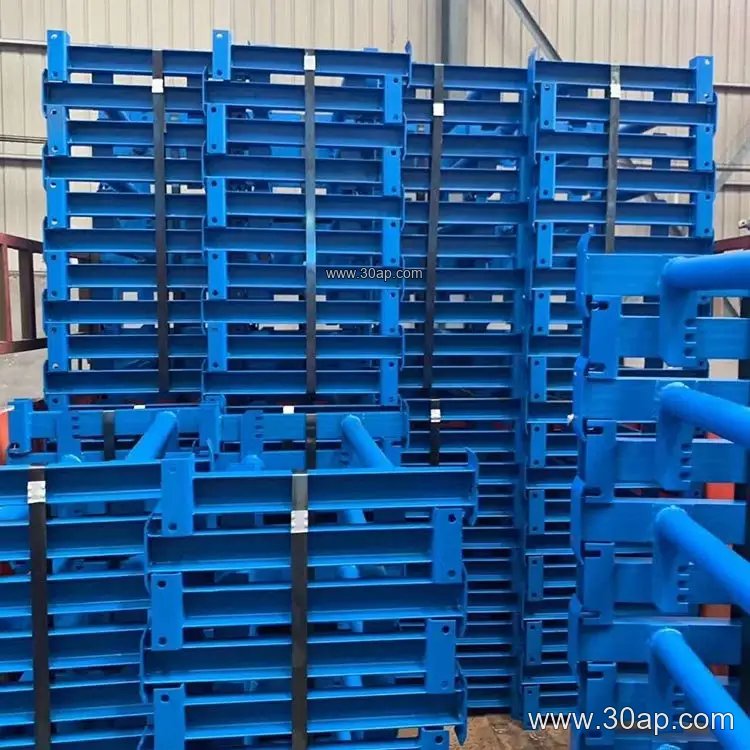
For high-abrasion duties such as iron ore or copper ore, an abrasion resistant conveyor belt paired with well-spaced frames reduces wear points. In cold climates, a cold resistant conveyor belt still needs frames that allow for thermal expansion of the steel structure.
Selection Points Buyers Should Check
- Belt width and trough angle: confirm the frame matches the actual belt and load profile, not just the nominal width.
- Roller diameter and shaft size: the frame slot must accept the idler roller chosen for the load.
- Material and coating: galvanized or painted frames suit humid or washdown areas; heavier sections suit high-impact load points.
- Adjustability: an adjustable frame lets maintenance staff fine-tune trough angle between common settings such as 20, 30, 35 or 45 degrees.
- Mounting dimensions: hole spacing and beam length vary with belt width and angle, so confirm against the conveyor drawing.
Buyers should also consider whether the frame is fixed or adjustable, and whether a forward-tilted design of about 1.5 to 2 degrees is needed for better belt tracking. For a pipe conveyor belt or a corrugated sidewall conveyor belt, frame geometry is usually custom-engineered, so generic frames should not be assumed to fit.
Installation and Maintenance Notes
Align frames square to the conveyor centerline and at consistent height. Check bolt torque after the first week of operation, since vibration can loosen fasteners. Inspect frames for bent beams or worn mounting slots, especially at transfer points where an impact resistant conveyor belt takes the heaviest load. Replacing a damaged frame early protects the belt and the idler roller from premature failure.
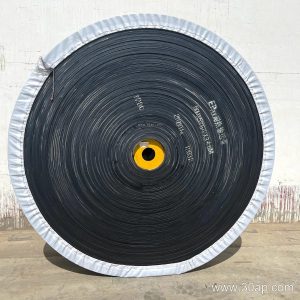
Whether the line handles EP conveyor belt, steel cord conveyor belt or a rubber conveyor belt, the idler frame remains the base that keeps everything running true.