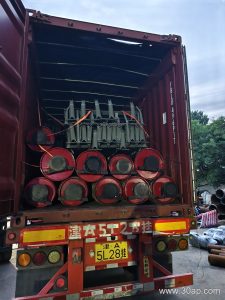
What an Aggregate Production Line Idler Does
An aggregate production line idler is the rotating support that carries the conveyor belt along the length of a crushing and screening circuit. In a sand and gravel plant, the belt moves broken rock, screened stone and sand between the primary crusher, secondary crusher, screens and stockpile conveyors. The idler roller bears the weight of both the belt and the load, and its alignment keeps the belt tracking straight. Because the material is abrasive and often dusty, the idler is one of the parts that most directly affects how long a conveyor runs without stoppage.
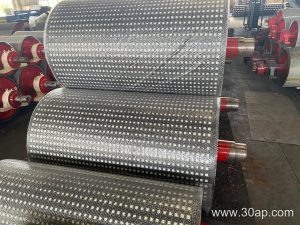
The idler is not a pulley. A conveyor pulley drives, returns or bends the belt at the ends of the conveyor, while idlers support the belt between those points. Drive, tail and bend pulleys have different jobs and are not interchangeable with idlers or with each other.
Construction of the Idler Roller
A typical idler roller is built around a steel tube shell, with bearing housings pressed into each end. The shaft runs through the shell and is held by the conveyor bracket at both sides. Seals protect the bearings from fine stone dust and water, which is critical in a quarry or aggregate plant where grit is everywhere.
Common shell materials include steel tube, nylon, ceramic and rubber rings. Rubber ring impact idlers are often used where large lumps drop onto the belt. Bearing sizes commonly seen range from 6204 and 6205 in lighter positions up to 6308 and 6310 in heavy-duty stations, but the bearing should be matched to the load and shaft design rather than to belt width alone.
Common Idler Types on an Aggregate Conveyor
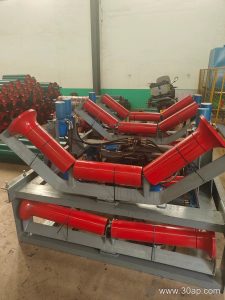
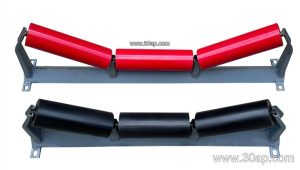
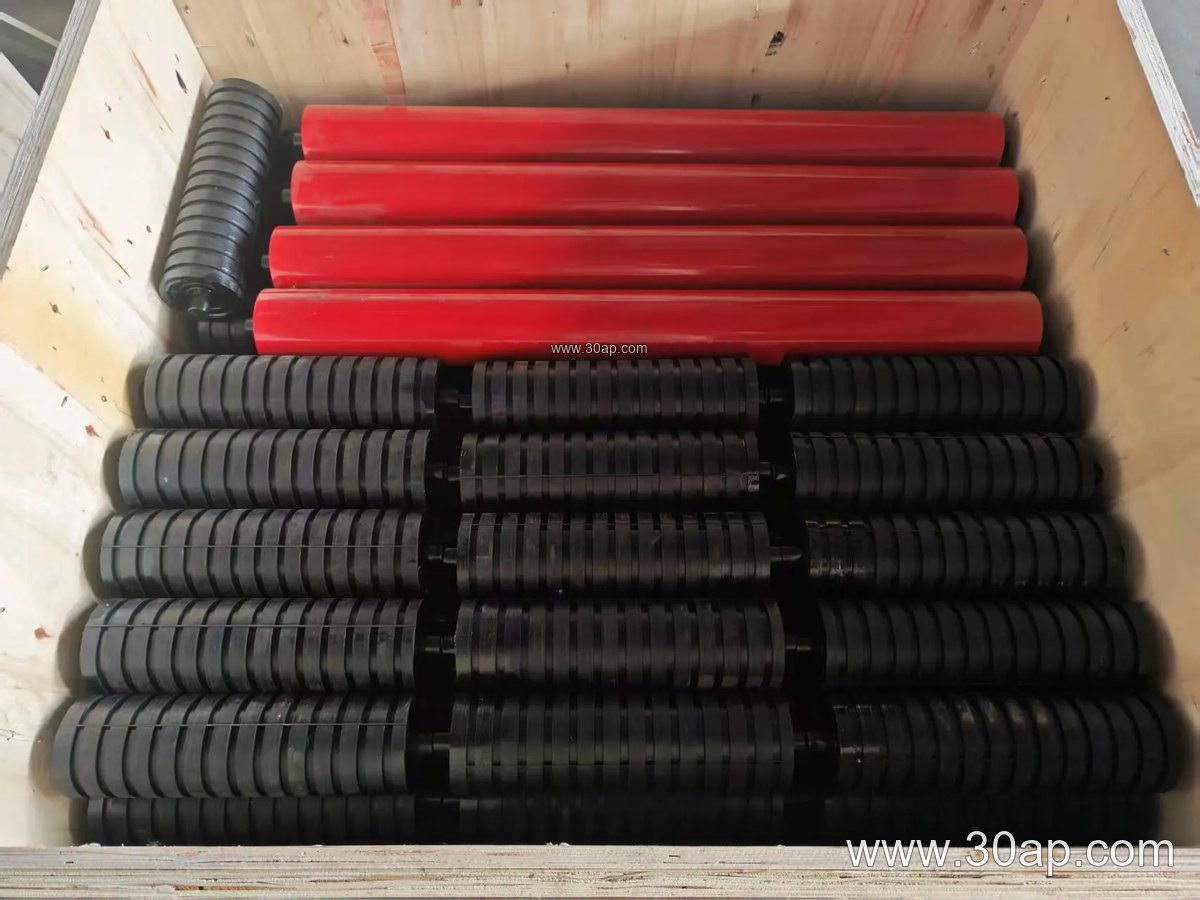
The carrying side usually uses three-roll troughing sets, with a trough angle of 20, 30, 35 or 45 degrees. A deeper trough holds more material and suits wider belts and higher tonnage. Return side positions often use flat return idlers or V-shaped return rollers, which help shed stray material and keep the belt centred.
Transition idlers are placed near pulleys to ease the belt from flat to troughed. Self-aligning idlers, including friction and tapered types, correct minor misalignment. Spiral rollers can reduce buildup on the return strand, and comb or disc idlers are sometimes chosen where sticky material clings to the belt.
Matching Idler Diameter and Belt Width
Idler diameter is selected from belt speed, load and available space. Common roll diameters include Ø63, Ø76, Ø89, Ø102, Ø108, Ø127, Ø133, Ø159 and larger sizes such as Ø178, Ø194 and Ø219. A larger diameter turns more slowly and can suit high-tonnage primary belts, while smaller diameters fit lighter conveyors.
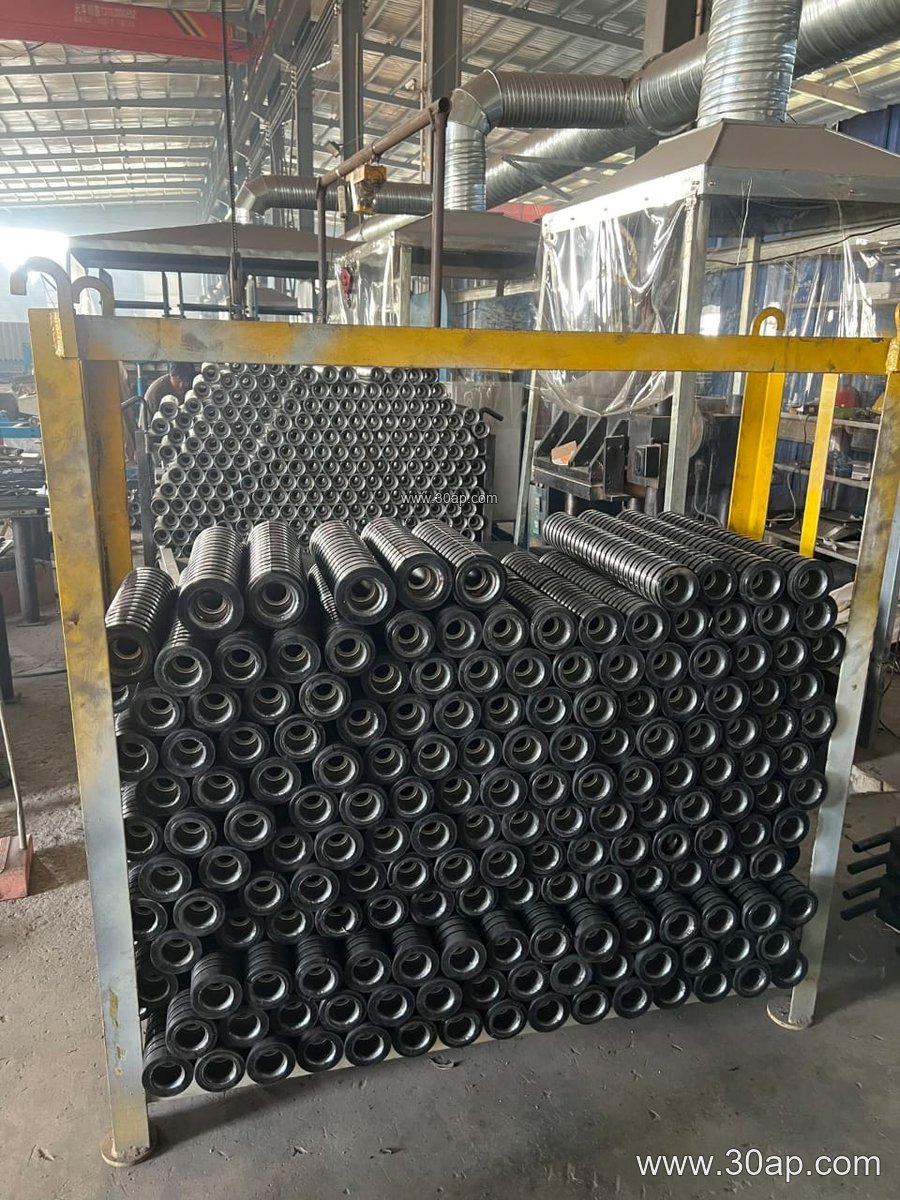
Belt widths on aggregate lines commonly run from B500 and B650 up to B1200, B1400 and B1600, with wider belts used on high-capacity stockyard and port conveyors. Roll length changes with belt width, trough angle and station type. As a rough example, a three-roll troughing set might use a roll length near 250 mm for B650, 315 mm for B800, 380 mm for B1000 and 465 mm for B1200. These are common references, not fixed pairings, and side rolls and centre rolls can differ.
| Parameter | Common reference values |
|---|---|
| Roll diameter | Ø63, Ø76, Ø89, Ø102, Ø108, Ø127, Ø133, Ø159, Ø178, Ø194, Ø219 mm |
| Belt width | B400, B500, B650, B800, B1000, B1200, B1400, B1600, B1800, B2000, B2200, B2400 |
| Trough angle | 20°, 30°, 35°, 45° |
| Station form | single roll, two-roll, three-roll troughing |
| Roll surface | steel tube, nylon, ceramic, rubber rings |
Where the Idler Fits in the Plant
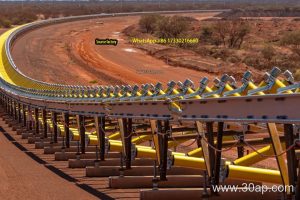
In a stone crushing and screening line, troughing idlers carry the crusher discharge and screen feed, while return idlers support the empty strand underneath. In a cement plant or power plant coal yard, dust and fines demand good sealing. In a port or ship loading conveyor, long runs and high belt tension call for sturdy frames and well-aligned rollers. The same principle applies in an iron ore or copper ore operation, where the belt may be a heavy-duty mining conveyor belt such as an abrasion resistant conveyor belt or a steel cord conveyor belt.
The idler must suit the belt it carries. A fabric core conveyor belt, an EP conveyor belt or an NN conveyor belt behaves differently from a steel cord belt, and belt stiffness affects how smoothly it runs over the rollers. Learn more about matching components at cscbelt.com/idler-roller and cscbelt.com/conveyor-pulley.
What Buyers Should Check
- Confirm the belt width, trough angle and station type before ordering rolls.
- Check shaft diameter and bearing size against the actual conveyor bracket, not against belt width alone.
- Ask about seal design and shell thickness for dusty aggregate service.
- Consider impact idlers under crusher discharge points and self-aligning idlers on long runs.
- Review the conveyor belt specification, including whether a flame retardant conveyor belt or heat resistant conveyor belt is required in the plant environment.
Well-chosen idlers reduce belt wear, lower power draw and keep the aggregate line running. Review roller and pulley details at cscbelt.com/conveyor-bracket and cscbelt.com/aggregate-conveyor-belt before finalising the order.