What Is a Belt Conveyor Take-Up Pulley?
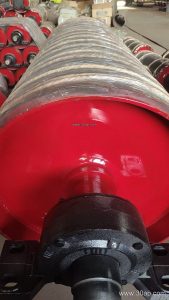
A belt conveyor take-up pulley is a specialized conveyor pulley that maintains proper belt tension in a conveyor system. Often called a tension pulley or take-up drum, it is typically mounted on a movable carriage or in a sliding frame that adjusts position to compensate for belt stretch and load variations. This keeps the conveyor belt running smoothly without slippage at the drive pulley. In coal mining, aggregate plants, and cement works, this component directly influences belt tracking and service life.
Construction and Key Components
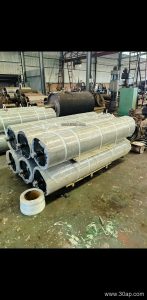
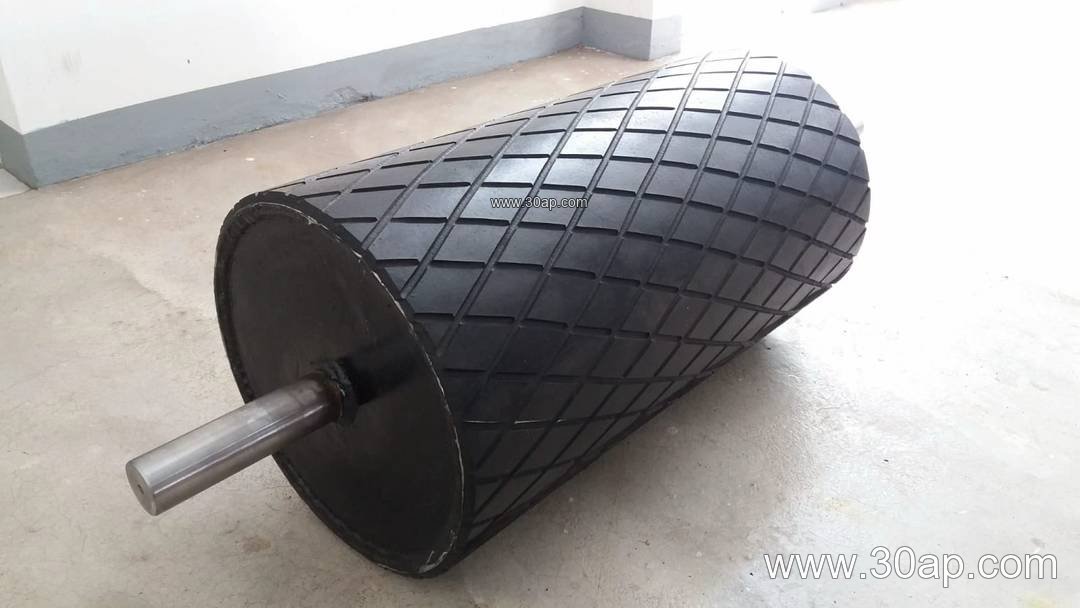
The take-up pulley is built around a sturdy cylindrical shell, usually made from seamless steel tube or rolled plate, with welded end discs and a through shaft. The shaft is supported by heavy-duty bearings housed in bearing blocks that slide along guide rails. Surface options include plain finish, rubber lagging (cold-bonded, hot-vulcanized, diamond, or ceramic), and various thicknesses such as 8 mm, 10 mm, 12 mm, 15 mm, or 20 mm. Lagging improves friction and protects the shell in abrasive conditions like quarry conveyor lines or power plant coal handling.
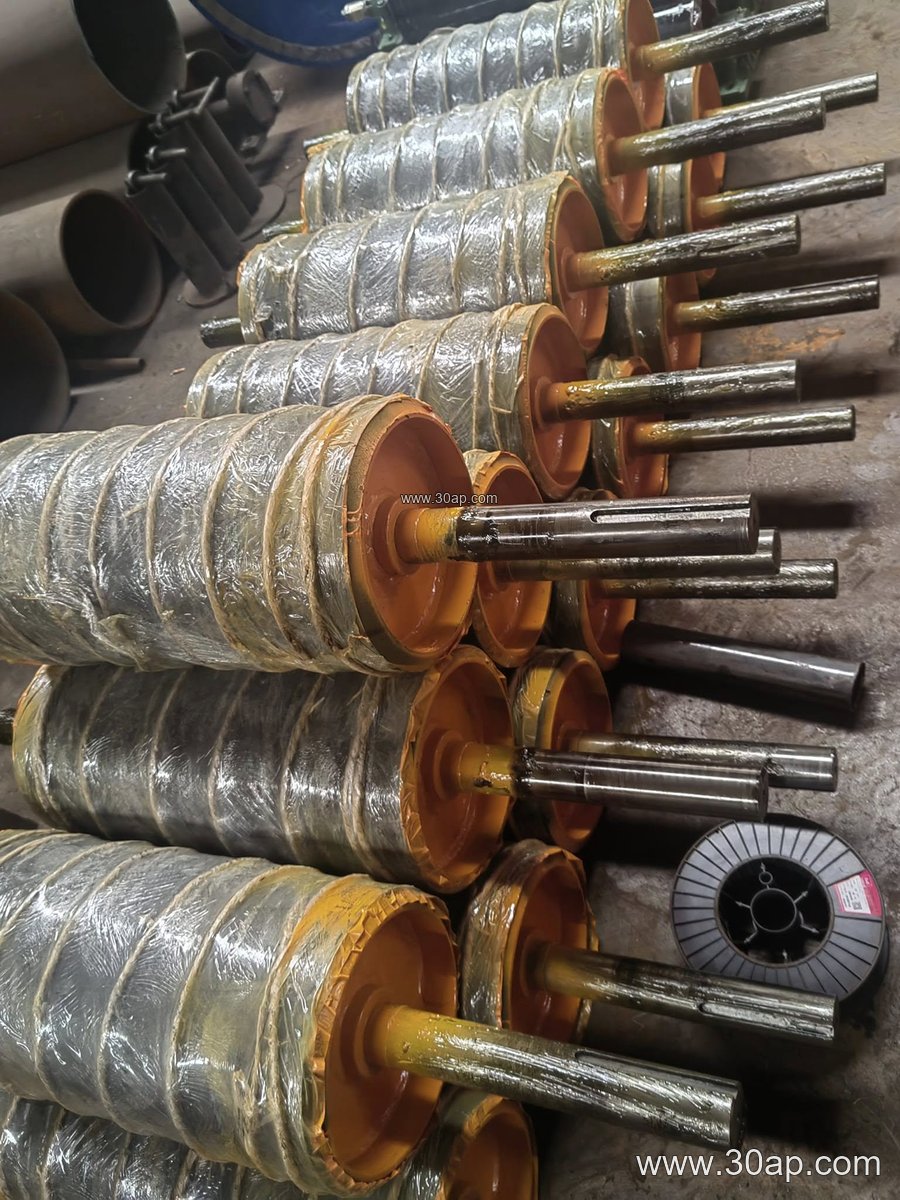
Common shell diameters for take-up pulleys range from Ø200 to Ø1800 mm, and face widths are usually slightly wider than the belt. For example, a B800 belt often uses a pulley face around 950 mm, while a B1200 belt may need about 1400 mm face width. Shaft diameters are determined by torque and load, with typical values from Ø50 to Ø200 mm. No single shaft size is tied to a specific belt width; each design must be calculated for the application.
Where It Is Used
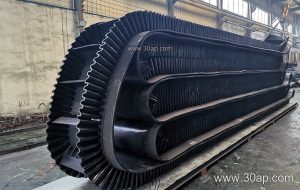
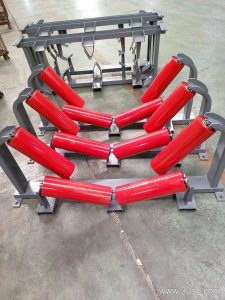
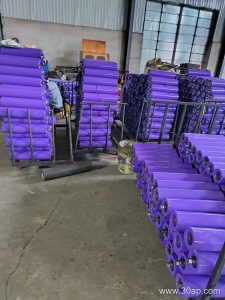
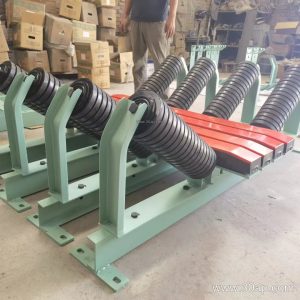
Take-up pulleys are essential in mining conveyor systems, including underground coal mining conveyor belts and iron ore handling. They also appear in limestone quarries, sand and gravel plants, cement clinker lines, and port bulk terminals. In these settings, a reliable take-up pulley works alongside the conveyor belt, idler rollers, and conveyor brackets to keep material flowing. For high-abrasion duties, pairing the pulley with an abrasion resistant conveyor belt or a heavy-duty mining conveyor belt can extend the whole system’s service life. In underground coal mining, flame retardant conveyor belts and fire resistant conveyor belts are often specified together with robust take-up units.
Types and Configurations
Take-up pulleys come in several configurations: gravity take-up, screw take-up, and automatic winch or hydraulic take-up. The pulley itself may be a plain drum or lagged version. While drive pulleys transmit power and tail pulleys redirect the belt, the take-up pulley’s primary role is tension control. It should not be confused with bend pulleys, which change belt direction without tension adjustment. In some arrangements, a bend pulley may be integrated into the take-up system, but the take-up pulley remains the tensioning element.
Buyer’s Checklist
- Belt width and pulley face: Confirm the conveyor belt width (e.g., B650, B1000, B1400) and required face width. Face width is typically belt width plus 100–200 mm.
- Diameter and shaft: Select shell diameter based on belt thickness and minimum bend radius. Shaft size must be calculated from torque and radial loads, not guessed from belt width.
- Lagging: Choose plain, rubber, or ceramic lagging according to grip needs and material abrasiveness. In coal mining, flame retardant and anti-static properties may be required for the belt, and the pulley lagging should be compatible.
- Take-up travel: Ensure the sliding frame or carriage has enough stroke to accommodate belt stretch over time.
- Bearing and sealing: In dusty or wet conditions, proper sealing extends bearing life. Consider the environment—quarry dust, cement powder, or coastal humidity.
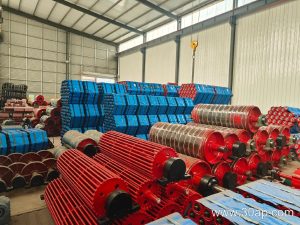
For a complete conveyor solution, match the take-up pulley with quality conveyor pulleys, idler rollers, and conveyor brackets. Whether your site is a copper ore concentrator, a limestone quarry, or a coal-fired power plant, the right take-up pulley helps reduce downtime and belt mistracking. Always request detailed drawings and material certificates from the supplier to verify dimensions and load ratings.