What a Heavy-Load Conveyor Pulley Does
A heavy-load conveyor pulley is the large rotating drum that drives, tensions or redirects a conveyor belt carrying dense or abrasive material. In a quarry, limestone mine or iron ore plant, one drum may transmit hundreds of kilowatts while supporting a belt that weighs several tonnes per metre. The pulley is therefore a structural component, not just a roller: it must resist bending, torsion, fatigue and wear at the same time.
Engineers often call this part a heavy-duty conveyor drum or a high-capacity conveyor pulley. It should not be confused with the tail or bend position, which performs a different job. The main subject here is the heavy-load unit used where torque and belt tension are high.
Construction and Key Components
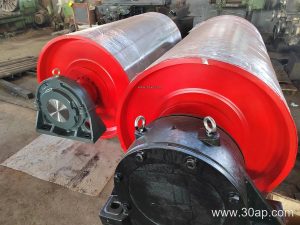
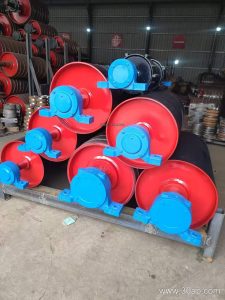
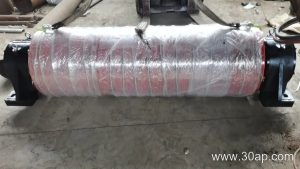
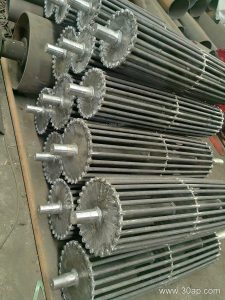
A typical assembly consists of a cylindrical shell, two end discs, a shaft, hub and locking elements, plus a lagging layer on the face. The shell is usually rolled from steel plate and machined to control runout. Shaft diameter is chosen from torque and bearing load, not from belt width alone; common shaft sizes range from Ø50 to Ø200 mm depending on the design case.
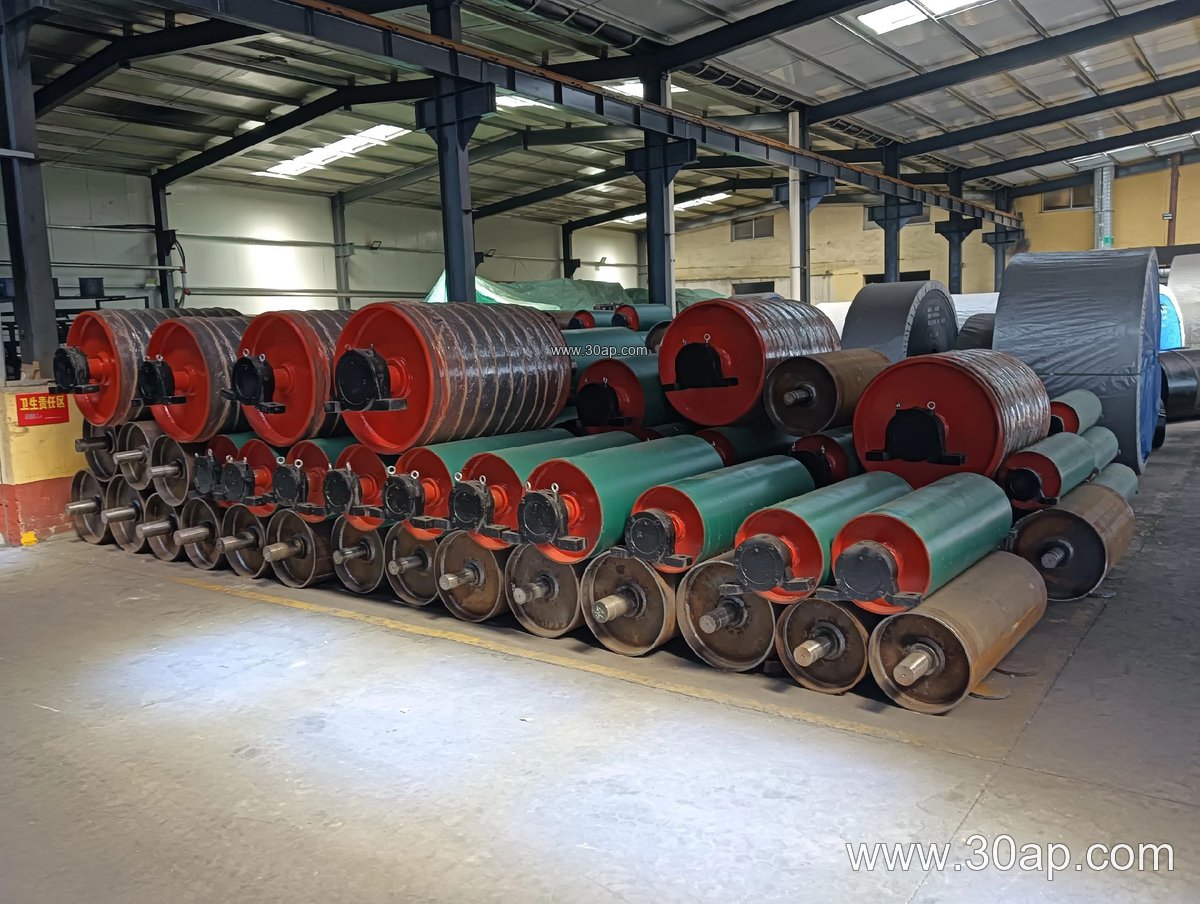
- Shell and discs welded and stress-relieved for fatigue resistance
- Keyed or shrink-disc hubs for torque transmission
- Bearing housings and a conveyor bracket matched to the frame
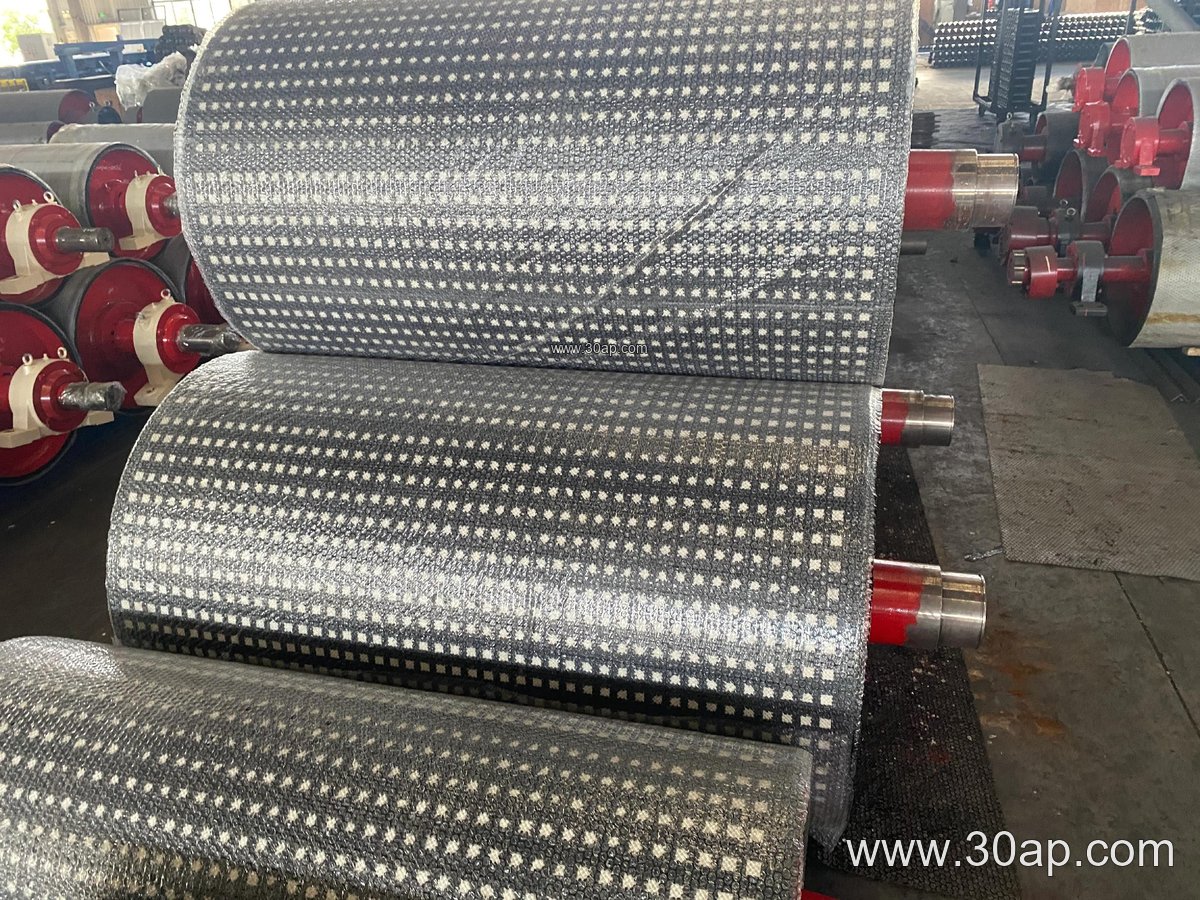
- Lagging in plain, diamond or ceramic form for grip
Face width is normally wider than the belt. A B1200 belt may run on a drum with roughly 1400 mm face; a B800 line often uses about 950 mm. These are reference relationships, not fixed rules.
Where It Is Used
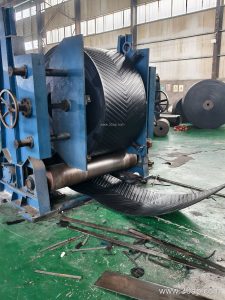
Heavy-load drums appear in crushing and screening circuits, cement clinker transport, power plant coal handling and port bulk terminals. In a sand and aggregate line, the drive drum pulls a thick abrasion resistant conveyor belt over idler roller sets while the head drum discharges rock onto the next stage. Underground coal mining conveyors use flame retardant belts and robust drums in confined spaces, while a steel plant handles sinter and ore with heat resistant or oil resistant belts.
Selection of the belt matters as much as the drum. A steel cord conveyor belt needs a large diameter to limit bending stress, whereas a multi-ply fabric core belt such as EP200 or NN300 can run on a smaller drum. Matching drum diameter to belt construction protects both components.
Sizes, Face Widths and Lagging
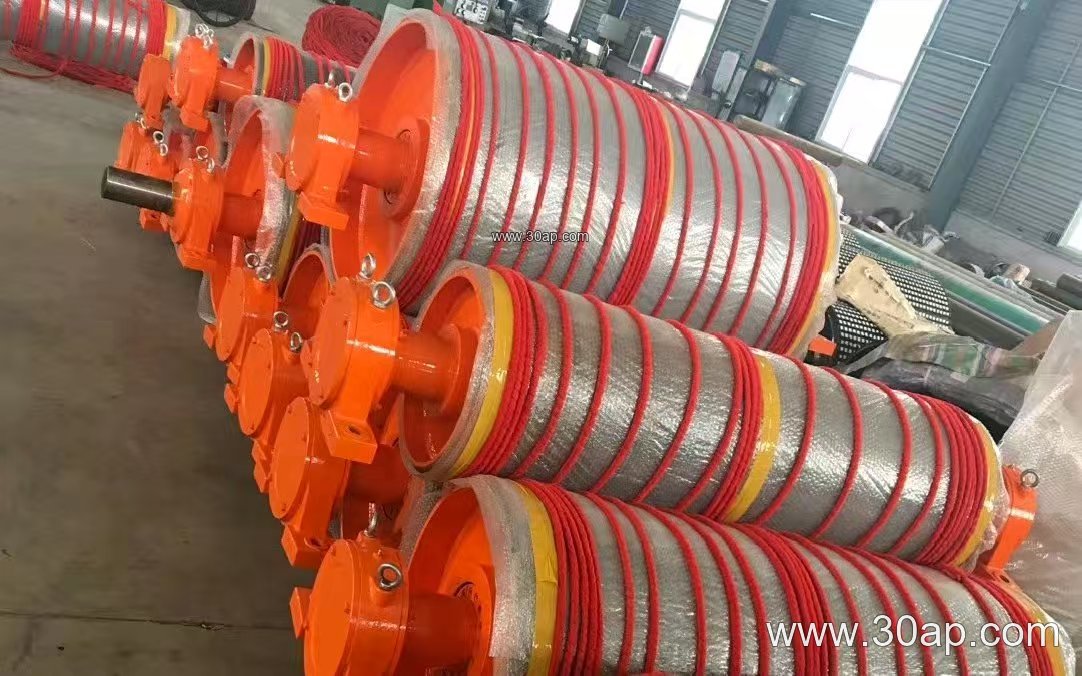
Common diameter series include Ø200, Ø315, Ø500, Ø630, Ø800, Ø1000, Ø1250 and up to Ø1800 for very large installations. Face widths follow belt widths from B400 through B2400. Lagging thickness is often 8, 10, 12, 15 or 20 mm.
| Belt width | Typical face width | Example drum combination |
|---|---|---|
| B500 | about 600 mm | B500 x Ø400 |
| B800 | about 950 mm | B800 x Ø500 |
| B1000 | about 1150 mm | B1000 x Ø630 |
| B1200 | about 1400 mm | B1200 x Ø1000 |
| B1400 | about 1600 mm | B1400 x Ø800 |
| B1800 | about 2000 mm | B1800 x Ø1250 |
Surface form affects grip and wear. Plain faces suit clean, low-tension runs; diamond or herringbone lagging improves traction on wet or dusty lines; ceramic lagging resists abrasive slip in ore handling. Hot vulcanized rubber lagging is common where long service life is required.
Buyer Checklist
Before ordering, confirm the belt type and tension, the required torque, shaft and bearing loads, the mounting position, and the environment. Ask for the lagging specification, balancing grade and inspection records. A drum for a 1200mm wide abrasion resistant belt in a crusher circuit has different demands from one on a pipe conveyor belt line or a corrugated sidewall conveyor belt run.
Also check compatibility with the conveyor bracket, frame height and take-up travel. For replacement work, measure the existing shaft, keyway and face width rather than relying on the belt width alone.
Maintenance Notes
Inspect lagging wear, shell cracks and bolt tightness at regular shutdowns. Keep the belt tracking centred so the drum is not loaded on one edge. Re-lagging is often more economical than replacing the whole unit when the shell and shaft remain sound. Record operating hours and load history to plan bearing replacement before failure.