What a 1250mm Drive Pulley Does
A 1250mm drive pulley is the powered drum at the head of a conveyor that transfers torque from the gearbox to the belt. The 1250mm figure refers to the pulley diameter, not the belt width. This large diameter gives the drive pulley a high wrap angle and low belt bending stress, which suits high-tension circuits in quarry, cement, and bulk terminal operations. It is a head pulley by position, but not every head pulley is a drive pulley; tail and bend pulleys serve different roles and are not interchangeable with the drive unit.
At a copper ore stockyard or a limestone crushing line, the drive pulley must match the conveyor belt’s tensile grade. A 1250mm drive pulley is often paired with heavy-duty conveyor belts such as steel cord or high-strength fabric constructions, but the diameter is selected from torque, belt tension, and shaft load rather than belt width alone.
Construction and Surface Options
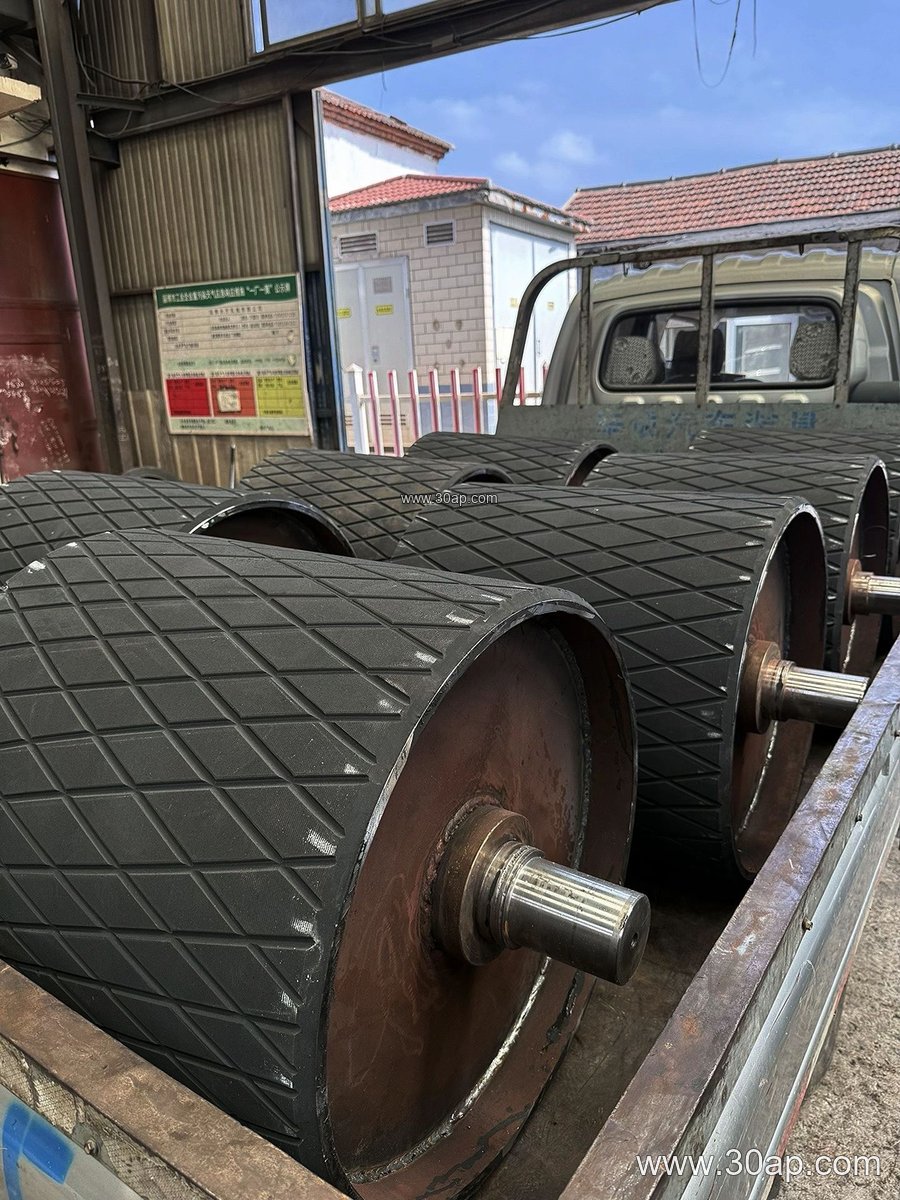
The drum body is usually fabricated from rolled steel plate with welded end discs, then machined for concentricity. The shaft is sized by torque and radial load; common shaft diameters range from Ø160 to Ø200 for this class, but final sizing is by design. Surface treatment matters for grip and wear life. Plain finish, hot-vulcanized rubber, cold-bonded rubber, diamond grooving, herringbone grooving, and ceramic lagging are all available. Lagging thickness commonly falls between 8 mm and 20 mm depending on the duty.
- Drum diameter: 1250 mm (fixed for this article)
- Face width: typically wider than the belt, e.g. 1400 mm face for a 1200 mm belt
- Lagging: plain, rubber, diamond, herringbone, or ceramic
- Shaft: sized by torque and load, not by belt width alone
- Bearing housings: matched to the conveyor bracket and frame
For a coal mining conveyor belt that carries abrasive run-of-mine coal, ceramic or diamond lagging can improve traction and reduce slip. In a cement plant clinker line, heat-resistant conveyor belt grades may be used nearby, but the drive pulley itself is selected for mechanical duty rather than belt compound.
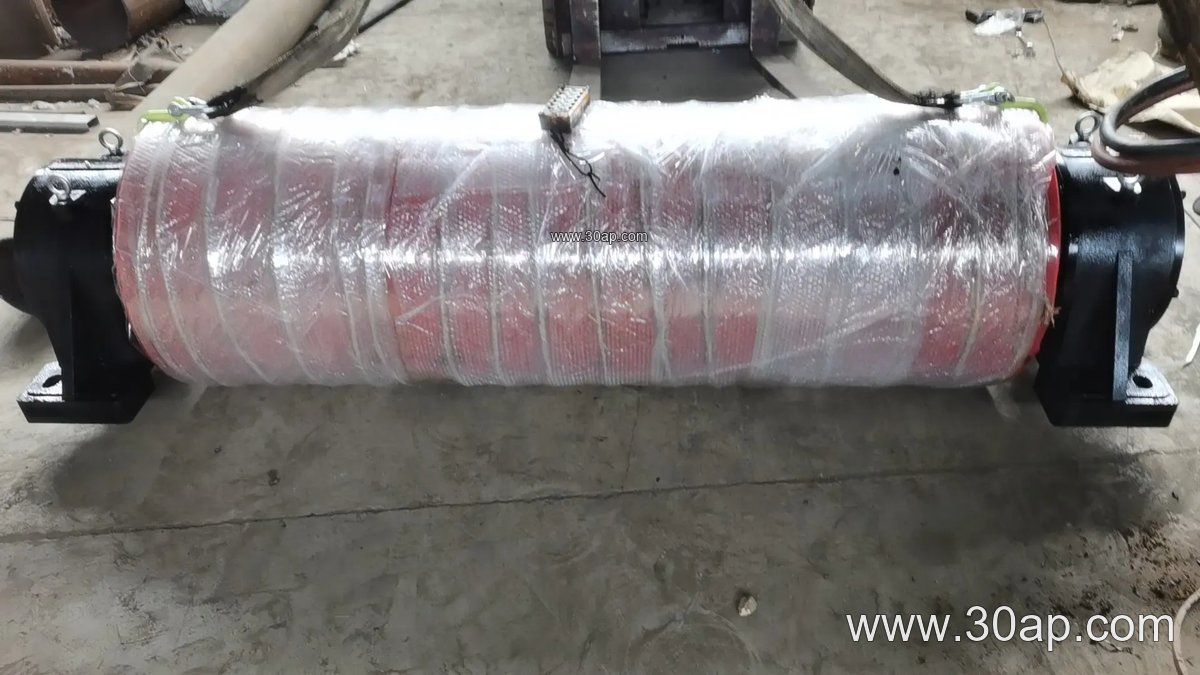
Where It Fits in the Conveyor
The 1250mm drive pulley is normally installed at the head station, where the conveyor belt discharges material. It works with the conveyor bracket, bearing blocks, and take-up system to maintain belt tension. A bend pulley or tail pulley may share the same diameter family, but they are not substitutes for the drive pulley because they do not transmit power. In a port ship loading conveyor or a power plant coal yard, the drive pulley is often the largest drum in the circuit.
Matching the pulley to the belt is straightforward in principle: confirm the belt width, the belt tension, and the shaft load. A B1200 conveyor belt may run on a 1250mm drive pulley, but B1400 or B1000 belts can also be considered with different face widths and shaft designs. The belt width does not lock the pulley diameter to one value.
Buyer Checklist
Before ordering, confirm the belt width and the required face width, the lagging type and thickness, the shaft diameter and keyway, and the bearing type. Ask for the allowable radial load and the balancing grade. For a quarry conveyor belt or an aggregate conveyor belt, abrasion-resistant lagging is often preferred. For an underground coal mining conveyor belt, flame retardant conveyor belt compatibility and anti-static properties may be relevant to the belt, while the pulley itself must meet the mechanical duty.
Also check the interface with the conveyor idler roller frames and the conveyor bracket dimensions. A drive pulley that fits the shaft but not the bracket can delay installation. Maintenance access for lagging replacement and bearing inspection should be planned at the head station.
Specification Reference
The table below shows common reference values, not a fixed supply promise. Final dimensions are confirmed by design.
| Item | Common reference |
|---|---|
| Pulley type | Drive pulley (head position) |
| Diameter | 1250 mm |
| Belt width examples | B1000, B1200, B1400 |
| Face width examples | 1150 mm, 1400 mm, 1600 mm |
| Lagging thickness | 8, 10, 12, 15, 20 mm |
| Shaft diameter examples | Ø160, Ø180, Ø200 |
| Surface forms | Plain, rubber lagging, diamond, herringbone, ceramic |
For high-tension circuits using steel cord conveyor belt or EP conveyor belt grades, the 1250mm drive pulley should be reviewed together with the belt manufacturer’s recommended pulley diameter. A oversized pulley can reduce belt stress but adds cost and space; an undersized one may shorten belt life. The right choice balances torque, tension, and available head station room.