Understanding the EP300 Conveyor Belt
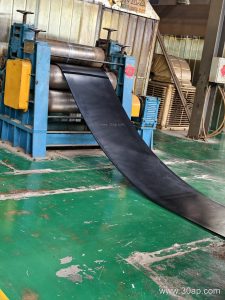
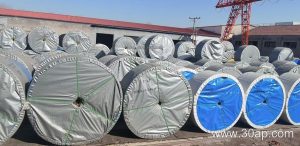
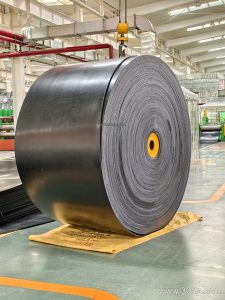
The EP300 Conveyor Belt is a heavy-duty fabric core belt built around polyester (E) and nylon (P) warp and weft yarns. Its 300 N/mm tensile strength per ply places it in the mid-to-high range of EP constructions, making it a practical choice for primary and secondary conveying in mines, quarries, cement plants, power stations, and port terminals. As an EP Rubber Conveyor Belt, it balances strength, flexibility, and fatigue resistance better than many all-nylon designs, while remaining more forgiving of misalignment and impact than a Steel Cord Conveyor Belt of comparable capacity.
The product is also correctly described as an EP Fabric Core Conveyor Belt or simply an EP Conveyor Belt. These names refer to the same construction and do not indicate different subtypes.
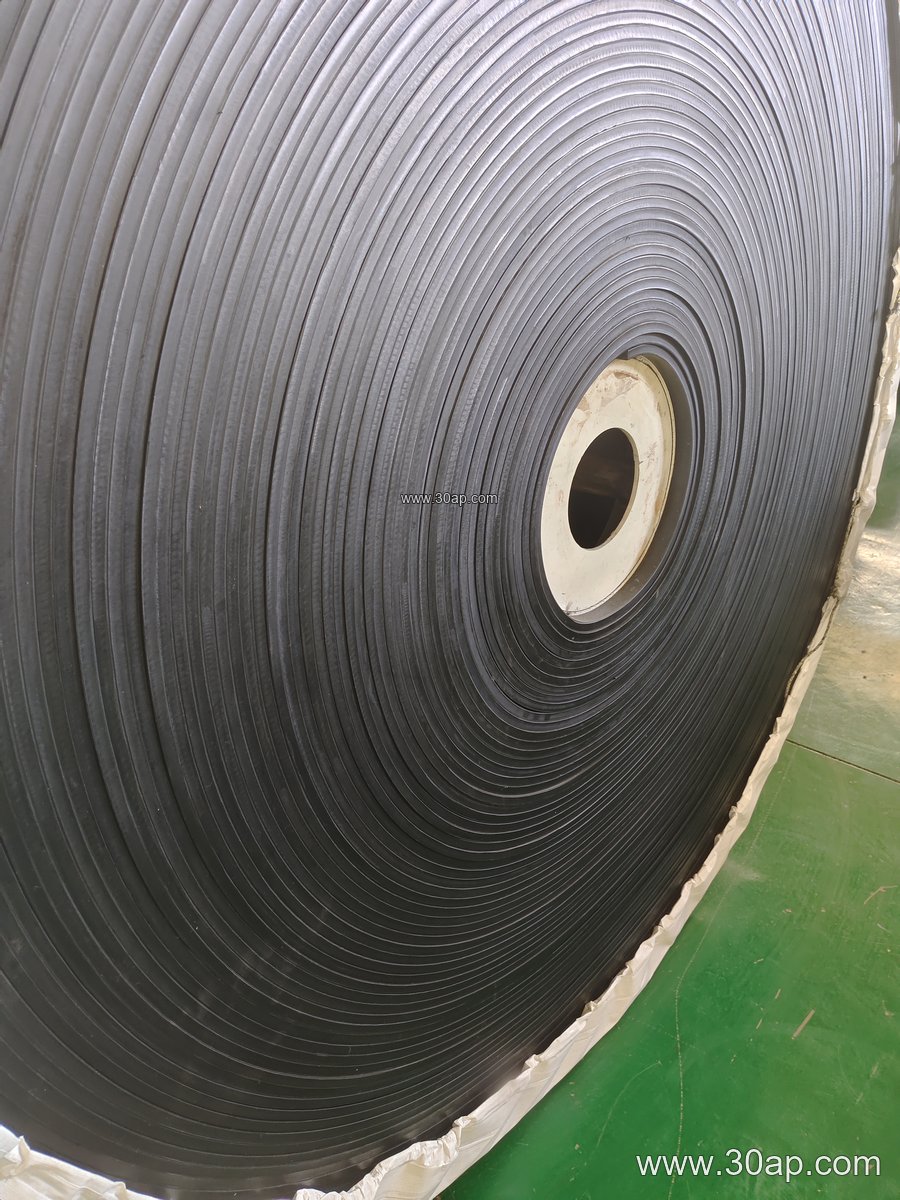
Construction and Materials
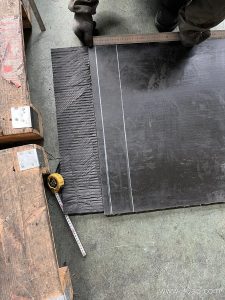
An EP300 belt typically uses multiple plies of polyester-nylon fabric, commonly two to six, bonded with rubber skim and cushion compounds. The cover rubber grade is selected to suit the duty: abrasion resistant for ore and aggregate, heat resistant for cement clinker and sinter, flame retardant for underground coal mining, oil resistant for recycled material, or anti-static where dust ignition is a concern. Cover thickness is usually stated as top plus bottom, for example 4+2 mm, 5+2 mm, 6+2 mm, or 8+3 mm for high-impact points. The belt edges may be cut or moulded, and the surface may be plain, chevron, or corrugated sidewall depending on the conveyor profile.
Common Specifications
Buyers often compare EP300 against EP200, EP400, EP500, EP630, EP800, EP1000, EP1250, EP1600, and EP2000 grades. The table below shows typical reference values; actual constructions vary by manufacturer and should be confirmed against the conveyor design.
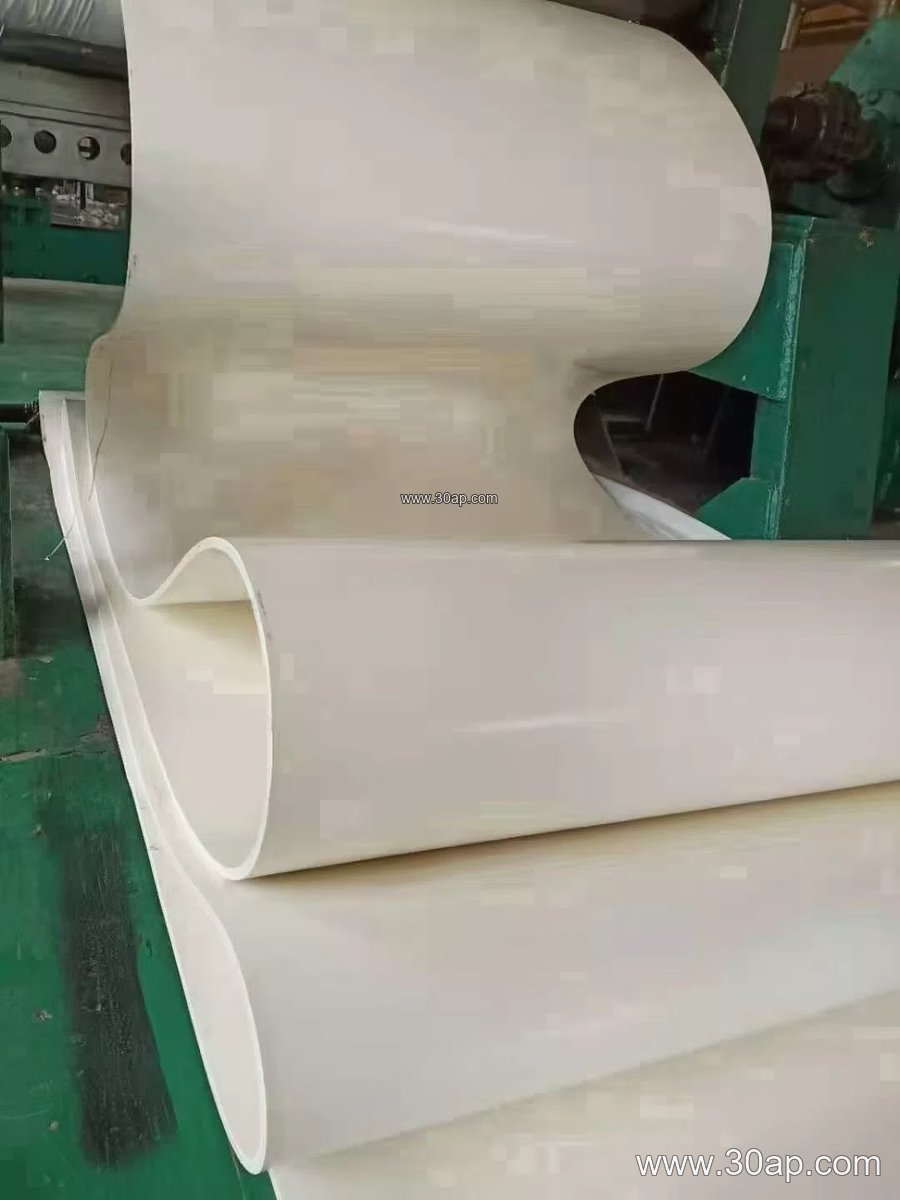
- Strength range: EP200 to EP2000, with EP300 a frequent selection for medium-to-heavy duty.
- Belt widths: B500, B650, B800, B1000, B1200, B1400, B1600, B1800, B2000 mm.
- Cover combinations: 3+1.5, 4+2, 5+2, 6+2, 8+3 mm.
- Ply count: usually 2 to 6, depending on belt width and load.
These values are reference data, not fixed pairings. A wider belt does not automatically require a specific pulley diameter, and shaft size is determined by the conveyor drive design rather than belt width alone.
Where It Fits in the Plant
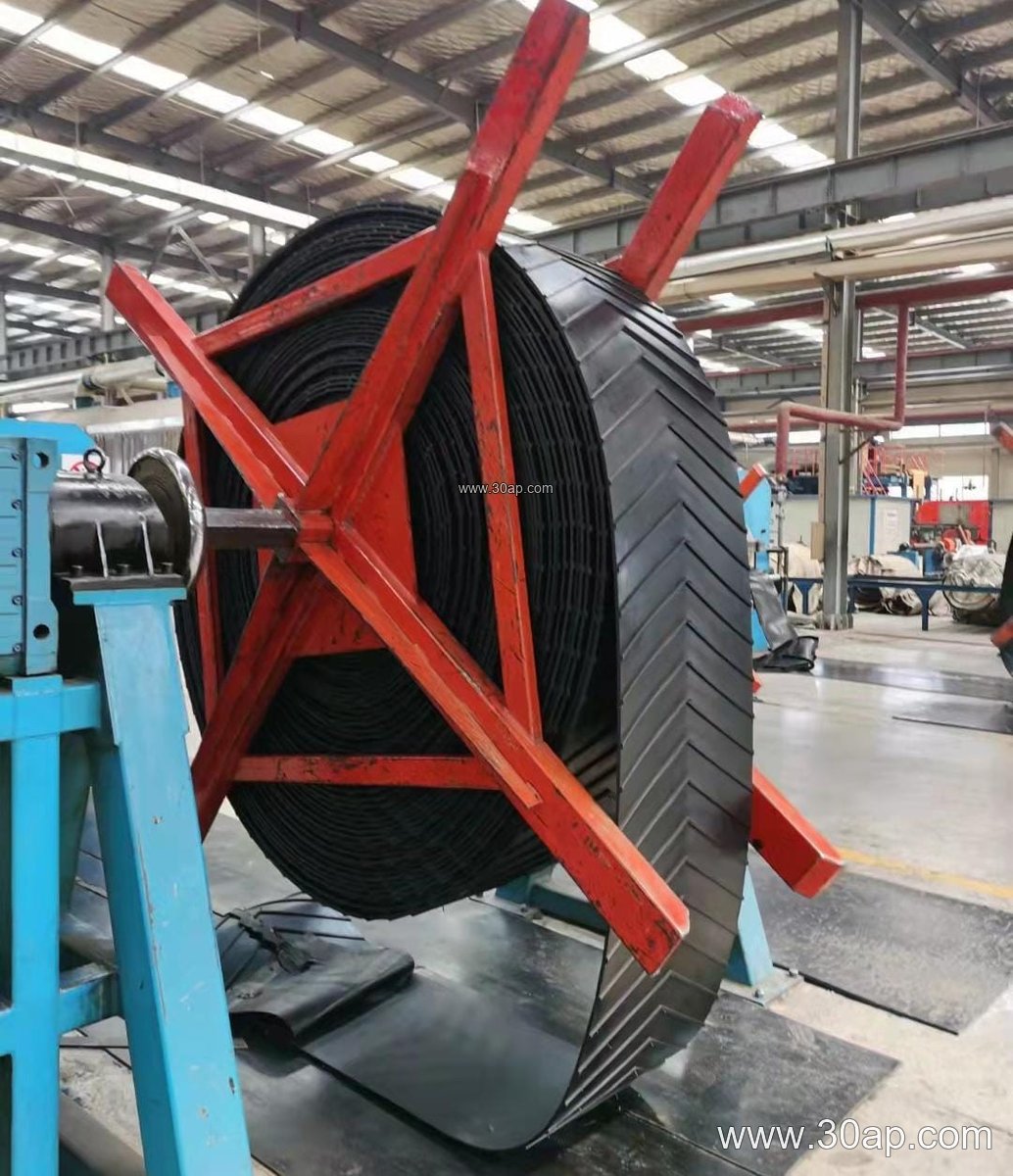
In a mining or quarry circuit, an EP300 belt often runs on the main haulage or crusher discharge, where lumps and abrasive rock demand a tough cover. In a cement plant it may carry limestone, clinker, or gypsum; in a power plant, coal and ash; in a sand and gravel operation, wet or dry aggregate. The same belt construction can appear as a Mining Conveyor Belt, a Quarry Conveyor Belt, or an Aggregate Conveyor Belt depending on the duty. Where the route bends or climbs, a Chevron Conveyor Belt or Corrugated Sidewall Conveyor Belt variant may be used to prevent material rollback, but these are separate surface forms, not replacements for the flat EP300 belt.
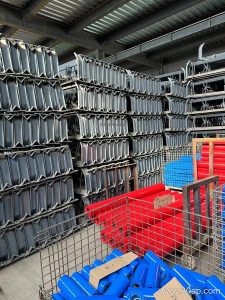
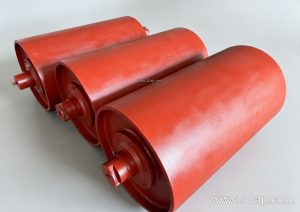
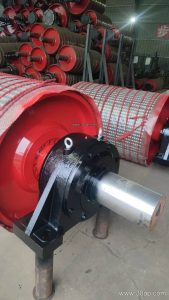
The belt works with conveyor pulleys, idler rollers, and conveyor brackets, each selected for the load and environment. Drive, tail, and bend pulleys have distinct roles and are not interchangeable; the same applies to different idler and bracket types. For very long, high-tension routes, a Steel Cord Conveyor Belt may offer lower stretch, while an NN Conveyor Belt is another fabric option with different elongation behaviour.
Selection and Maintenance Notes
When specifying an EP300 Conveyor Belt, confirm the maximum lump size, drop height, material temperature, and whether the belt will run in a flame retardant or anti-static area. Check that the pulley diameters and troughing angles suit the belt’s flexibility, and allow adequate take-up travel. During service, inspect splice condition, edge wear, and cover gauge, and keep idler rollers turning freely to avoid localized abrasion. For high-temperature or oil-laden duties, a Heat Resistant Conveyor Belt or Oil Resistant Conveyor Belt grade should be chosen at the ordering stage rather than added later.
For more information on EP300 Conveyor Belt options, conveyor belt accessories, and conveyor pulley matching, visit www.example.com/conveyor-belt or www.example.com/conveyor-pulley. Related searches for EP Rubber Conveyor Belt and EP Fabric Core Conveyor Belt are handled by the same product family.