What a Vertical Roller Does on a Conveyor
A vertical roller is a specialized idler used to guide the conveyor belt along its edges, particularly on the return strand or at transition points. Unlike standard carrying idlers that support the belt from below, this roller is mounted vertically to press against the belt edge, preventing lateral drift and keeping the belt centered. In industries such as coal mining, cement plants, and quarry operations, a vertical roller helps maintain belt alignment where space is tight or where conventional training idlers cannot be installed.
Also known as a vertical guide roller or edge control roller, this component is distinct from drive, tail, and bend pulleys, which transmit power or change belt direction. The vertical roller does not drive the belt; it only provides side guidance. It is often used in conjunction with a conveyor pulley at the head or tail to ensure smooth tracking.
Construction and Key Features
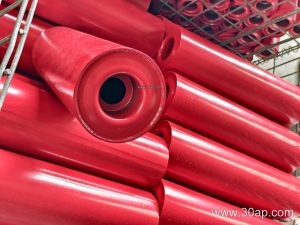
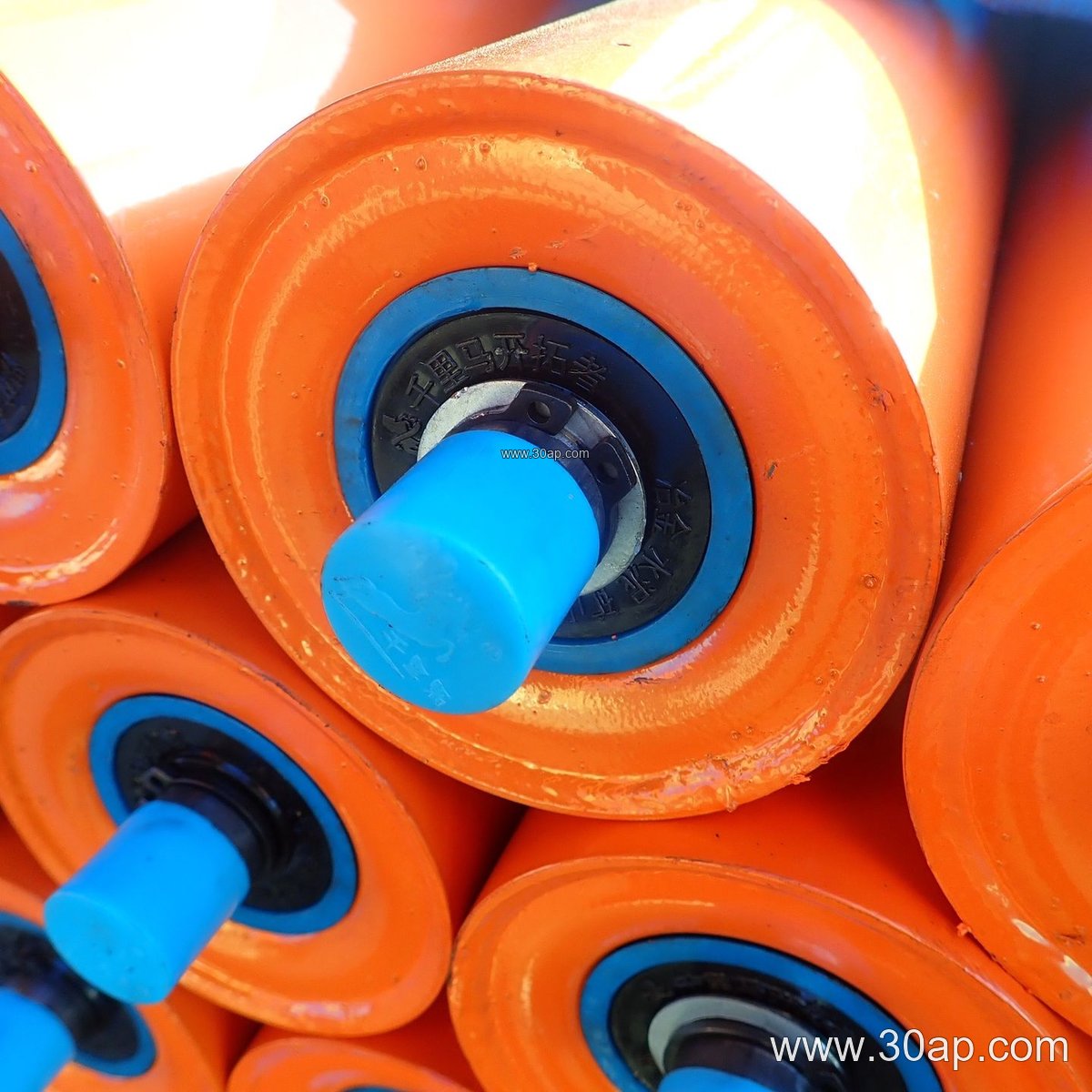
A typical vertical roller consists of a steel tube shell, bearing housings, and a shaft mounted in a bracket. The roller surface may be plain steel, nylon, or rubber-covered to reduce wear on the belt edge. Common bearing sizes include 6204, 6205, and 6305, though the exact bearing depends on the roller diameter and load. Roller diameters for vertical guiding often range from Ø63 mm to Ø133 mm, with larger sizes used on high-tension belts. The roller length is usually short, as it only contacts the belt edge; it is not sized like a full-width carrying idler.
Sealing is critical in dusty environments such as coal mines and cement plants. Good labyrinth seals keep out fine particles and extend service life. The bracket that holds the vertical roller must be sturdy enough to resist vibration and impact from the moving belt.
Where Vertical Rollers Are Used
Vertical rollers are common in:
- Underground coal mining conveyors, where space is limited and belt training is essential.
- Cement plant clinker and raw material transport, especially at transfer points.
- Quarry and aggregate lines, where belt misalignment can cause spillage.
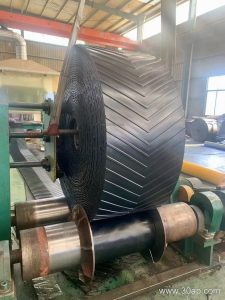
- Power plant coal handling systems, often combined with a flame retardant conveyor belt.
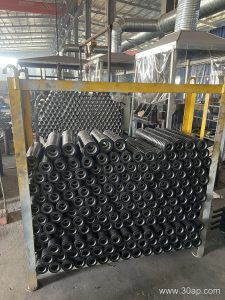
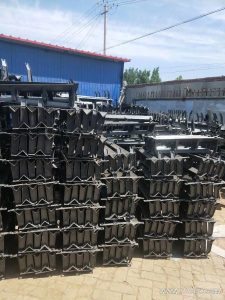
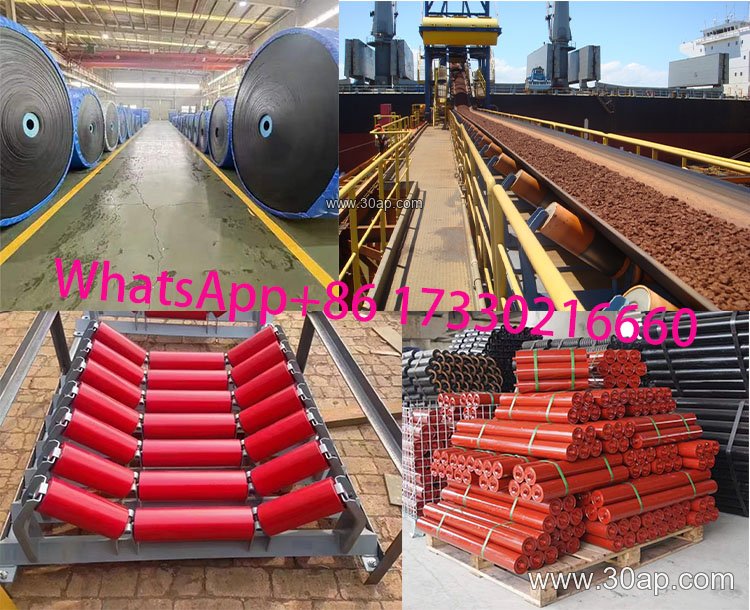
In these settings, a vertical roller works alongside carrying idlers, return rollers, and a conveyor bracket to keep the belt on track. It is not a replacement for a troughing idler or a buffer roller, but a complementary component for edge control.
Selection and Sizing Notes
Choosing a vertical roller starts with the belt width. For example, a 800mm conveyor belt or a 1000mm conveyor belt may use a vertical roller of Ø89 mm or Ø108 mm, but the final choice depends on the belt tension, speed, and available mounting space. The roller length is typically much shorter than the belt width; it only needs to cover the edge zone. Common belt widths in mining and bulk handling include 650mm, 800mm, 1000mm, 1200mm, and 1400mm. The table below gives reference examples, not fixed rules.
| Belt Width (mm) | Typical Vertical Roller Diameter (mm) | Common Bearing |
|---|---|---|
| 650 | Ø63 – Ø89 | 6204 |
| 800 | Ø76 – Ø108 | 6205 |
| 1000 | Ø89 – Ø127 | 6305 |
| 1200 | Ø108 – Ø133 | 6306 |
| 1400 | Ø127 – Ø159 | 6308 |
Note that the roller diameter is not determined by belt width alone; load, speed, and mounting geometry also matter. A vertical roller should be selected with the help of the conveyor designer, especially when used with a steel cord conveyor belt or a heavy-duty mining conveyor belt where edge stress is high.
Maintenance and Buyer Tips
Regular inspection of vertical rollers helps prevent belt edge damage. Check for bearing play, shell wear, and seal integrity. In abrasive environments, such as a quarry conveyor belt line, rubber-covered vertical rollers can reduce belt wear. Keep the roller free-turning; a seized roller can cause rapid edge wear and belt mistracking. When replacing, match the roller diameter and bracket dimensions to the original design. Do not substitute a vertical roller with a return roller or a training idler, as they serve different functions. For coal mining conveyor belt systems, ensure the roller meets flame retardant requirements if required by the site. Finally, consider the overall conveyor layout: a vertical roller works best when paired with proper belt training and a well-aligned conveyor pulley.
For more information on conveyor components, visit our site at www.example.com/vertical-roller or explore our range of conveyor belt and idler roller solutions. Our team can help you specify the right vertical roller for your mining conveyor belt or cement plant application.