What a Discharge Pulley Does
The discharge pulley is the conveyor pulley positioned at the head end of a belt conveyor, where the belt turns around and releases its load into a chute, transfer point, or stockpile. In many plants this component is also called the head pulley or delivery pulley, and those names describe the same role. It is not a tail pulley and not a bend pulley; those serve different positions on the conveyor line. A discharge pulley combines three jobs: it supports the carrying run, drives or guides the belt at the point of highest tension, and helps throw material clear of the belt surface.
Because it sits at the material release point, wear and traction matter more here than at most other pulley stations. In a quarry, a limestone mine, or a crushing and screening circuit, the discharge pulley often sees abrasive rock dust and occasional impact from oversized lumps. In a coal handling system the same pulley must work with flame retardant conveyor belt and keep tracking stable through transfer chutes.
Construction and Surface Options
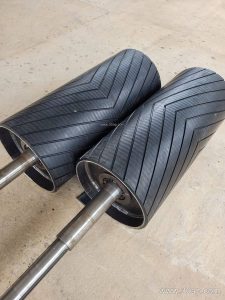
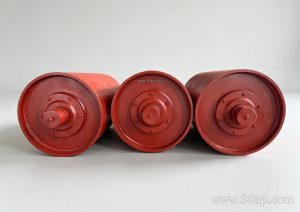
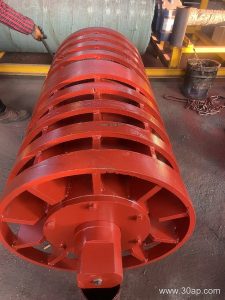
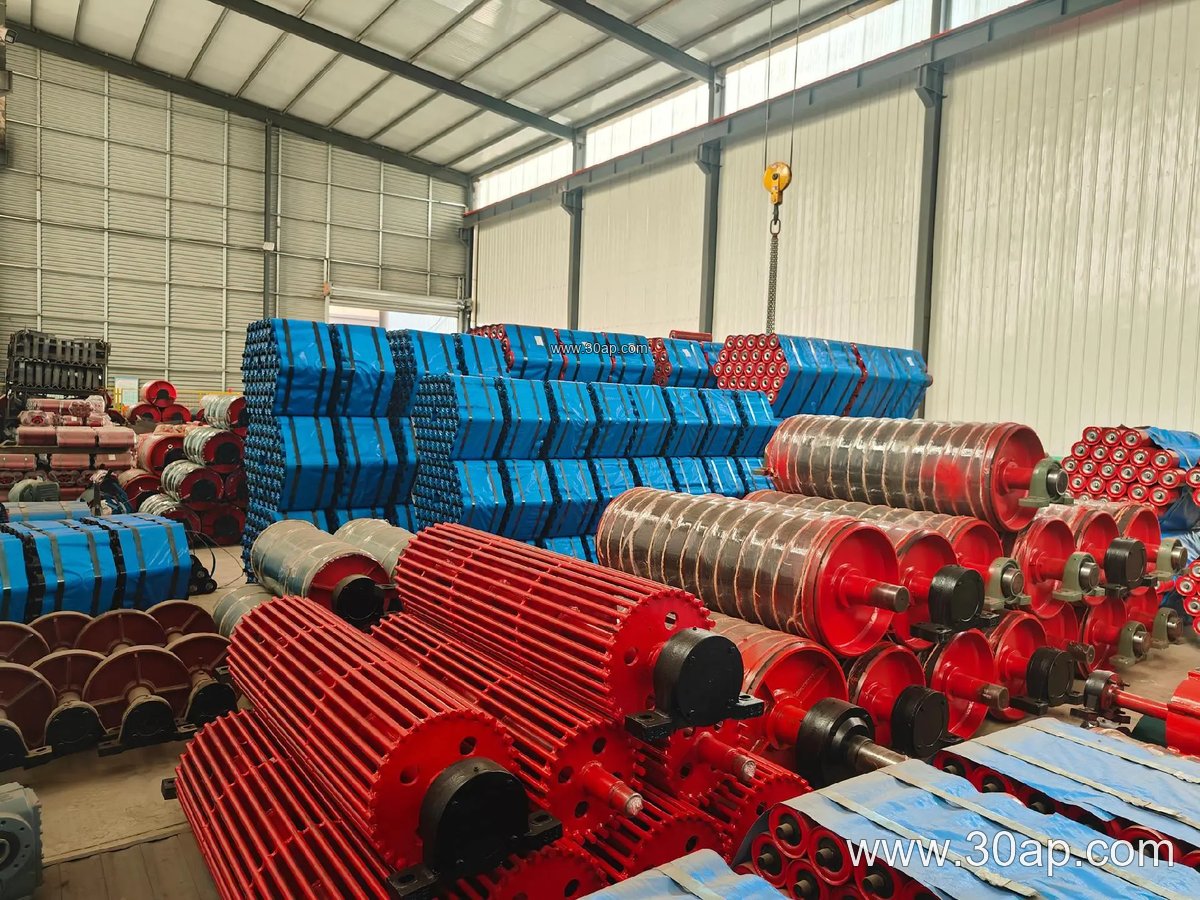
A typical discharge pulley is built from a rolled steel shell, end discs, a shaft, and bearing housings mounted in conveyor brackets or a fabricated frame. The shell may be plain or covered with rubber, and the covering choice affects grip and service life. Common surface forms include plain finish, hot-vulcanized rubber, cold-bonded rubber, diamond grooving, herringbone grooving, and ceramic lagging. Lagging thickness is often selected from 8, 10, 12, 15, or 20 mm, depending on belt tension and slip risk.
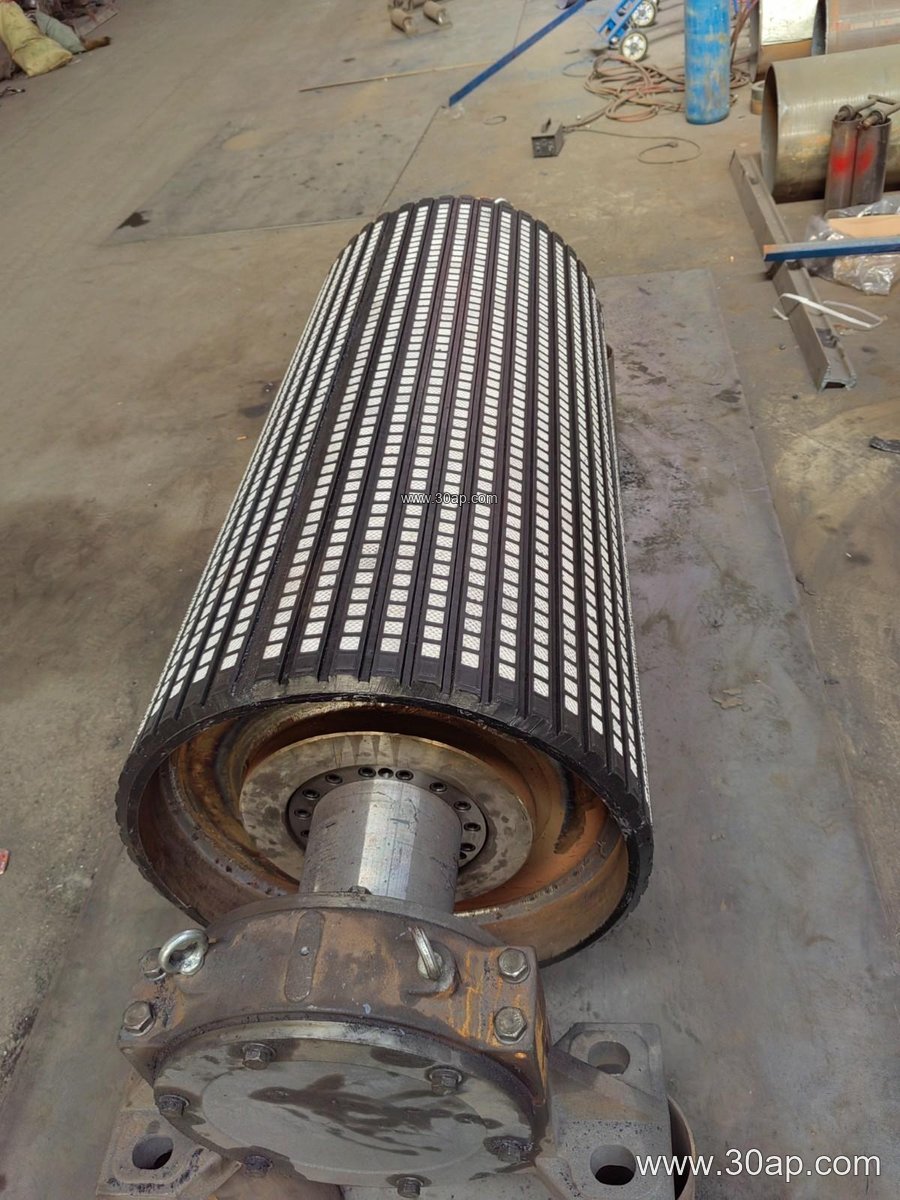
- Plain shell: basic option for low-tension, clean-duty conveyors
- Rubber lagging: improves friction and protects the shell from abrasion
- Diamond or herringbone pattern: helps water and fine dust escape at the contact patch
- Ceramic lagging: used where slip and abrasive wear are both concerns
Shaft diameter is determined by torque and load, not by belt width alone. Typical shaft sizes range from about Ø50 to Ø200 mm, and engineers should confirm the bearing selection and fatigue life for each duty point.
Sizing and Matching the Belt
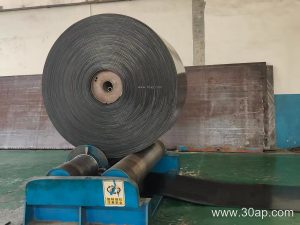
The pulley face width is usually a little wider than the belt it carries. For example, a B650 belt commonly runs on a pulley face around 750 mm, while a B1200 belt may use a face near 1400 mm. Diameter selection depends on belt speed, belt thickness, splice type, and the required wrap angle. Combinations such as B800 × Ø500 or B1400 × Ø800 appear in real installations, but no single diameter is mandatory for a given belt width. Larger diameters reduce bending stress in the belt, especially with steel cord conveyor belt or thick EP conveyor belt constructions.
| Belt width | Typical pulley face width |
|---|---|
| B400 | about 500 mm |
| B500 | about 600 mm |
| B650 | about 750 mm |
| B800 | about 950 mm |
| B1000 | about 1150 mm |
| B1200 | about 1400 mm |
| B1400 | about 1600 mm |
| B1600 | about 1800 mm |
These figures are common reference values, not fixed pairings. A heavy-duty mining conveyor belt may need a larger pulley diameter than a light-duty bulk material conveyor belt of the same width.
Where It Fits in the Plant
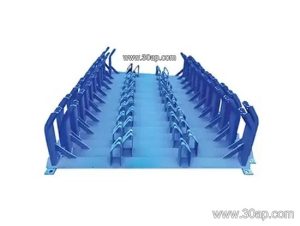
Discharge pulleys appear in cement plant clinker lines, power plant coal conveying, port ship loading systems, and aggregate stockpile conveyors. In a sand making plant or stone crushing line, the head-end pulley often discharges onto a screen or a transfer belt. In a fertilizer or grain silo facility, the same component may be built with a smooth lagging to avoid product buildup. The surrounding equipment usually includes idler rollers, conveyor brackets, and a chute designed to guide the falling material without striking the pulley face.
When specifying a discharge pulley, buyers should confirm the belt width, belt type and tension, shaft diameter, lagging material and thickness, bearing type, and the available space at the head frame. Matching these details to the actual conveyor duty is more useful than copying a size from another line.