What a Trough Idler Bracket Set Does
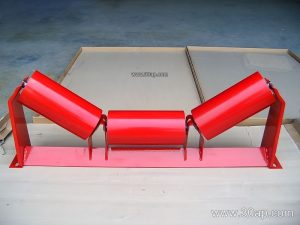
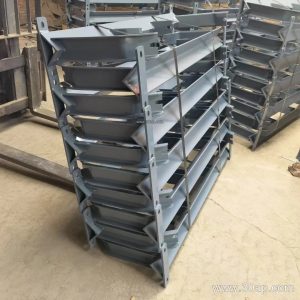
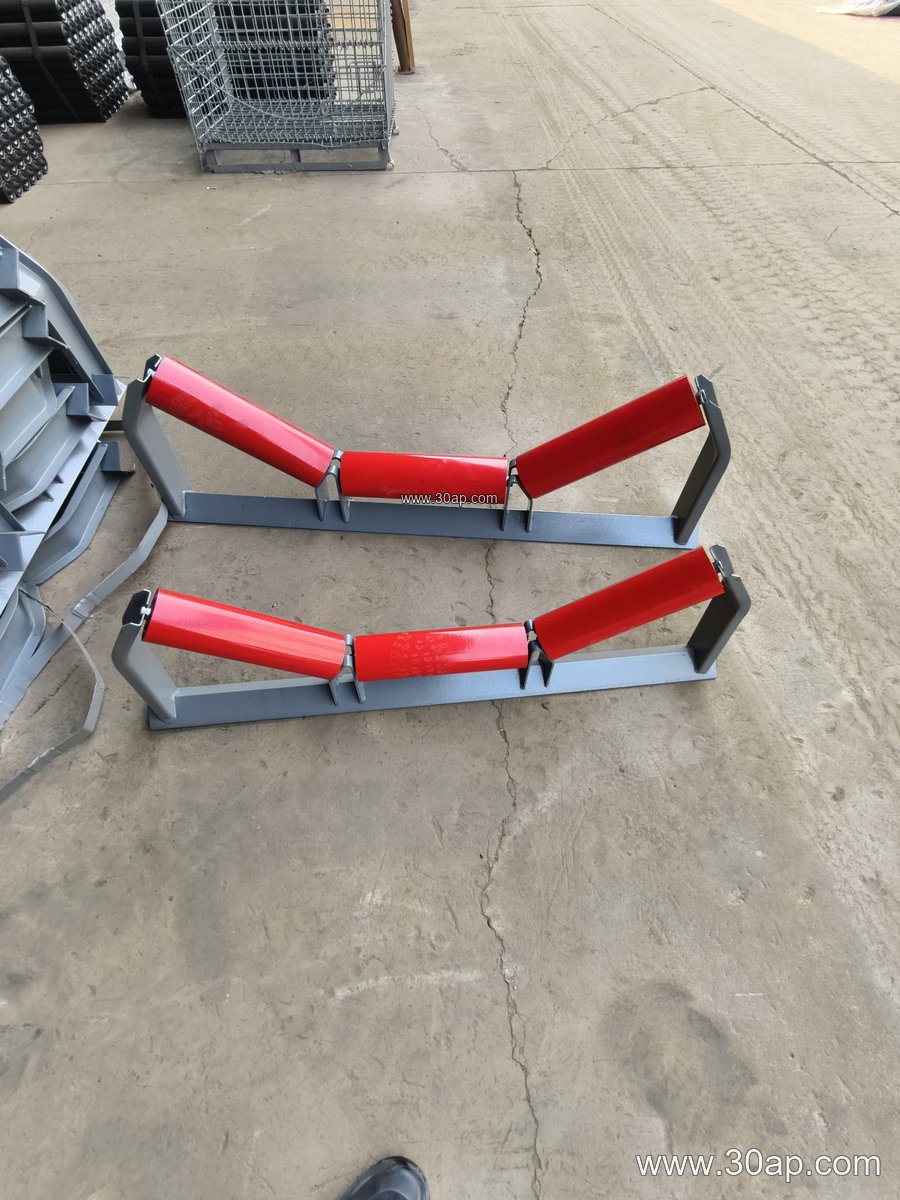
A trough idler bracket set is the frame that holds the carrying idlers in a troughed shape under a loaded conveyor belt. Instead of letting the belt run flat, the set lifts the two outer idler rollers to form a trough, which keeps bulk material centered and reduces spillage. In a quarry, a coal handling line, or a cement plant, this bracket set is a small but critical link between the conveyor belt and the idler roller assembly.
Buyers often search for the same item as a troughing idler bracket set or a conveyor trough bracket. These names describe the same product: a bolted or welded bracket assembly that positions three idlers at a chosen trough angle. It should not be confused with a return bracket or a self-aligning bracket, which serve different positions on the conveyor structure.
How the Bracket Set Is Built
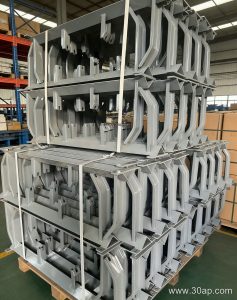
Most sets are fabricated from angle steel, channel steel, or folded steel plate. The main cross beam carries two side wings or angled seats, and each seat has mounting slots for the idler shaft. The set is usually supplied as a matching group so the three idlers sit in one plane and share the load evenly.
- Cross beam and end plates formed from channel or folded plate
- Angled idler seats set to the required trough angle
- Mounting holes or slots for pin, bolt, or clamp fixing
- Optional adjustable wings for changing the trough angle on site
Because hole spacing and beam length follow the belt width and trough angle, a bracket set is normally made to match a specific conveyor design rather than picked from a single universal size.
Trough Angle and Idler Diameter Choices
The trough angle controls how deeply the belt sits in the frame. Common values are 20, 30, 35, and 45 degrees. A 30 or 35 degree set is widely used for general bulk material, while a 45 degree set gives a deeper trough for higher capacity on wide belts. Adjustable brackets allow the same frame to be set at more than one angle during installation.
Idler diameter is chosen together with belt width and load, not from belt width alone. Typical carrying idler diameters include Ø89, Ø108, Ø133, Ø159, and Ø194. A small B650 frame may use Ø89 idlers, while a heavy B1400 or B1600 line may use Ø133 or Ø159. The table below shows common reference combinations, not fixed rules.
| Belt Width | Common Trough Angle | Typical Idler Diameter | Typical Use |
|---|---|---|---|
| B500 / B650 | 20 to 30 degrees | Ø89 | Small aggregate or sand lines |
| B800 / B1000 | 30 to 35 degrees | Ø108 | General quarry and plant conveyors |
| B1200 / B1400 | 35 to 45 degrees | Ø133 | Coal handling and cement plants |
| B1600 / B1800 | 35 to 45 degrees | Ø159 | Heavy bulk material transport |
| B2000 and above | 35 to 45 degrees | Ø194 | Large port or mine conveyors |
These values are indicative only. Final selection depends on belt speed, material density, and the conveyor frame design.
Where the Set Fits in a Conveying System
The bracket set works with the conveyor belt, the idler roller group, and the supporting steel structure. In a stone crushing line, a set of 35 degree brackets with Ø108 idlers keeps crushed rock in the center of an EP conveyor belt. In a power plant coal yard, heavier frames with Ø133 idlers support a flame retardant conveyor belt on the coal feed line.
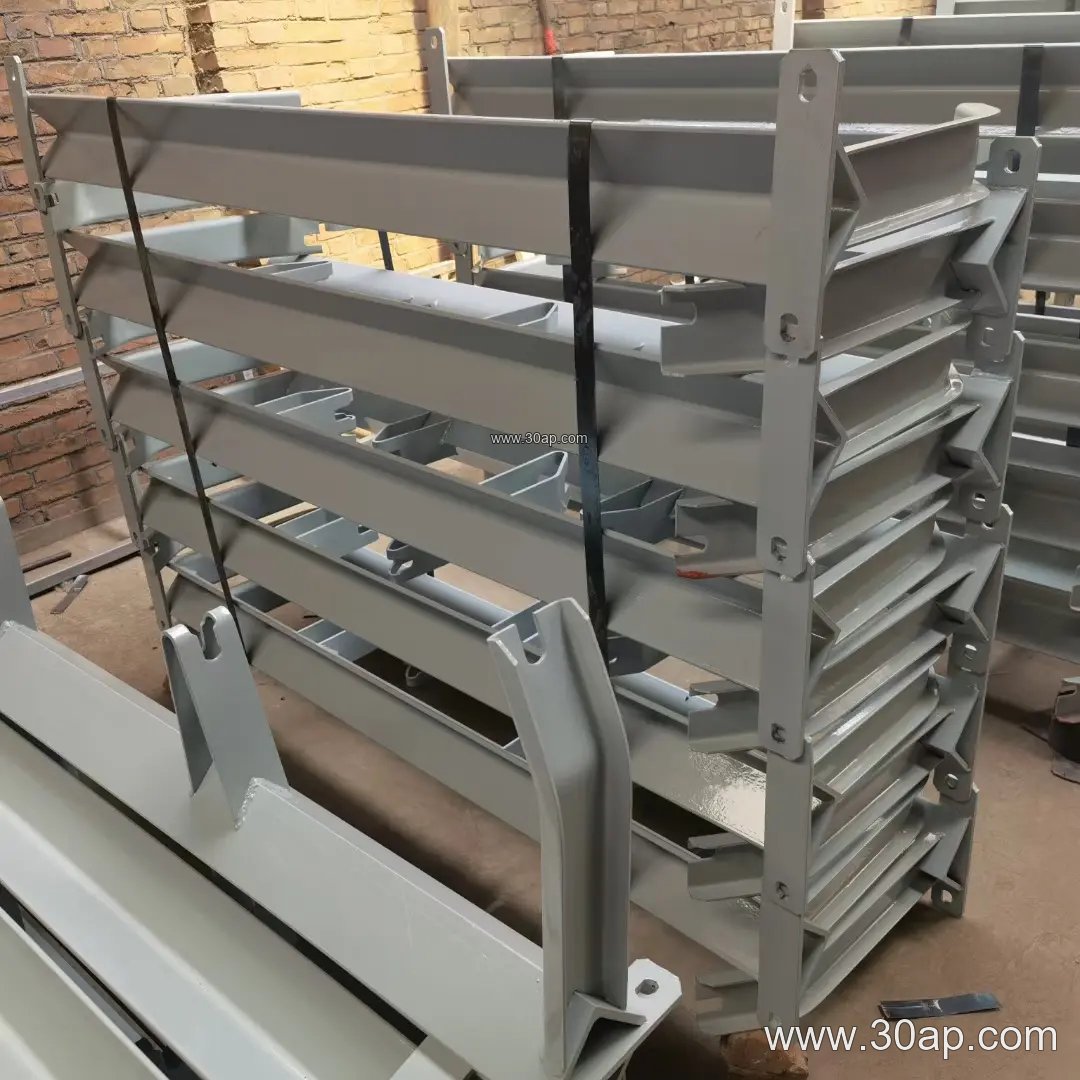
It is also common to see this bracket in a sand making plant, a fertilizer warehouse, or a tunnel spoil handling system. The bracket itself does not drive the belt, so it is unrelated to the drive pulley, tail pulley, or bend pulley, which are separate components of the conveyor.
Fixed, Adjustable, and Transition Versions
Fixed trough brackets are welded to a set angle and suit standard runs where the profile does not change. Adjustable versions let maintenance teams fine-tune the trough angle to reduce belt edge stress or improve material containment. Transition brackets are placed near the tail or head to guide the belt gradually from flat to troughed, which helps avoid sudden edge tension.
Impact brackets with rubber or spring cushions are used under loading points, while self-aligning brackets are a different function and should not be substituted for a plain trough set. When comparing, keep each subtype in its correct position on the conveyor.
Buyer Checklist
- Confirm belt width (B500 to B2200 range) and the required trough angle.
- Match the bracket seat to the idler shaft and diameter, such as Ø108 or Ø133.
- Check mounting hole spacing against the existing conveyor stringer.
- Choose fixed or adjustable wings based on whether the angle may change.
- Specify material and surface treatment for dusty, wet, or corrosive sites.
A well-matched trough idler bracket set keeps the belt stable, extends idler life, and reduces material spillage along the whole conveying route.