What an Integral Pulley Is
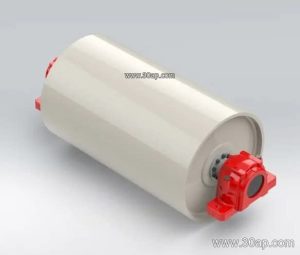
An integral pulley is a conveyor pulley whose shell, end discs, and hub assembly are joined into a single structural unit rather than assembled from separate bolt-on components. In many plants this component is simply called a conveyor pulley, and it sits at the head, tail, or bend point of a belt conveyor, guiding the conveyor belt and transmitting or absorbing the loads that keep the system moving. Because the shell and hub work as one piece, the design tends to hold its shape well under continuous duty and is easier to align during installation.
The term describes construction, not position. An integral pulley can serve as a drive pulley, a tail pulley, or a bend pulley depending on where it is installed. Those roles are not interchangeable, and a buyer should confirm the duty position before ordering.
How the Structure Comes Together
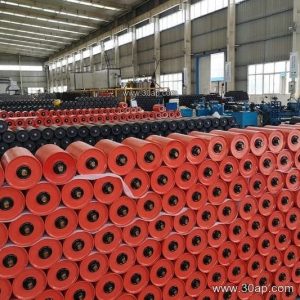
Most integral pulleys start with a rolled steel shell, to which end discs are welded or shrink-fitted. The shaft passes through the hub, and bearing housings are mounted at each end. Surface treatment follows: plain finish, cast rubber, cold-bonded rubber, hot-vulcanized rubber, diamond grooving, herringbone grooving, or ceramic lagging. Lagging thickness commonly falls between 8 mm and 20 mm, selected according to grip requirements and the material being carried.
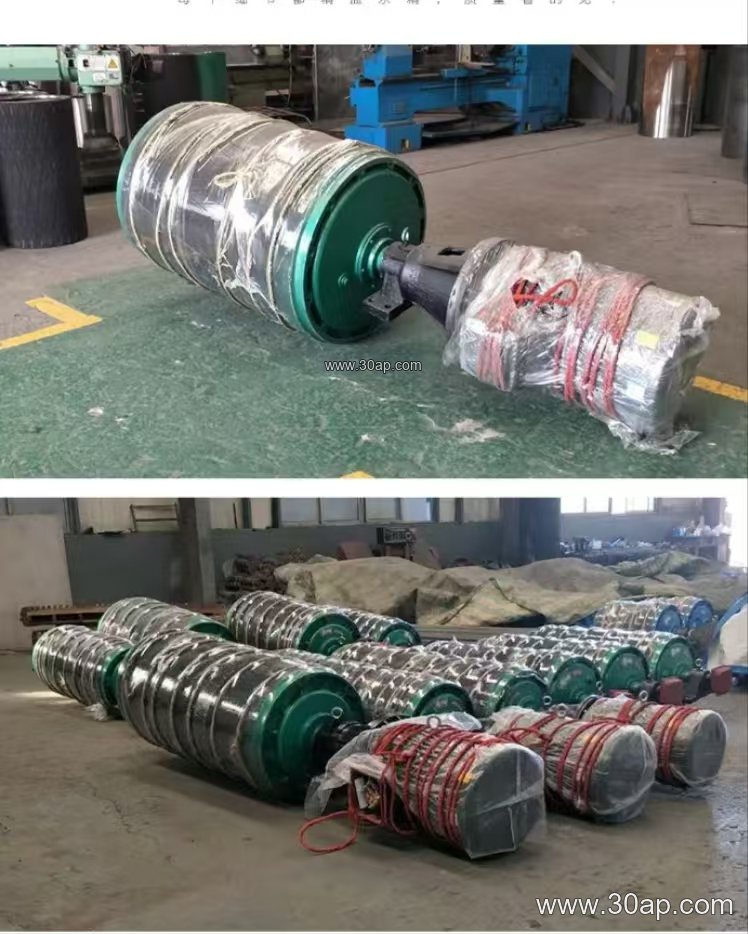
Shell width is normally slightly greater than belt width. Typical references include B500 with a shell around 600 mm, B800 at roughly 950 mm, B1200 at about 1400 mm, and B1600 near 1800 mm. Diameter is chosen from torque, belt tension, and wrap angle rather than belt width alone, so a B1200 system might use Ø800 in one layout and Ø1000 in another. Shaft diameter is likewise determined by load calculation; common values such as Ø80, Ø100, or Ø120 should be treated as reference points, not fixed pairings with a given belt width.
Where It Fits in the Plant
Bulk handling operations rely on this component across many duty points. In a limestone quarry or aggregate line, an integral pulley at the head end discharges crushed rock onto a stockpile belt, while a tail unit keeps tension on the return side. Coal mining conveyors and underground mining systems use them where flame retardant conveyor belt and anti-static conveyor belt are specified for safety. Cement plants run them on clinker and raw meal circuits, power plants on coal feeding lines, and port terminals on ship loading conveyors handling ore and bulk material.
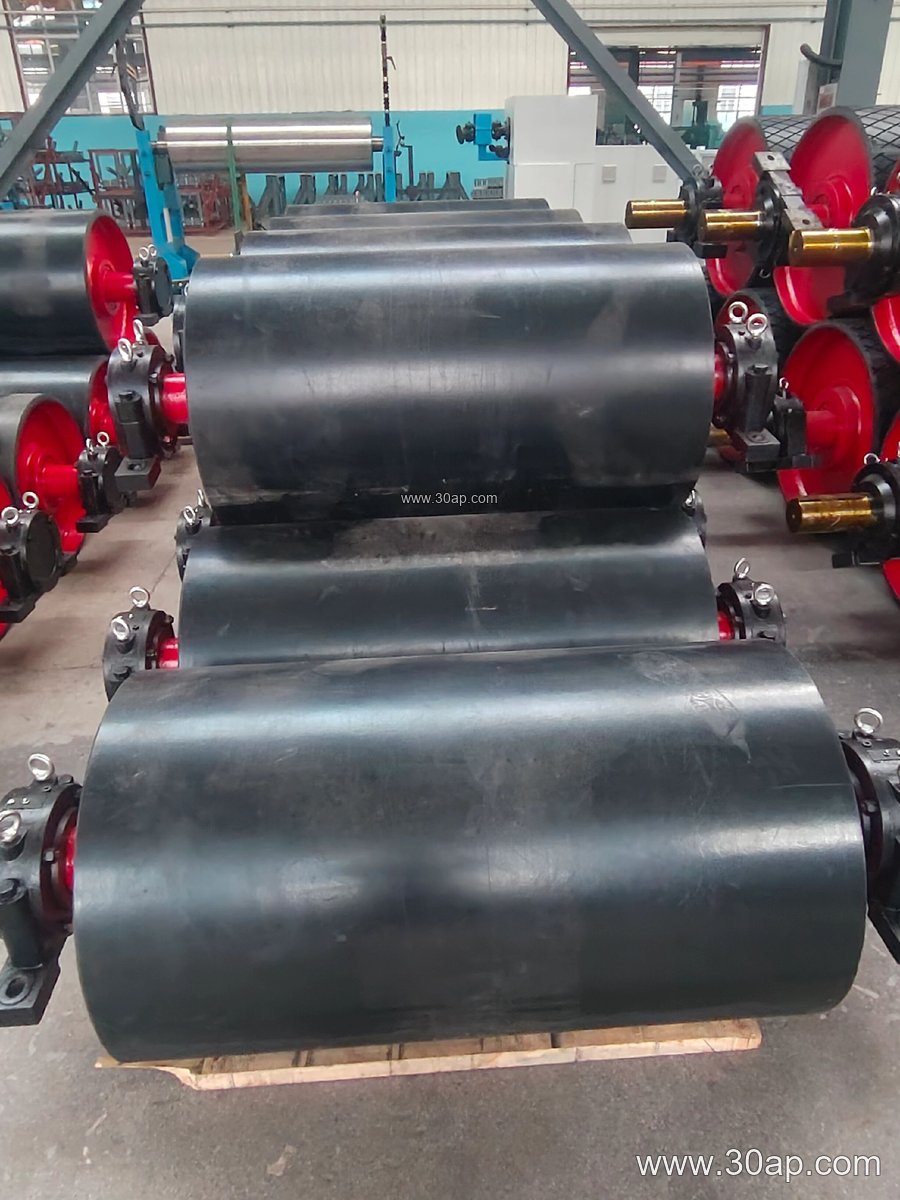
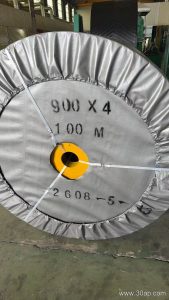
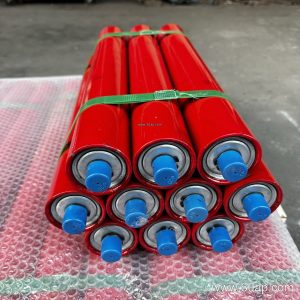
The pulley works alongside other hardware: idler rollers support the belt along the run, conveyor brackets anchor the frame, and the conveyor belt itself must match the pulley diameter and lagging profile. A heavy-duty mining conveyor belt with a thick cover may need a larger diameter to avoid excessive bending stress, while a pipe conveyor belt or corrugated sidewall conveyor belt calls for careful checks on clearance and edge contact.
Selection Points Buyers Should Check
- Duty position: drive, tail, bend, take-up, or snub. Each imposes different tension and wrap conditions.
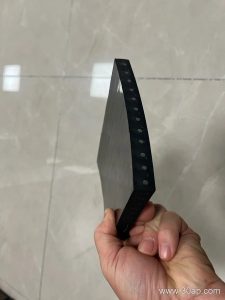
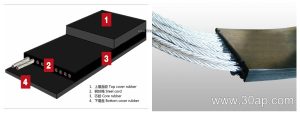
- Belt specification: an EP conveyor belt, NN conveyor belt, or steel cord conveyor belt behaves differently under bending, so share the belt data with the pulley supplier.
- Lagging: rubber or ceramic lagging improves grip on drive pulleys; plain shells suit some bend positions.
- Environment: heat resistant conveyor belt in a sinter plant or oil resistant conveyor belt in recycling may require specific lagging compounds.
- Balance and runout: critical at higher belt speeds to limit vibration and bearing wear.
Maintenance and Long-Term Care
Inspect lagging for wear, glazing, or chunking, particularly on drive pulleys where slip accelerates damage. Check bearing temperature and lubrication intervals, confirm that the shaft remains true, and verify that the belt tracks centrally so edge loading does not wear the shell unevenly. Keeping idler rollers and conveyor brackets in good condition reduces shock loads reaching the pulley.
For matching belts and components, buyers can review options at www.bulkconveyorparts.com including rubber conveyor belt grades and abrasion resistant conveyor belt constructions, and confirm pulley dimensions at www.bulkconveyorparts.com/conveyor-pulley before finalizing an order.