What a Conveyor Belt Guide Idler Does
A conveyor belt guide idler is a training roller assembly installed along the carrying or return run to keep the belt centered on its path. Rather than carrying the full material load, its job is corrective: when the belt begins to drift sideways, the angled or pivoted rollers of the guide idler nudge it back toward the centerline. In a quarry, a coal handling plant, or a cement kiln feed line, a belt that wanders can quickly damage edges, spill material, and wear the structure, so this small component protects the whole conveyor.
The same product is often called a belt training idler or self-aligning idler. These names describe the same function, and buyers will see them used interchangeably in catalogs and maintenance manuals.
How the Assembly Is Built
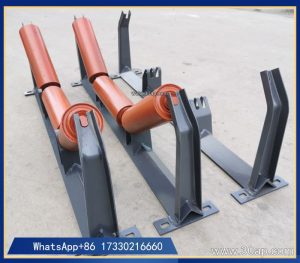
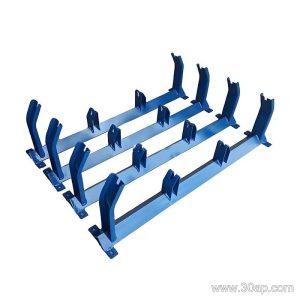
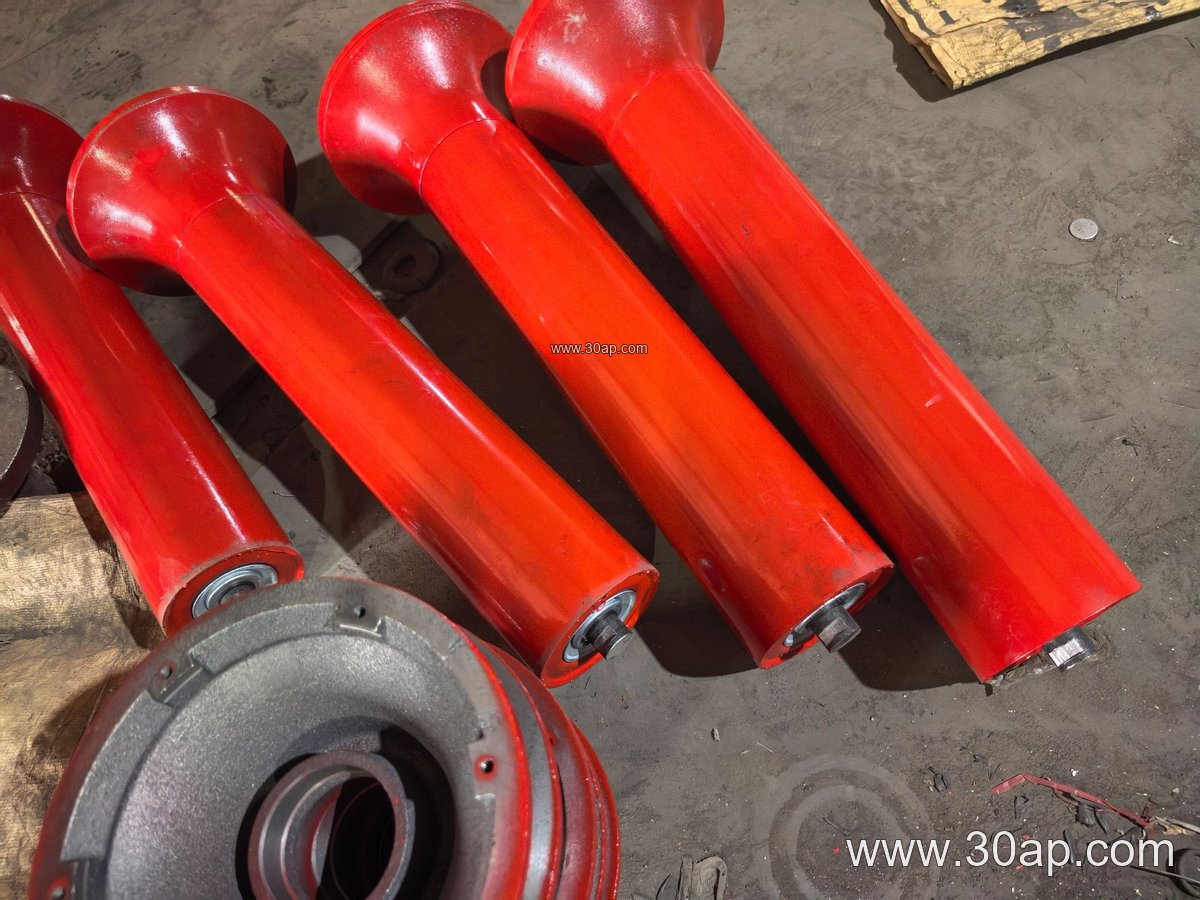
Most guide idlers use a sturdy frame that pivots on a central vertical shaft. The roller group is mounted so that friction from a misaligned belt turns the frame slightly, and the resulting angle pushes the belt back. Common designs include friction training idlers, which rely on contact with the belt edge, and conical training idlers, where tapered rollers create a natural centering effect.
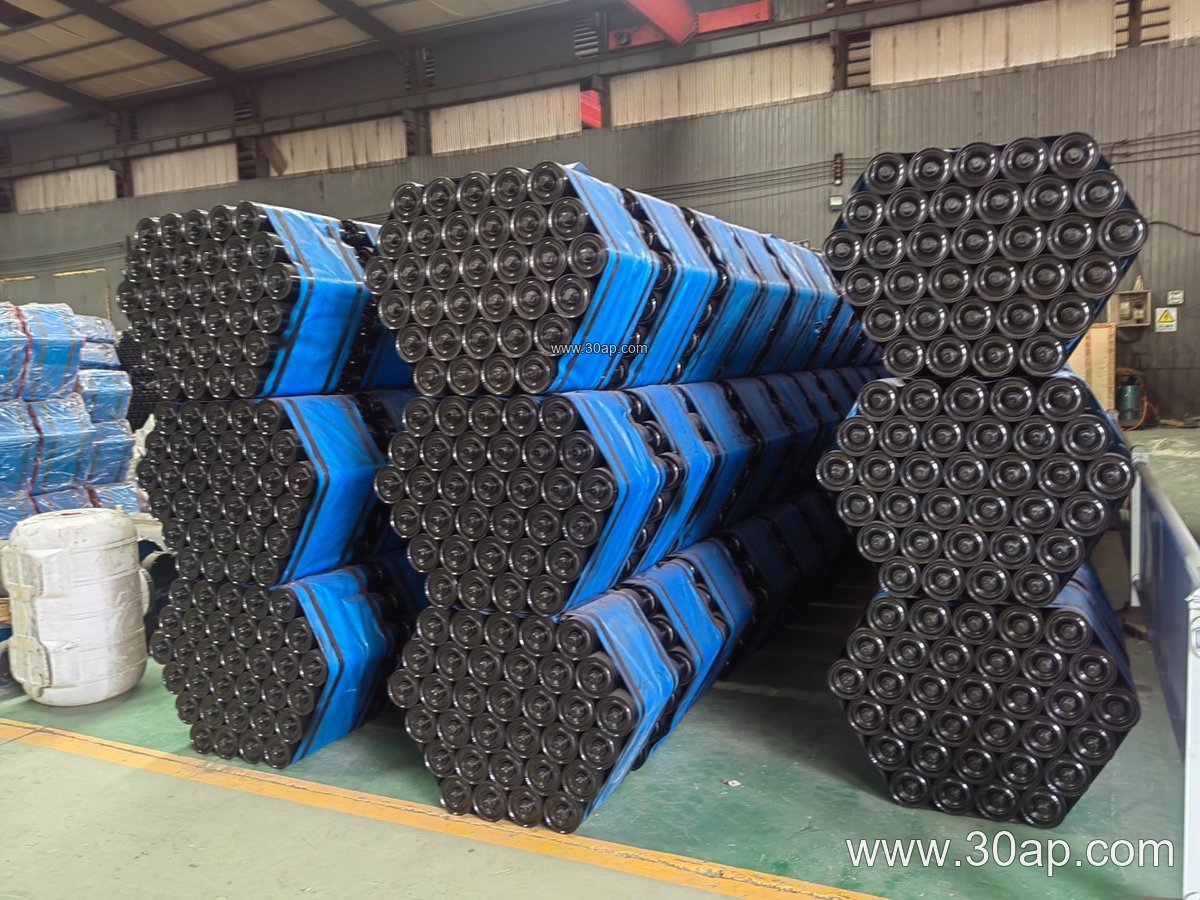
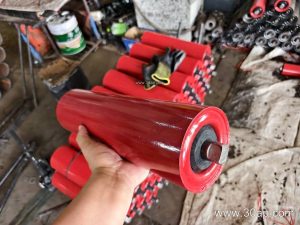
Rollers are typically steel tube, with nylon, rubber, or ceramic surfaces available for different wear conditions. Bearing selection matters as much as the shell: sizes such as 6204, 6205, 6305, 6306, 6308, and 6310 appear across the range, and the correct bearing depends on load, speed, and sealing rather than on roller diameter alone. Good labyrinth seals keep dust out in a stone crushing line or an iron ore terminal.
Where Guide Idlers Fit on the Conveyor
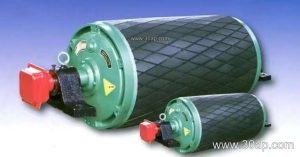
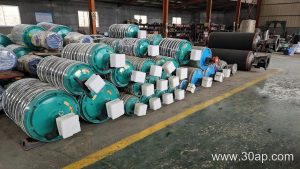
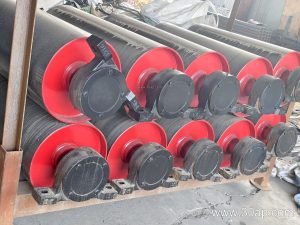
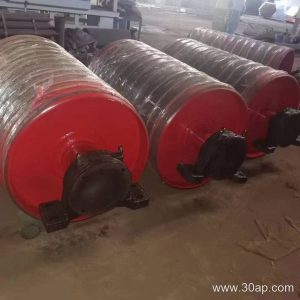
Training idlers are usually placed on the carrying side, spaced at intervals that follow the conveyor design, and on the return strand where belt tracking is critical. They are not a substitute for a bend pulley or a tail pulley; those components change belt direction, while a guide idler only corrects lateral position. On a long overland conveyor carrying aggregate or on a ship loading conveyor at a port, a few well-placed training stations can prevent edge damage along the entire run.
In dusty or wet conditions, such as a wash plant or an underground coal mining conveyor, sealed bearings and robust frames reduce maintenance calls. A heavy-duty mining conveyor belt carrying sharp rock benefits from guide idlers with reinforced rollers, while a food grade conveyor belt line needs smooth, cleanable surfaces.
Common Sizes and Configuration Reference
The table below shows typical reference values, not fixed matches. Roller length varies with belt width, trough angle, and roller group form, and side rollers may differ from the center roller.
| Parameter | Common Reference Values |
|---|---|
| Roller diameter | Ø63, Ø76, Ø89, Ø102, Ø108, Ø127, Ø133, Ø159, Ø178, Ø194, Ø219 mm |
| Belt width | B400, B500, B650, B800, B1000, B1200, B1400, B1600, B1800, B2000, B2200, B2400 |
| Trough angle | 20°, 30°, 35°, 45° |
| Roller group | Single roller, two-roller, three-roller troughing |
| Roller surface | Steel tube, nylon, ceramic, rubber ring |
| Typical roller length for three-roller troughing | About 200 mm at B500, 250 mm at B650, 315 mm at B800, 380 mm at B1000, 465 mm at B1200, 530 mm at B1400, 600 mm at B1600, 670 mm at B1800, 750 mm at B2000 |
Forward tilt of about 1.5° to 2° is sometimes used on training idlers to improve self-centering. These figures are design references; actual selection should follow the conveyor manufacturer’s layout and the site conditions.
Buyer Checklist
- Confirm the belt width and existing roller diameter so the guide idler fits the conveyor bracket without modification.
- Match the roller surface to the duty: rubber rings for impact zones, ceramic for abrasive ore, steel for general bulk material.
- Check seal and bearing quality for dusty sites such as a limestone mine or a power plant coal yard.
- Ask how the training frame pivots and whether it suits both carrying and return positions.
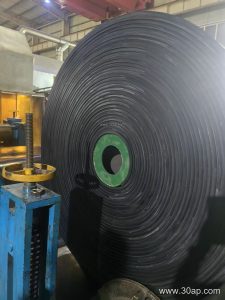
- Consider the belt type in service, from an EP conveyor belt to a steel cord conveyor belt, because stiffness affects tracking behavior.
Related equipment such as the idler roller, conveyor pulley, and conveyor bracket should be reviewed together during a belt upgrade, since tracking problems often come from several small misalignments rather than one failed part. For more on compatible components, visit www.beltconveyorparts.com and review conveyor belt, idler roller, and conveyor pulley options before ordering.