What a Self-Aligning Idler Bracket Does
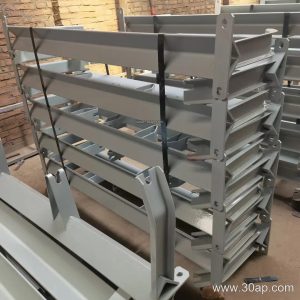
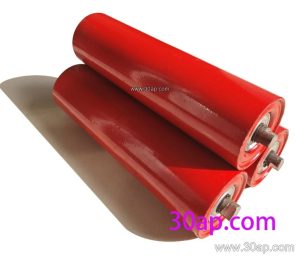
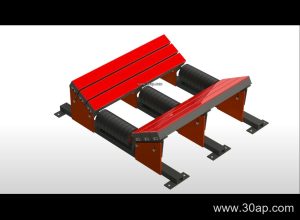
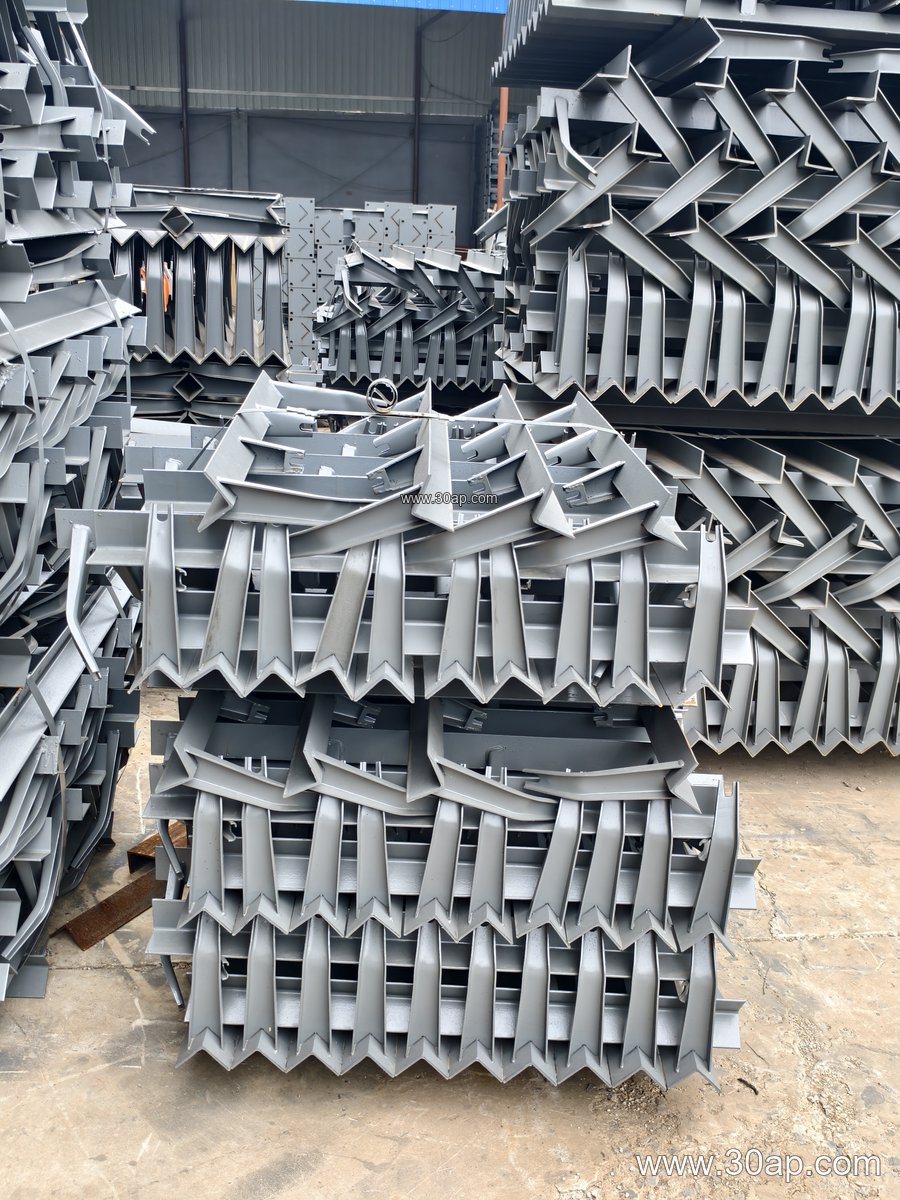
A Self-Aligning Idler Bracket is the mounting frame that holds a set of training idlers and lets them pivot slightly so the belt corrects its own drift. On a long overland or in-plant conveyor, the belt rarely stays perfectly centered; uneven loading, misaligned structure, or a slight build-up of material on a roller will push it to one side. The self-aligning bracket responds to that sideways force, swinging the idler set so the roller axes steer the belt back toward the center line. It is a small component, but it protects the conveyor belt, the idler roller, and the conveyor pulley from edge damage and tracking problems.
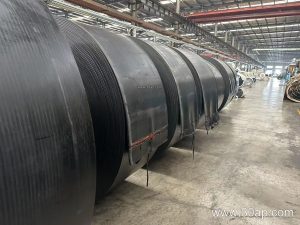
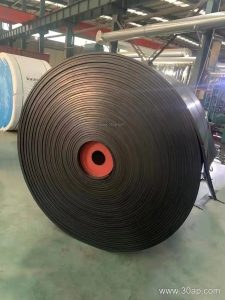
The bracket is usually used in pairs or groups along the carrying side and the return side. In a quarry or a sand and gravel line, a single set placed after the loading point often prevents a slow, chronic misalignment from becoming an edge tear. For heavier duty service, such as a high abrasion resistant conveyor belt carrying crushed rock, the same bracket design is built with thicker sections to survive shock loading.
How the Bracket Is Built
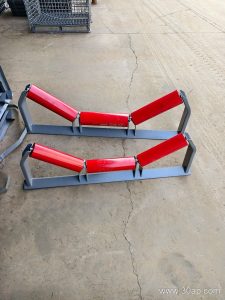
Most self-aligning idler brackets are fabricated from angle steel, channel steel, or folded steel plate. The frame carries a central pivot, often a vertical pin or a bearing seat, that allows the whole idler set to rotate a few degrees in either direction. Two side rollers or a pair of guide rollers sense the belt edge and convert a lateral push into a steering movement. The pivot must be free but not loose; dust and fines in a cement plant or a coal handling system will find any gap, so sealed or shielded pivots are common.
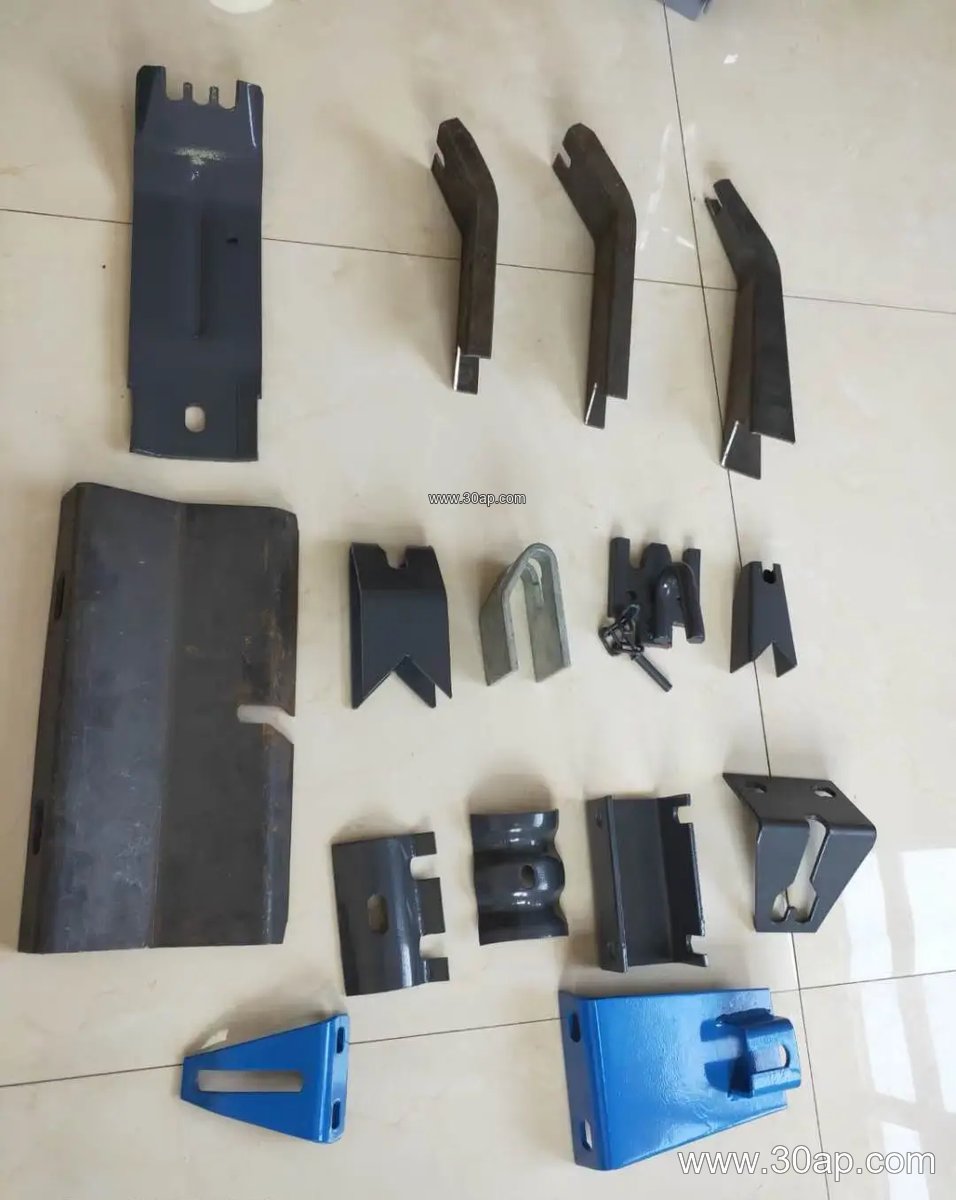
The bracket is matched to the trough angle of the idler set it carries. Common trough angles are 20, 30, 35, and 45 degrees, and an adjustable version can be set between these positions. A slight forward tilt of about 1.5 to 2 degrees is also used on leading idlers to encourage centering. The bracket frame length and mounting hole spacing follow the belt width and trough angle, so they are determined by design rather than fixed for every conveyor.
Matching the Bracket to Belt Width and Roller Diameter
Buyers should treat belt width, trough angle, and roller diameter as a set that is chosen together, not as a single fixed rule. The table below shows typical reference combinations; the actual selection depends on the conveyor design, belt tension, and material handled.
| Belt Width | Typical Trough Angle | Common Roller Diameter | Typical Use |
|---|---|---|---|
| B500 | 20 to 30 degrees | Ø89 | Light aggregate, sand, small stone |
| B650 | 30 degrees | Ø89 to Ø108 | Sand and gravel, mixing plant |
| B800 | 35 degrees | Ø108 | Quarry and cement plant transfer |
| B1000 | 35 to 45 degrees | Ø108 to Ø133 | Coal handling, power plant fuel line |
| B1200 | 45 degrees | Ø133 | Iron ore, heavy bulk material |
| B1400 | 35 to 45 degrees | Ø133 to Ø159 | Port loading, large tonnage lines |
| B1600 | 35 to 45 degrees | Ø159 | Mining and steel plant conveyors |
| B1800 | 35 to 45 degrees | Ø159 to Ø194 | High capacity ore and coal lines |
| B2000 and above | 35 to 45 degrees | Ø194 | Extra-wide bulk handling |
These are reference values, not universal specifications. A wide belt does not automatically demand one trough angle, and a given belt width can be paired with more than one roller diameter depending on load and speed. Installation hole spacing and crossbeam length change with belt width and trough angle, so they should be confirmed against the conveyor drawing.
Where It Fits on the Conveyor
Self-aligning brackets are most valuable at points where the belt is most likely to wander. A typical arrangement includes a set after the loading chute, a set before the head pulley, and sets on the return strand. In a coal mining conveyor belt system, a self-aligning bracket on the return side helps keep the belt away from the structure and reduces edge wear. In a cement plant, the same component protects the belt on inclined sections where material shifts to one side. The bracket is matched with the conveyor bracket family around it, but its pivoting action is what separates it from a fixed troughing frame.
For comparison, a fixed troughing bracket holds the idlers rigidly and relies on precise installation for tracking; the self-aligning type adds a corrective motion. Neither replaces the other, and a well-designed conveyor may use both: fixed frames for most of the run and self-aligning units at the critical spots.
Buyer Checklist
- Confirm the belt width and trough angle, then check that the bracket’s mounting hole spacing matches the conveyor stringers.
- Match the roller diameter to the idler set already in use, so the belt line stays level.
- Ask how the pivot is protected against dust and fines; this is the part that decides service life.
- Check that the frame material and thickness suit the duty, especially with a heavy-duty mining conveyor belt or an abrasion resistant conveyor belt.
- Verify the free movement of the pivot before installation, and keep the guide rollers clean during operation.
A self-aligning idler bracket is a modest part of the conveyor, but it protects expensive components such as the conveyor belt and the conveyor pulley from the slow damage caused by a belt that will not stay centered. Choosing it by belt width, trough angle, and roller diameter, and maintaining its pivot, keeps the whole line running straighter.