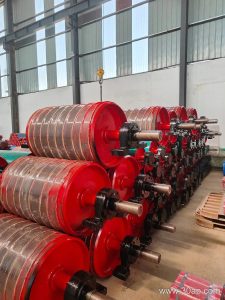
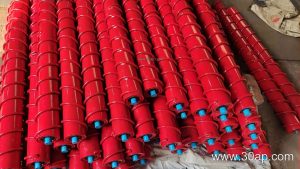
What a Tail Pulley Assembly Does
A tail pulley assembly is the return-end pulley group that guides and supports the conveyor belt as it begins its carrying run. In a quarry conveyor or an aggregate conveyor line, this assembly sits at the opposite end from the drive. It keeps the belt tracking, maintains tension in combination with the take-up system, and protects the belt from misalignment at the loading zone. While a drive pulley transmits power, the tail pulley assembly is a passive but critical component that influences belt life, spillage control, and overall conveyor reliability.
Unlike a bend pulley, which changes belt direction in the middle of a circuit, or an idler roller that supports the belt along its length, the tail pulley assembly has a specific location and function. It is not interchangeable with a drive pulley or a bend pulley, and its design must match the belt width, load conditions, and environment of the conveyor.
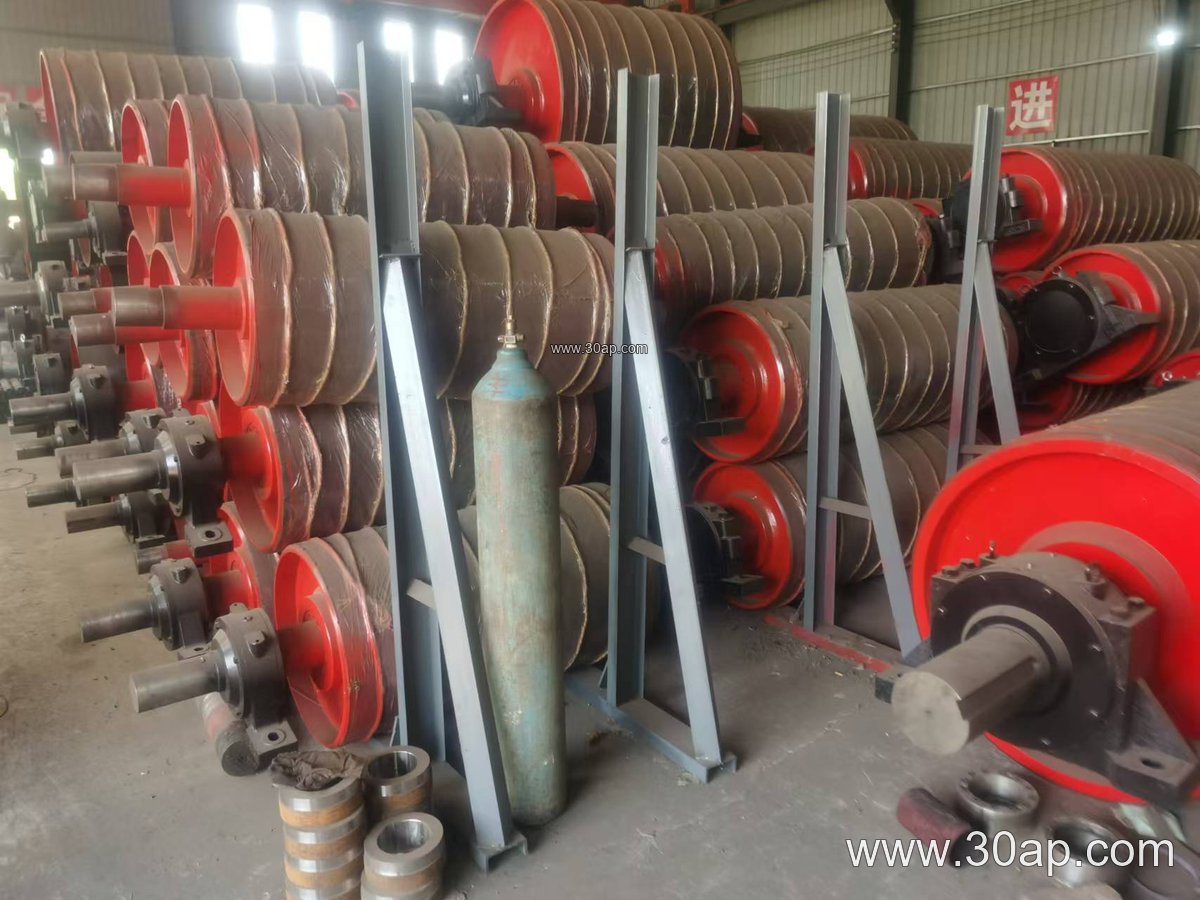
Construction and Key Components
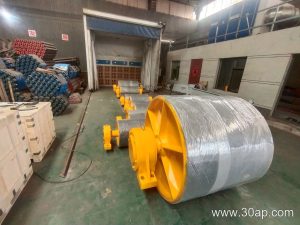
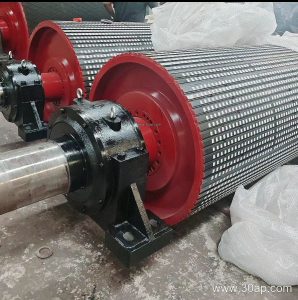
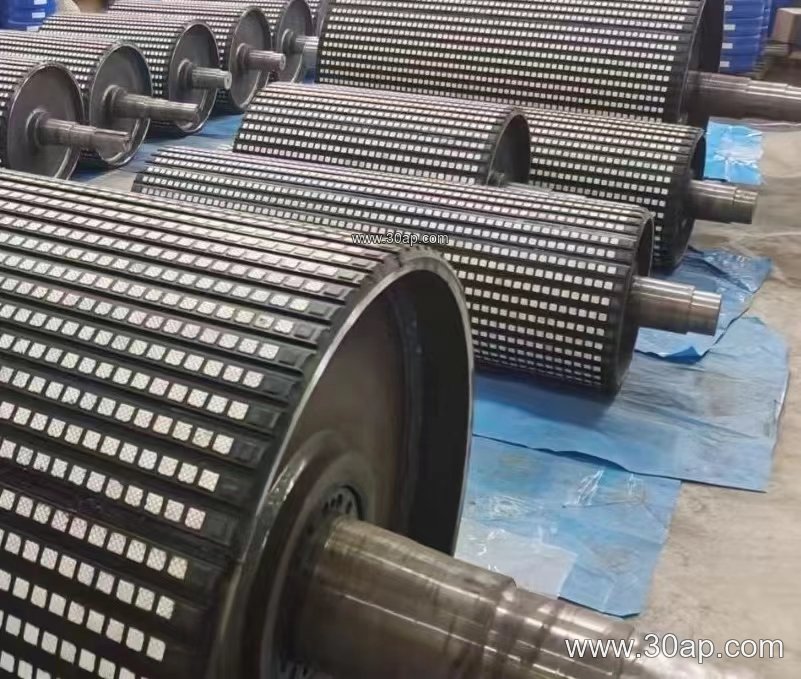
A typical tail pulley assembly includes the pulley shell, shaft, bearings, bearing housings, and a support frame or conveyor bracket that anchors it to the conveyor structure. The shell is usually welded steel, machined for balance and concentricity. Surface options range from plain steel to rubber lagging—cold-bonded, hot-vulcanized, or diamond-pattern—to improve grip and reduce material buildup. Lagging thickness commonly falls between 8 mm and 20 mm, depending on the duty.
The shaft diameter is determined by torque and radial load, not simply by belt width. Common shaft sizes include Ø50, Ø80, Ø100, Ø120, and larger, but the final choice depends on the conveyor design. Pulley diameters for tail applications often range from Ø200 to Ø1000 or more, and the face width is usually wider than the belt—for example, a B800 belt may use a pulley face around 950 mm, while a B1200 belt may call for about 1400 mm. These are typical references, not fixed pairings.
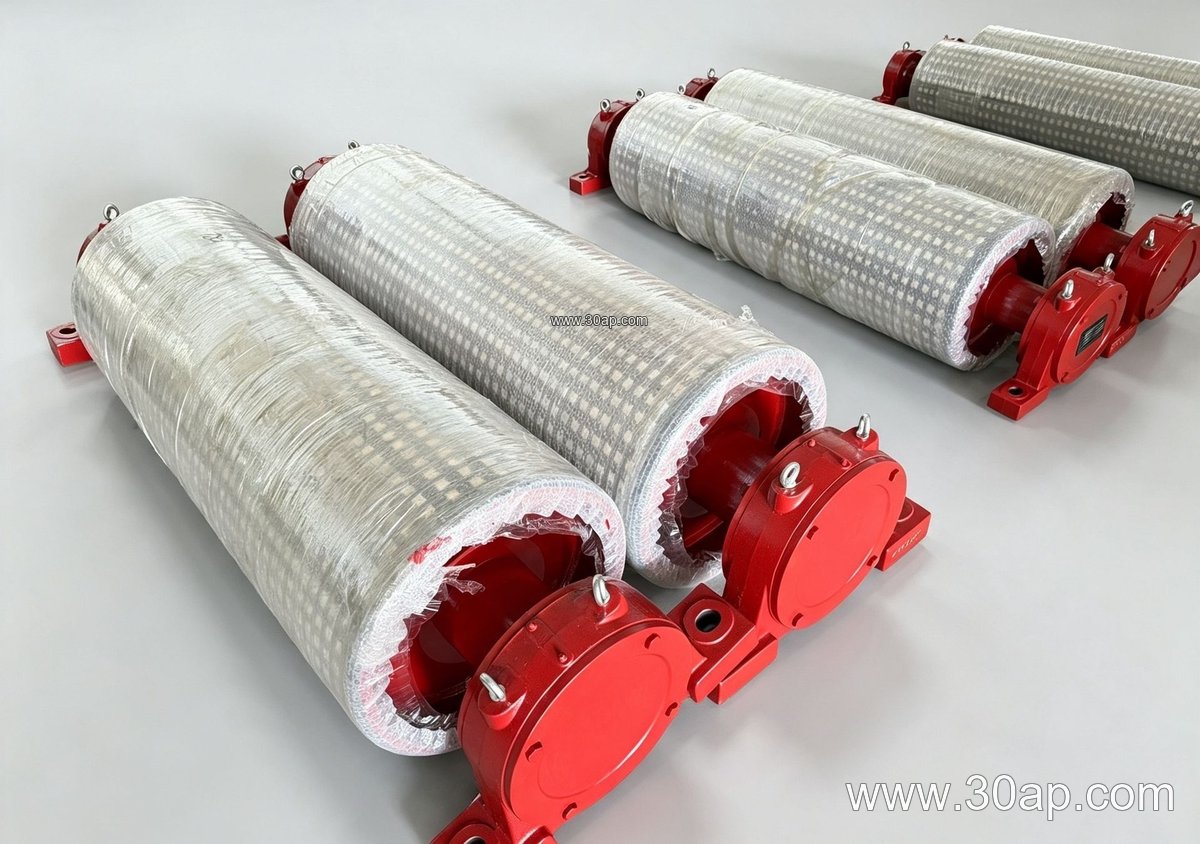
Where It Fits in the Conveyor Layout
Tail pulley assemblies are found in crushing and screening plants, sand and gravel operations, cement plants, and power plant coal handling. In a quarry conveyor, the tail end often sits below a hopper or crusher discharge, where impact and dust are present. The assembly must be robust enough to handle fines and occasional lumps without seizing. In aggregate conveyor systems, proper sealing and bearing protection extend service life.
The assembly works together with the conveyor belt, idler rollers, and conveyor brackets to maintain a stable belt path. When the belt is a heavy-duty mining conveyor belt or an abrasion resistant conveyor belt, the tail pulley lagging should be selected to match the belt surface and the material being carried. For example, a chevron conveyor belt or a corrugated sidewall conveyor belt may require a plain or lightly lagged tail pulley to avoid interference with cleats or sidewalls.
Selection and Maintenance Notes
Buyers should consider belt width, belt type, load profile, and environmental conditions. A steel cord conveyor belt or a high-strength fabric core belt may impose higher tension, influencing shaft and bearing selection. In dusty or wet conditions, sealed bearings and corrosion-resistant finishes are advisable. Regular inspection of lagging wear, bearing play, and frame alignment helps prevent belt tracking issues and premature belt damage.
When replacing a tail pulley assembly, confirm the shaft diameter, bearing centers, and pulley face width against the existing conveyor bracket. Avoid assuming that a given belt width automatically dictates a specific pulley diameter or shaft size. The assembly should be balanced and aligned to reduce vibration and extend the life of the conveyor belt and idler rollers.
Typical Reference Parameters
| Parameter | Common Range / Example |
|---|---|
| Pulley diameter | Ø200, Ø315, Ø400, Ø500, Ø630, Ø800, Ø1000 |
| Belt width (B) | B500, B650, B800, B1000, B1200, B1400 |
| Pulley face width (approx.) | B500 → 600 mm; B800 → 950 mm; B1200 → 1400 mm |
| Shaft diameter | Ø50, Ø80, Ø100, Ø120, Ø160 (by design) |
| Lagging thickness | 8, 10, 12, 15, 20 mm |
| Surface options | Plain, rubber lagging, diamond lagging |
These values are for reference only; actual selection should follow the conveyor designer’s calculations and the specific operating conditions.