What a Comb Idler Does on a Conveyor
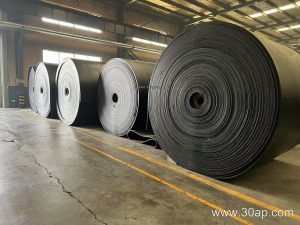
A comb idler is a return-side idler roller built with a series of spaced discs or rings along its shaft, resembling the teeth of a comb. Unlike a smooth return roller, this design creates a self-cleaning effect: as the belt runs over the discs, sticky material that would otherwise build up on a flat roller surface falls away between the gaps. In aggregate yards, limestone mines, and cement plants, this simple difference can extend belt life and reduce manual cleanup. The comb idler is not a drive pulley, tail pulley, or bend pulley—it performs a distinct function on the carrying and return run, and it should be specified as its own component. At www.xinrui-conveyor.com, comb idlers are often paired with a rubber conveyor belt or an EP conveyor belt to keep the return strand tracking clean.
Construction and Common Configurations
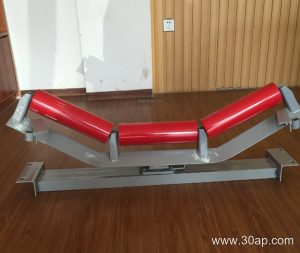
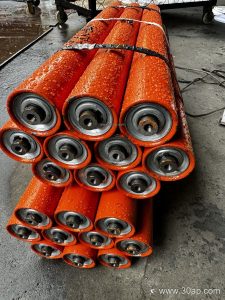
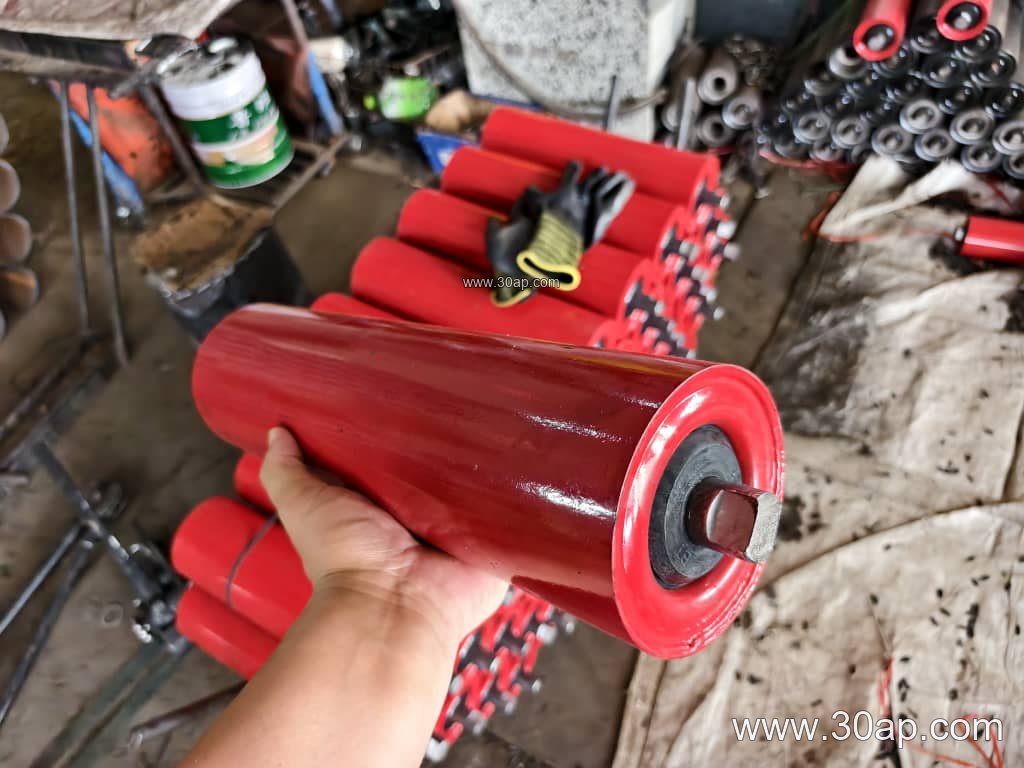
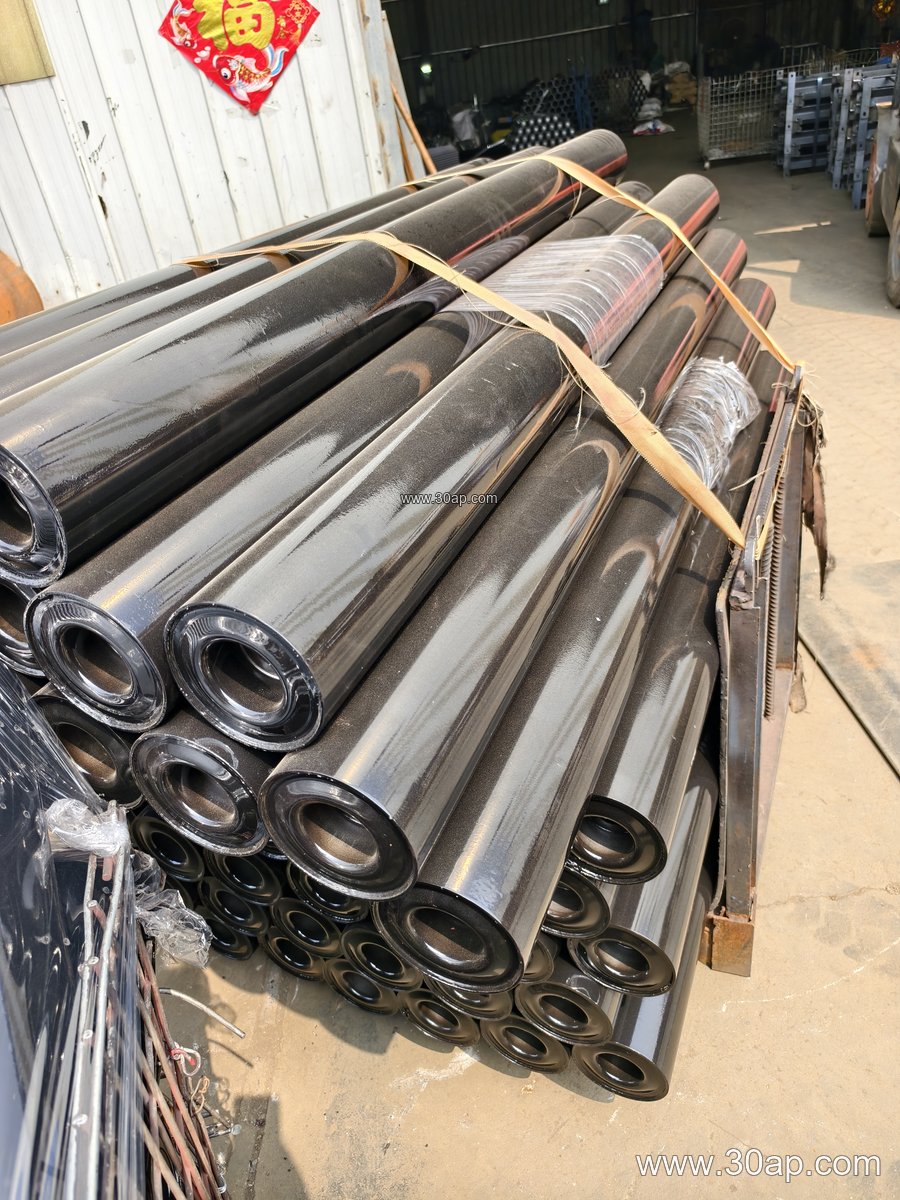
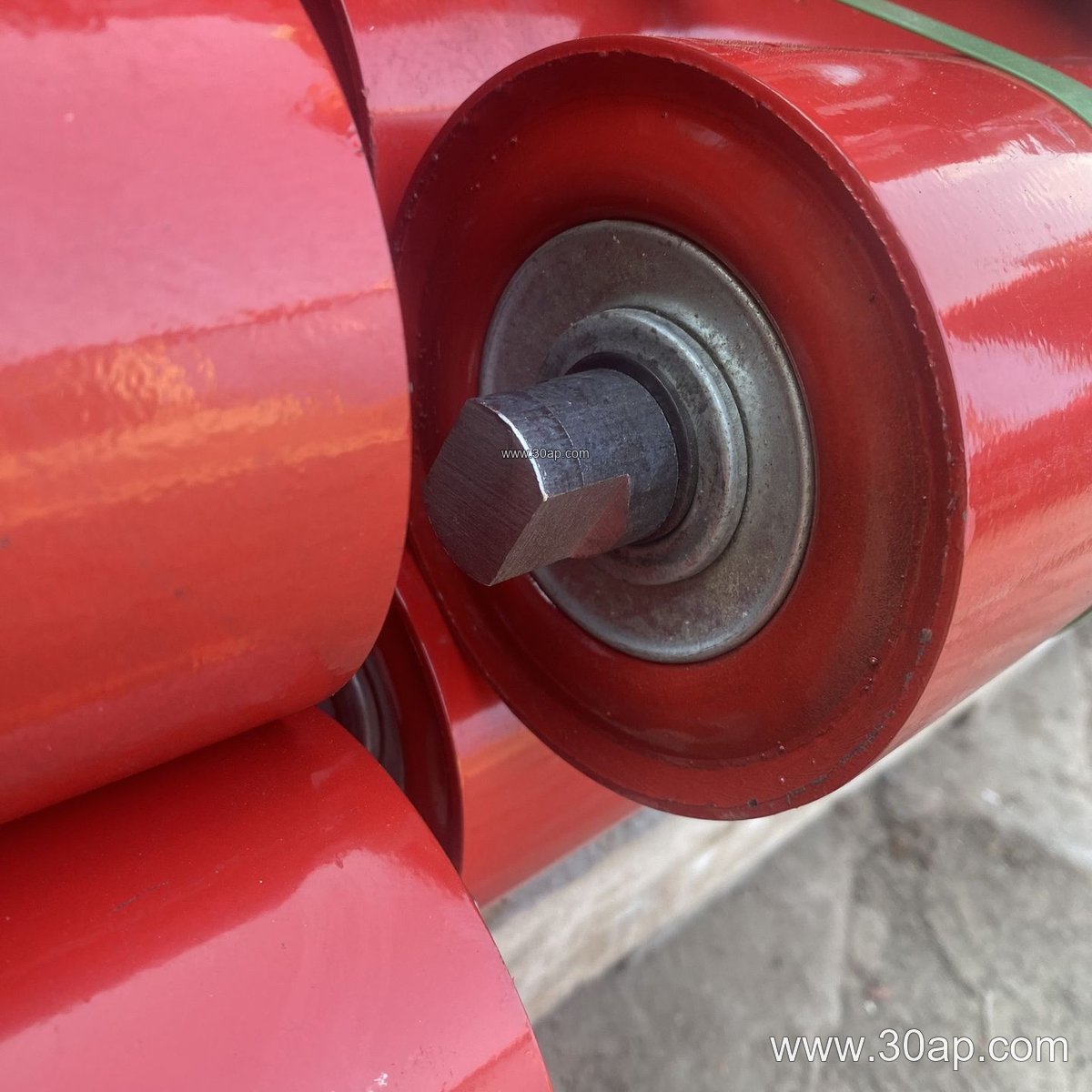
Most comb idlers use a steel tube shaft with a series of rubber or polyurethane discs pressed onto the body. The discs are spaced to allow fines and moisture to pass through rather than pack. Bearing housings are sealed to keep dust out, and common bearing sizes include 6204, 6205, 6305, and 6308, selected according to load and speed rather than tied to one roller diameter. Roller diameters for comb idlers typically follow the same range as other return rollers—Ø89, Ø102, Ø108, Ø127, and Ø133 mm are frequently seen—but the final choice depends on belt width and the conveyor bracket arrangement. The roller length is not fixed by belt width alone; for a three-roll return set, lengths are determined by the trough angle and frame design. For reference, common roller lengths in three-roll troughing sets are approximately 200 mm for B500, 250 mm for B650, 315 mm for B800, 380 mm for B1000, and 465 mm for B1200—values that help in early planning but should always be confirmed against the actual conveyor drawing.
Where Comb Idlers Fit in Bulk Handling
Comb idlers are especially useful on the return run of belts carrying wet or sticky bulk materials. In a sand and gravel line, a quarry conveyor belt often carries damp aggregate that clings to smooth rollers; the comb design sheds this material and keeps the belt from mis-tracking. In a coal preparation plant or a power plant coal yard, a flame retardant conveyor belt may run alongside comb idlers to reduce buildup under the return strand. The same principle applies in fertilizer plants and concrete batching stations, where fine powders and moisture create buildup. For heavier duties, such as an iron ore conveyor or a copper ore conveyor, a heavy-duty mining conveyor belt may require a more robust comb idler with thicker discs and reinforced bearings. It is worth noting that a comb idler is not a substitute for a training idler or a impact idler; each has a separate role, and a well-designed conveyor uses them together where needed.
Selection and Sizing Notes
Buyers should match the comb idler to the belt width, the return strand load, and the environment. The following table summarizes common reference values; these are examples, not mandatory combinations.
| Parameter | Common reference range |
|---|---|
| Roller diameter | Ø89, Ø102, Ø108, Ø127, Ø133 mm |
| Belt width | B500 to B1400 (e.g., 650mm conveyor belt, 800mm conveyor belt, 1000mm conveyor belt) |
| Bearing size | 6204, 6205, 6305, 6308 |
| Disc material | Rubber, polyurethane, or nylon |
| Roller length (three-roll set) | Approx. 200 mm (B500) to 530 mm (B1400), by design |
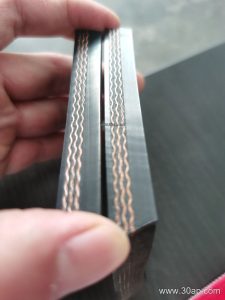
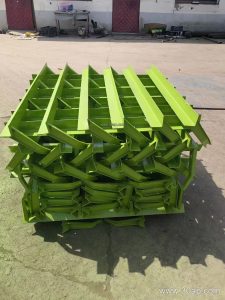
When specifying, state the belt width, the return idler spacing, and the material being conveyed. If the conveyor uses a steel cord conveyor belt or a multi-ply fabric core conveyor belt, the return strand may be heavier, so bearing selection and shaft diameter should be reviewed. Avoid assuming that one belt width locks in a single roller diameter; the frame and load determine the final size. Also confirm the conveyor bracket dimensions so the comb idler drops in without modification.
Maintenance and Buyer Checklist
Comb idlers require less cleaning than smooth rollers, but the discs can wear or crack in high-impact service. Inspect for missing discs, seized bearings, and material wedged between discs. Keep the return strand free of large debris that could bend the shaft. For abrasive duties, such as a high abrasion resistant conveyor belt carrying sharp rock, consider a comb idler with reinforced discs. In cold climates, a cold resistant conveyor belt may be used, and the comb idler should be checked for brittle disc material. Finally, verify that the comb idler is specified as a return idler, not confused with a bend pulley or tail pulley, and that the mounting matches the conveyor bracket. A clear drawing and a material list prevent costly swaps on site.