What a Loading Point Impact Idler Does
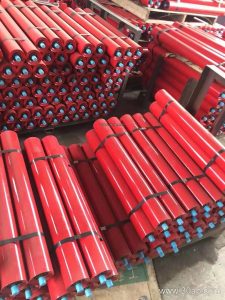
At the transfer point where bulk material first lands on a conveyor belt, the idler directly beneath the chute absorbs the most severe force in the entire system. A loading point impact idler is a specialized roller assembly designed to cushion that initial drop, protect the belt cover from gouging, and keep the belt tracking smoothly through the loading zone. Unlike standard carrying idlers that only support the belt and material weight, impact idlers use shock-absorbing elements and a reinforced frame to handle repeated high-energy impacts from ore, coal, clinker, or aggregate.
Operators in coal mining, quarrying, cement plants, and power plant coal handling often specify impact idlers wherever material free-falls more than a short distance. Without them, a heavy-duty mining conveyor belt can suffer rapid top-cover wear, fabric ply separation, or splice failure within weeks of startup.
Construction and Key Components
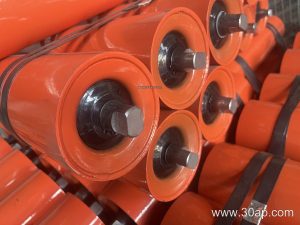
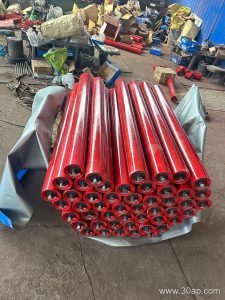
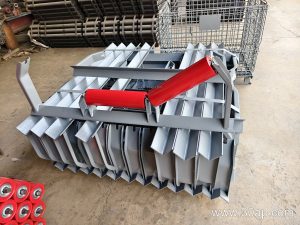
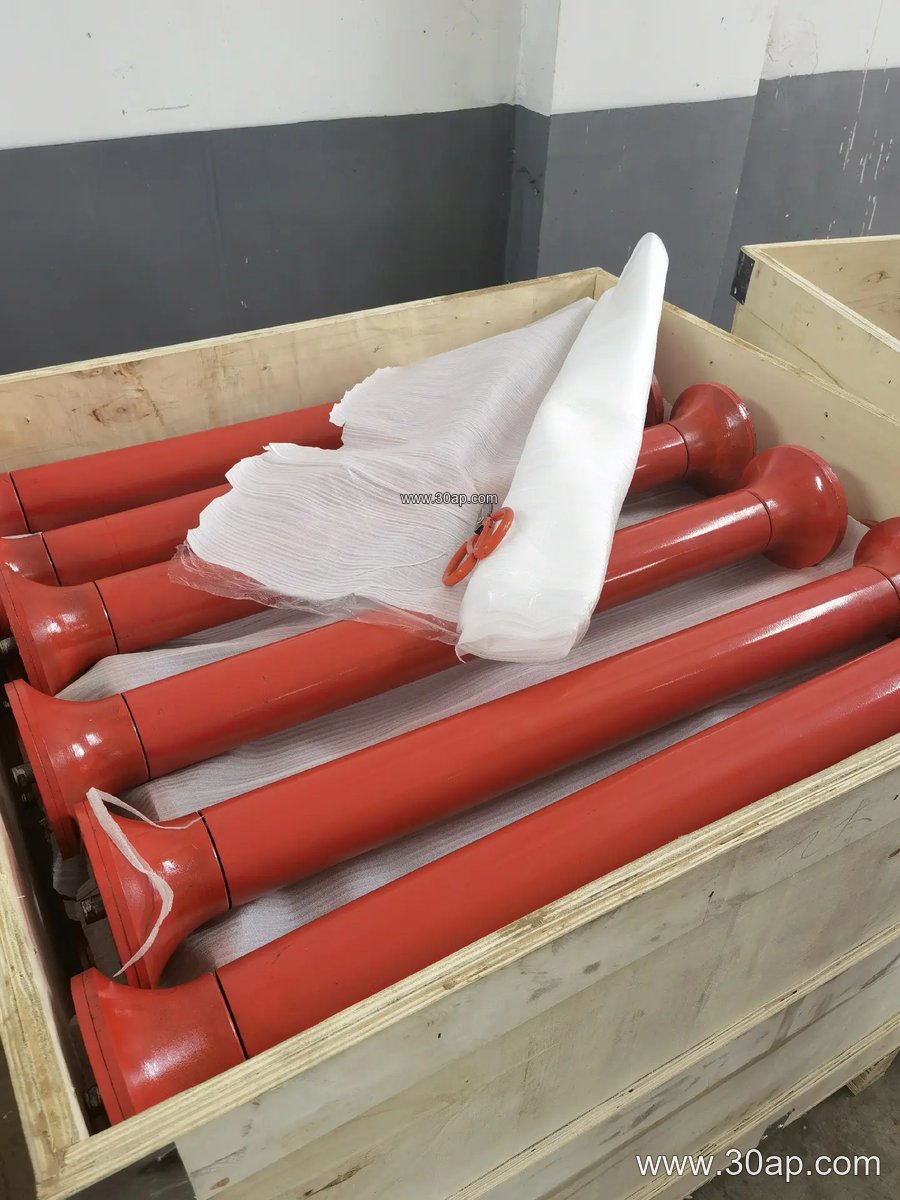
A typical impact idler assembly combines a strong steel frame with rubber-cushioned rollers or a series of rubber rings mounted on a steel tube. The base frame is often fixed to a conveyor bracket that allows height adjustment during installation. Several design details matter:
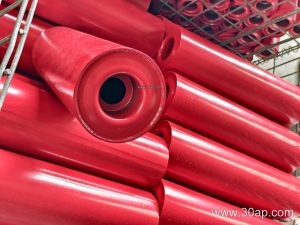
- Roller body: Steel tube with rubber discs, solid rubber rings, or a full rubber sleeve, depending on the impact severity.
- Bearing arrangement: Common bearing sizes for impact rollers include 6205, 6305, 6306, and 6308; the correct bearing is selected by load and shaft design, not by belt width alone.
- Frame type: Usually a three-roll troughing arrangement with 20°, 30°, 35°, or 45° trough angles; two-roll and single-roll versions may appear in narrow or special transfer points.
- Surface form: Rubber rings are the most common impact-absorbing surface, but some designs use a smooth rubber sleeve for sticky materials.
The rubber elements deform under impact and recover quickly, reducing peak force transmitted to the belt carcass and the idler bearings. A well-built impact idler also limits vibration that can loosen fasteners on the conveyor bracket.
Where Impact Idlers Fit on the Conveyor
Loading point impact idlers are installed in the first few idler stations after the feed chute. Their number depends on the drop height, material lump size, and belt speed. In a typical stone crushing line, two to five impact idler sets may be needed under the primary crusher discharge. In underground coal mining, flame retardant conveyor belt specifications often pair with impact idlers that resist both shock and fine coal dust accumulation.
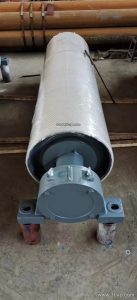
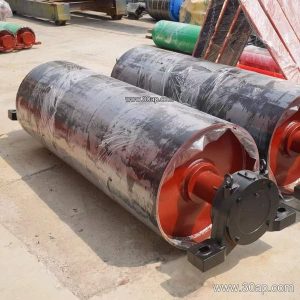
These idlers are not a substitute for drive, tail, or bend pulleys; those components handle belt tension and direction changes. Impact idlers belong to the carrying side, and in some plants they are compared with plain troughing idlers only to show the difference in shock absorption. A transition idler may sit just before or after the impact zone to ease the belt from flat to troughed profile, but it does not replace the cushioning function.
Sizing and Selection Notes
Belt width and idler diameter are related through the conveyor design, but they are not locked to one another. Common roller diameters for impact idlers include Ø89, Ø102, Ø108, Ø127, Ø133, Ø159, and Ø178 mm. Belt widths range from B500 to B2400, and the roller length changes with belt width, trough angle, and roll configuration. For a three-roll troughing set, typical center roll lengths may be around 200 mm for B500, 315 mm for B800, 465 mm for B1200, and 600 mm for B1600, but side rolls can differ and final dimensions are set by the conveyor designer.
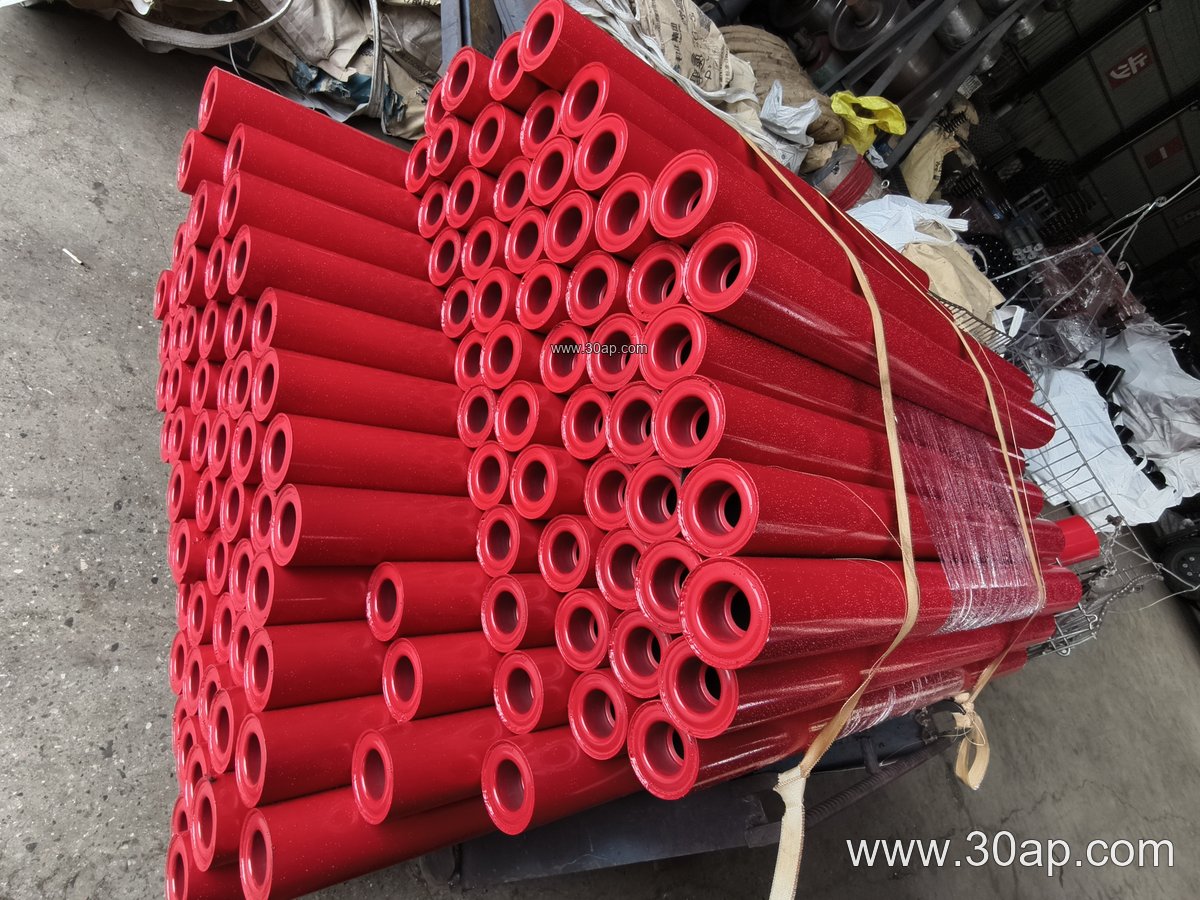
Buyers should provide the belt width, trough angle, material lump size, drop height, and belt speed. The conveyor belt type also matters: an abrasion resistant conveyor belt or impact resistant conveyor belt may tolerate more abuse, but the idler still needs adequate cushioning. In cement plants and aggregate lines, a heavy-duty conveyor belt paired with rubber-ring impact idlers usually gives a good balance of service life and cost.
For high-temperature duties such as clinker or sinter, heat resistant conveyor belt grades are used, and impact idlers should be specified with heat-tolerant rubber compounds. In coal mining, flame retardant conveyor belt and anti-static conveyor belt properties are often required, and the idler’s rubber parts should be compatible with the same safety environment. Food grade conveyor belt applications rarely use impact idlers of this heavy type, but light-duty rubber-disc versions exist for gentle product handling.
Maintenance and Buyer Checklist
Inspect impact idlers for rubber ring wear, flat spots, and bearing noise during scheduled shutdowns. Worn rings reduce cushioning and can allow the belt to sag into the frame. Check that the conveyor bracket bolts remain tight and that material buildup under the idler does not restrict rotation.
When ordering, confirm the roller diameter, shaft size, bearing number, trough angle, and mounting dimensions. Ask for the rubber hardness and ring profile if the application involves sharp rock or ore. A loading point impact idler is a small part of the conveyor cost but a major factor in belt life at the transfer point, so matching it to the actual impact energy is worth the engineering effort.