What the Conveyor Head Pulley Does
The conveyor head pulley sits at the discharge end of a belt conveyor and is usually the drive pulley as well. It grips the conveyor belt, pulls the loaded strand forward, and throws material off at the head. In a quarry, a limestone mine, or a cement plant clinker line, this single component sets the pace for the whole conveyor. Because it transmits torque and carries belt tension at the same time, its design deserves more attention than its simple appearance suggests.
People often call it the head drum, discharge pulley, or drive drum. These are accurate equivalents for the same product. A tail pulley, bend pulley, or take-up pulley is a different position with a different job, so do not treat the names as interchangeable.
How It Is Built
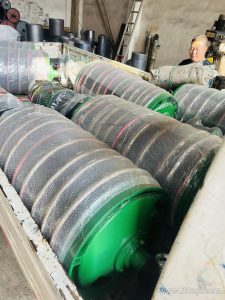
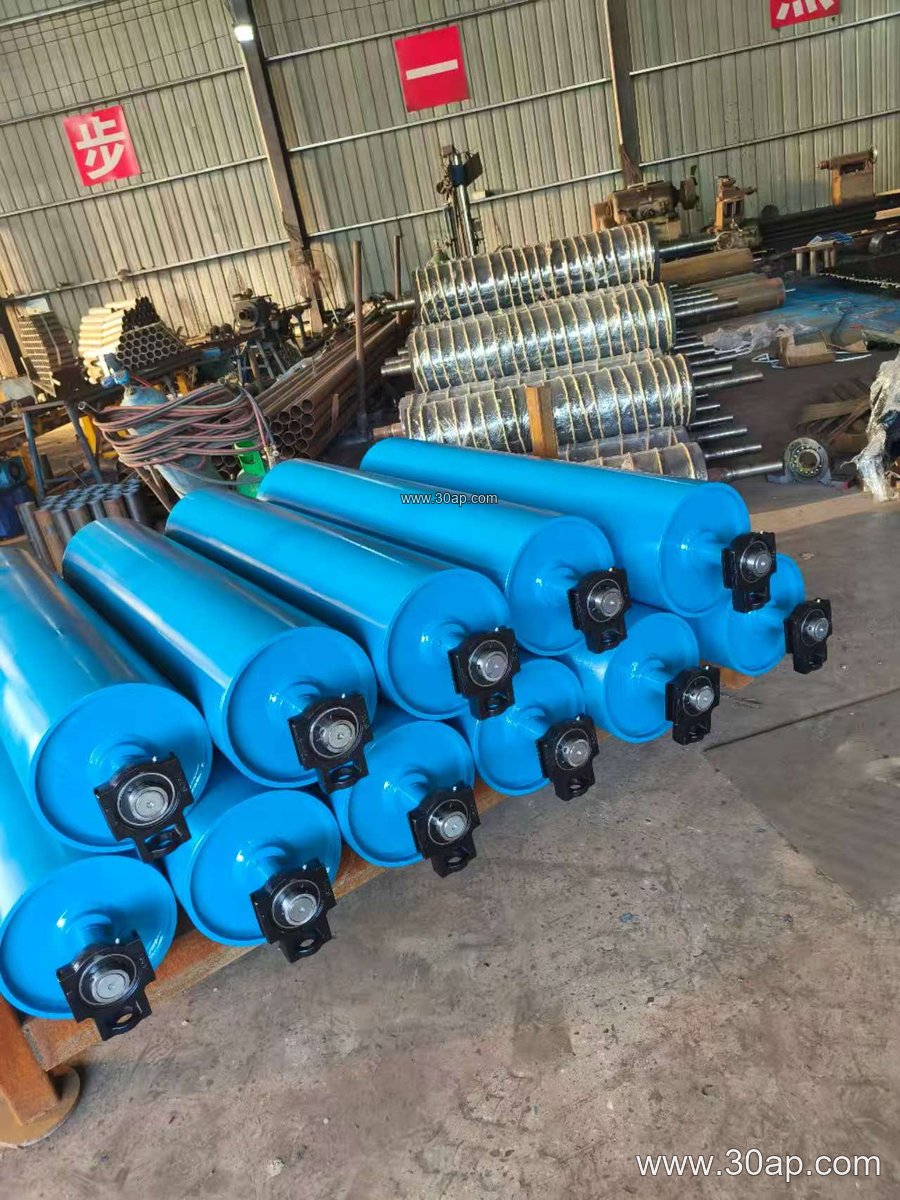
A typical head drum combines a cylindrical shell, two end discs, a shaft, hub connections, and bearing housings that bolt to the conveyor bracket. The shell is usually machined or rolled from steel plate, then welded and stress-relieved where the duty demands it. The shaft is sized by torque and radial load, not by belt width alone. Common shaft diameters include Ø80, Ø100, Ø120, Ø140, and Ø160, but the final value comes from the drive calculation.
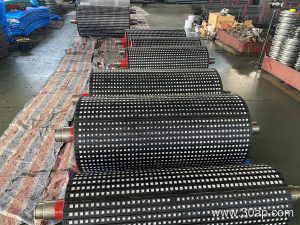
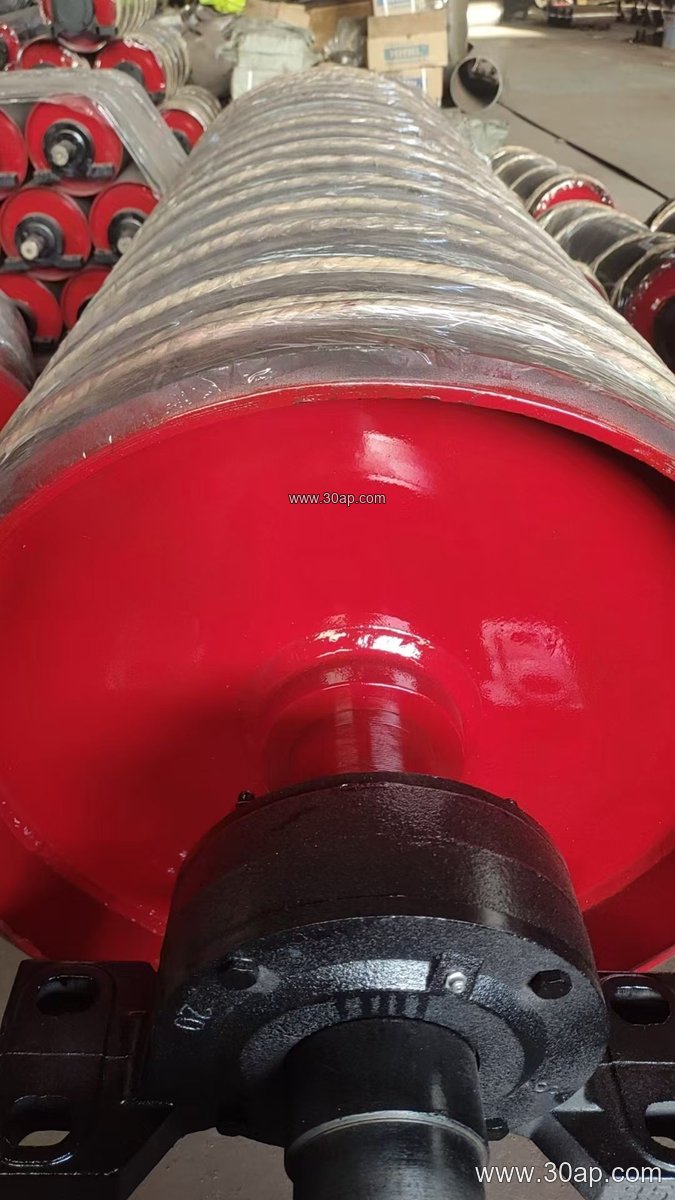
Surface treatment matters for grip. Plain finish suits light duty and low tension. Rubber lagging, applied by hot vulcanizing, cold bonding, or casting, raises friction and protects the shell. Diamond or herringbone grooving helps shed water and fines. Ceramic lagging is chosen where abrasive slip is a real risk. Lagging thickness of 8, 10, 12, 15, or 20 mm is common, selected according to load and environment.
Sizing the Drum to the Belt
The pulley face width is normally a little wider than the belt so the belt stays supported. Some reference pairings are shown below. They are examples, not fixed rules, and a given belt width can work with more than one drum diameter.
- B400 belt, about 500 mm face
- B650 belt, about 750 mm face
- B800 belt, about 950 mm face
- B1000 belt, about 1150 mm face
- B1200 belt, about 1400 mm face
- B1400 belt, about 1600 mm face
Diameter choices commonly range from Ø200 up to Ø1800 for heavy bulk systems. A mid-size arrangement such as B800 x Ø500 or B1200 x Ø1000 appears in many aggregate and ore lines, while B1400 x Ø800 suits certain medium-duty transfers. The right diameter depends on belt thickness, wrap angle, belt speed, and the allowable bending stress in the carcass.
Matching the Pulley to the Belt
Belt construction influences pulley selection. A heavy Steel Cord Conveyor Belt needs a larger diameter to keep bending stress low, while an EP Conveyor Belt or NN Conveyor Belt can often run on a smaller drum. In coal mining, a Flame Retardant Conveyor Belt or Fire Resistant Conveyor Belt is paired with anti-static lagging and grounded frames. In a power plant coal yard, an Abrasion Resistant Conveyor Belt running over a rubber-lagged head drum reduces slip and wear. Food and chemical lines may call for an Oil Resistant Conveyor Belt or a heat-rated carcass, and the drum surface should be chosen to match.
The head pulley also works with the conveyor belt tracking system. A slightly crowned face can help centering on long spans, while a flat face with proper lagging is preferred where the belt is stiff. Idler roller alignment upstream of the head affects how the belt enters the drum, so check both during installation.
Installation and Maintenance Notes
Mount the unit squarely on the conveyor bracket and confirm that the shaft is parallel to the tail drum. Misalignment causes edge wear and premature lagging failure. Check bearing temperature and lagging condition at regular intervals. Worn lagging reduces grip, which shows up as slip, belt polish, and heat. Re-lagging or replacing the pulley before the shell wears through avoids unplanned stops.
When ordering, provide belt width, belt type, required diameter, shaft size, lagging pattern and thickness, bearing type, and the position in the conveyor. A clear specification keeps the head drum, the belt, and the supporting structure working as one system, whether the line handles ore, clinker, coal, or sand.