What the EP630 Conveyor Belt Is
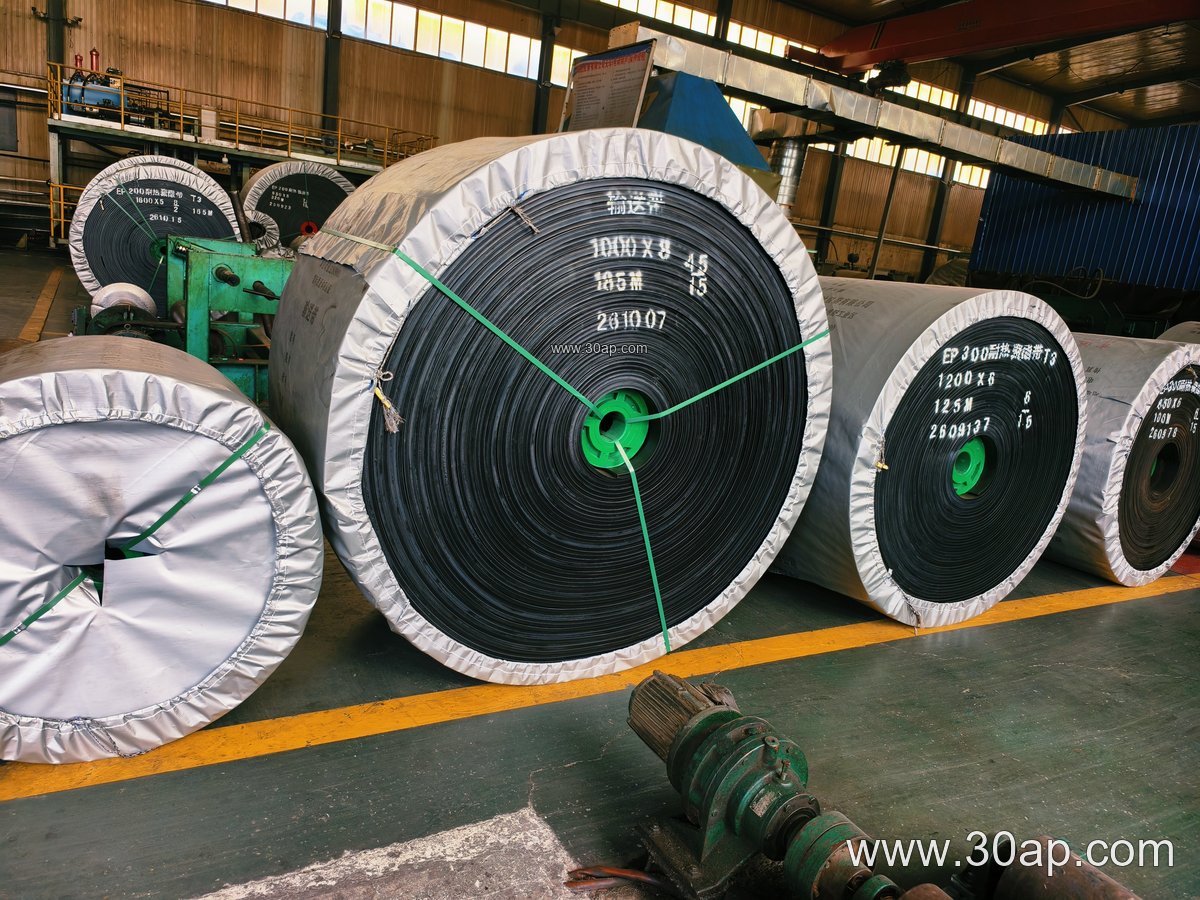
The EP630 Conveyor Belt is a fabric core belt built on polyester-nylon (EP) carcass plies. The number 630 refers to the nominal tensile strength of the carcass, commonly expressed in N/mm, which places this grade in the upper-middle range of EP construction. In practice it is a heavy-duty conveyor belt that balances strength, flexibility and reasonable spliceability, which is why it appears in many bulk material circuits where a steel cord belt would be heavier and more expensive than the duty requires.
The product is also described as an EP rubber conveyor belt or EP fabric core conveyor belt, and these names point to the same article. It should not be confused with an NN conveyor belt, which uses nylon-nylon plies and behaves differently under load, or with a steel cord conveyor belt, where the tension members are steel wires rather than woven fabric.
How the Belt Is Built
A typical EP630 construction combines several EP fabric plies with top and bottom rubber covers. The carcass provides tensile strength and resistance to fatigue, while the covers protect the plies from abrasion, impact and moisture. Cover thickness is usually specified as a top plus bottom figure, for example 5+2 mm or 6+2 mm, and the ply count commonly falls between two and six depending on the required strength and the pulley arrangement on the conveyor.
Buyers often choose cover compounds to match the environment rather than the strength grade alone. A high abrasion resistant conveyor belt suits sharp aggregate, a heat resistant conveyor belt is used where clinker or hot sinter is present, and a flame retardant conveyor belt or fire resistant conveyor belt is common in coal handling. Oil resistant, cold resistant and anti-static variants are also available for particular service conditions.
Common Sizes and Parameters
The figures below are typical reference values, not a fixed catalogue and not a supply promise. Actual dimensions and construction should be confirmed with the belt designer for each conveyor.
| Parameter | Typical reference values |
|---|---|
| Strength grade | EP200, EP400, EP500, EP630, EP800, EP1000, EP1250 |
| Belt width | B650, B800, B1000, B1200, B1400, B1600 |
| Cover thickness | 4+2 mm, 5+2 mm, 6+2 mm, 8+3 mm |
| Carcass plies | Usually 2 to 6 plies |
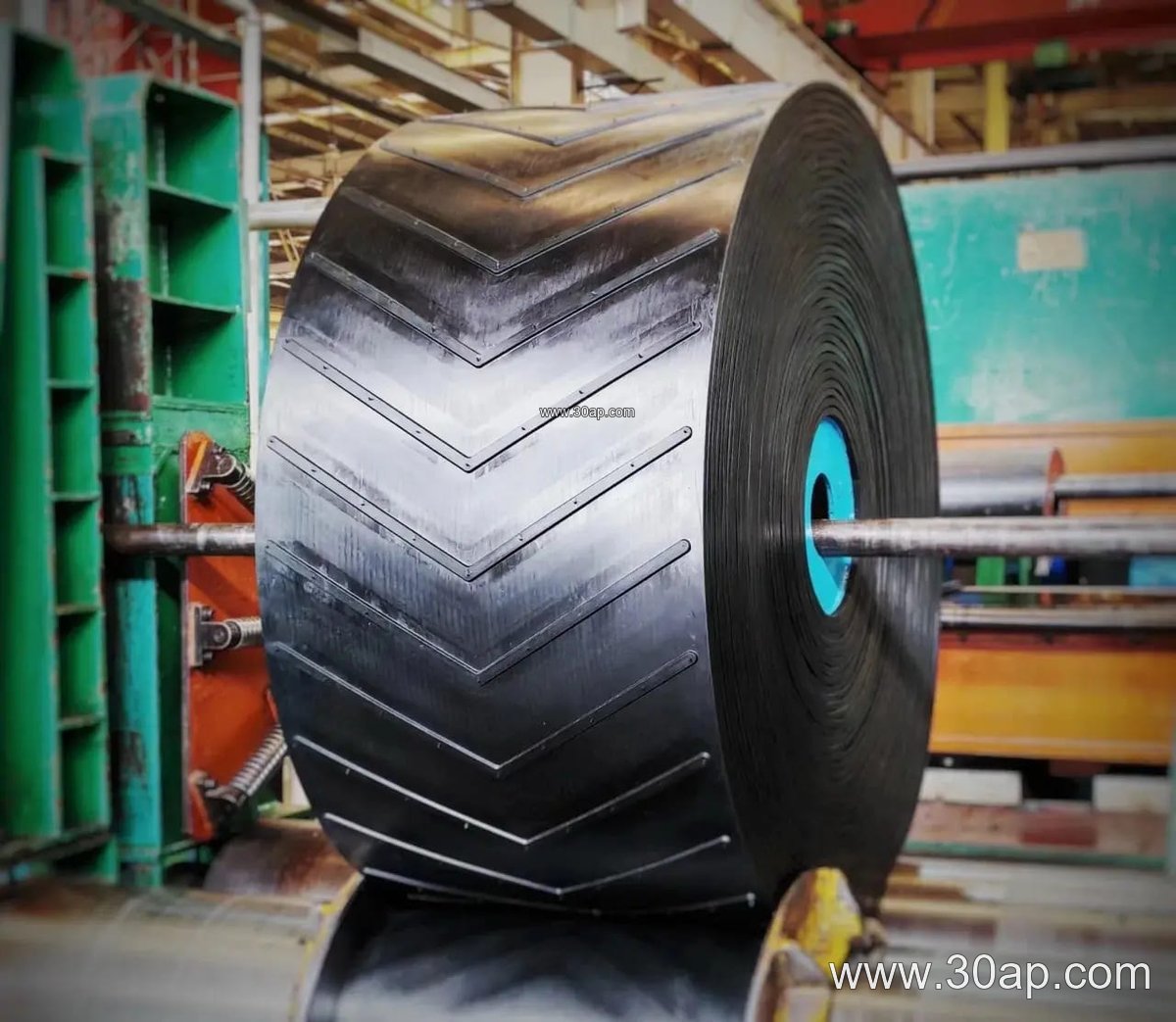
| Surface forms | Smooth, chevron, corrugated sidewall, skirted |
Width and strength are selected together with the conveyor layout. A wider belt does not automatically mean a larger pulley, and shaft diameters are determined by the pulley manufacturer from the actual load case, not from belt width alone.
Where It Fits in the Plant
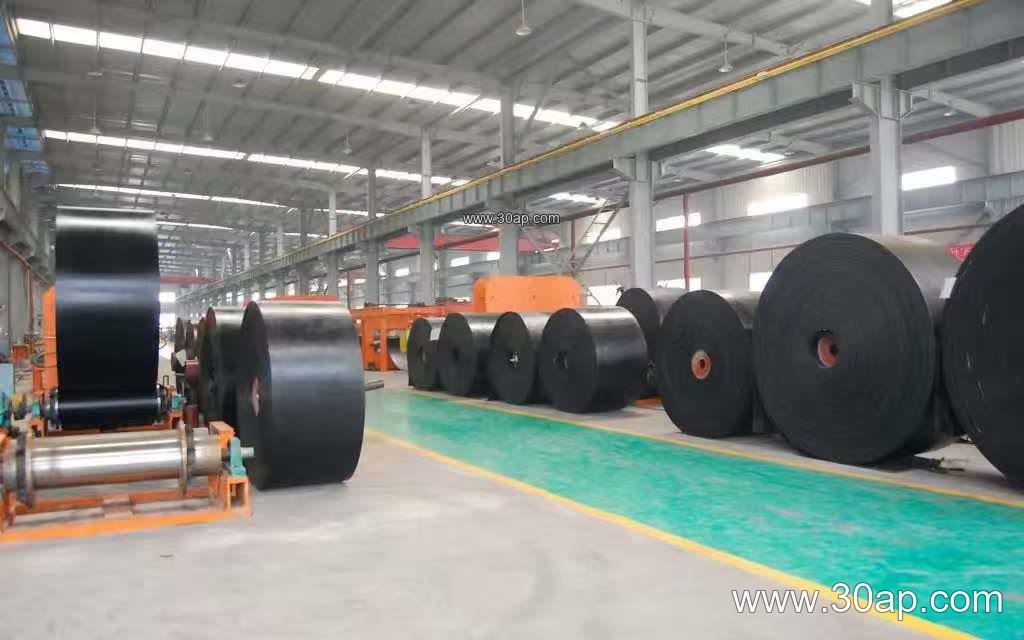
The EP630 grade is common in mines, coal preparation plants, cement works, power stations, quarries and sand and gravel yards. It handles crushed rock, ore, clinker, limestone, coal and similar bulk materials on long inclined or horizontal runs. In a coal mining conveyor belt system it may be supplied in flame retardant form, while a quarry conveyor belt or aggregate conveyor belt installation usually prioritises abrasion resistance.
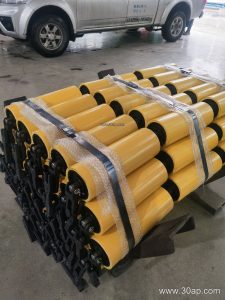
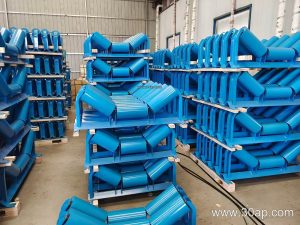
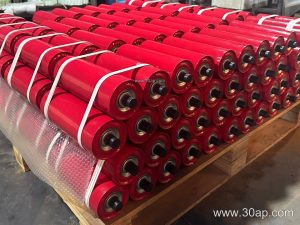
On the conveyor itself, the belt works with idler rollers, conveyor pulleys and conveyor brackets. Drive pulleys transmit motion, tail pulleys return the belt, and bend pulleys redirect it; these are separate components with separate duties and are not interchangeable. Matching belt tension to the pulley and idler layout is part of the selection work.
Selection and Maintenance Notes
- Confirm the required tensile grade from the calculated belt tension, not from habit or from a neighbouring line.
- Choose the cover compound for the actual material: abrasive, hot, oily, wet or flammable.
- Check minimum pulley diameters recommended for the selected ply count and carcass type.
- Plan the splice method and allow enough take-up travel for an endless conveyor belt or a field-vulcanised joint.
- Inspect idler rollers and pulleys regularly; a seized roller or worn pulley lagging can damage even a correctly rated belt.
For replacement planning, record the belt width, ply count, cover thickness and strength grade from the existing belt, then verify these against the conveyor design. Further details on EP630 and related belt constructions can be reviewed at yongliuqt.com, where belt, roller and pulley options are described together.