What a Trough Idler Does on a Conveyor
A trough idler is the carrying-side roller assembly that shapes a flat conveyor belt into a shallow trough. Three rolls mounted in a frame hold the belt edges higher than the center, so loose material settles into the middle instead of spilling over the edges. This carrying idler sits between the loading point and the discharge pulley, supporting both the belt and its cargo along the whole run. In a quarry, a coal washing plant or a cement kiln feed line, the trough idler is the component that decides whether the belt tracks straight and whether fines stay on top of the rubber.
The same assembly is often called a troughing idler or carrying troughing roller. Those names describe the same product; they are not different equipment. A trough idler is not a drive pulley, a tail pulley or a bend pulley, and it should never be ordered as a substitute for one of them.
How the Assembly Is Built
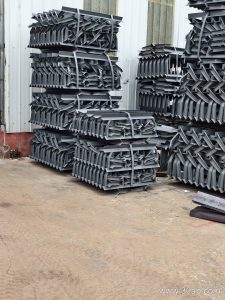
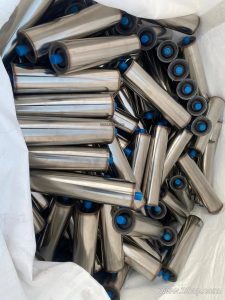
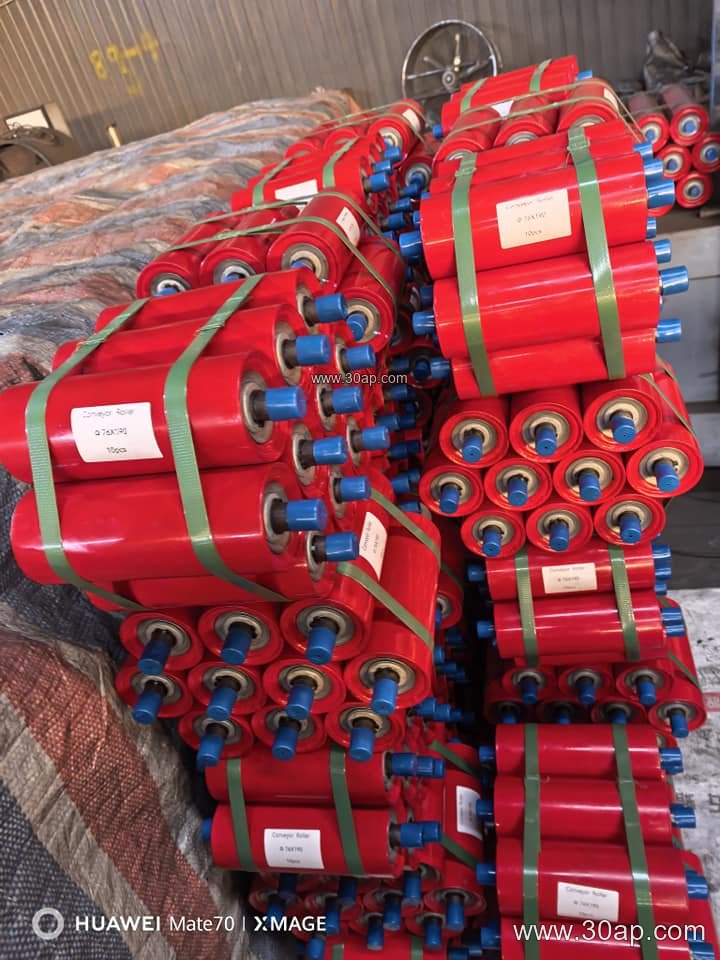
A typical station has a steel frame, two side rolls set at the trough angle and one center roll. Each roll is a steel tube fitted with a shaft, sealed bearings and a bearing housing. Common roll diameters include Ø89, Ø108, Ø127, Ø133 and Ø159 mm, while larger bulk lines may use Ø178, Ø194 or Ø219 mm. Bearing sizes such as 6204, 6205, 6305, 6306, 6308 and 6310 appear across this range, but no single bearing is tied to one roll diameter.
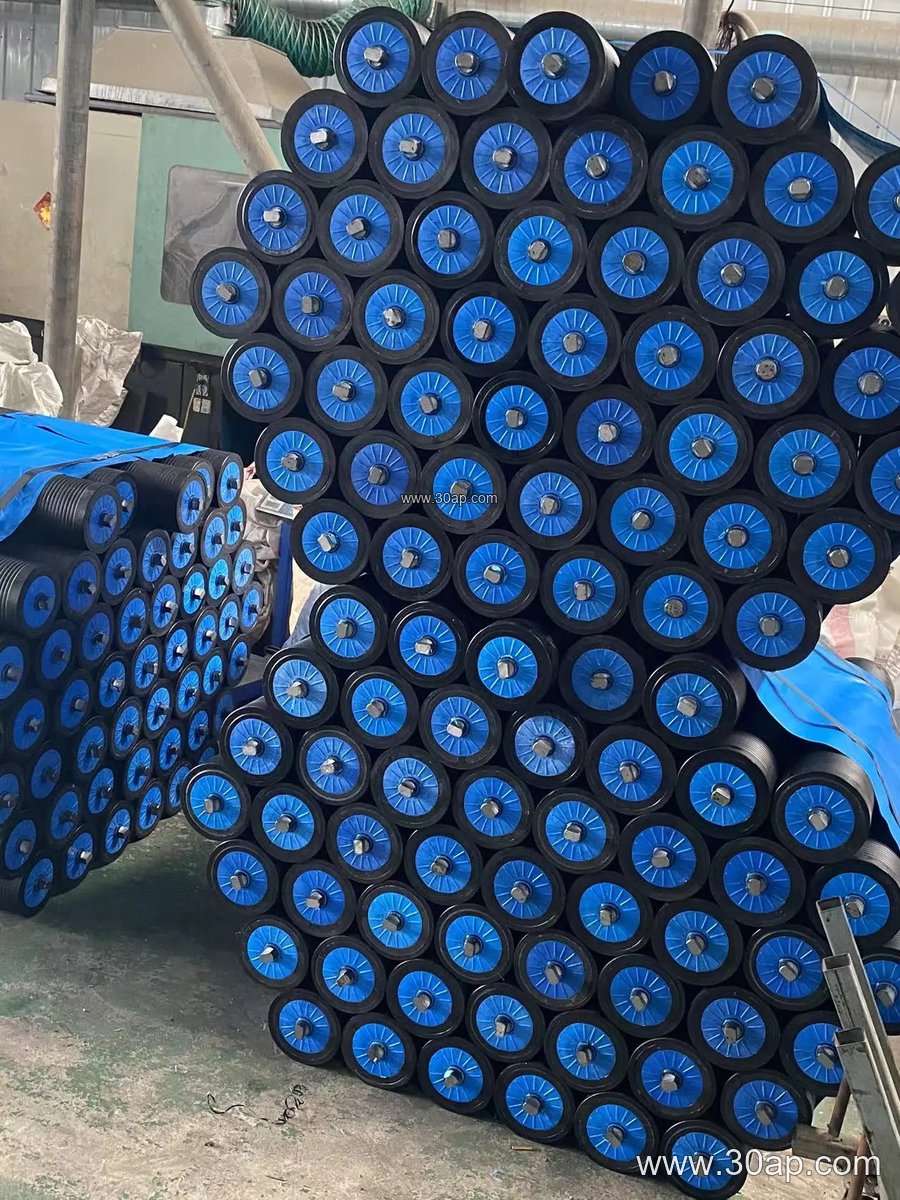
Roll length follows belt width, trough angle and frame design. For a three-roll station, common center-roll lengths run roughly 200 mm at B500, 315 mm at B800, 380 mm at B1000 and 465 mm at B1200, with wider belts reaching 600 mm at B1600 and 750 mm at B2000. Side rolls are usually shorter and are selected together with the trough angle. These figures are reference examples, not fixed pairings.
Trough Angle and Belt Width
The trough angle controls how deeply the belt is folded. A 20-degree station suits flat, easily shifted loads, while 30 and 35 degrees are the everyday choice for aggregate and ore. A 45-degree trough holds a deeper bed for fine, free-flowing material, but it also increases edge tension and demands a belt that can flex without cracking.
- 20 degrees: gentle trough for fragile or light material
- 30 to 35 degrees: general bulk handling in stone and cement plants
- 45 degrees: high-capacity fines, needs careful belt selection
Belt width and trough angle work together. A 650mm or 800mm belt on a 35-degree station behaves very differently from a 1400mm or 1600mm belt on the same angle. When specifying, give the belt width, the required capacity and the material lump size rather than asking for a roll length alone.
Where Trough Idlers Are Used
You will find these stations on nearly every bulk handling line. In an iron ore or copper ore concentrator they carry crushed feed toward the grinding circuit. In a coal washing plant they support a flame retardant conveyor belt and a coal mining conveyor belt that must resist abrasion and fine dust. Cement plants use them under clinker and raw meal, while power plant coal yards rely on them on long inclined runs.
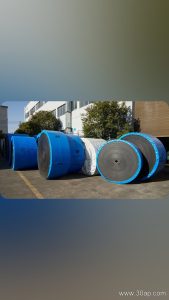
At a port or ship loading terminal, wide belts of 1800mm to 2400mm need heavy frames and closely spaced stations. Crushing and screening plants often pair a trough idler with an impact resistant conveyor belt near the crusher discharge and a standard EP conveyor belt further along the line. The selection changes with the duty, not with fashion.
Sealing, Roll Surface and Service Life
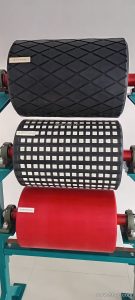
Dust and water are the main enemies. A well-sealed bearing housing with a labyrinth or multi-stage seal keeps grit out of the grease and is often more important than a thicker tube. Roll surfaces vary: plain steel for general service, nylon or ceramic lagging for sticky or abrasive material, and rubber rings for impact zones. Rubber-ring impact stations are a separate subtype and are used only where loading shocks are severe.
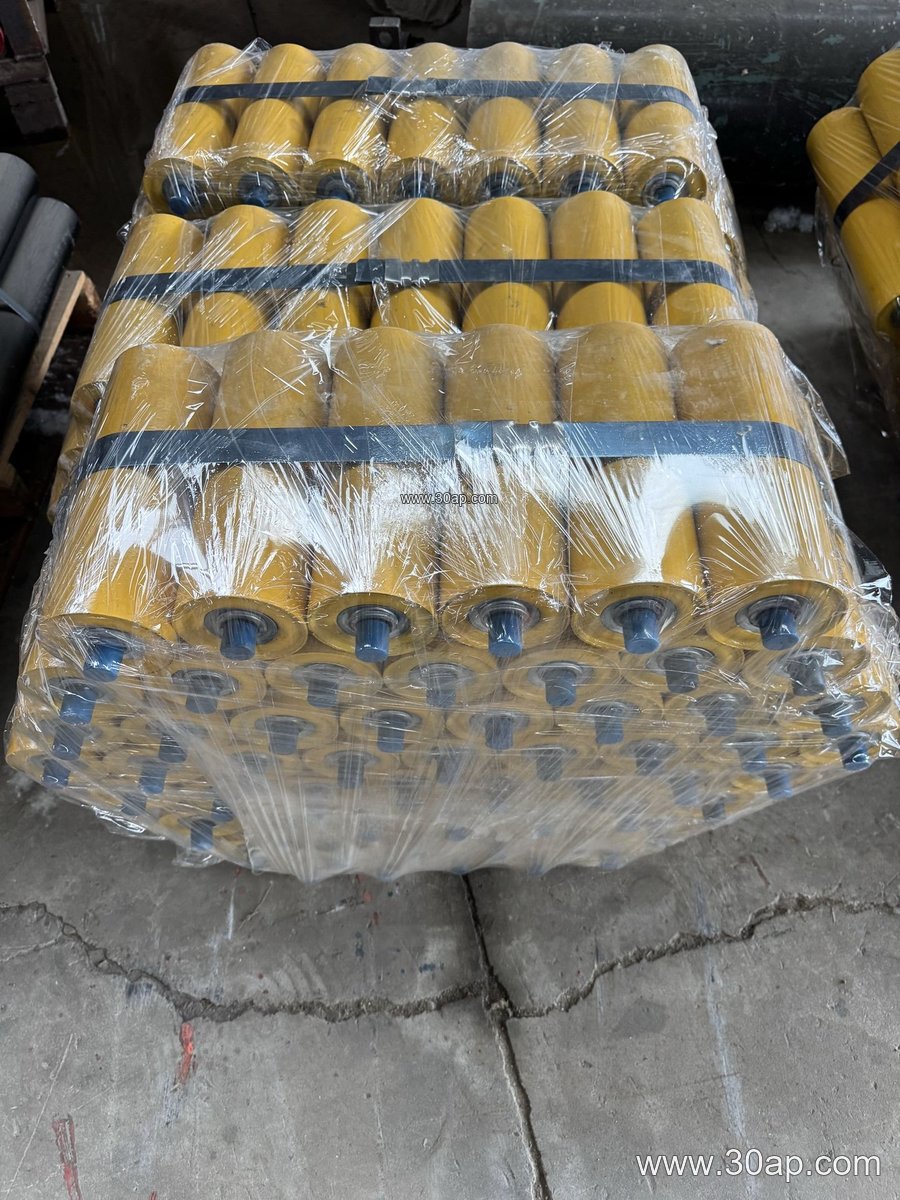
Inspection is simple. Listen for a seized roll, watch for belt wander and check that the frame sits square to the belt line. A worn idler roller that stops turning will flat-spot the belt cover and can damage a nearby conveyor pulley. Replace rolls in sets where wear is uneven, and keep the conveyor bracket bolts tight so the trough stays aligned.
What Buyers Should Confirm Before Ordering
Ask for the belt width, the trough angle, the roll diameter, the frame type and the bearing size in one specification. Confirm whether the station is a single-roll, two-roll or three-roll trough, and state the material and operating environment. For a mine or a cement works, note whether the belt is a heat resistant conveyor belt or an abrasion resistant conveyor belt, because that affects the load the idler must carry.
Finally, check interchangeability with the existing conveyor bracket spacing. A correct trough idler keeps the belt seated, the material centered and the whole conveying line running quietly, whether the plant handles ore, clinker, coal or sand.