What the Intermediate Bend Pulley Does
An intermediate bend pulley is a non-drive conveyor pulley placed between the head and tail of a conveyor to change the belt’s direction of travel. It is a route-control component, not a power source: it does not pull the belt, and it does not set the belt tension the way a tail pulley or take-up pulley does. In a long overland conveyor, a yard conveyor, or an inclined transfer line, one or more of these bend pulleys can guide the belt around an obstruction, dip under a walkway, or return the belt cleanly to the loading zone.
Because it changes belt direction rather than driving it, the intermediate bend pulley is often grouped with the take-up and snub pulleys in the return strand. It is a distinct subtype from the drive pulley, head pulley, and tail pulley, and should be specified as such in a bill of materials.
Construction and Surface Options
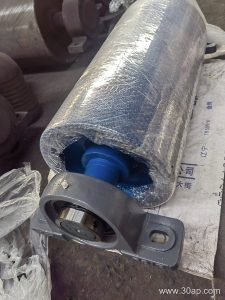
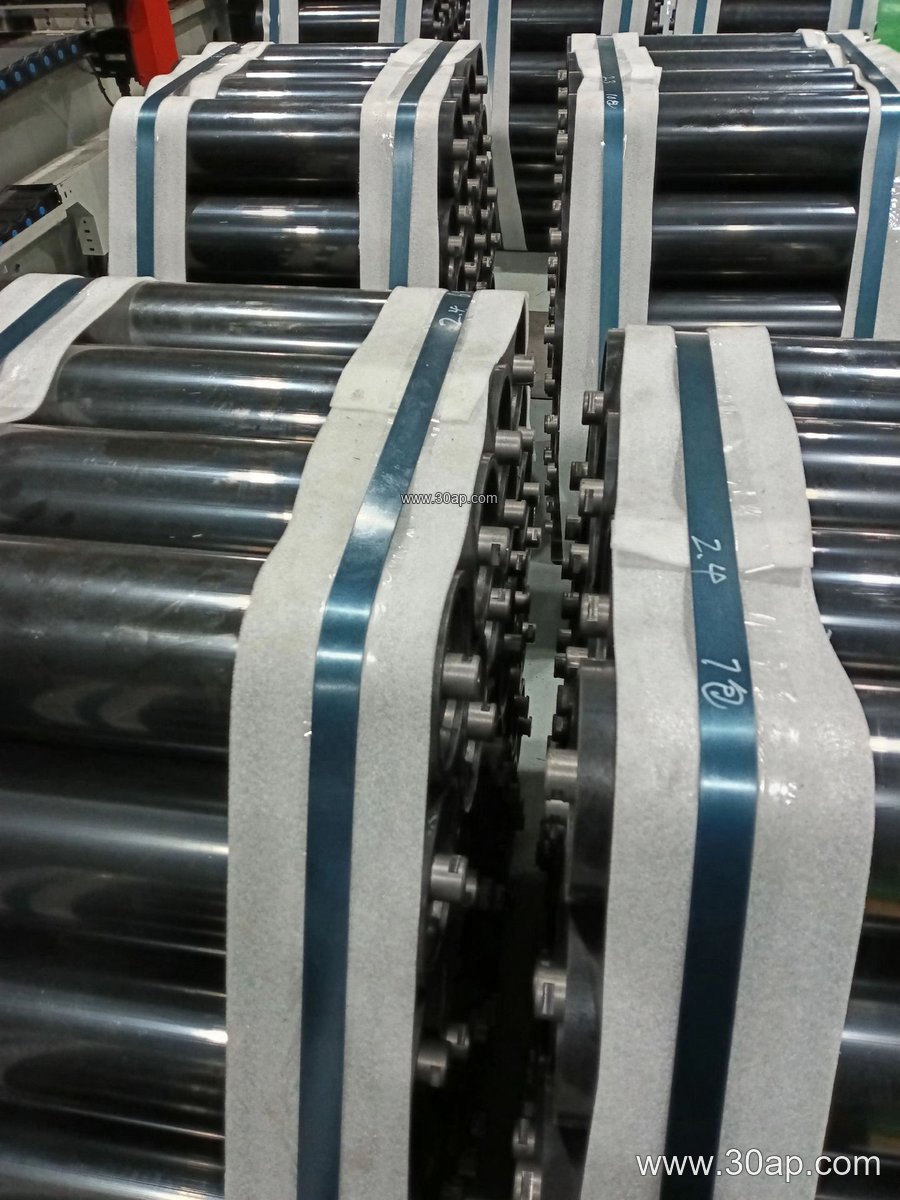
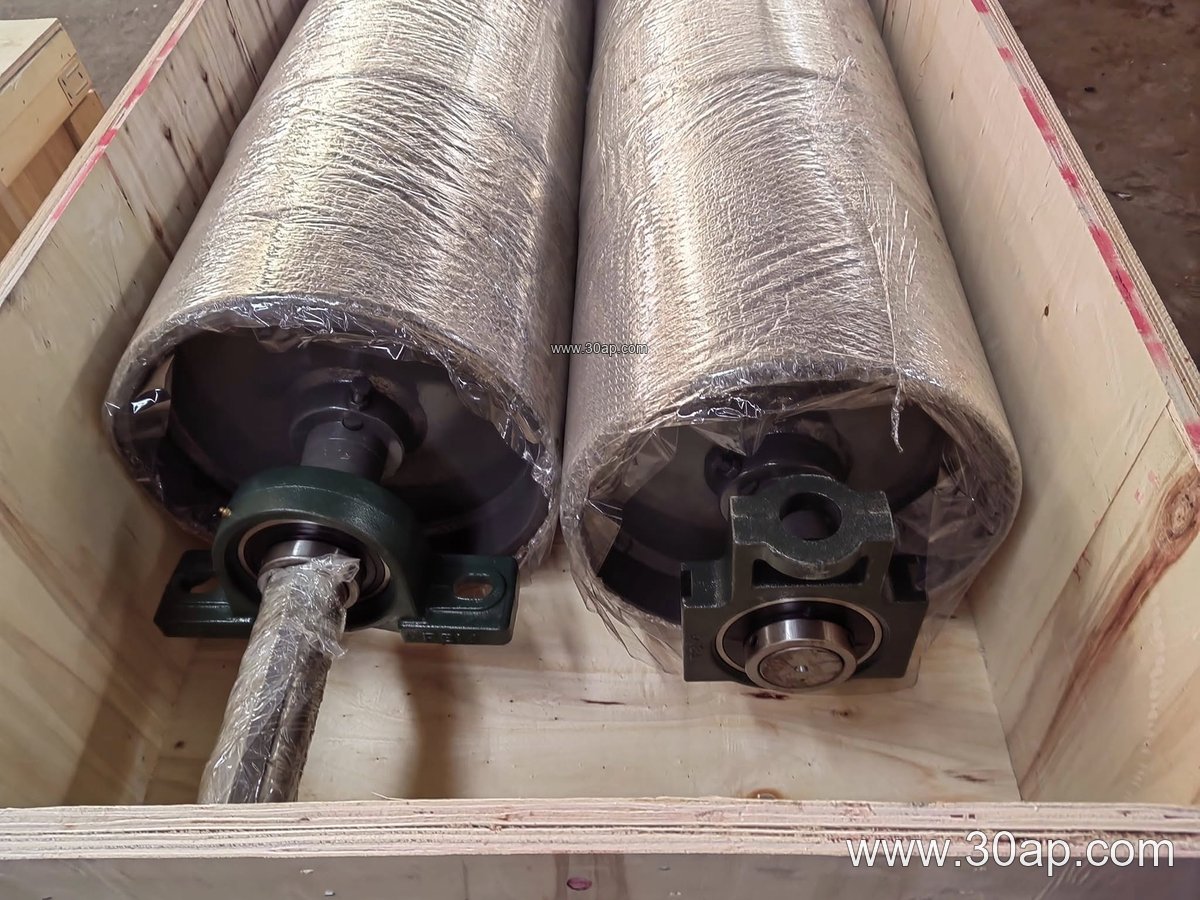
The pulley body is usually a welded steel drum with a machined face, fitted with a shaft, bearing housings, and a conveyor bracket or pillow-block mounting. Common face widths follow belt width plus margin, for example B800 with a face around 950 mm, B1000 around 1150 mm, and B1200 around 1400 mm. Diameters commonly range from Ø250 up to Ø1000 or more, depending on wrap angle and belt stiffness.
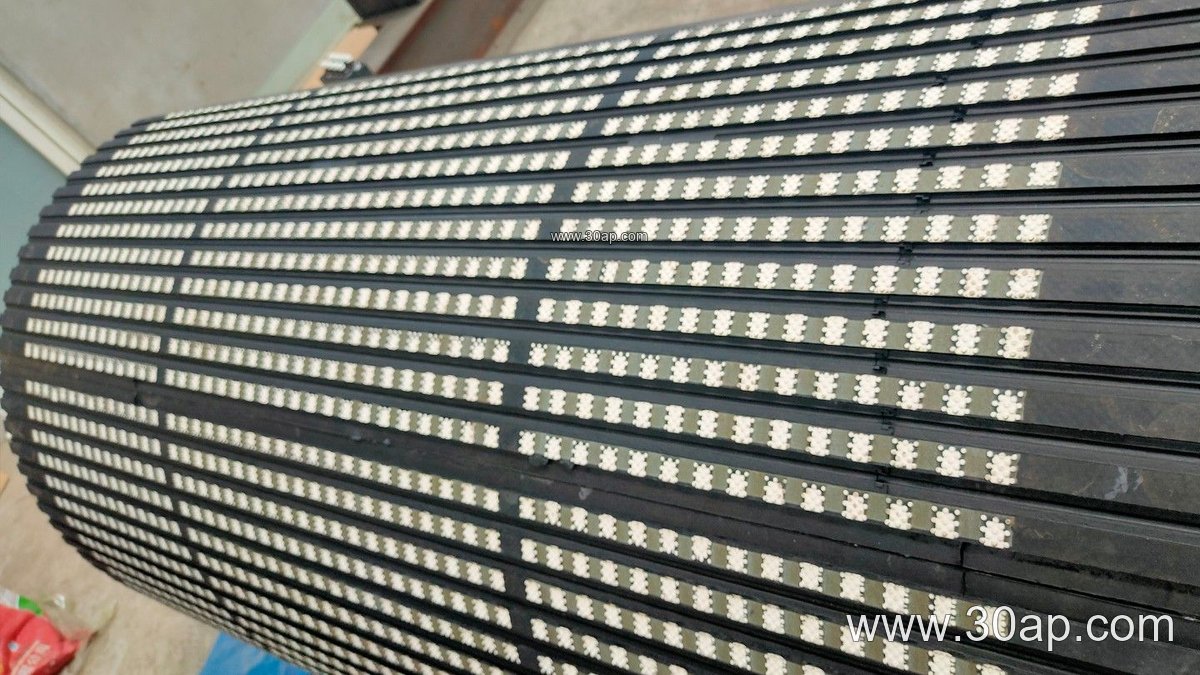
The pulley face may be plain, or covered with rubber lagging applied by hot vulcanizing, cold bonding, or casting. Diamond and herringbone patterns improve traction and shed water, while ceramic lagging suits very abrasive service. Lagging thickness is commonly 8, 10, 12, 15, or 20 mm. On a bend pulley, lagging mainly protects the shell and helps center the belt; it does not need the high-friction grip demanded of a drive pulley.
| Parameter | Common reference values |
|---|---|
| Belt width | B500, B650, B800, B1000, B1200, B1400, B1600 |
| Pulley diameter | Ø315, Ø400, Ø500, Ø630, Ø800, Ø1000 |
| Face width | Belt width plus 100 to 200 mm, e.g. B800 ≈ 950 mm |
| Shaft diameter | Ø60, Ø80, Ø100, Ø120, Ø140, determined by torque and load |
| Surface | Plain, hot-vulcanized rubber, cold-bonded rubber, diamond, ceramic |
Shaft size should be calculated from the actual belt tension and bearing load, not copied from the belt width alone. A wide belt on a lightly loaded return run may use a smaller shaft than a narrow belt under heavy tension.
Where It Fits in the Plant
In a limestone quarry or aggregate line, an intermediate bend pulley often routes the return belt beneath a screening station. In a coal washing plant or power plant coal yard, it may guide the belt around a transfer tower. The same component appears in cement plants, iron ore and copper ore handling, port bulk terminals, and tunnel spoil conveyors.
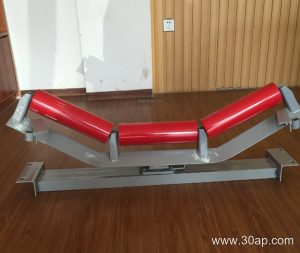
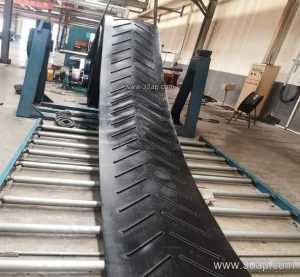
Selection should consider the conveyor belt itself. A heavy steel cord conveyor belt needs a larger minimum pulley diameter than a thin multi-ply fabric core belt, and a chevron conveyor belt or corrugated sidewall belt needs enough clearance and a suitable face. The pulley works alongside the idler roller set and conveyor bracket, so mounting height and alignment matter as much as the drum itself.
Buyer Checklist
- Confirm the pulley is specified as an intermediate bend pulley, not a drive or tail pulley.
- State belt type and width, for example EP conveyor belt at 1200 mm or a steel cord belt at 1400 mm.
- Give the required wrap angle and belt path so the diameter can be checked.
- Choose lagging by environment: plain for clean return runs, rubber or ceramic for wet, gritty service.
- Ask for the shaft and bearing calculation, not just a nominal size.
- Check face width, balance, and bracket dimensions against the conveyor frame.
For spare-part planning, record the pulley diameter, face width, shaft diameter, lagging type, and bearing number. A correctly matched intermediate bend pulley keeps the belt tracking smoothly and reduces wear on the conveyor belt, idler roller, and frame.