What a Deep Trough Idler Does
A deep trough idler is a carrying idler assembly whose rolls are set at a steep trough angle, typically 35 to 45 degrees, so the conveyor belt forms a deep U-shaped channel. This deeper profile keeps bulk material centered and reduces spillage on high-capacity lines. In a quarry, a limestone mine, or a cement plant feeding a crusher, the difference between a standard 30-degree trough and a deep trough idler is often visible within the first few meters of belt travel: the load sits lower, the belt edges stay supported, and fines are less likely to escape at transfer points.
The product is also described as a deep trough carrying idler or a steep-angle trough idler. It belongs to the carrying side of the conveyor and should not be confused with return idlers, impact idlers, or self-aligning idlers, each of which has a different job along the same structure.
How the Assembly Is Built
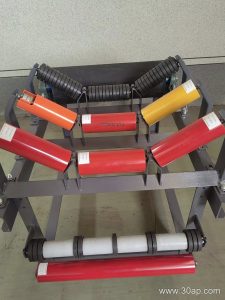
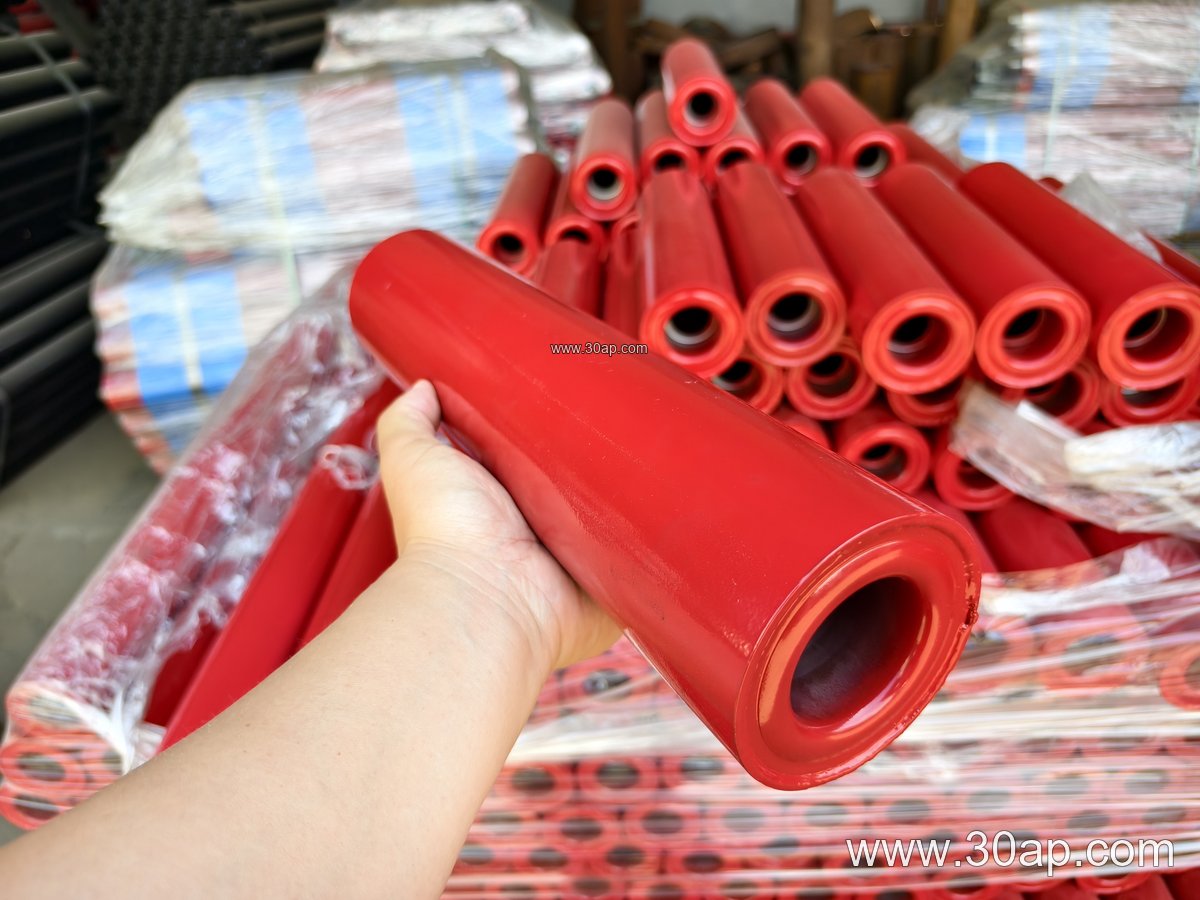
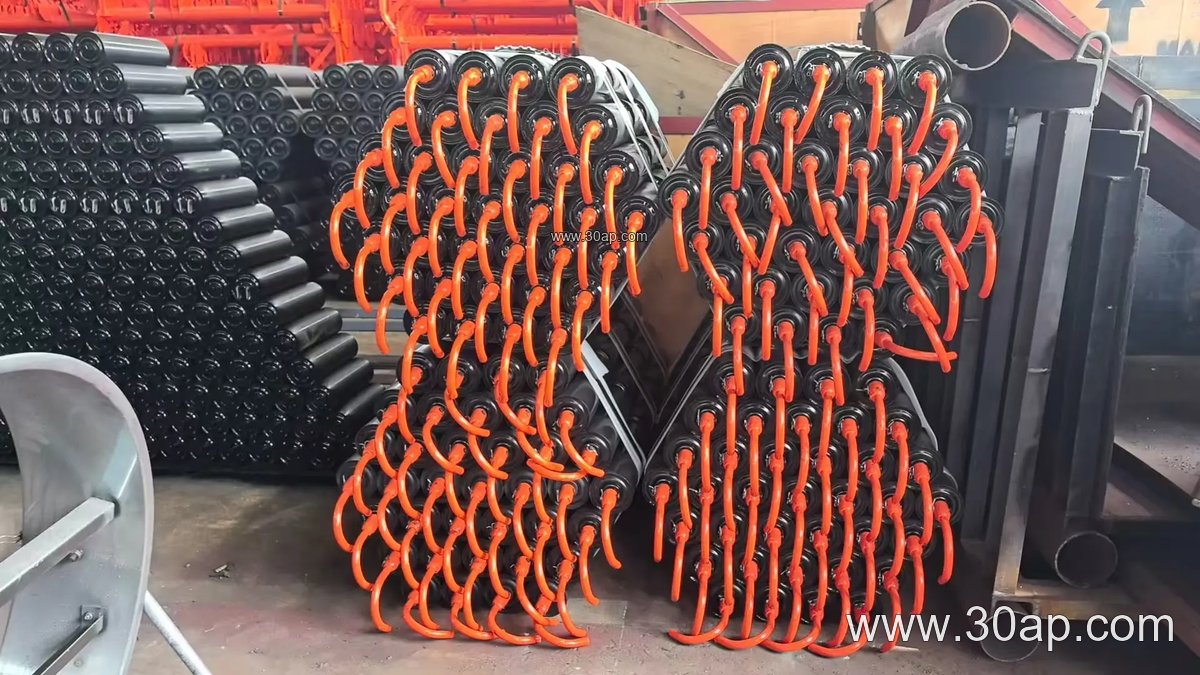
A deep trough idler usually consists of three rolls mounted in a rigid frame, with the two side rolls inclined sharply and the center roll nearly horizontal. The roll shell may be steel tube, nylon, ceramic, or rubber-covered, depending on the duty. Bearings such as 6205, 6305, 6306, or 6308 are common in these rolls, with the final choice depending on load, speed, and sealing arrangement rather than on any single roll diameter.
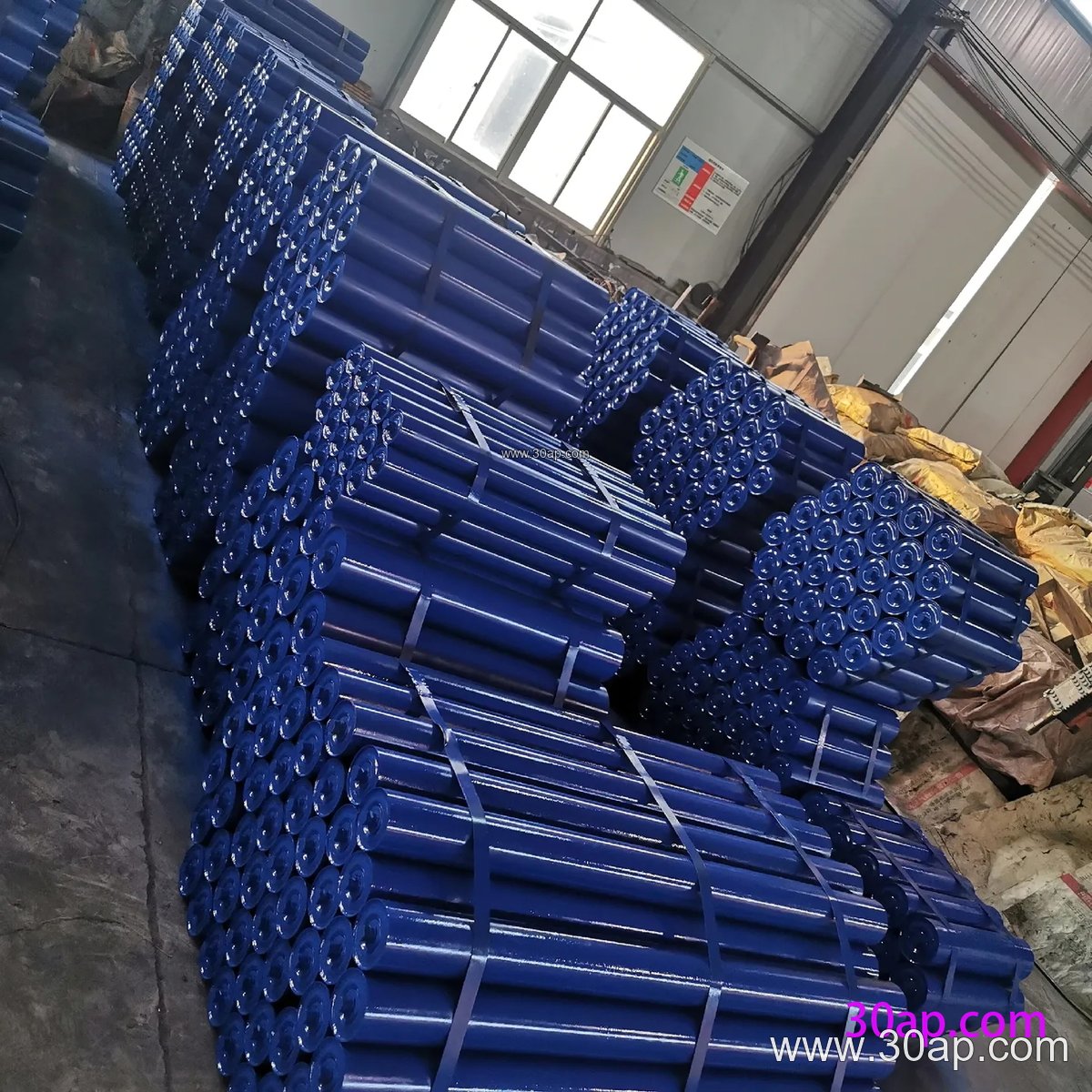
Sealing matters as much as the shell. Dust from aggregate, coal, or ore finds its way into bearing housings, so labyrinth seals and grease retention features are part of the specification a buyer should review. The frame is fixed to the conveyor bracket or stringer, and the roll length is matched to belt width, trough angle, and the three-roll geometry. For example, a three-roll deep trough set on a B1000 belt may use rolls around 380 mm long, while a B1400 arrangement might sit near 530 mm; side rolls and center rolls can differ, and these figures are typical references rather than fixed rules.
Where Deep Troughing Pays Off
The steep profile is most useful when the belt carries a wide, heavy load or when material is prone to rolling. In an iron ore or copper ore handling circuit, a deep trough idler helps contain lumpy feed. At a power plant coal yard, it supports a stable coal bed on the incline toward the bunker. In sand and gravel plants, the same arrangement reduces edge spillage on the way to screening. It is also seen on overland conveyors at ports and in sinter plants where throughput is high and belt tracking must remain predictable.
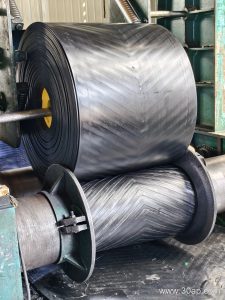
The belt itself must suit the trough. A rigid, thick carcass may not flex into a 45-degree profile as readily as a more flexible construction, so the conveyor belt specification and the idler angle should be considered together. A heavy-duty mining conveyor belt with a suitable fabric or steel cord carcass is often paired with deep troughing on primary haulage, while a flame retardant conveyor belt may be required underground.
Specification Points a Buyer Should Check
Several parameters drive the selection, and they interact rather than stand alone:
- Trough angle: 35 degrees and 45 degrees are common deep settings; 20 degrees and 30 degrees are shallower options.
- Roll diameter: Ø89, Ø108, Ø127, Ø133, Ø159, and Ø178 are among the usual references, chosen with load and belt speed in mind.
- Belt width: B650, B800, B1000, B1200, B1400, and B1600 are typical, with wider belts needing longer rolls and heavier frames.
- Roll surface: steel for general duty, rubber rings for cushioning, ceramic or nylon where wear or buildup is a concern.
- Bearing size and seal type: matched to the environment, not copied from a neighboring conveyor.
Buyers should also confirm the mounting dimensions, the frame material and coating, and whether the idler is intended for a new conveyor or a retrofit. A deep trough idler that fits one bracket pattern may not fit another, and the roll end configuration must match the frame.
Installation and Maintenance Notes
Alignment is critical. A deep trough idler set that is skewed or mounted at uneven height will pull the belt to one side, and the resulting edge wear can be severe. During commissioning, check that all rolls turn freely and that the trough line is straight. In service, listen for seized or noisy rolls and inspect for material buildup between the roll and the frame. Re-greasing intervals depend on the seal design and the dust level; in a stone crushing line, shorter intervals are often sensible. Replacing a worn roll before the shell cuts through protects the belt and avoids a shutdown at the transfer point.
Used with the right conveyor belt, a well-matched deep trough idler helps a conveyor run cleaner and carry more within the same structure width. The key is to treat trough angle, roll size, belt type, and site conditions as one design decision.