What a Three-Roll Idler Set Does
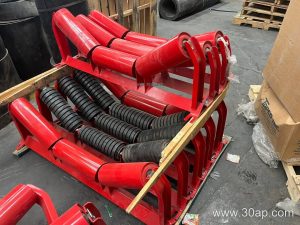
A three-roll idler set is the troughing assembly that supports the carrying side of a conveyor belt. It uses three idler rollers mounted on a common frame: one center roll and two side rolls angled upward to form a trough. This arrangement keeps bulk material centered on the belt, reduces spillage, and helps the belt track smoothly. In a quarry, a coal handling system, or a cement plant, the three-roll troughing idler set is usually the most visible part of the conveyor structure.
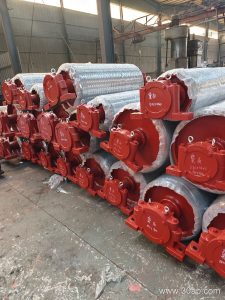
The same assembly is also called a three-roll troughing idler set or a three-roll carrying idler group. These names describe the same product; they are not interchangeable with drive, tail, or bend pulleys, which are separate components at the ends of the conveyor.
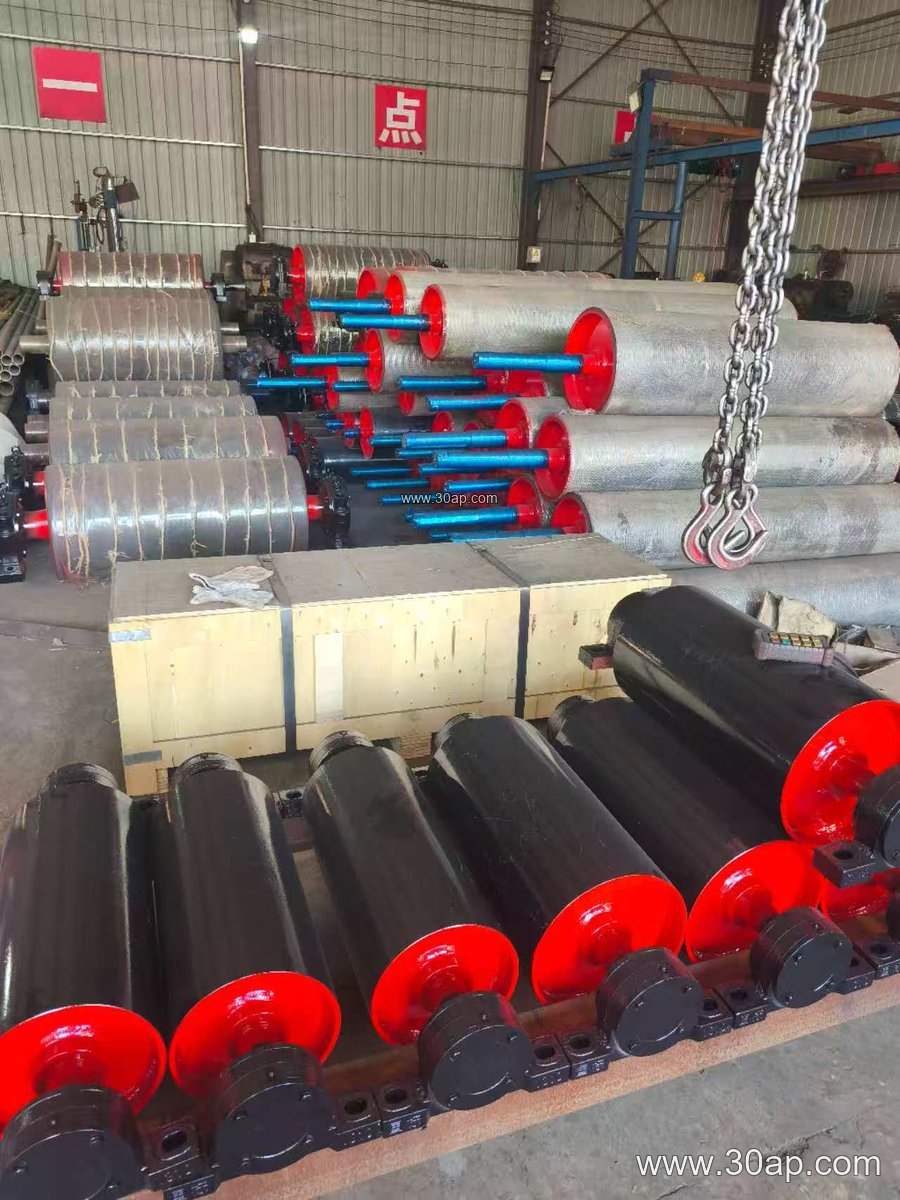
How the Assembly Is Built
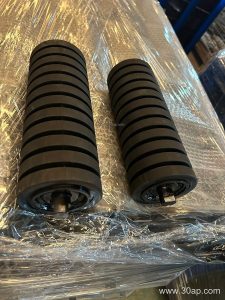
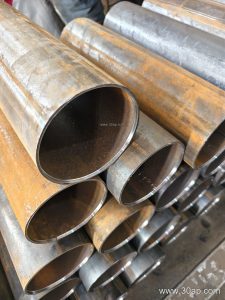
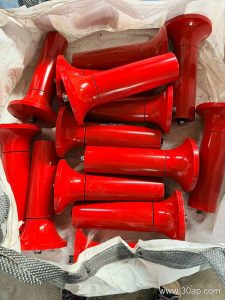
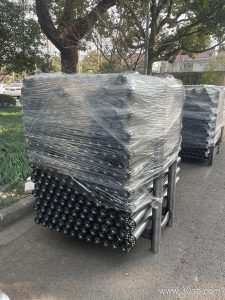
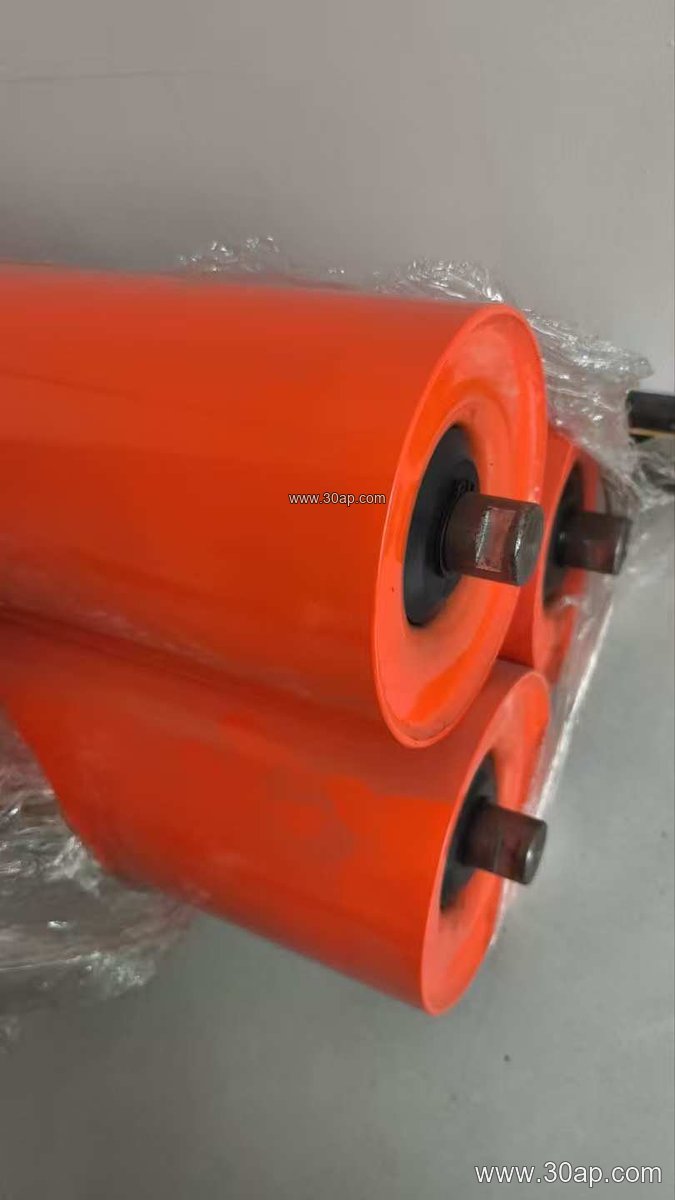
Each set consists of three idler rollers, a bracket or frame, and shaft fittings. The rolls are commonly made from steel tube, nylon, ceramic, or rubber rings. Steel tube is the general-purpose choice; rubber rings are often used where impact from coarse rock is heavy, and ceramic or nylon surfaces may be selected for sticky or abrasive materials.
Bearings are sealed inside each roll, with common sizes including 6204, 6205, 6305, 6306, 6308, and 6310. Bearing size should be matched to the roll diameter and load rather than assumed from belt width alone.
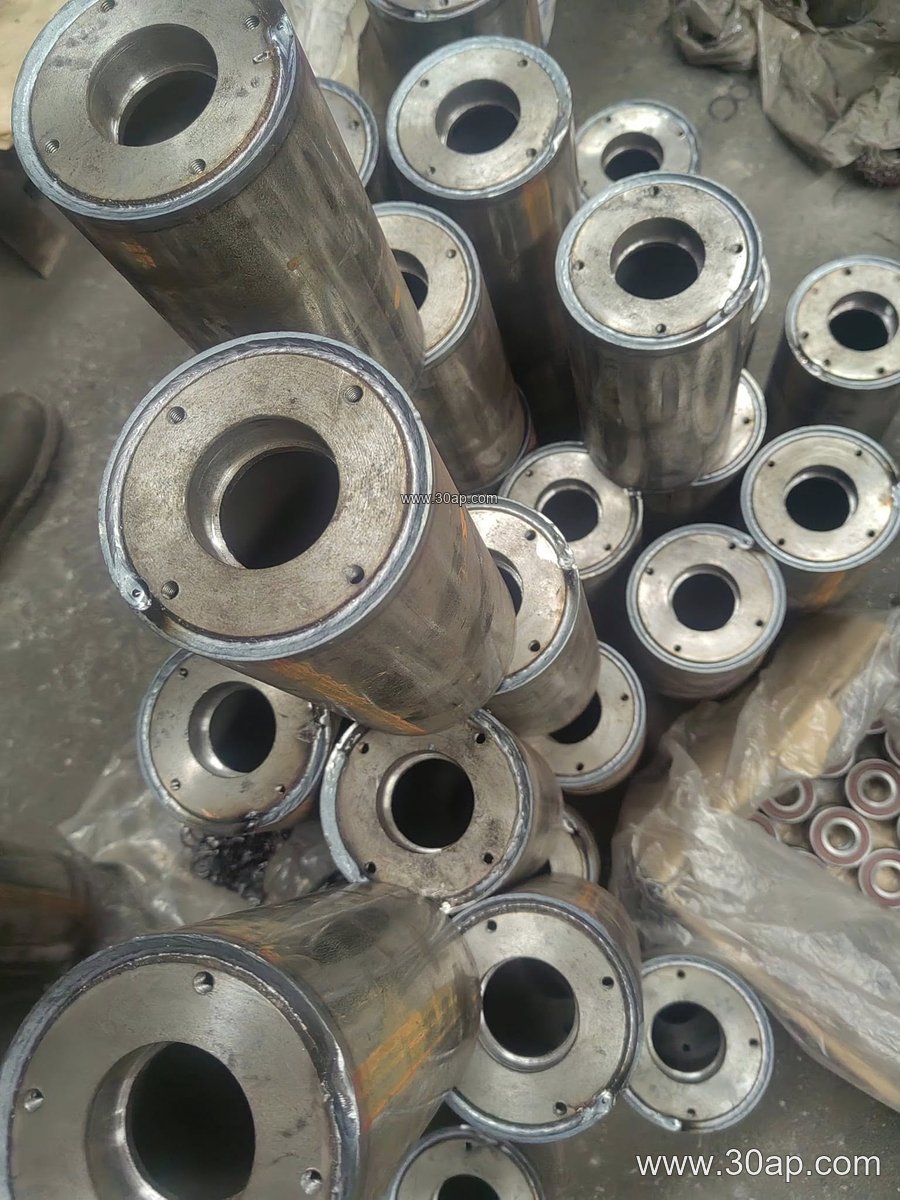
The trough angle is a key design figure. Common angles are 20, 30, 35, and 45 degrees. A steeper angle gives better material containment but raises belt stress. The roll length also varies with belt width and trough angle, and the center roll can differ from the side rolls.
Common Roll and Belt Width References
The table below gives typical examples only. Values are for reference and should be confirmed against the conveyor design.
| Belt Width | Typical Side Roll Length (example) | Common Trough Angle |
|---|---|---|
| B500 | 200 mm | 20-35 degrees |
| B650 | 250 mm | 20-35 degrees |
| B800 | 315 mm | 30-35 degrees |
| B1000 | 380 mm | 30-35 degrees |
| B1200 | 465 mm | 30-35 degrees |
| B1400 | 530 mm | 30-35 degrees |
| B1600 | 600 mm | 30-35 degrees |
| B1800 | 670 mm | 35-45 degrees |
| B2000 | 750 mm | 35-45 degrees |
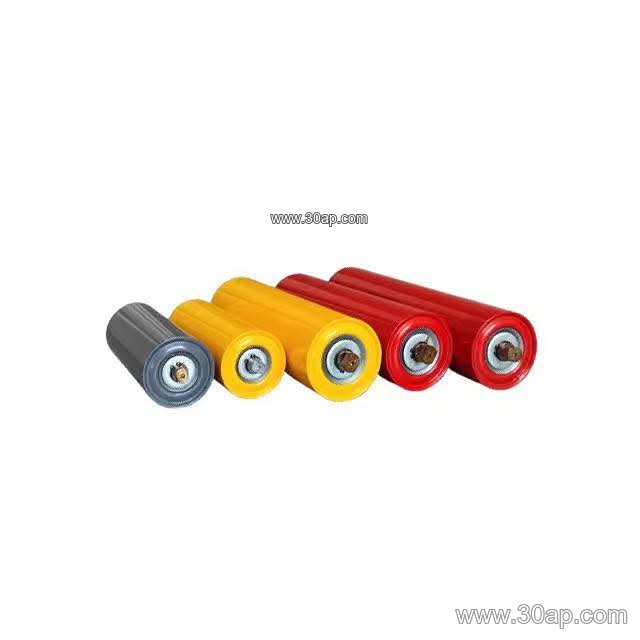
Roll diameters commonly range from Ø63 to Ø219 mm. Larger diameters are used on wider, heavier conveyors where load and belt speed demand more bearing capacity. Smaller diameters suit lighter belts. There is no fixed rule that one belt width must use one roll diameter.
Where the Set Fits on the Conveyor
The three-roll troughing set is normally installed on the carrying run, spaced at intervals along the conveyor frame. It works together with the conveyor belt, conveyor bracket, and conveyor pulley. On a stone crushing line or a sand and gravel plant, the set supports the belt just after the loading point and along the main run. Impact-resistant or rubber-ring rolls are often placed near the feed point, while standard steel rolls serve the steady sections.
Return idlers are a different subtype and are not replacements for this assembly. A flat return roll or V-return set supports the empty side of the belt. Likewise, self-aligning idlers and spiral idlers have their own roles. A three-roll troughing set remains the main carrying support, and its selection should follow the conveyor layout.
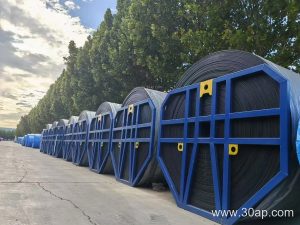
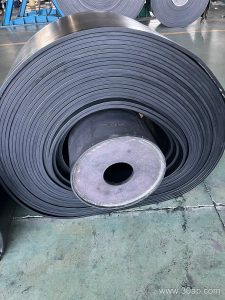
Heavy-duty mining conveyor belts and high abrasion resistant conveyor belts place greater load on the idler set, so roll diameter, bearing grade, and frame strength should be reviewed together.
Buyer Checklist
- Confirm belt width, trough angle, and roll length from the conveyor drawing.
- Check the roll diameter and bearing size against the load and belt speed.
- Decide on roll surface: steel, nylon, ceramic, or rubber ring.
- Verify frame and bracket dimensions, hole spacing, and mounting style.
- Review sealing and lubrication needs for dusty or wet conditions.
For a cement plant, power plant coal yard, or iron ore terminal, matching the idler set to the belt and frame avoids premature wear. Buyers can source a three-roll idler set together with the conveyor belt and conveyor pulley from one supplier to keep dimensions consistent.