What a Conveyor Drive Pulley Does
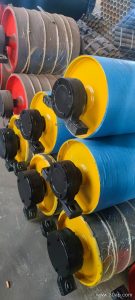
A conveyor drive pulley is the powered drum that turns the belt and keeps material moving along the line. It is the point where torque from the gearbox or motor enters the conveyor, so the surface must grip the belt firmly enough to transmit pull without slipping. In a typical aggregate or quarry conveyor, the drive pulley sits at the head end and discharges material onto the next stage, while the tail pulley and bend pulleys simply guide and tension the belt.
The drive pulley is not a tail pulley and not a bend pulley. Those perform different jobs, and confusing them during ordering leads to the wrong shaft, the wrong lagging, or a drum that cannot handle the belt pull. A drive drum is sized around torque, belt tension, and the load the conveyor carries.
How the Drum Is Built
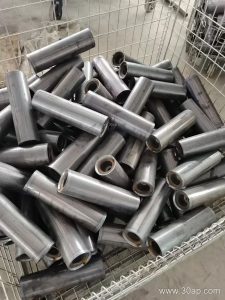
Most units combine a steel shell, end discs, a shaft, and a lagging layer. The shell is machined to keep the belt tracking evenly, and the shaft is keyed or shrink-fitted to the hubs. Bearing housings sit in conveyor brackets that bolt to the conveyor frame. On larger drives, the pulley may be supplied with a keyless locking assembly so the shaft and hub stay tight under reversing loads.
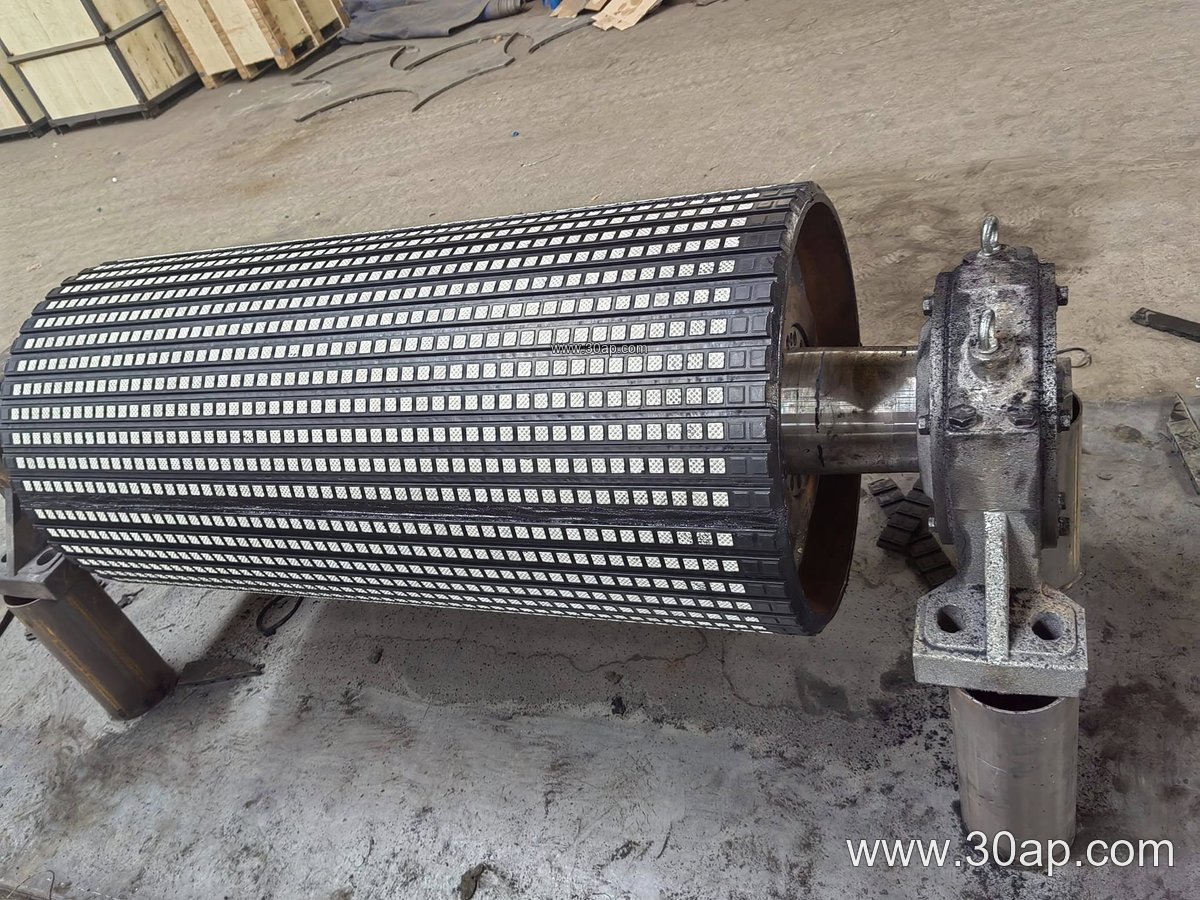
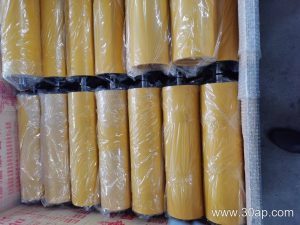
Surface lagging is where many buying decisions are made. Plain finish suits light duty and dry conditions. Rubber lagging improves grip and cushions the belt. Diamond or herringbone patterns help shed water and fines. Ceramic lagging is chosen where abrasive slurry or wet ore reduces friction. Common lagging thicknesses are 8, 10, 12, 15, and 20 mm, and the pattern should match the duty rather than being chosen by habit.
Where It Is Used
Drive pulleys appear on belt conveyors in a wide spread of industries. In a coal washing plant, a flame retardant conveyor belt may run over a lagged drive drum near the discharge. In a cement plant, clinker and raw meal move on heavy-duty belts driven by large diameter pulleys. In a copper or iron ore mine, a steel cord conveyor belt often needs a high-torque drive with ceramic lagging to hold traction on long inclines. Port bulk terminals and power plant coal yards use similar arrangements on wide belts.
The same drum design also appears in smaller sand and gravel lines, where an EP conveyor belt or a multi-ply fabric core belt may run over a B800 or B1000 pulley. The drive pulley is always the unit that receives power, whichever industry it serves.
Sizes and Common Combinations
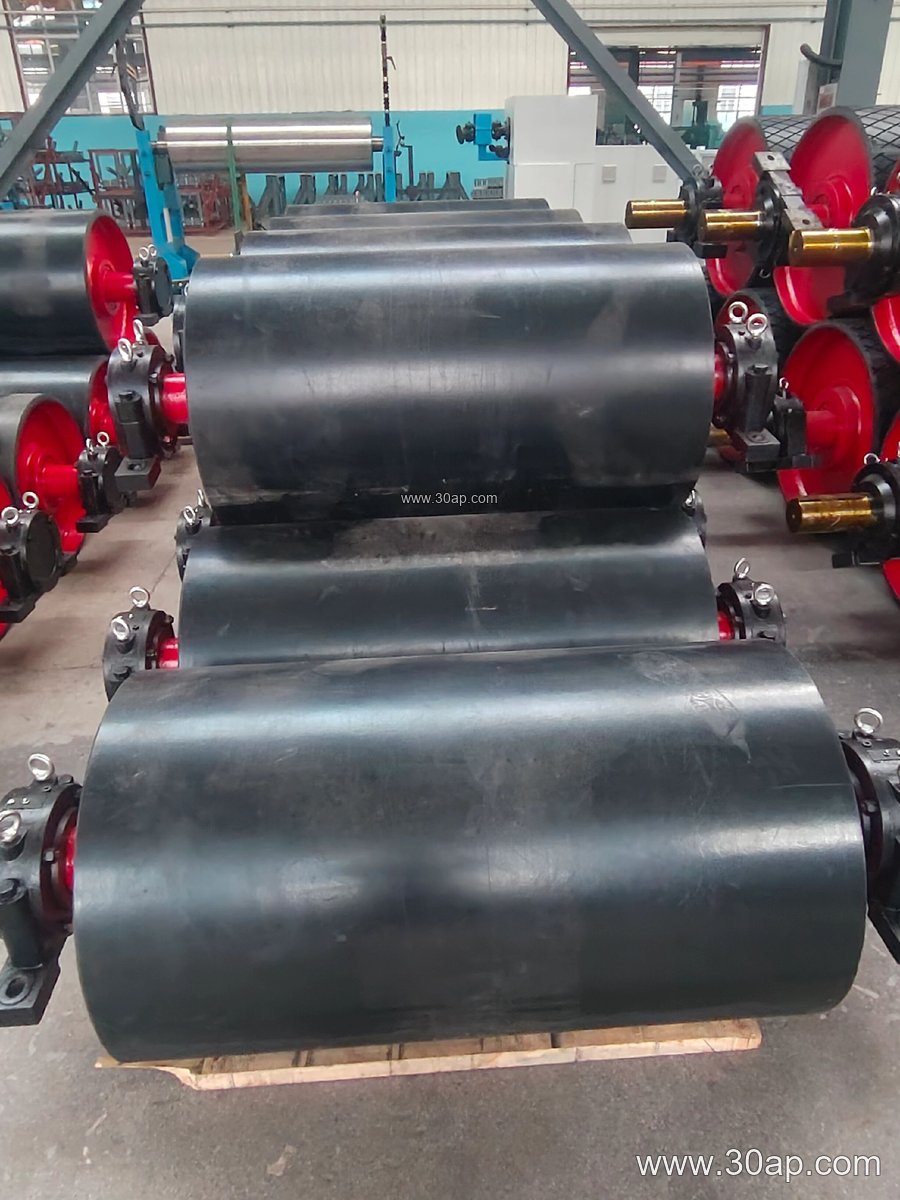
Pulley dimensions are usually stated as belt width x diameter. The table below shows typical pairings; the final choice depends on belt tension, shaft load, and the required wrap angle, not on width alone.
| Belt width | Common pulley diameter | Typical face width |
|---|---|---|
| B500 | Ø250 to Ø400 | about 600 mm |
| B650 | Ø315 to Ø500 | about 750 mm |
| B800 | Ø400 to Ø630 | about 950 mm |
| B1000 | Ø500 to Ø800 | about 1150 mm |
| B1200 | Ø630 to Ø1000 | about 1400 mm |
| B1400 | Ø800 to Ø1250 | about 1600 mm |
| B1600 | Ø1000 to Ø1400 | about 1800 mm |
Shaft diameters commonly range from Ø50 up to Ø200, but the shaft is selected from torque and bearing load, not copied from the belt width. A B1200 x Ø1000 drive pulley and a B800 x Ø500 drive pulley may both be correct for their own conveyors.
Buying Notes
- Confirm whether the drive is at the head, tail, or an intermediate position, because the wrap angle and lagging choice change with location.
- Match the lagging to the material: oil resistant or heat resistant belt lines may need a compatible rubber cover on the drum.
- Check that the pulley face width suits the belt and that the conveyor brackets and bearing centers fit the existing frame.
- Ask for the shaft material, keyway, and balancing details when the conveyor runs at higher speed.
- Keep spare lagging and bearings on hand for crusher conveyor belts and other high-wear service.
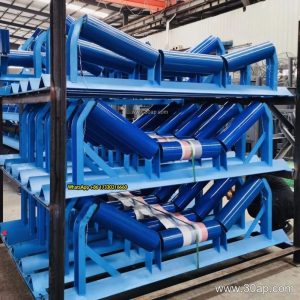
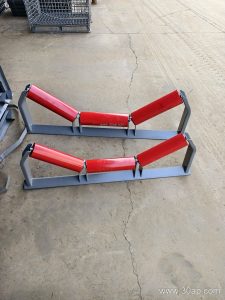
On a well-built conveyor, the drive pulley, the idler roller sets, and the belt work as one system. If the drum slips, the belt overheats at the contact face; if the lagging is too hard, the belt cover wears faster. Buyers should share belt type, belt speed, material, and duty cycle with the supplier so the drum is matched to the job. For a full conveyor pulley package, include the drive drum, tail drum, and bend drums in one specification so the whole line is consistent. www.example.com/conveyor-pulley is a useful reference point when comparing options.