What a Port Bulk Material Conveyor Idler Does
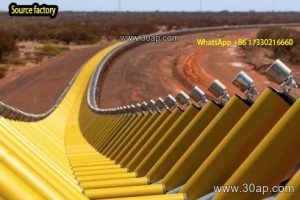
A port bulk material conveyor idler is the rotating support that carries the conveyor belt along the length of a ship loading or unloading line. In a port, the belt may run several hundred meters from the stockyard to the berth, so hundreds of idler roller units work together to keep the belt stable, limit sag, and reduce friction. The idler itself is a simple assembly, but its reliability directly affects how many tons per hour the terminal can move and how often maintenance crews must intervene.
The idler is not the same as a conveyor pulley. Drive pulleys, tail pulleys, and bend pulleys transmit or redirect belt tension at the ends and corners of the system, while idlers support the belt between those points. A bend pulley, for example, changes belt direction but does not carry the material load in the same way a troughing idler does. Keeping this distinction clear helps buyers order the right spare parts.
Construction Details That Matter
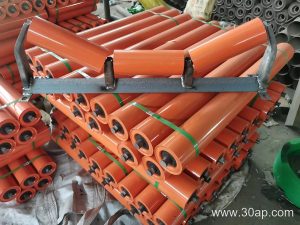
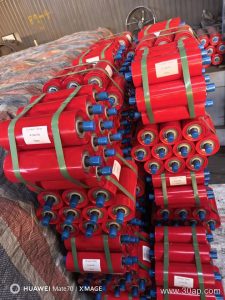
A typical port bulk material conveyor idler consists of a steel tube shell, a shaft, bearing housings, and a sealing arrangement. The shell may be plain steel, nylon-coated, ceramic-lined, or fitted with rubber rings for impact absorption. Common roller diameters include Ø89, Ø102, Ø108, Ø127, Ø133, Ø159, and Ø178 mm, with larger sizes used on high-capacity lines. Bearing sizes such as 6204, 6205, 6305, 6306, 6308, and 6310 appear across the range, but a given bearing is not tied to one roller diameter.
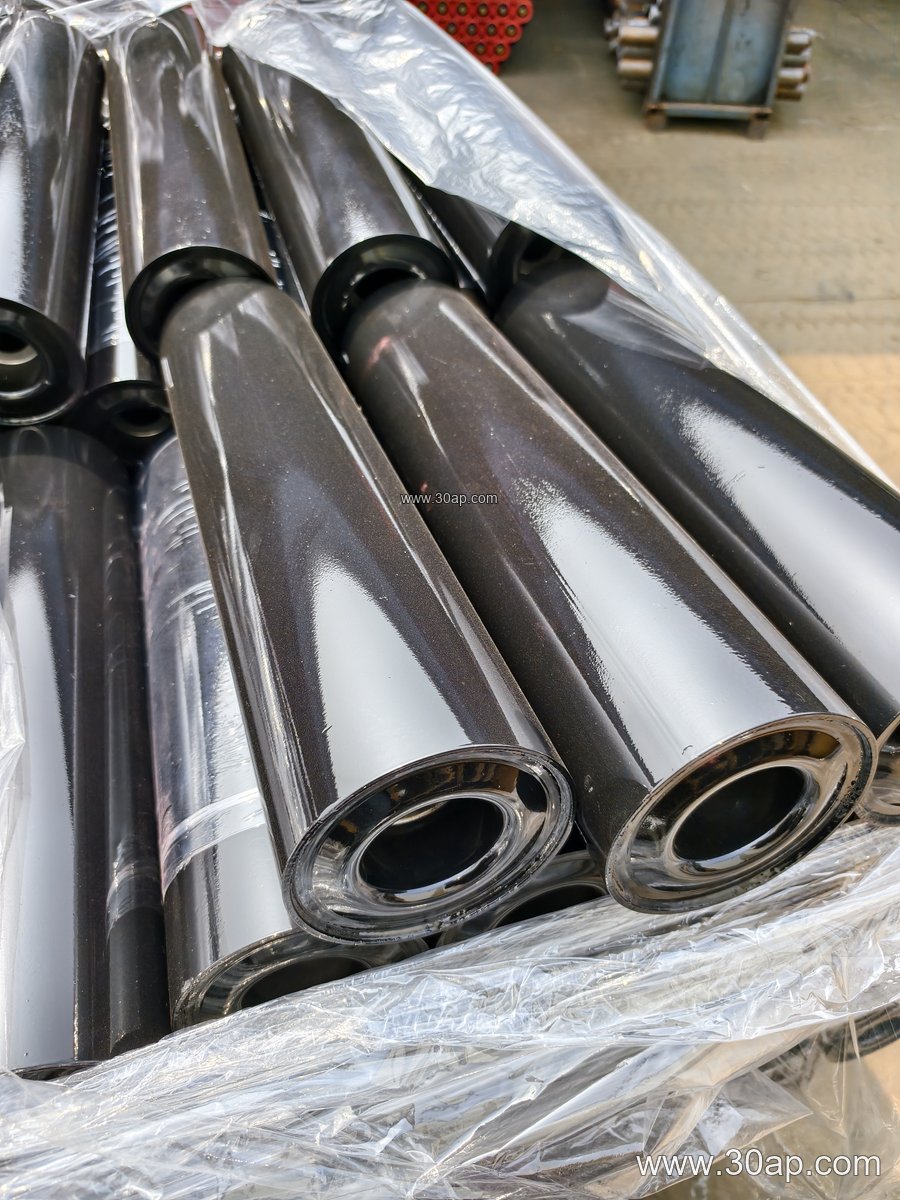
Sealing is often the deciding factor in port environments. Salt air, fine dust, and occasional rain demand a labyrinth seal with good grease retention. The idler roller must spin freely yet keep contaminants out of the bearing cavity.
Common Idler Types on a Port Conveyor
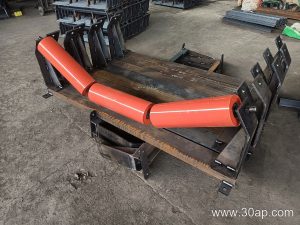
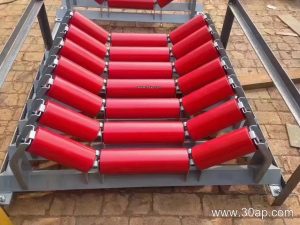
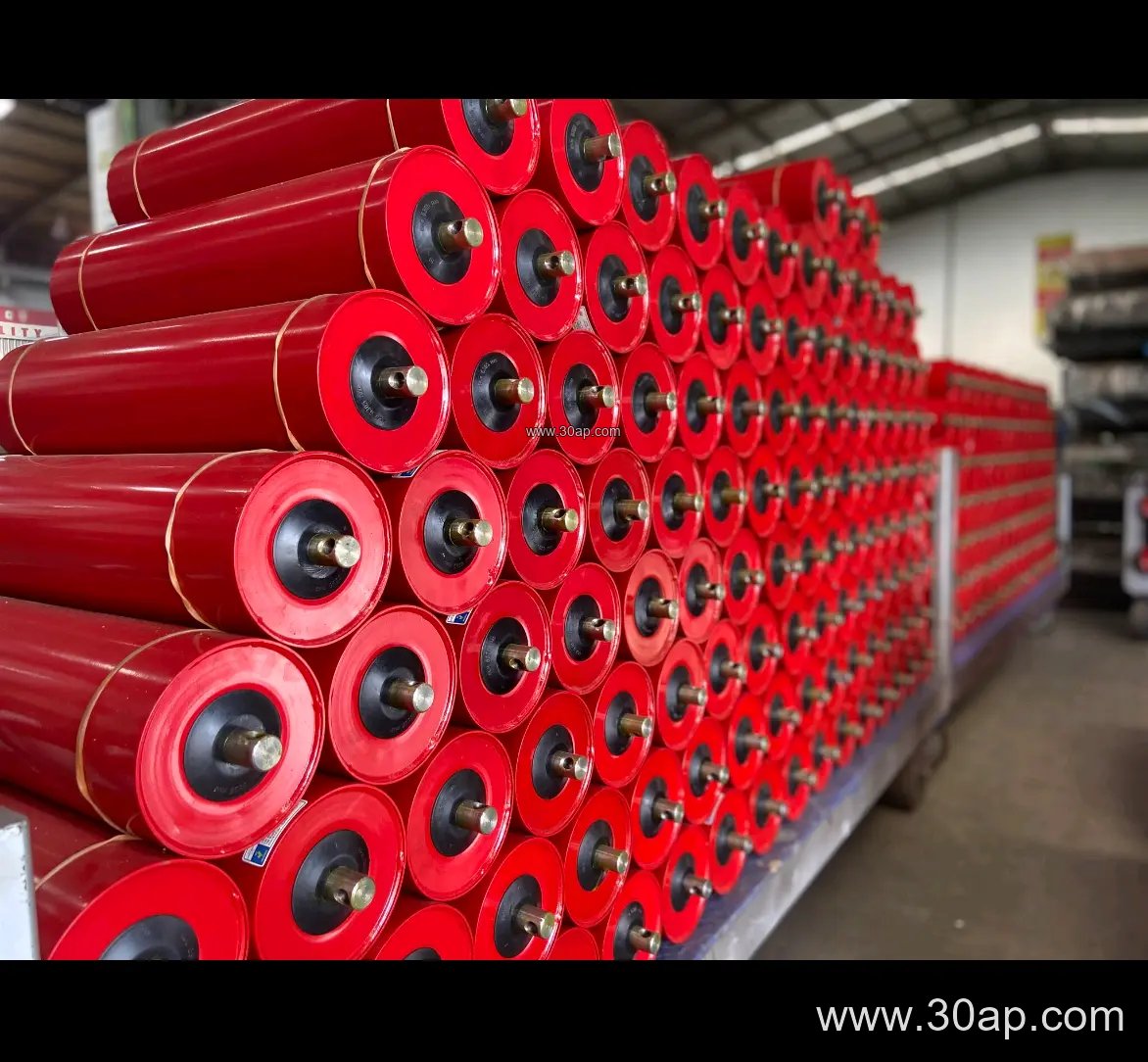
Troughing idlers are the workhorses on the carrying side. They are usually arranged as two-roll or three-roll sets, and the trough angle may be 20, 30, 35, or 45 degrees depending on the material and belt width. A 35-degree three-roll set is common on aggregate and ore lines, while a 45-degree set may be chosen where the belt needs a deeper trough.
On the return side, flat return idlers or V-return idlers support the empty belt. Impact idlers with rubber rings are placed under the loading point where ore or coal drops onto the belt. Transition idlers smooth the change from the flat pulley to the trough. Self-aligning idlers, including friction and tapered types, help correct belt drift on long port conveyors.
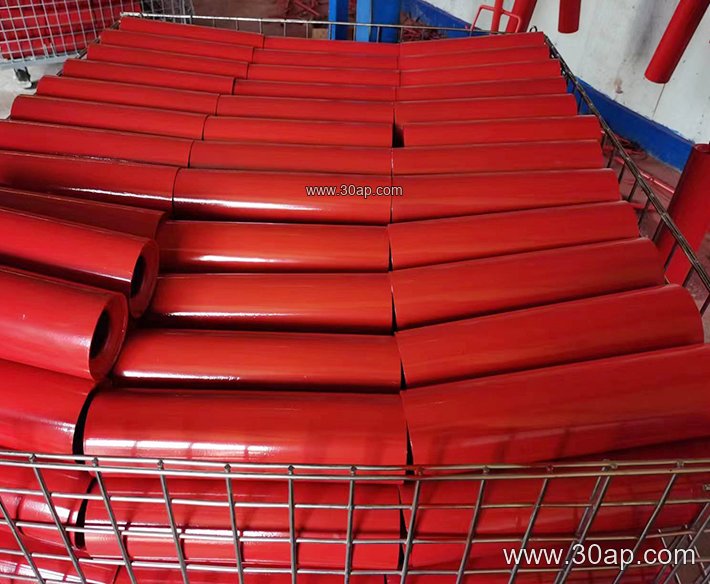
Roller length varies with belt width and idler arrangement. For a three-roll troughing set, common examples are about 200 mm for B500, 250 mm for B650, 315 mm for B800, 380 mm for B1000, 465 mm for B1200, 530 mm for B1400, 600 mm for B1600, 670 mm for B1800, and 750 mm for B2000. These are reference examples only; side rollers and center rollers can differ, and final dimensions are set by design.
Where These Idlers Are Used
Port conveyors handle iron ore, copper ore, coal, limestone, fertilizer, grain, and containerized bulk cargo. A ship loading conveyor may run at high speed and carry a heavy belt such as a steel cord conveyor belt or a thick EP conveyor belt, so idler selection must match the belt load. In a coal terminal, a flame retardant conveyor belt may be used, and the idler seals should resist coal dust. In a fertilizer or grain terminal, an oil resistant conveyor belt or food grade conveyor belt may appear, and washdown conditions may call for extra sealing attention.
Near the stockyard, a quarry conveyor belt or crusher conveyor belt may feed the port line, and the idler sets at the transfer point should include impact rollers. On curved routes, a pipe conveyor belt may need special idler panels, but those are a different support arrangement from standard troughing idlers.
Buyer Checklist
- Confirm belt width and trough angle before ordering idler sets.
- Match roller diameter and bearing size to the actual load and speed.
- Check seal type for dust, salt air, and washdown exposure.
- Specify shell material and coating where abrasion is severe.
- Ask for dimensional drawings, since roller length is not fixed by belt width alone.
- Plan a spare-parts stock for high-wear positions such as loading and transfer points.
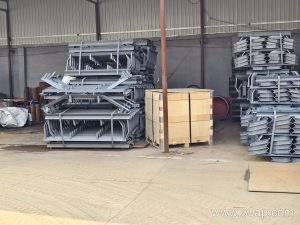
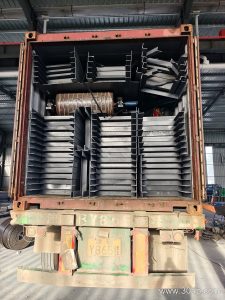
For coordinated supply, buyers often source the conveyor belt, idler roller, conveyor pulley, and conveyor bracket from one technical partner so that dimensions and interfaces fit together. A port bulk material conveyor idler that is correctly sized and well sealed will run quieter, draw less power, and last longer between shutdowns.