What Is a Four-Roll Idler Bracket?
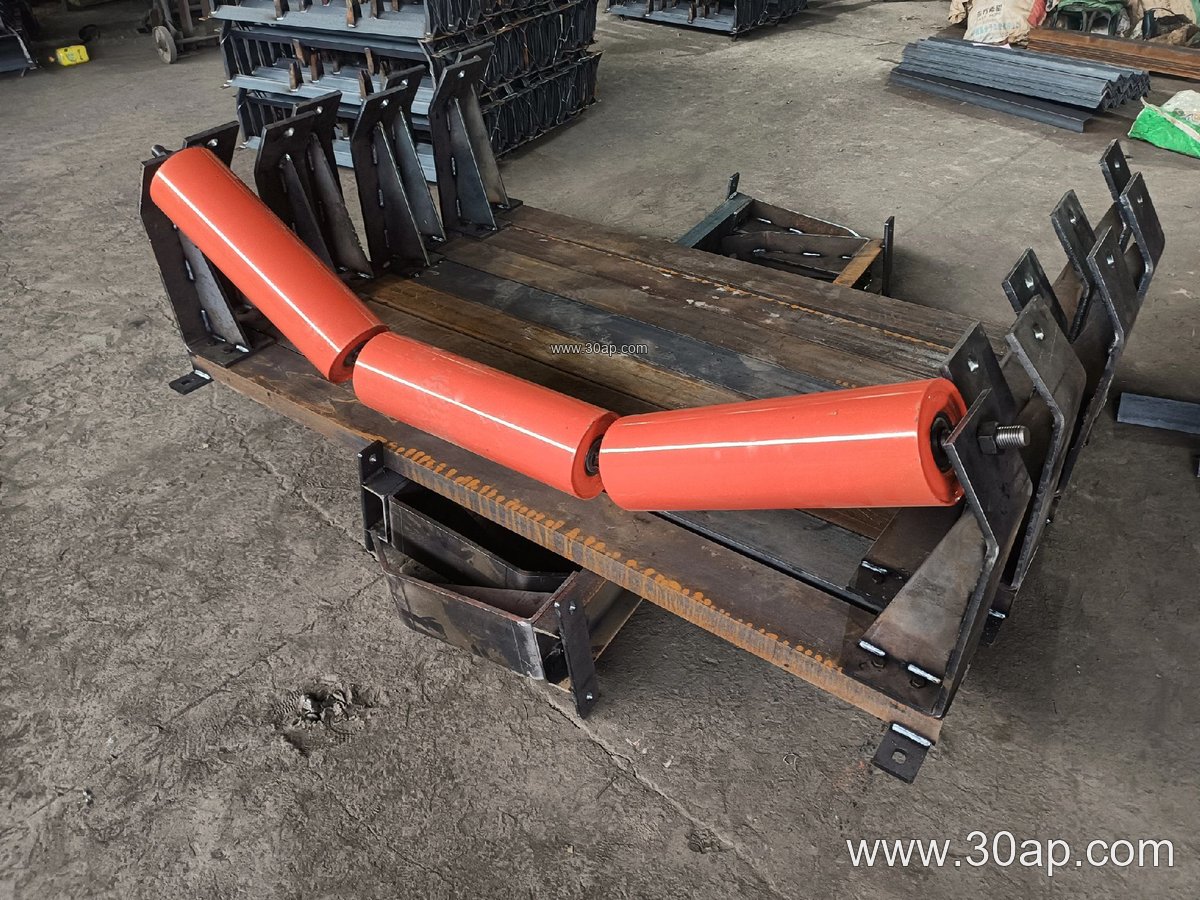
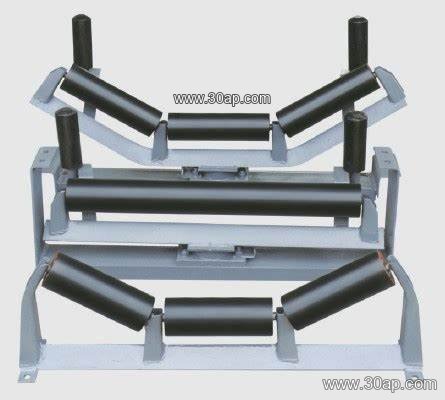
A four-roll idler bracket is a support frame that carries four idler rollers under the belt line. It is commonly used in the transition zone or in heavy-load sections where the conveyor belt needs extra support to keep a stable trough profile. Unlike a standard three-roll bracket, this design distributes the load across four rollers, which can reduce point pressure on the belt and help maintain a smooth material path. In quarry conveyor lines and cement plant clinker transport, the bracket works together with the conveyor belt and idler roller set to keep bulk material centered.
Construction and Mounting Position
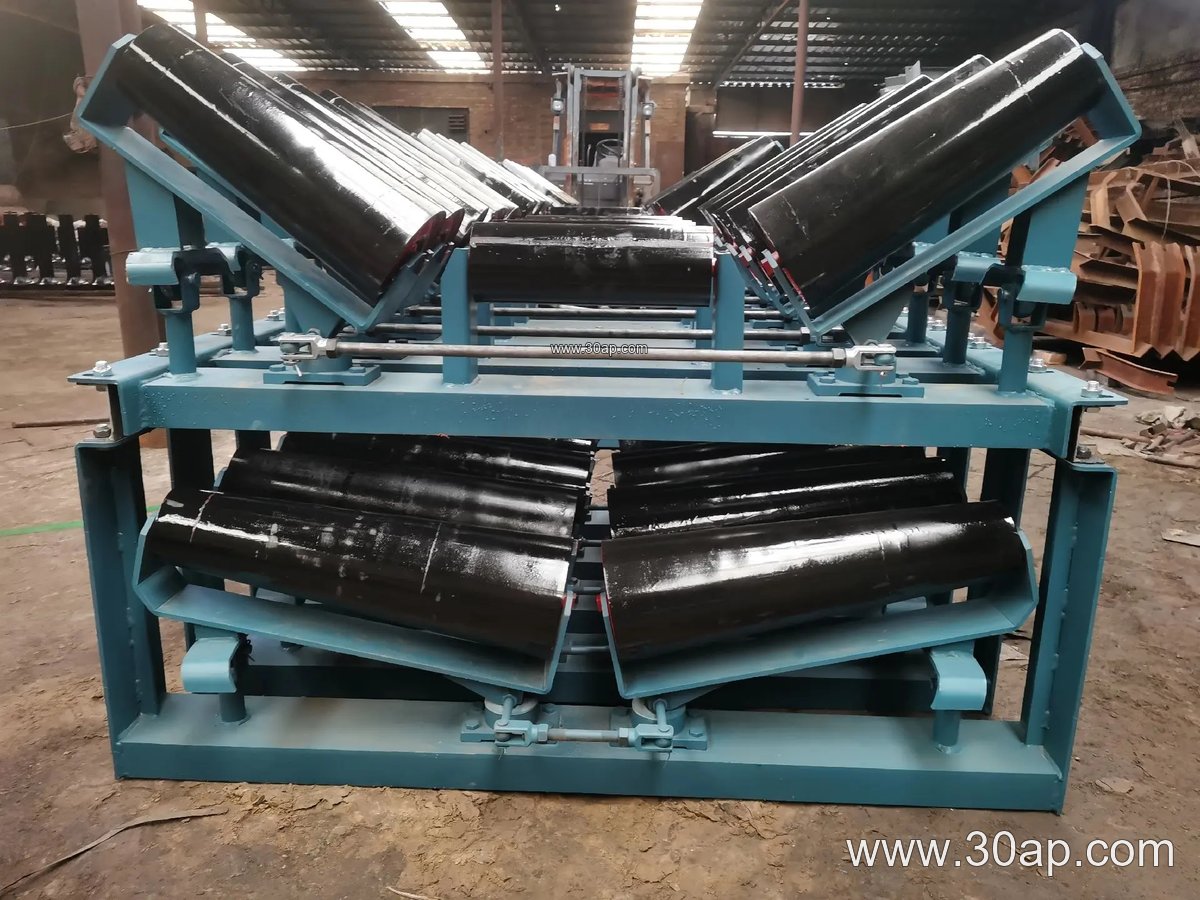
Most four-roll idler brackets are fabricated from angle steel, channel steel, or bent steel plate. The frame usually includes two outer rolls set at the main trough angle and two inner rolls that create a shallower center section. This arrangement can be fixed or adjustable, depending on the design. Adjustable versions allow the trough angle to be set between common values such as 20, 30, 35, or 45 degrees. The bracket is bolted to the conveyor stringer or cross beam, and the mounting hole spacing and beam length are determined by belt width and trough angle rather than being a single fixed number.
Typical Reference Dimensions
The table below shows common combinations used in design discussions. These are reference values, not universal specifications, and actual selection should follow the conveyor design.
| Belt Width | Trough Angle | Idler Roller Diameter | Bracket Type |
|---|---|---|---|
| B650 | 30 degrees | Ø89 | Fixed or adjustable |
| B800 | 35 degrees | Ø108 | Fixed or adjustable |
| B1000 | 35 degrees | Ø108 | Adjustable |
| B1200 | 45 degrees | Ø133 | Fixed |
| B1400 | 45 degrees | Ø159 | Fixed or adjustable |
| B1600 | 35 degrees | Ø159 | Adjustable |
Larger belt widths such as B1800 and B2000 may also use four-roll brackets in high-capacity transfer points, but the roller diameter and frame length must be confirmed by the conveyor designer. The bracket is not a substitute for a conveyor pulley at the drive, tail, or bend position; those components serve different functions.
Where It Fits in the Conveyor System
Four-roll idler brackets are often found in the loading zone, at transfer points, and along sections where the belt carries uneven or heavy lumps. In an iron ore port terminal or a limestone quarry, the bracket helps the belt stay in contact with all rollers, which can improve tracking and reduce spillage. When used with a heavy-duty mining conveyor belt or an abrasion resistant conveyor belt, the extra support can contribute to longer belt life. The bracket also pairs well with impact resistant conveyor belt in crusher discharge areas, where material drop height is significant.
In coal mining conveyor belt systems, flame retardant conveyor belt and anti-static conveyor belt are common, and the bracket must be compatible with the roller mounting dimensions. The same applies in power plant coal handling and steel plant sinter lines, where heat resistant conveyor belt may be used near hot material. The four-roll bracket does not replace a self-aligning bracket or a buffer bracket; each has a specific role, and the four-roll design is chosen for load distribution and trough stability.
Buyer Checklist
- Confirm belt width, trough angle, and roller diameter with the conveyor design, not from a single catalog page.
- Check whether the bracket is fixed or adjustable, and whether the adjustment range covers the required angles.
- Verify mounting hole spacing and cross beam length against the existing stringer dimensions.
- Match the bracket material and finish to the environment, such as dusty quarry conditions or wet coal handling.
- Ensure the idler roller shaft ends fit the bracket slots without modification.
- Consider the belt type in use, including EP conveyor belt, NN conveyor belt, or steel cord conveyor belt, because belt stiffness affects trough formation.
For bulk material conveyor belt systems in sand and gravel plants, cement plants, and port loading facilities, the four-roll idler bracket is a practical frame choice when stable belt support is needed. Buyers should treat all dimensions as project-specific and confirm them with the conveyor manufacturer before ordering.