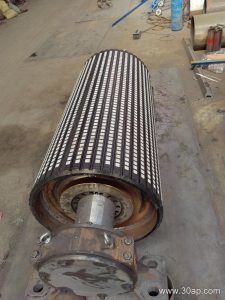
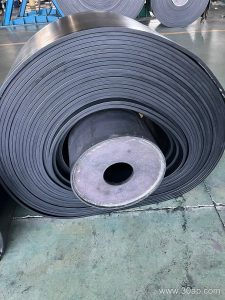
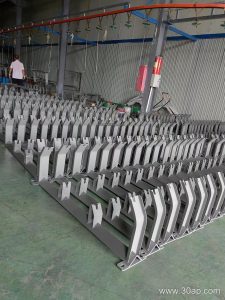
What a Large-Diameter Conveyor Pulley Is
A large-diameter conveyor pulley is a drum-style rotating component used at the head, tail, tension or bend positions of a belt conveyor, with a shell diameter sized well above the small pulleys found on light-duty lines. In practice, diameters such as Ø800, Ø1000, Ø1250, Ø1400 and above are common on heavy conveyors, while the exact figure is set by belt tension, wrap angle, shaft load and the space available in the frame. It is the same product family as an industrial conveyor pulley; the word large simply describes the size class and the duty it is expected to carry.
These pulleys are frequently seen in iron ore plants, coal preparation facilities, cement kilns and port bulk terminals, where a wide, heavily loaded conveyor belt runs continuously. You may also hear the same item called a heavy-duty conveyor drum or a head drum, depending on where it sits on the conveyor.
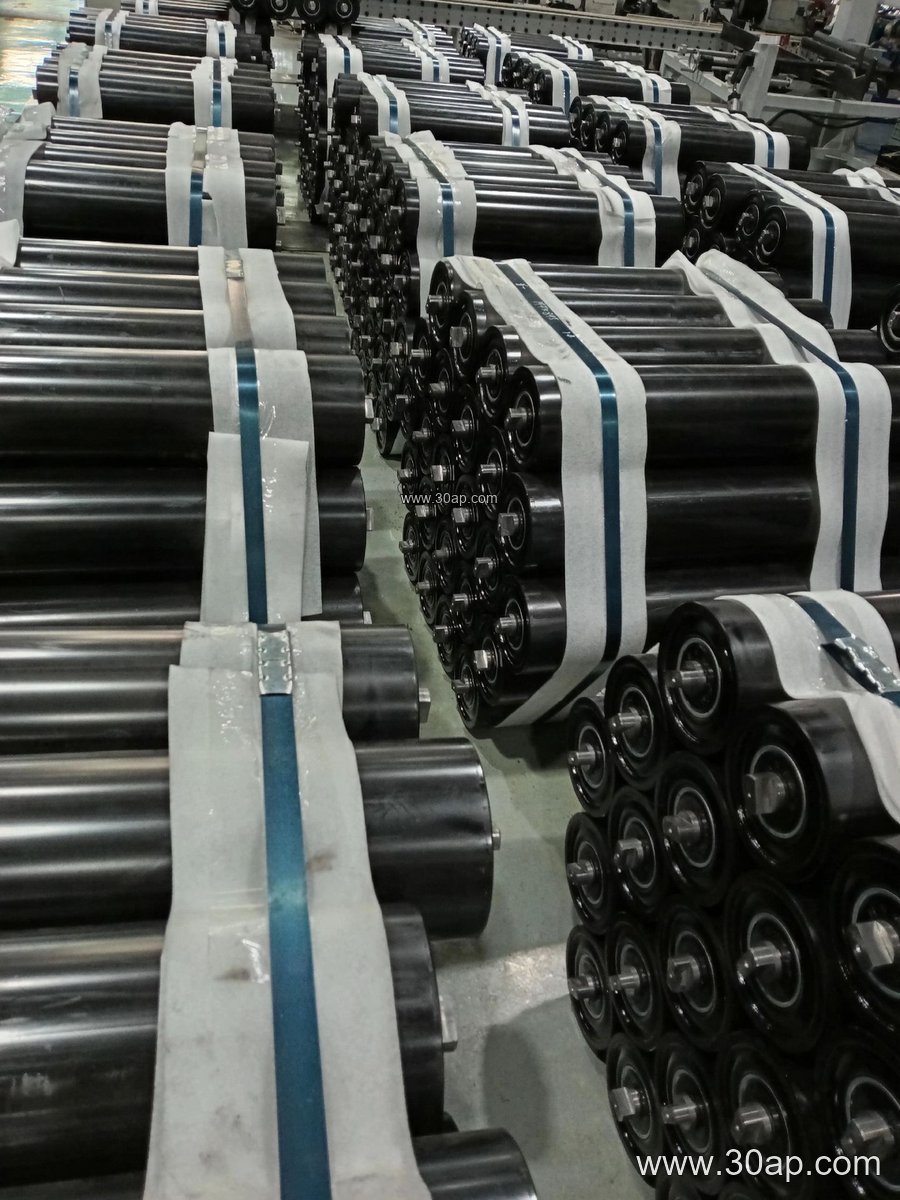
Construction and Surface Options
The shell is usually a rolled steel cylinder, machined and welded to end discs, with a shaft pressed or keyed into the hub. Larger units often use a welded hub and diaphragm design to spread torque evenly and reduce stress at the weld seams. Shaft diameters for this class commonly range from Ø100 up to Ø200 or more, but the final value is determined by torque and bending load rather than belt width alone.
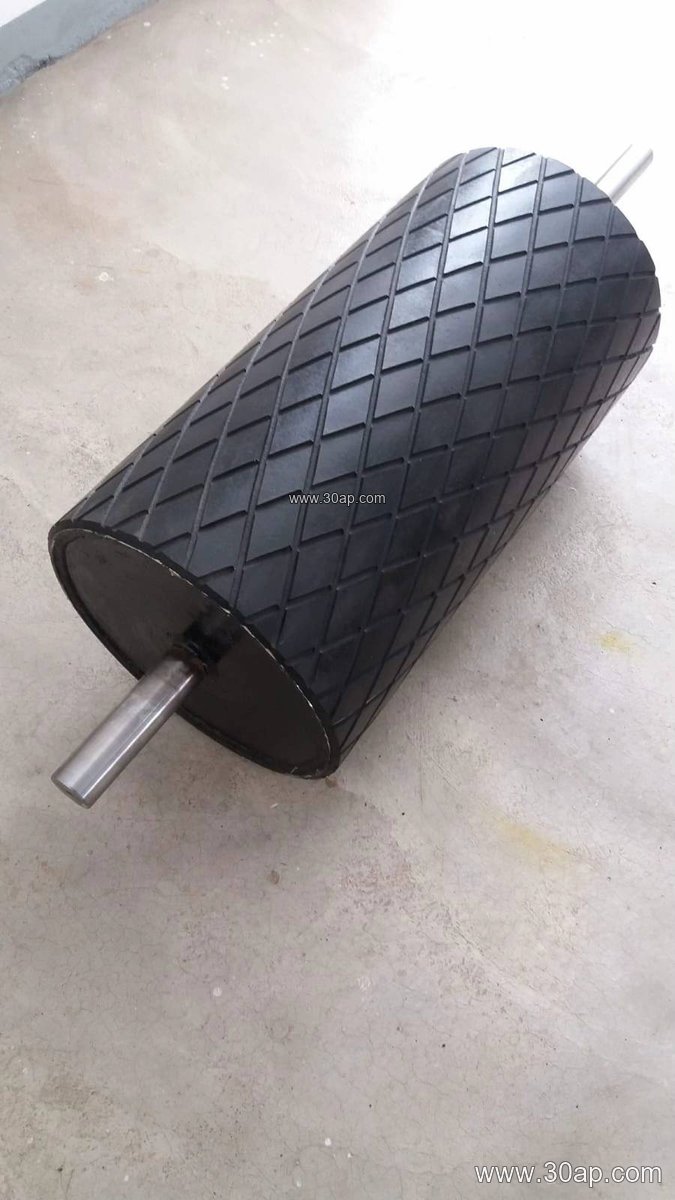
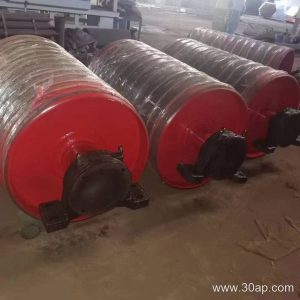
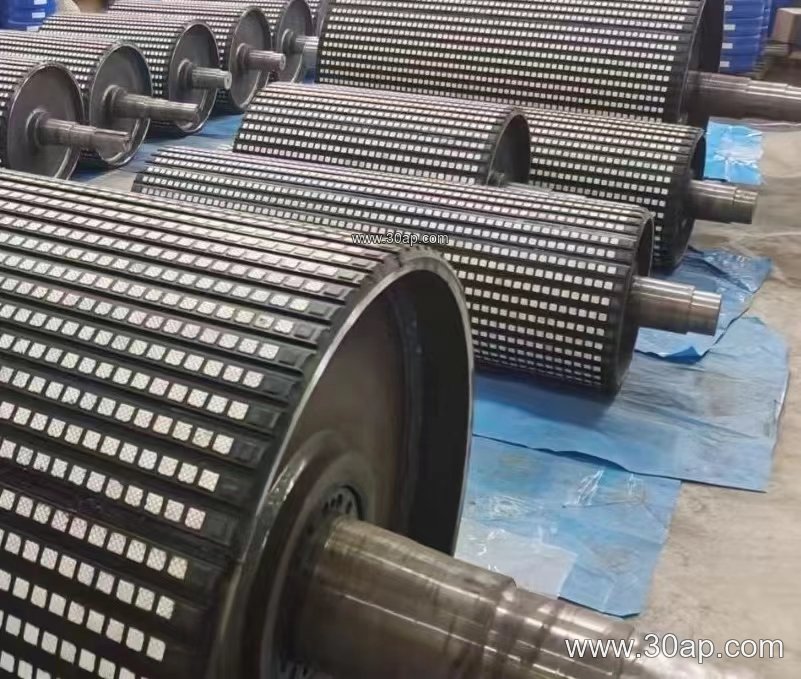
Surface treatment matters as much as shell thickness. Common forms include plain finish, hot-vulcanized rubber lagging, cold-bonded rubber, diamond grooved lagging, herringbone lagging and ceramic lagging. Lagging thickness is often 8, 10, 12, 15 or 20 mm. Diamond and herringbone patterns help shed water and fine material, while ceramic tiles suit highly abrasive service in a quarry conveyor belt line or a copper ore transfer station.
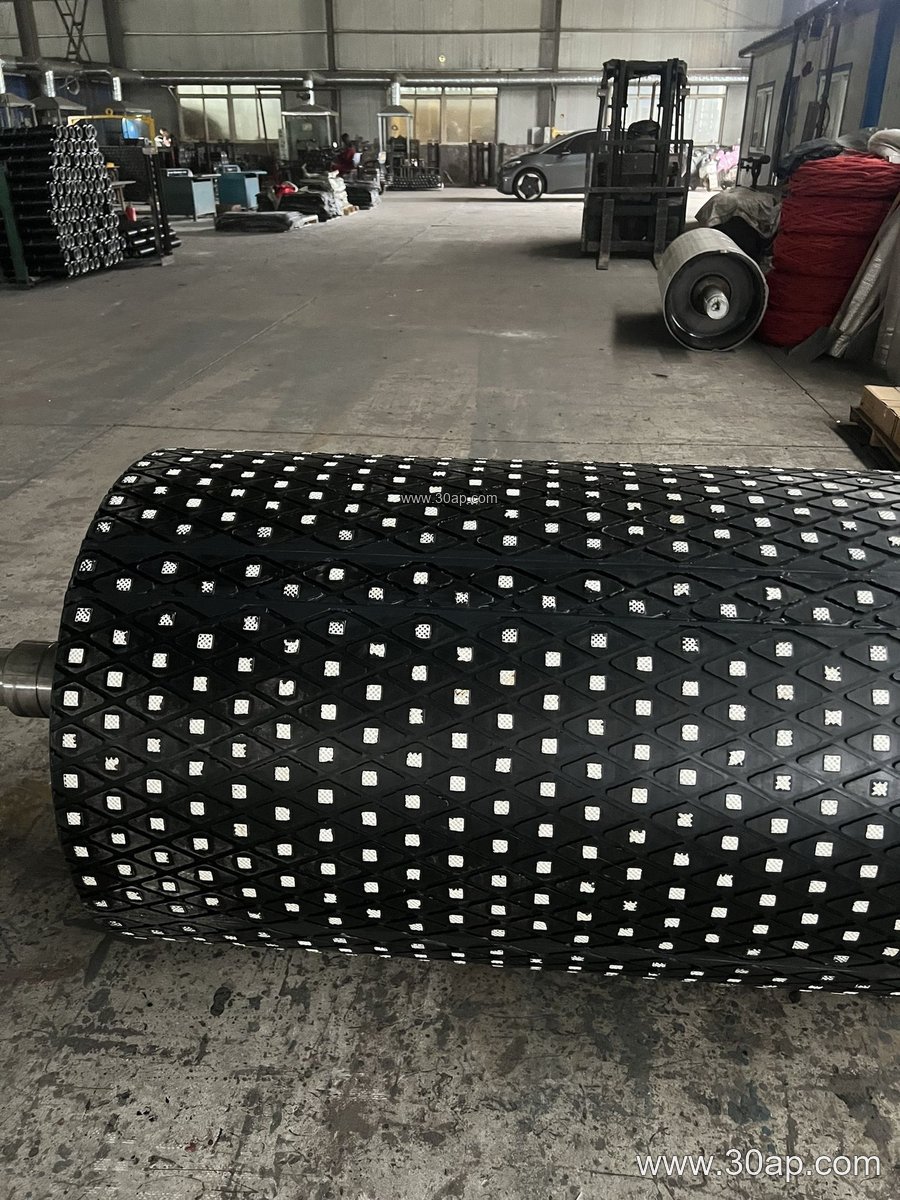
- Shell: rolled steel, machined for balance
- Hub and shaft: welded or shrink-fit, sized by torque
- Lagging: plain, rubber, diamond, herringbone or ceramic
- Bearings: pillow block or flanged, selected by radial load
The face width of the drum is normally wider than the belt it carries; for example, a B1200 belt is often matched with a face width near 1400 mm, and a B800 belt with roughly 950 mm. These are reference relationships, not fixed rules, and a B1200 × Ø1000 or B1400 × Ø800 combination may both appear in real projects. A large-diameter pulley at a head station can carry an EP conveyor belt or a steel cord conveyor belt, and the lagging choice should reflect the material being moved.
Where It Fits on the Conveyor
Position determines function. A drive pulley, also called the head pulley, transmits power to the belt and is usually the largest drum on the line. A tail pulley supports the belt at the loading end. A bend or deflection pulley changes belt direction without driving, and a tension pulley maintains take-up force. These roles are not interchangeable, and a large-diameter drive drum cannot simply be swapped for a bend drum of the same size without checking wrap angle and torque.
In a coal mining conveyor belt system, the head drum often runs with diamond lagging to keep grip in damp conditions, while a bend pulley upstream may use a plain finish. In a cement plant, heat resistant conveyor belt grades may call for a drum design that allows airflow and easy inspection. At a port ship loading conveyor, a wide face drum with ceramic lagging can reduce slip during wet weather.
Buyer Checklist
Before ordering, confirm the belt width, the required diameter, the shaft size and the bearing type. Check the lagging pattern against the material and the environment. Ask how the shell and hub are welded and whether the shaft is machined after welding. Review the balancing grade, since an unbalanced large drum can shorten bearing life. Also confirm the mounting dimensions, the conveyor bracket interface and the take-up arrangement.
Maintenance is mainly about inspection: watch lagging wear, check bolt tightness, listen for bearing noise and verify that the drum turns freely. Re-lagging a worn surface is often cheaper than replacing the whole assembly. For any conveyor pulley selection, match the drum to the belt, the load and the drive, and treat published sizes as guidance rather than fixed supply promises.