What a Five-Roll Idler Bracket Does
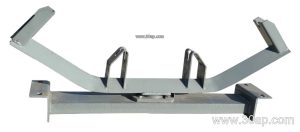
A five-roll idler bracket is a support frame that carries five idler rollers in a single troughing station. Instead of the three rolls found in a conventional trough set, this bracket spreads the conveyor belt across five contact points, creating a wider, smoother trough profile. The arrangement is common on high-capacity conveyors where belt widths and material loads make a three-roll profile less effective at containing the load. In a quarry or a cement plant, the extra rolls help keep bulk material centered and reduce spillage along the carrying side.
The bracket is a structural item, not a rotating one. It positions and holds the idler rollers, and its geometry determines the trough angle and the belt’s cross-section. For this reason, buyers often treat the five-roll idler bracket as part of the conveyor’s overall troughing design rather than as a simple accessory. On a long overland conveyor carrying aggregate or ore, the difference between a three-roll and a five-roll station can be visible in belt tracking and edge wear.
How the Bracket Is Built
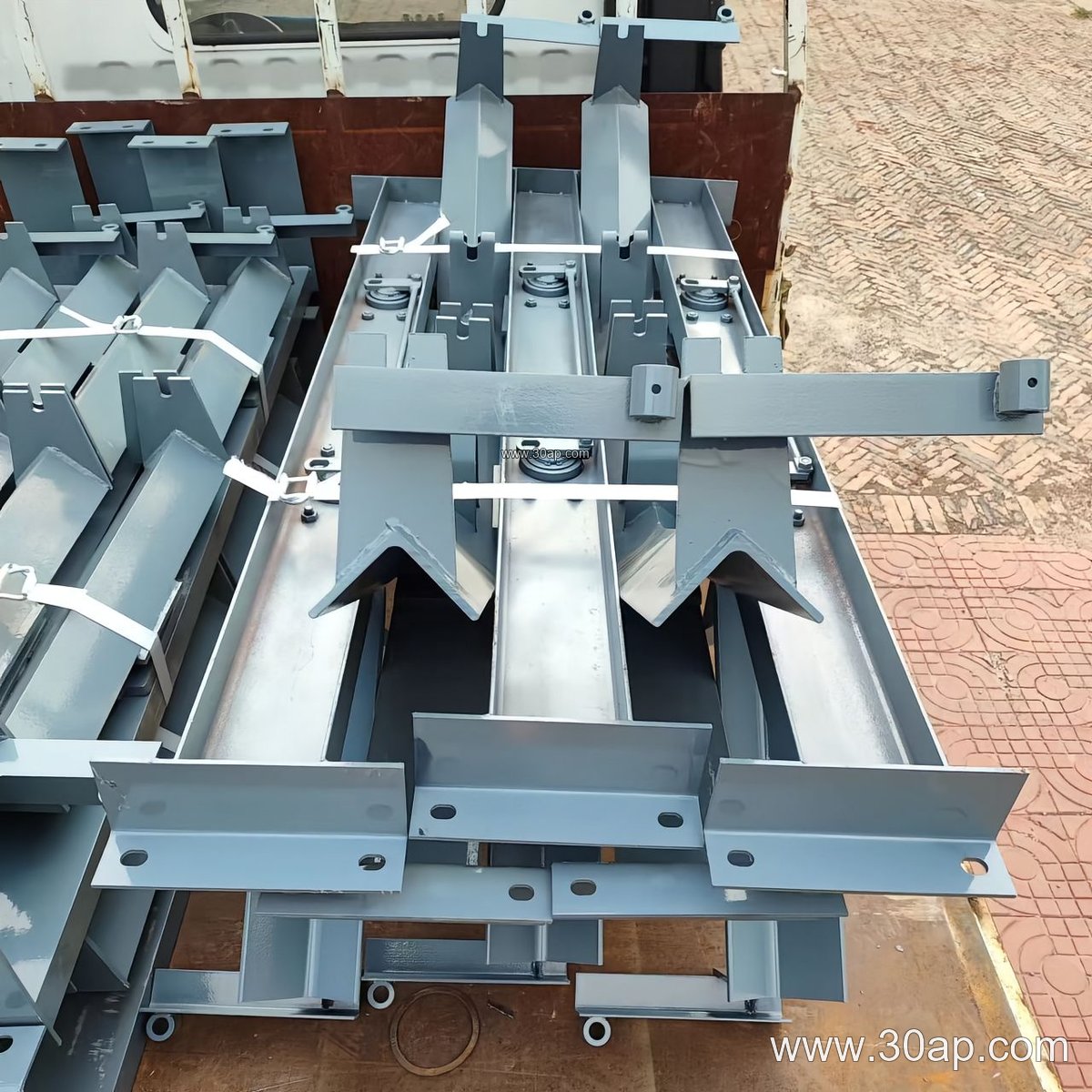
Most five-roll idler brackets are fabricated from angle steel, channel steel, or folded steel plate. The frame usually consists of a central horizontal section, two intermediate inclined arms, and two outer inclined arms. Each arm carries a mounting position for an idler roller, and the angles of the arms set the trough shape. Welded gussets and cross members add stiffness so the bracket does not flex under the weight of a loaded belt.
Mounting hole spacing and crossbeam length are not fixed values. They are determined by the belt width, the chosen trough angle, and the roller diameter. A bracket designed for a B1200 belt at a 45-degree trough angle will not share the same hole pattern as one built for a B800 belt at 35 degrees. Buyers should confirm these dimensions with the conveyor designer rather than assume a standard layout.
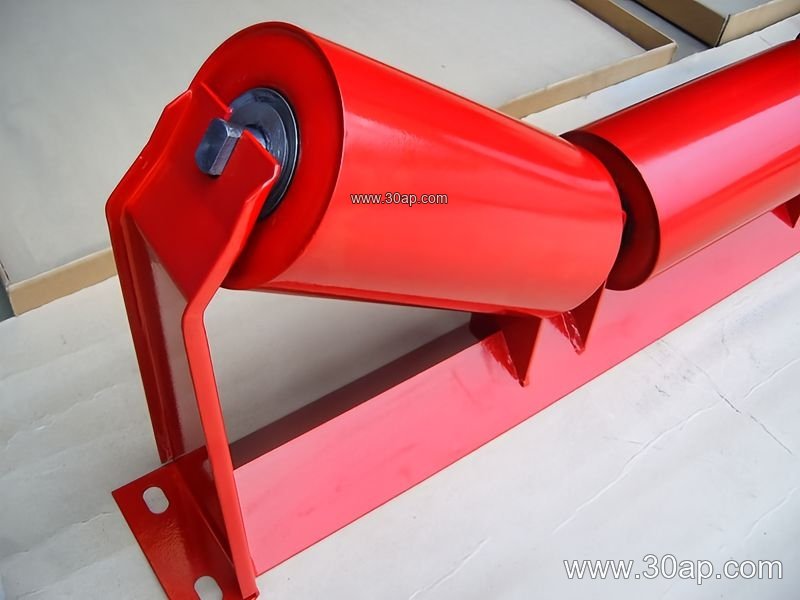
- Frame material: angle steel, channel steel, or folded plate
- Roll positions: five, arranged symmetrically about the belt centerline
- Common trough angles: 20, 30, 35, and 45 degrees
- Common roller diameters: Ø89, Ø108, Ø133, Ø159, Ø194
- Common belt widths: B500 through B2200, depending on design
Where Five-Roll Stations Fit in a Conveyor
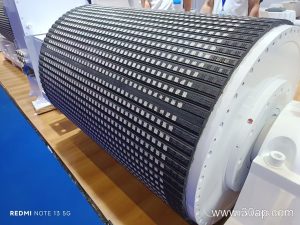
The five-roll bracket is normally used on the carrying side of a conveyor, in the troughing section between the head and tail. It is not a substitute for a drive pulley, tail pulley, or bend pulley, and it does not replace the conveyor pulley that transmits motion to the belt. Its job is support and profile control.
Typical applications include:
- Wide belt conveyors in coal preparation and power plant coal handling
- Ore and rock transport in iron ore and limestone operations
- Aggregate and sand lines where spillage control matters
- Cement plant raw material and clinker conveying
- Port and ship loading conveyors handling bulk material
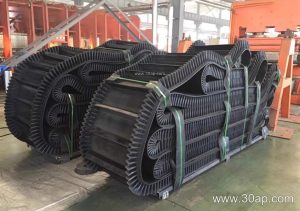
In these settings, the five-roll configuration is often paired with a heavy-duty rubber conveyor belt or a steel cord conveyor belt where impact and abrasion are significant. A five-roll idler bracket should be selected alongside the idler roller type, since roll diameter and bearing style affect how the bracket performs.
Five-Roll versus Three-Roll Troughing
A three-roll troughing station is the standard choice for many conveyors and remains suitable for moderate belt widths and loads. The five-roll version becomes relevant when the belt is wide enough that a three-roll trough leaves a flatter center section, or when material tends to migrate toward the belt edges. More rolls mean more support points and a deeper, more rounded trough, which can improve load containment. The trade-off is additional rollers, more mounting positions, and a heavier bracket that requires proper frame alignment.
This comparison is about troughing geometry, not about replacing one pulley type with another. Drive, tail, and bend pulleys serve separate functions and are selected on different criteria.
Buyer Checklist
Before ordering a five-roll idler bracket, confirm the belt width, the required trough angle, the roller diameter, and the mounting hole pattern. Check that the bracket material matches the duty level, and verify that the frame will align with the existing conveyor stringers. For abrasive or high-impact service, consider how the bracket pairs with an abrasion resistant conveyor belt and whether impact idlers are needed at transfer points.
Ask for dimensional drawings rather than relying on nominal descriptions. A bracket that fits one conveyor may not fit another even when both use the same belt width. Finally, plan for maintenance access, since a five-roll station has more rollers to inspect and replace than a three-roll set.