What a Conveyor Self-Aligning Idler Does
A conveyor self-aligning idler is a carrying or return idler assembly designed to correct belt drift as it happens. Instead of sitting square to the frame like a standard troughing idler, it is mounted on a pivoting base or fitted with angled rollers that steer the conveyor belt back toward the centerline when it wanders. In a quarry, a coal handling plant, or a cement kiln feed line, this small correction prevents edge damage, spillage, and premature wear on the conveyor pulley and frame.
The same product is also called a self-training idler or training idler. These are accurate equivalent names for the same item. Drive pulleys, tail pulleys, and bend pulleys are separate components and are not interchangeable with this idler.
How the Assembly Is Built
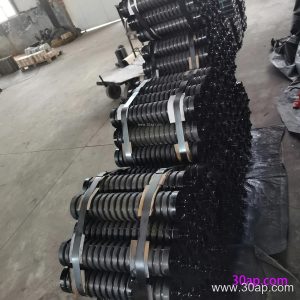
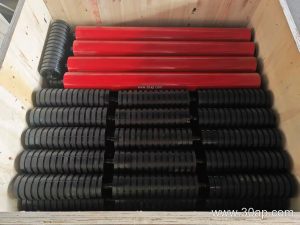
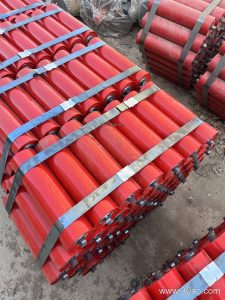
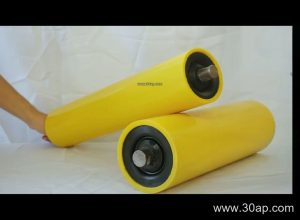
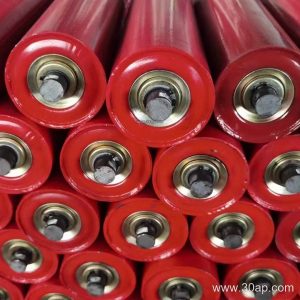
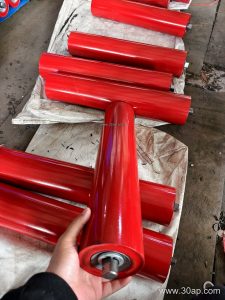
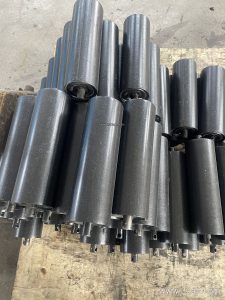
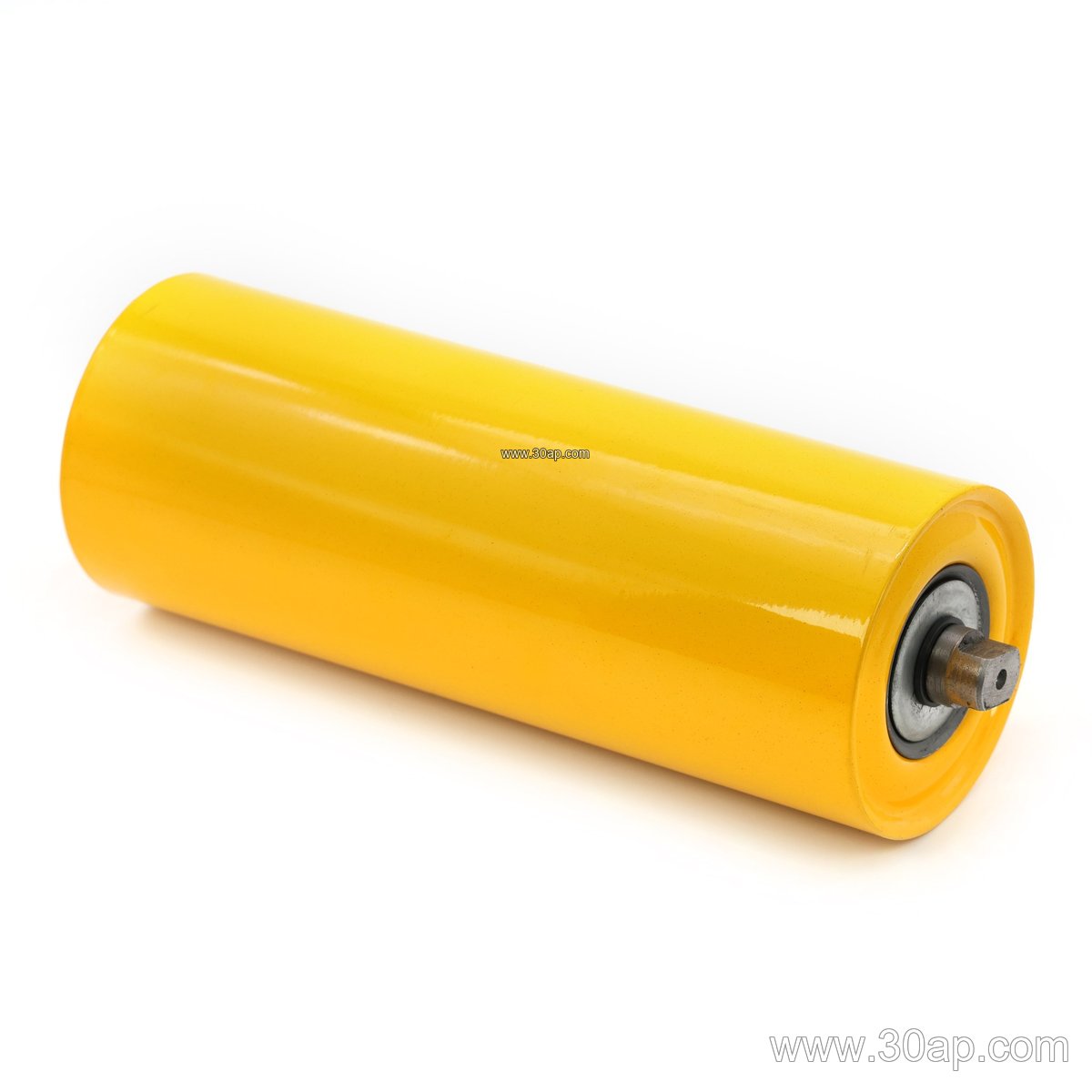
A typical unit combines two or three idler rollers, a pivot mechanism, and a mounting bracket. The rollers may be steel tube, nylon, or rubber-covered, and the pivot responds to friction or side load from a misaligned belt. Common variants include friction self-aligning idlers, conical self-aligning idlers, and plain self-aligning troughing sets.
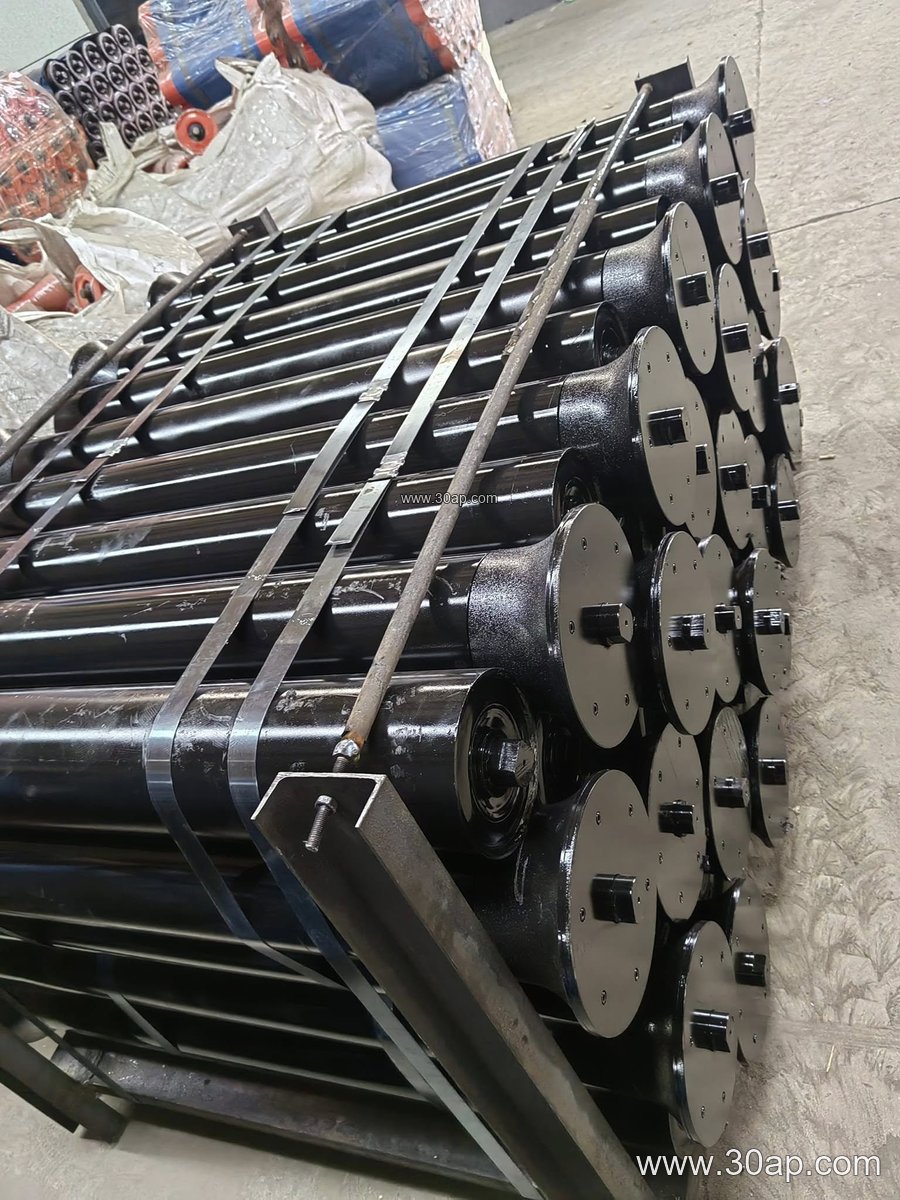
- Roller shell: steel tube, nylon, or rubber ring surface
- Bearing: 6204, 6205, 6305, 6306, 6308, or 6310 depending on load and roller size
- Roller diameter: commonly Ø63, Ø76, Ø89, Ø102, Ø108, Ø127, Ø133, Ø159, Ø178, Ø194, or Ø219 mm
- Mounting: pivoting base or fixed bracket with adjustable arms
Roller length follows belt width, trough angle, and the idler set form. For a three-roll troughing set, common roller lengths are roughly 200 mm at B500, 250 mm at B650, 315 mm at B800, 380 mm at B1000, 465 mm at B1200, 530 mm at B1400, 600 mm at B1600, 670 mm at B1800, and 750 mm at B2000. Side rollers and center rollers can differ, so these are examples rather than fixed matches.
Where It Fits on the Conveyor
Self-aligning idlers are usually placed at intervals along the carrying run, often near the head end, the tail end, and any point where the belt is likely to drift. On a long overland conveyor at a copper mine or an iron ore terminal, several training stations may be spaced between ordinary troughing idlers. Return-side self-aligning units are also used under the belt to control tracking on the empty strand.
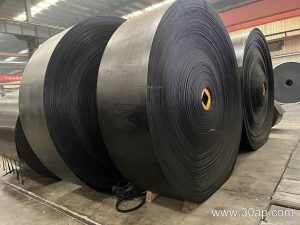
The working load comes from the conveyor belt itself, so the idler must suit the belt type. A heavy-duty mining conveyor belt or steel cord conveyor belt running at high tension needs a robust frame and bearings, while a lighter EP conveyor belt or NN conveyor belt on an aggregate line may use a smaller roller diameter. Heat resistant conveyor belt and flame retardant conveyor belt installations in power plant coal handling or underground coal mining conveyors also benefit from reliable tracking to avoid rubbing against structure.
Choosing the Right Size and Type
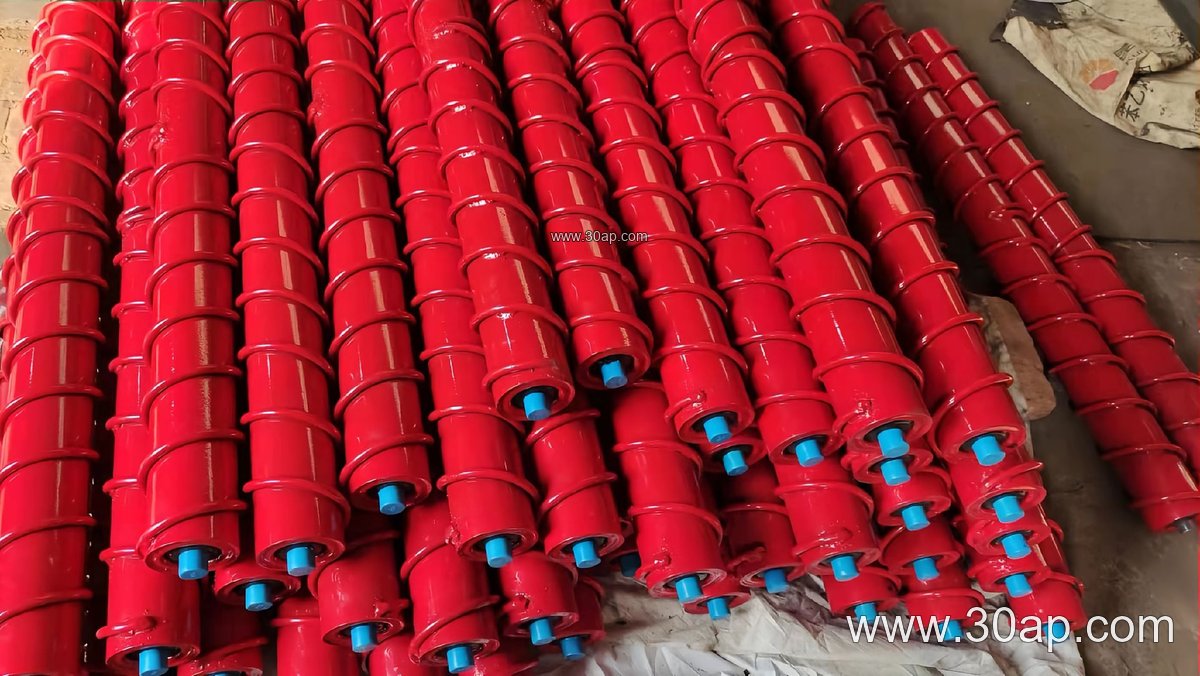
Selection starts with belt width, trough angle, and the mass of material carried. Trough angles of 20, 30, 35, and 45 degrees are common, and the idler set should match the existing trough profile so the belt transitions smoothly. Forward tilt of about 1.5 to 2 degrees is sometimes used on training idlers to encourage centering, but it should be set according to the conveyor design.
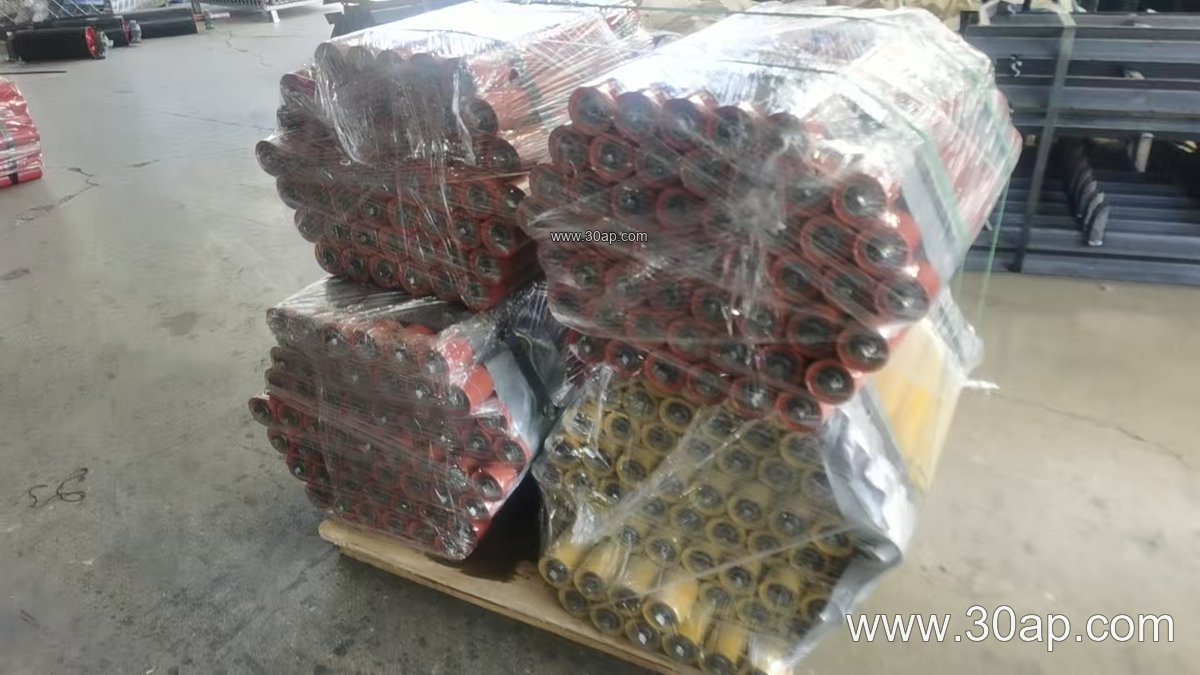
Buyers should confirm the roller diameter, shaft end type, bearing size, and bracket dimensions against the conveyor frame. A conveyor bracket that does not match the pivot base will cause installation problems. For abrasive duties such as a crusher conveyor belt or quarry conveyor belt, rubber ring rollers or ceramic-faced rollers may extend service life. For dusty coal mining conveyor belt lines, sealed bearings matter more than a fancy roller surface.
Maintenance and Practical Notes
Check pivot freedom regularly; a seized pivot turns a self-aligning idler into a fixed one. Inspect roller shells for flat spots, listen for bearing noise, and confirm that the belt is not over-tensioned. Keep the conveyor pulley and belt edges clean, since buildup can defeat even a well-set training idler. Spare rollers should match the original diameter and bearing number so the set stays balanced.
Used correctly, a conveyor self-aligning idler is a low-cost way to protect the belt, reduce spillage, and keep a bulk material conveyor running straight in mining, cement, steel, and port operations.