What a Four-Roll Idler Bracket Does
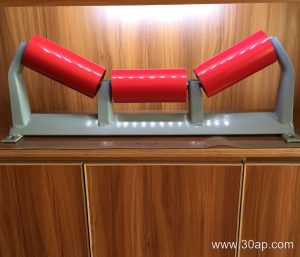
A four-roll idler bracket is the support frame that carries four idler rollers under the loaded run of a conveyor belt. Instead of the familiar three-roller trough set, this bracket arranges two outer rolls at a steeper angle and two inner rolls at a shallower angle, forming a deeper, more rounded trough profile. In quarry lines, sinter plants and bulk terminals, that deeper profile helps keep a wide, heavily loaded belt centered and reduces spillage at transfer points.
The bracket is a structural part, not a rotating part. It positions the idler rollers, sets the trough angle, and transfers the weight of belt and material into the conveyor stringer. A well-matched four-roll idler bracket and idler roller set keeps the belt tracking smoothly whether the conveyor is moving abrasive stone, clinker or damp coal.
How the Bracket Is Built
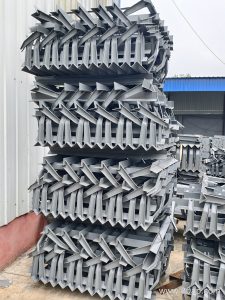
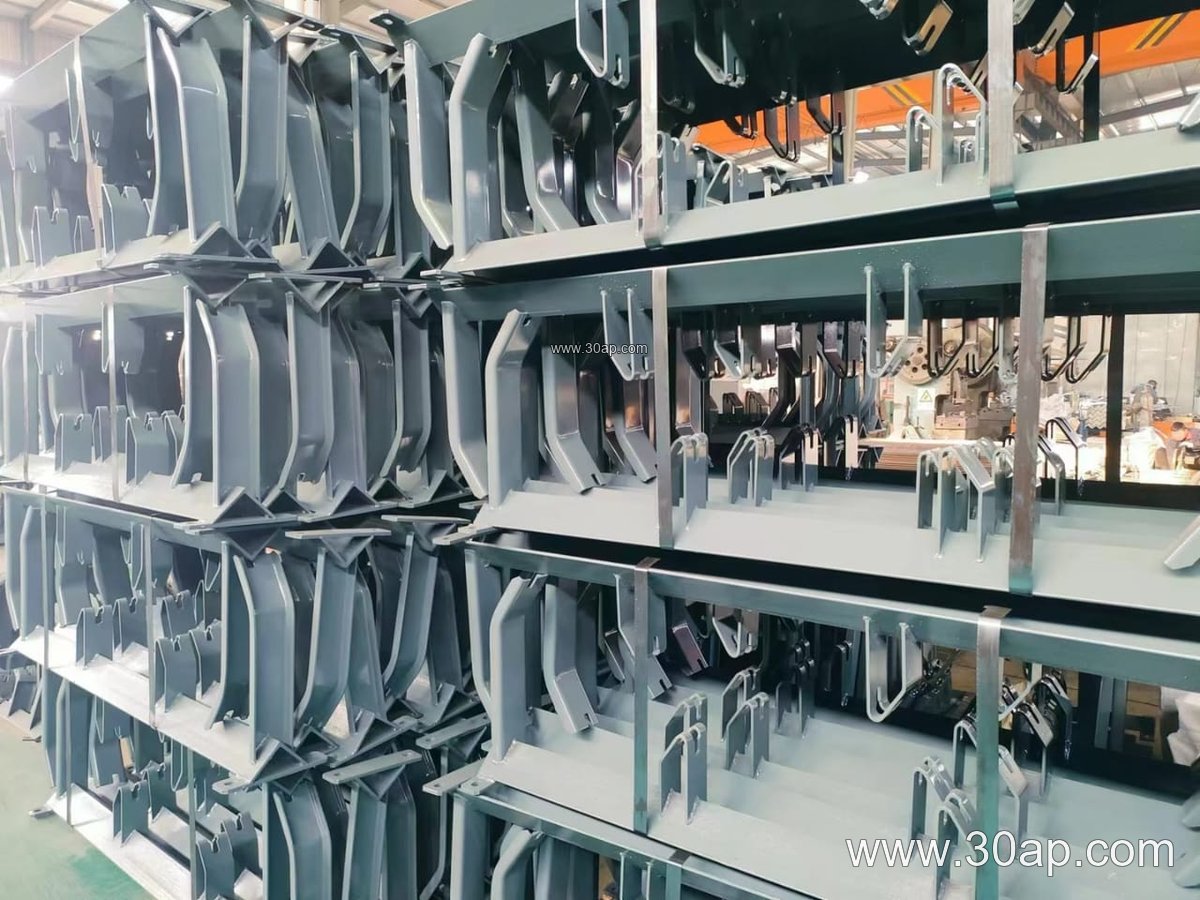
Most units are fabricated from angle steel, channel steel or folded steel plate, then welded into a rigid crossbeam with bolted or pinned roller seats. Common construction details include:
- Two outer roller cradles set at a steep angle and two inner cradles at a flatter angle
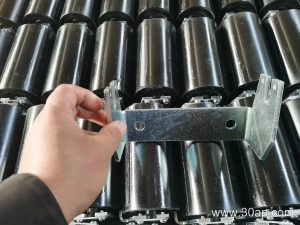
- Mounting feet or brackets that bolt to the conveyor stringer
- Reinforced center section where the inner rolls meet
- Optional adjustable seats that let maintenance crews fine-tune the trough angle
Because the frame carries four rolls, the load per roll is lower than in a comparable three-roll arrangement, which can extend roller bearing life on wide, high-tonnage belts. The bracket itself must be stiff enough that it does not flex under load, since flexing changes the trough shape and disturbs belt tracking.
Where Four-Roll Idler Brackets Are Used
These brackets suit conveyors that are wide, heavily loaded or prone to spillage. Typical placements include the loading zone of a limestone quarry conveyor, the main haulage drift in an underground coal mine, and the transfer towers of a cement plant. They are also found on power plant coal handling lines and in iron ore concentrate circuits where a deep trough improves material containment.
When the conveyed belt is a heavy-duty mining conveyor belt or a steel cord conveyor belt carrying sharp rock, the deeper trough of a four-roll arrangement can reduce edge loading and belt wander. On long overland lines, the same bracket style is sometimes chosen to keep a wide conveyor belt stable through curves and undulating terrain.
Matching the Bracket to Belt Width, Trough Angle and Roll Diameter
Selection starts with belt width, required trough angle and roller diameter. A four-roll idler bracket is normally ordered to suit a specific belt width and a defined trough angle, while the roller seats are machined for a chosen roll diameter. Common reference values include belt widths from B500 to B2200, trough angles of 20, 30, 35 and 45 degrees, and roller diameters such as Ø89, Ø108, Ø133, Ø159 and Ø194. These are reference ranges, not fixed rules; a B1000 belt, for example, may be paired with different roll diameters and trough angles depending on load and belt stiffness.
The table below shows representative combinations for planning purposes only. Actual mounting hole spacing and crossbeam length are determined by the conveyor design, not by belt width alone.
Reference Selection Examples
| Belt Width | Trough Angle | Roller Diameter | Typical Use |
|---|---|---|---|
| B650 | 30 degrees | Ø89 | Small aggregate transfer |
| B800 | 35 degrees | Ø108 | Quarry feed conveyor |
| B1000 | 35 degrees | Ø133 | Cement plant clinker line |
| B1200 | 45 degrees | Ø133 | Coal handling in power plant |
| B1400 | 45 degrees | Ø159 | Iron ore primary haulage |
| B1600 | 45 degrees | Ø194 | Heavy bulk terminal |
Adjustable brackets allow the trough angle to be changed within a range, which is useful when a conveyor handles different materials or when belt training needs correction after installation. Fixed brackets are simpler and stiffer, and are common where the trough angle is set once at the design stage.
Buyer Checklist
Before ordering, confirm the belt width, the required trough angle, the roller diameter and the stringer bolt pattern. Ask whether the bracket is fixed or adjustable, and check that the roller seats match the idler roller end fittings you plan to use. Confirm the steel section and finish, and whether the frame is designed for the load of a fully loaded belt. For abrasive duty, a robust four-roll idler bracket paired with abrasion resistant conveyor belt and quality idler rollers will usually outlast a lighter frame that flexes under load.
For matching components, buyers often review conveyor belt, idler roller and conveyor pulley options together so that bracket, roller and belt work as one system. A four-roll idler bracket is only as good as the alignment of the parts around it, so keep the whole conveyor bracket assembly in mind during selection.