What a Carbon Steel Conveyor Bracket Does
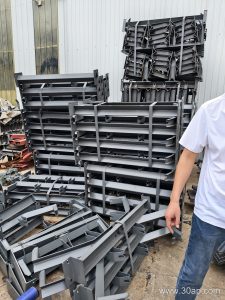
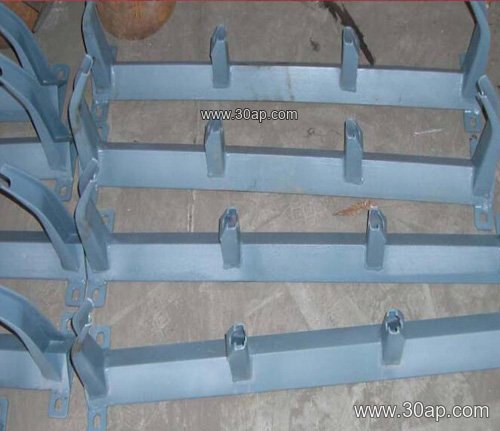
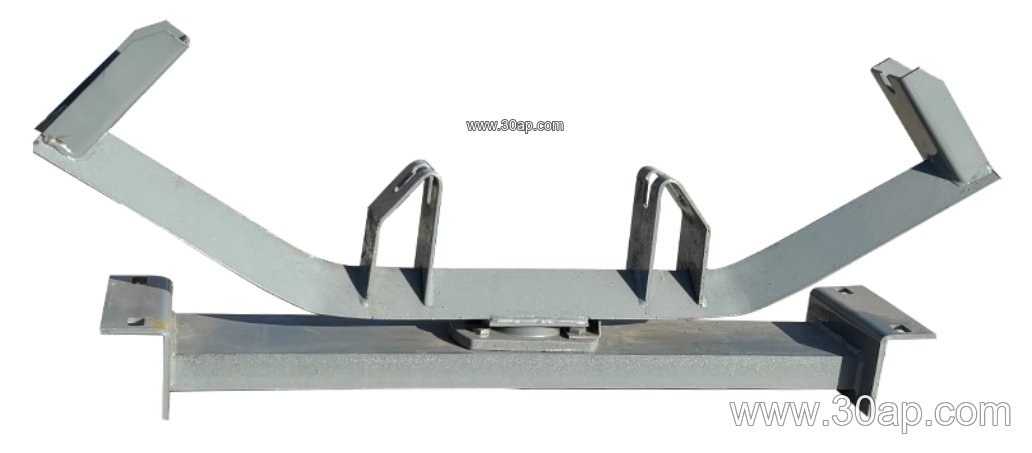
A carbon steel conveyor bracket is the structural support that holds idler rollers in the correct position under and over the conveyor belt. It carries the roller load, keeps the trough shape, and transfers vibration and impact into the conveyor frame. In a coal mining conveyor line, a quarry conveyor, or a power plant coal handling system, these brackets are the quiet workhorses that determine whether the belt tracks smoothly or wanders.
The bracket is usually fabricated from angle steel, channel steel, or folded steel plate. Holes are punched or drilled for roller shafts, and the crossbeam length and hole spacing are set by belt width and trough angle. Because the material is plain carbon steel, the bracket offers good stiffness and weldability at a reasonable cost, and it can be painted or galvanized for corrosion protection.
Common Bracket Types and Where They Sit
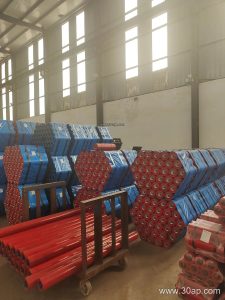
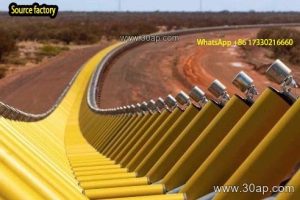
- Trough brackets support the three-roller carrying side and set the trough angle.
- Transition brackets ease the belt from flat to troughed profile near pulleys.
- Return brackets and V-return brackets support the belt on its way back.
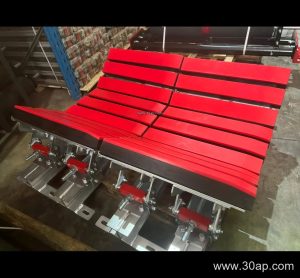
- Impact brackets sit under loading points and carry buffer rollers.
- Self-aligning brackets correct belt drift on long runs.
Adjustable brackets let maintenance crews change the trough angle between common values such as 20, 30, 35, and 45 degrees. Forward-tilt brackets usually lean about 1.5 to 2 degrees to help center the belt.
Matching Bracket to Belt Width and Roller Diameter
Belt width and roller diameter are chosen together with the bracket. Typical pairings seen in the field include B800 with 35 degrees and Ø108 rollers, B1200 with 45 degrees and Ø133 rollers, or B650 with 30 degrees and Ø89 rollers. These are common references, not fixed rules. A wide, heavy-duty mining conveyor belt may call for Ø159 or Ø194 rollers, while a light aggregate line may stay smaller. The bracket drawing should always follow the actual design, because hole spacing and beam length change with width and trough angle.
| Reference | Belt Width | Trough Angle | Roller Diameter |
|---|---|---|---|
| Light duty | B500 to B650 | 20 to 30 degrees | Ø89 |
| Medium duty | B800 to B1000 | 30 to 35 degrees | Ø108 |
| Heavy duty | B1200 to B1400 | 35 to 45 degrees | Ø133 to Ø159 |
| Extra heavy | B1600 to B2200 | 35 to 45 degrees | Ø159 to Ø194 |
Values above are common references only and should be confirmed against the conveyor design.
Installation Notes for Site Teams
Align brackets square to the frame centerline before tightening bolts. Check that all rollers in a section sit at the same height, because a single low bracket causes belt slap and uneven wear. On a crusher conveyor or a belt feeding a screening plant, impact brackets should be installed directly beneath the loading chute. For a steel cord conveyor belt running at high tension, bracket spacing is usually tighter and the frame must be stiff enough to resist deflection.
Buyer Checklist
- Confirm belt width, trough angle, and roller diameter before ordering.
- Ask for the hole spacing and crossbeam length on the drawing, not just the type name.
- Specify the surface treatment, such as paint or hot-dip galvanizing, for wet or dusty sites.
- Decide between fixed and adjustable brackets based on how often the trough angle may change.
- Check that the bracket matches the roller shaft end used by the idler roller supplier.
Whether the site handles iron ore, cement clinker, or grain, a correctly specified carbon steel conveyor bracket keeps the belt, idler roller, and conveyor pulley working as one system. Buyers who match bracket geometry to the actual belt and roller data avoid most tracking and wear problems before the first start-up.