What a Q355 Conveyor Bracket Does on a Belt Conveyor
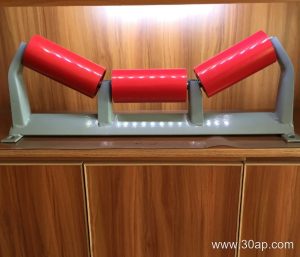
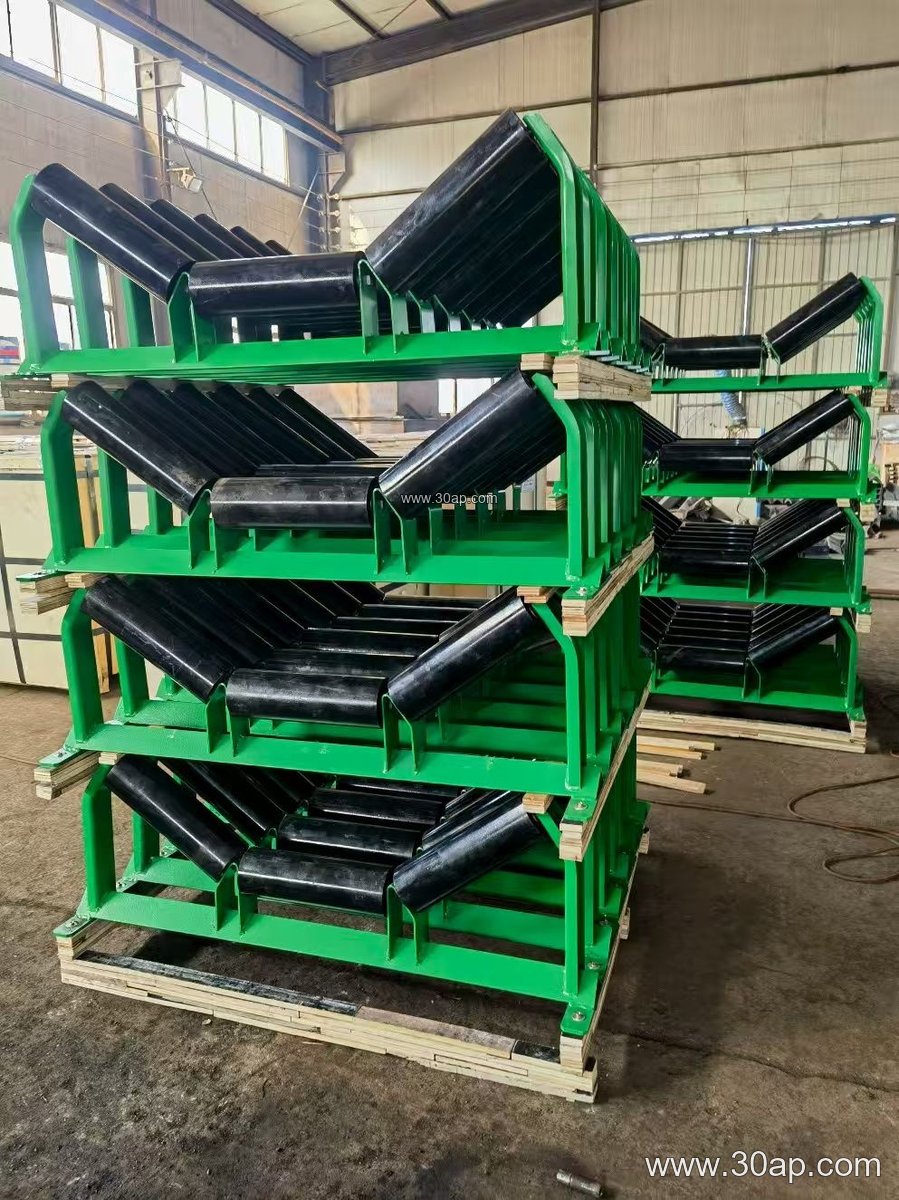
A Q355 conveyor bracket is the steel support that holds idler rollers in the correct position under and over a conveyor belt. It is usually fabricated from Q355 low-alloy structural steel, a grade chosen for its good strength-to-weight balance in welded frames. On a typical troughing station, the bracket carries three idlers set at a chosen trough angle; on the return side it may hold a single flat roller or a V-shaped set. The bracket itself does not move, but everything above it does, so its geometry, stiffness and hole alignment directly affect belt tracking and roller life.
In an aggregate plant or a coal handling system, a poorly aligned Q355 conveyor bracket can cause edge wear on the belt, uneven loading on the idlers and premature bearing failure. Buyers therefore treat it as a structural component rather than a simple accessory.
How the Bracket Is Built
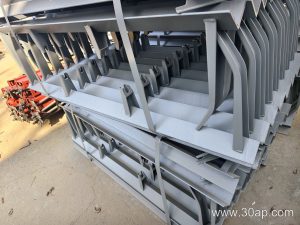
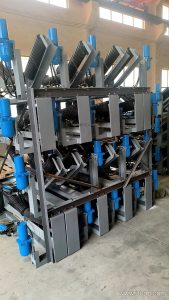
Most Q355 conveyor brackets are made from angle steel, channel steel or folded steel plate, welded into a frame with drilled or punched mounting holes. Common forms include troughing brackets, transition brackets, return brackets, V-return brackets, impact brackets and self-aligning brackets. Adjustable versions allow the trough angle to be changed on site, which is useful when a conveyor handles materials with different flow characteristics. Forward-leaning brackets, typically around 1.5 to 2 degrees, are used to encourage belt centering.
Fabrication quality matters more than the raw steel grade. Weld seams should be continuous where load is concentrated, holes should be aligned so idlers sit square to the belt line, and the bracket should be protected against corrosion by painting or galvanizing depending on the environment.
Common Reference Dimensions
The table below shows indicative combinations used in planning. These are reference values, not fixed pairings; final dimensions follow the conveyor design.
| Belt width | Trough angle | Idler diameter | Typical bracket form |
|---|---|---|---|
| B500 | 20 or 30 degrees | Ø89 | Troughing, return |
| B650 | 30 degrees | Ø89 or Ø108 | Troughing, adjustable |
| B800 | 35 degrees | Ø108 | Troughing, impact |
| B1000 | 35 or 45 degrees | Ø108 or Ø133 | Troughing, transition |
| B1200 | 35 or 45 degrees | Ø133 | Troughing, V-return |
| B1400 | 45 degrees | Ø133 or Ø159 | Troughing, self-aligning |
| B1600 | 35 or 45 degrees | Ø159 | Troughing, impact |
| B1800 | 45 degrees | Ø159 or Ø194 | Troughing, transition |
Installation hole spacing and crossbeam length change with belt width and trough angle, so they should always be confirmed against the conveyor layout rather than assumed.
Where Q355 Conveyor Brackets Are Used
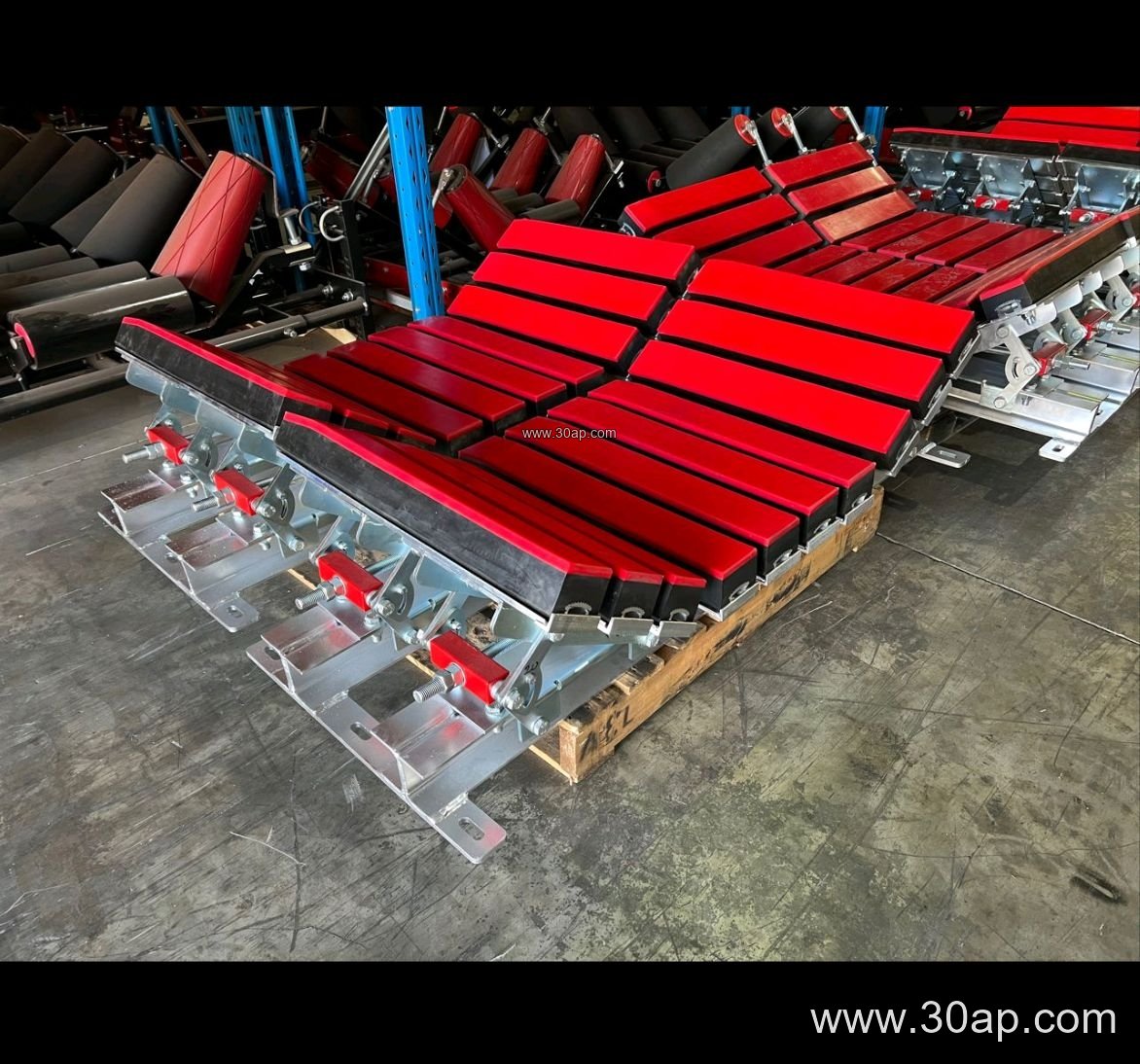
These brackets appear wherever bulk material moves on a belt: a limestone quarry feeding a primary crusher, a coal preparation plant transferring washed coal, a cement plant clinker line, a power station coal yard, a port ship loader, or a sand and gravel washing circuit. In dusty or wet conditions, galvanized or well-painted brackets last longer. On a heavy-duty mining conveyor carrying abrasive ore, impact brackets under the loading point protect both the idler and the belt, while self-aligning brackets help keep a wide belt centered.
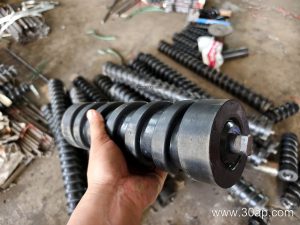
The bracket works together with the conveyor belt, idler roller and conveyor pulley. A misaligned bracket stresses all three, so alignment during installation is as important as the steel grade. For high-abrasion duties, pairing a sturdy bracket with an abrasion resistant conveyor belt and quality idlers gives a more reliable station than upgrading any single part.
Buyer Checklist
- Confirm belt width, trough angle and idler diameter as a set, not in isolation.
- State whether the bracket is fixed or adjustable, and whether forward lean is required.
- Ask for the mounting hole pattern and crossbeam length for your layout.
- Match the surface finish to the environment, for example galvanized for wet coal handling.
- Check weld quality and squareness before accepting a batch.
For a coal mining conveyor or a quarry conveyor belt line, a correctly specified Q355 conveyor bracket is a low-cost part that protects far more expensive components. Buyers who treat it as an engineered item rather than a commodity usually get longer roller life and steadier belt tracking.