What a Heavy-Duty Trough Idler Set Does
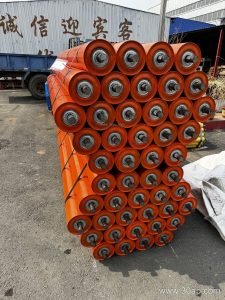
A heavy-duty trough idler set is the carrying assembly that supports the loaded side of a conveyor belt and shapes it into a trough so bulk material stays centered. In a quarry, limestone mine, or crusher discharge line, the set takes continuous impact and abrasion while keeping the belt tracking smoothly. The same assembly appears in cement plants, power plant coal yards, and port stockyards where dust, moisture, and heavy loads are routine. Operators often shorten the name to heavy-duty trough idlers, but it still refers to the same three-roll carrying station with reinforced frame and bearings.
How the Set Is Built
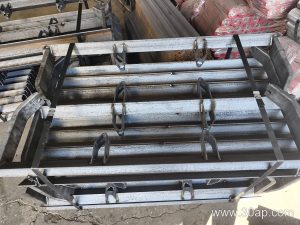
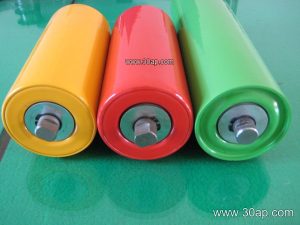
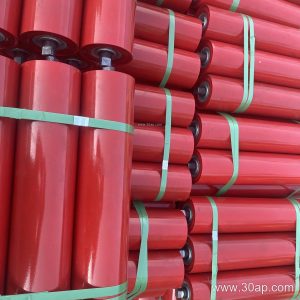
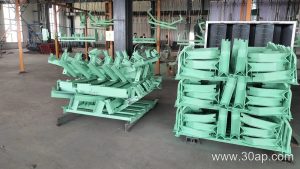
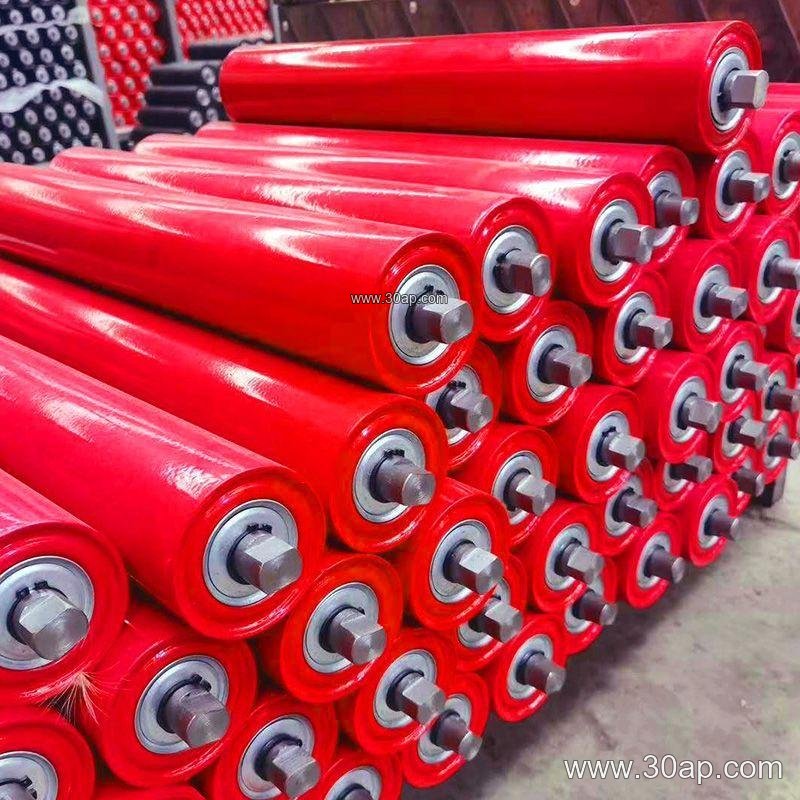
A typical set combines a three-roll trough configuration with a rigid cross frame and mounting brackets. Rollers usually run on steel tubes fitted with sealed ball bearings; common bearing sizes include 6205, 6305, 6308, and 6310, selected according to load and roll diameter rather than one fixed pairing. Roll diameters in the range of Ø89, Ø108, Ø127, Ø133, Ø159, and Ø178 mm are frequently used in heavy duty work, while larger diameters such as Ø194 and Ø219 mm suit very high loads. Trough angles of 20, 30, 35, and 45 degrees are common, and a slight forward tilt of about 1.5 to 2 degrees is sometimes applied to help self-alignment.
Roll length follows belt width, trough angle, and roll arrangement. For a three-roll trough set, common roll lengths are roughly 250 mm at B650, 315 mm at B800, 380 mm at B1000, 465 mm at B1200, 530 mm at B1400, and 600 mm at B1600. These are reference examples only; side rolls and center rolls may differ, and final dimensions are set by design. Surface options include plain steel, nylon, ceramic, and rubber rings, with rubber rings often chosen at transfer points where impact is severe.
Where It Fits on the Conveyor
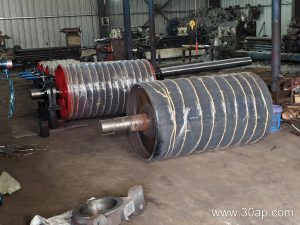
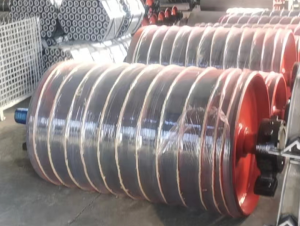
The heavy-duty trough idler set belongs on the carrying run, not at the drive, tail, or bend positions where a conveyor pulley does its work. A drive pulley, tail pulley, and bend pulley perform different functions and are not interchangeable with idler assemblies. On a long overland or plant conveyor, carrying idlers are spaced closely near loading zones and more widely along steady runs. Return idlers, V-return idlers, and impact idlers may appear nearby, but they serve separate roles. A conveyor bracket or frame ties the set to the stringer, and correct alignment between bracket and belt centerline matters as much as roller quality.
Matching the Set to the Belt and Duty
Selection starts with the conveyor belt itself. A heavy-duty mining conveyor belt or abrasion resistant conveyor belt carrying ore at high tonnage needs sturdier rolls and bearings than a light aggregate line. In coal preparation plants, a flame retardant conveyor belt is common, and the idler set should be specified together with the belt so that trough depth and roll length suit the actual belt width. Steel cord conveyor belt and multi-ply fabric core conveyor belt behave differently in troughing, so the trough angle and roll spacing should be confirmed with the belt supplier. For dusty or wet conditions, sealed bearings and effective labyrinth protection extend service life.
Specification Reference
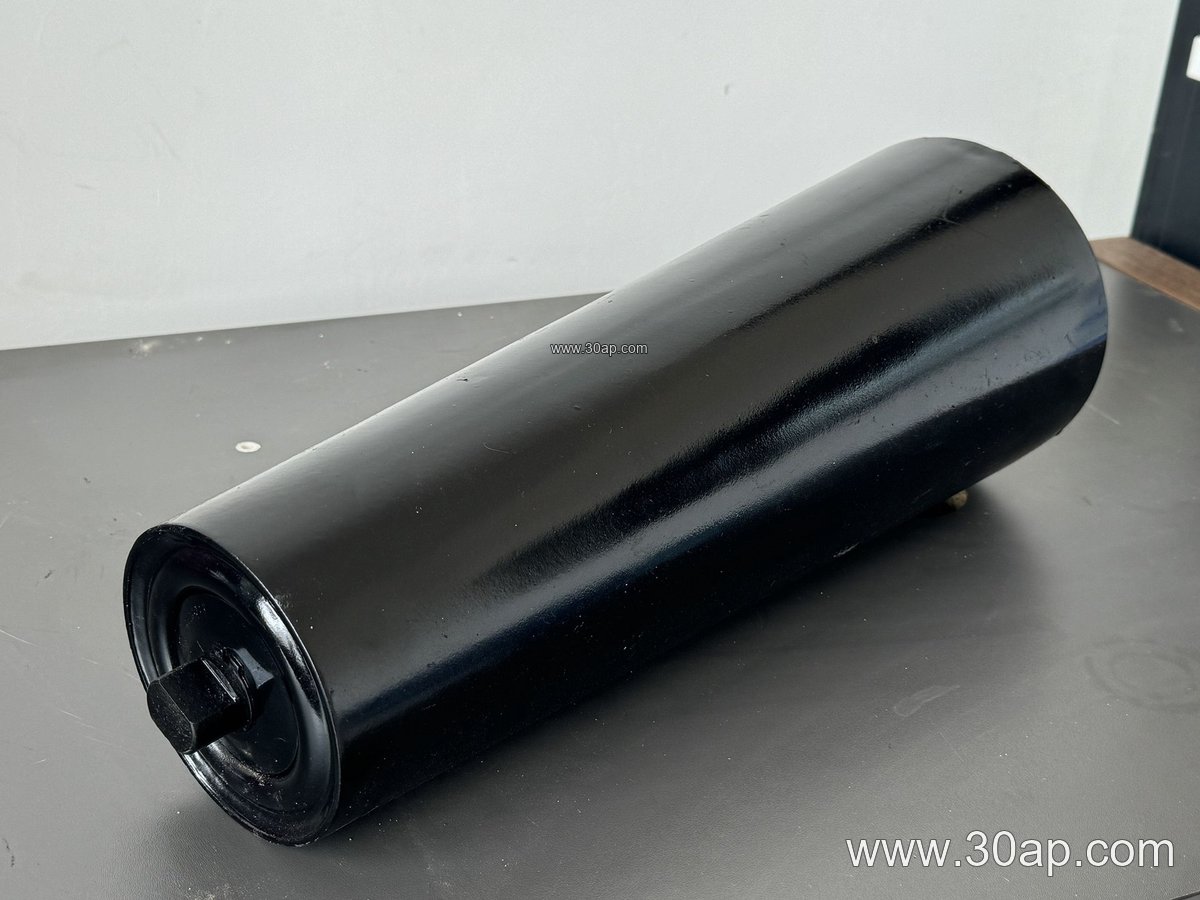
The table below lists reference values that help buyers describe a heavy-duty trough idler set in an inquiry. Values are typical examples, not universal specifications or supply promises.
- Roll diameter: Ø89, Ø108, Ø127, Ø133, Ø159, Ø178, Ø194, Ø219 mm
- Belt width: B500, B650, B800, B1000, B1200, B1400, B1600, B1800, B2000 mm
- Trough angle: 20, 30, 35, 45 degrees
- Roll surface: steel tube, nylon, ceramic, rubber ring
- Bearing: 6204, 6205, 6305, 6306, 6308, 6310
- Set form: single roll, two roll, three roll trough
Buyer Checklist
Before ordering, confirm belt width, trough angle, roll diameter, roll length, bearing type, and mounting bracket dimensions. State the material being handled and the loading conditions so the supplier can recommend an appropriate roll surface and seal. Ask how the rollers are lubricated and whether replacement rolls are sold separately from the frame. For a mine or cement plant, keep a small stock of spare rolls and brackets, because a single seized roller can damage an expensive conveyor belt. Also check that the set fits the existing stringer spacing; a heavy-duty idler set that is strong but misaligned will still cause belt wander and edge wear.
Installation and Maintenance Notes
Install each set square to the belt centerline and at the correct height so the belt rests evenly on all rolls. After startup, check for loose brackets, noisy bearings, and uneven belt contact. Routine inspection of the trough idler set should include roller rotation, seal condition, and frame alignment. In high-dust areas such as a coal yard or limestone crushing plant, cleaning around the brackets prevents material buildup that can push the belt off track. Replacing worn rolls early is cheaper than repairing a damaged belt or a scored conveyor pulley.