What a Self-Aligning Idler Set Does
A self-aligning idler set is a small, self-correcting assembly mounted on the carrying or return side of a conveyor. Its job is to keep the conveyor belt centered on the structure, so the belt does not drift toward the frame and rub against it. The set is sometimes called a self-tracking idler set or a training idler set. In a quarry conveyor or an ore conveyor, a belt that wanders off line can damage edges, spill material, and shorten belt life, so this assembly earns its place near transition zones and long straight runs.
Unlike a fixed troughing idler, the self-aligning design pivots. When the belt touches a guide roller or a slightly angled end roll, the whole frame swings a few degrees, which gently steers the belt back toward the center line. The correction is mechanical and continuous, with no motor or sensor.
How the Assembly Is Built
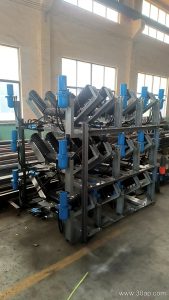
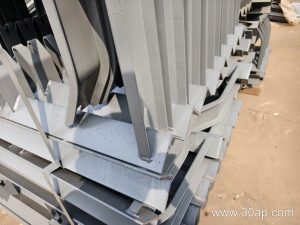
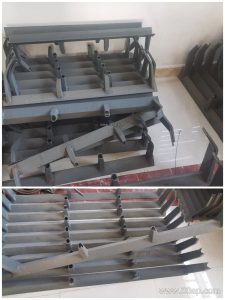
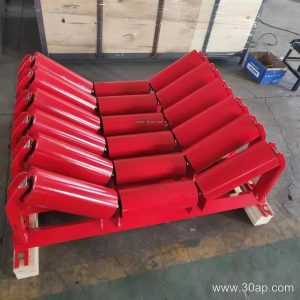
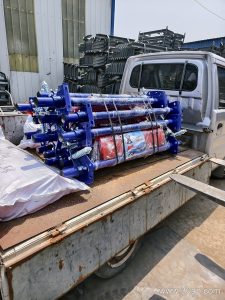
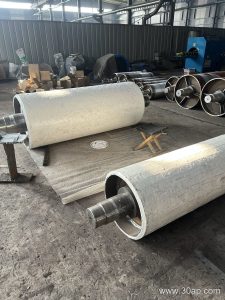
The frame is usually a steel beam with a central pivot pin and a pair of side rollers set at a shallow angle. The rolls may be plain steel tube, nylon, or rubber-covered. Bearings such as 6204, 6205, or 6305 are common in smaller roll diameters, while larger rolls may use 6308 or 6310. The pivot base, mounting brackets, and stoppers are matched to the conveyor bracket spacing.
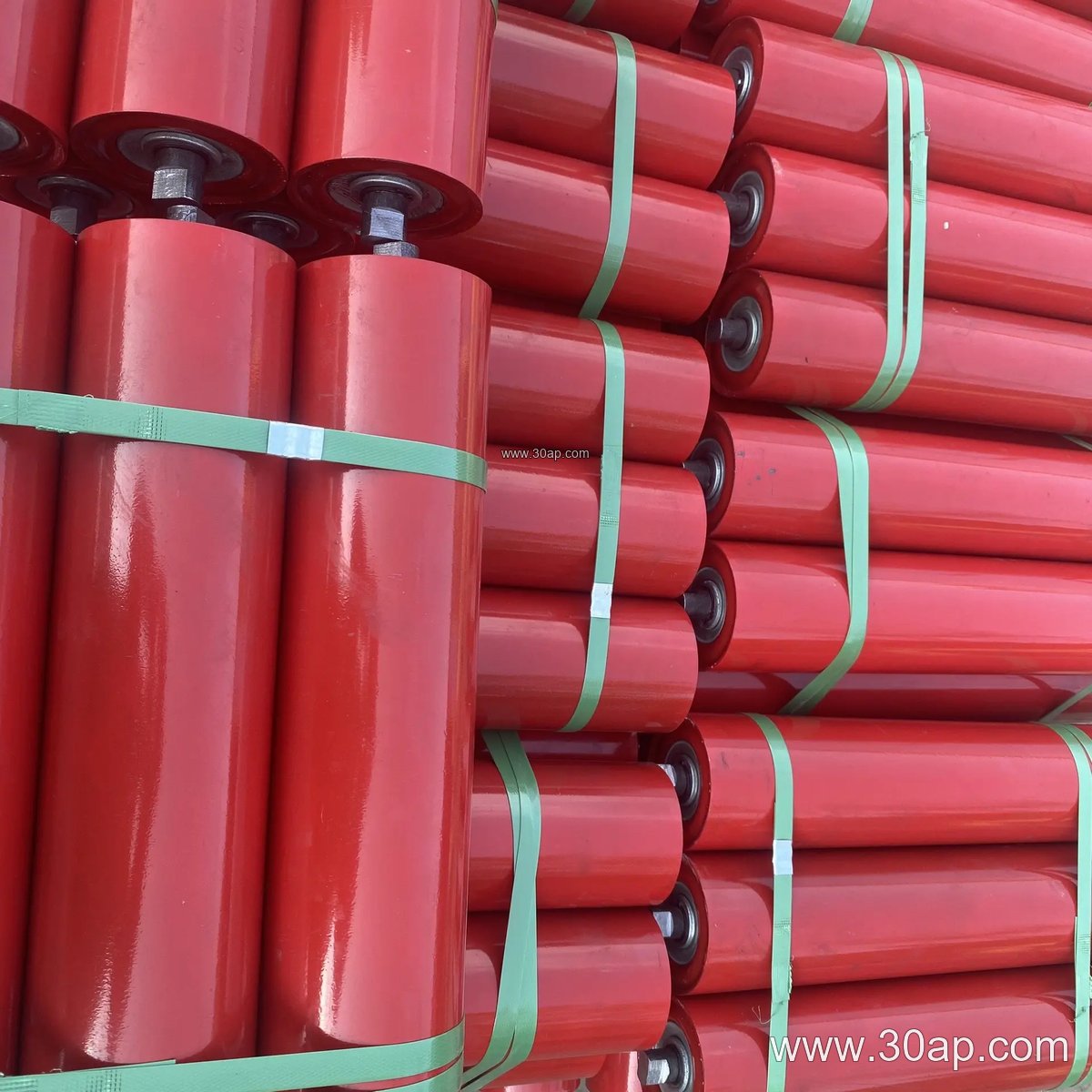
A typical set may include a forward-leaning top idler, often around 1.5 to 2 degrees of tilt, which helps the roll steer the belt. The bearing housing and seal are important in dusty plants; a worn seal lets grit into the bearing and the roll stops turning, so the set loses its correcting effect.
Where It Fits on the Conveyor
Self-aligning sets are placed at intervals along a long straight section, just after a conveyor pulley at the head or tail, and ahead of a bend pulley where the belt changes direction. They are used on a wide range of conveyor widths, from B500 to B2400, and are common in coal mining, cement plants, power plant coal handling, sand and aggregate lines, and port bulk terminals.
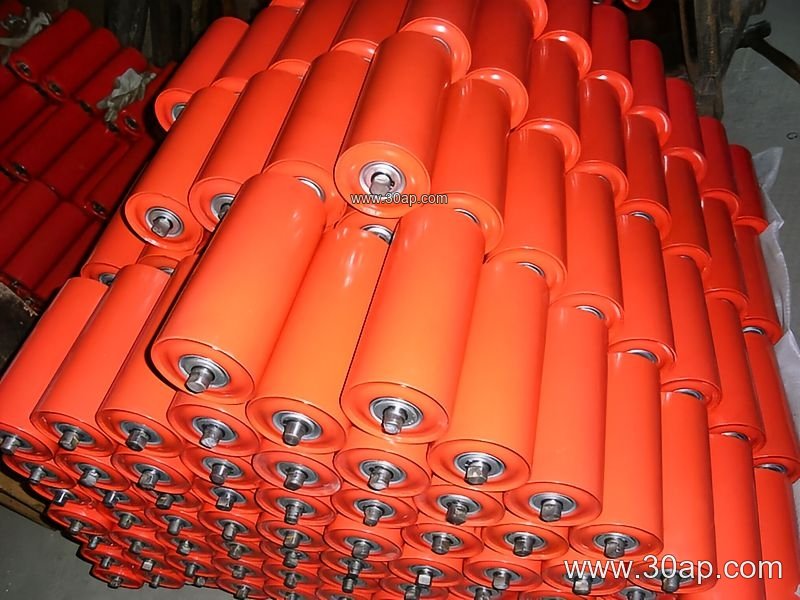
The carrying side may use a two-roll or three-roll set, while the return side often uses a V-shaped or flat arrangement with two guide rolls. In a dusty coal yard or a limestone crushing line, the same principle applies: small pivot movement, gentle steering, less edge wear.
Common Roll and Belt Reference Values
The roll length changes with belt width and roll arrangement. The values below are common examples, not fixed rules. Side rolls and center rolls can differ, and the final length is set by design.
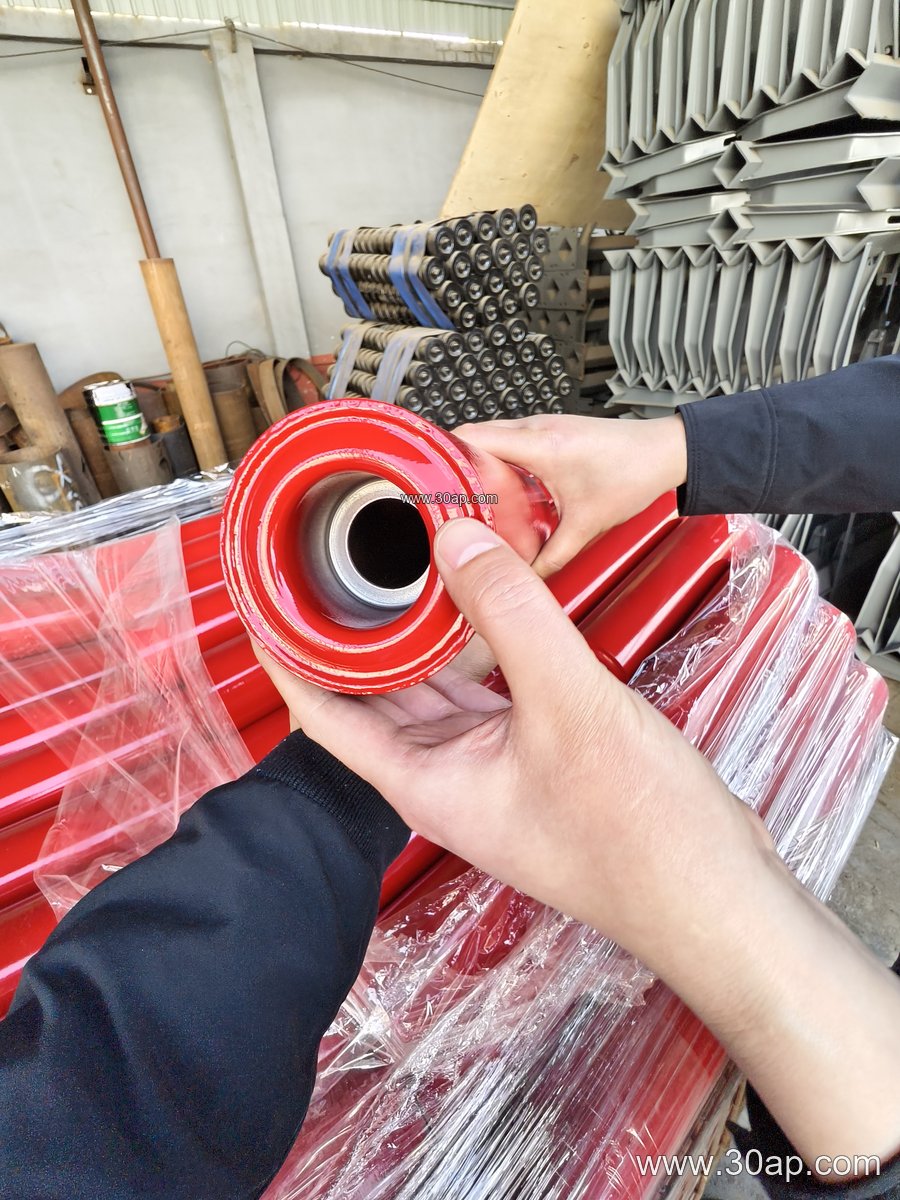
- Roll diameter options: Ø63, Ø76, Ø89, Ø102, Ø108, Ø127, Ø133, Ø159, Ø178, Ø194, Ø219 mm
- Trough angle options: 20°, 30°, 35°, 45°
- Belt width options: B400 to B2400
For a three-roll troughing set, a B800 belt often uses a roll around 315 mm long, a B1000 around 380 mm, and a B1200 around 465 mm. A B1600 set may use rolls near 600 mm, while a B2000 set can run near 750 mm. These are typical reference points, and the actual roll length should follow the frame design and the belt width selected.
Buying Points to Confirm
Before ordering, confirm the belt width and the roll diameter, the trough angle, and whether the set is for the carrying or return side. Check the pivot base and the conveyor bracket hole spacing. Ask about the bearing number, the seal type, and the roll surface, since a rubber-covered roll behaves differently from a plain steel roll in wet or sticky material.
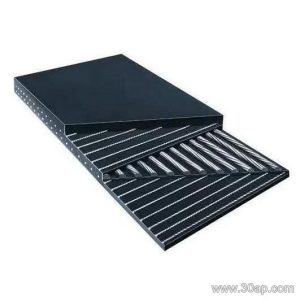
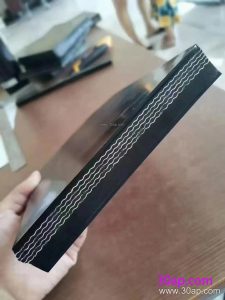
The belt itself matters too. A heavy, stiff belt such as a steel cord conveyor belt or a thick abrasion resistant conveyor belt needs a stronger steering response than a thin fabric core belt, so the set should match the belt load. In a coal mine, a flame retardant conveyor belt is often paired with self-aligning sets that resist dust and keep tracking stable.
Maintenance Notes
Inspect the pivot for free movement and clear any packed material around the base. Turn each roll by hand to check for a dry bearing. Replace worn seals before grit reaches the bearing. A self-aligning set that cannot pivot is no better than a fixed idler, so keep the pin and stoppers clean. For more conveyor components, visit conveyor idler and conveyor belt pages.