What a Guide Idler Bracket Does
A guide idler bracket is the mounting component that positions a guide idler—often a vertical or angled roller—against the edge of a conveyor belt to keep it centered. In a quarry or a coal handling system, even a small misalignment can cause the belt to rub the structure. The bracket holds the guide roller at the correct height and angle so it contacts the belt edge without forcing it. This makes the guide idler bracket a small but critical part of the tracking system, working alongside the main idler roller sets and the conveyor pulley to maintain steady operation.
Unlike the fixed frames that carry troughing idlers, a guide bracket is usually adjustable. It may be bolted to the conveyor stringer or to a separate support post. The goal is simple: provide a controlled side force that nudges a wandering belt back to the center line. On a bulk material conveyor belt, this reduces edge damage and spillage.
Construction and Common Mounting Points
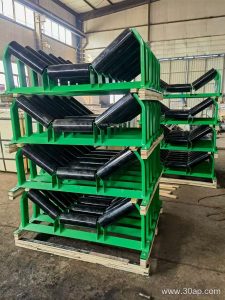
Most guide idler brackets are fabricated from angle steel, channel steel, or folded steel plate. The design often includes slotted holes or a pivoting arm so the guide roller can be set at the right angle and distance from the belt. Typical mounting locations are just ahead of the head pulley, before the tail pulley, and at transition zones where the belt changes from flat to troughed.
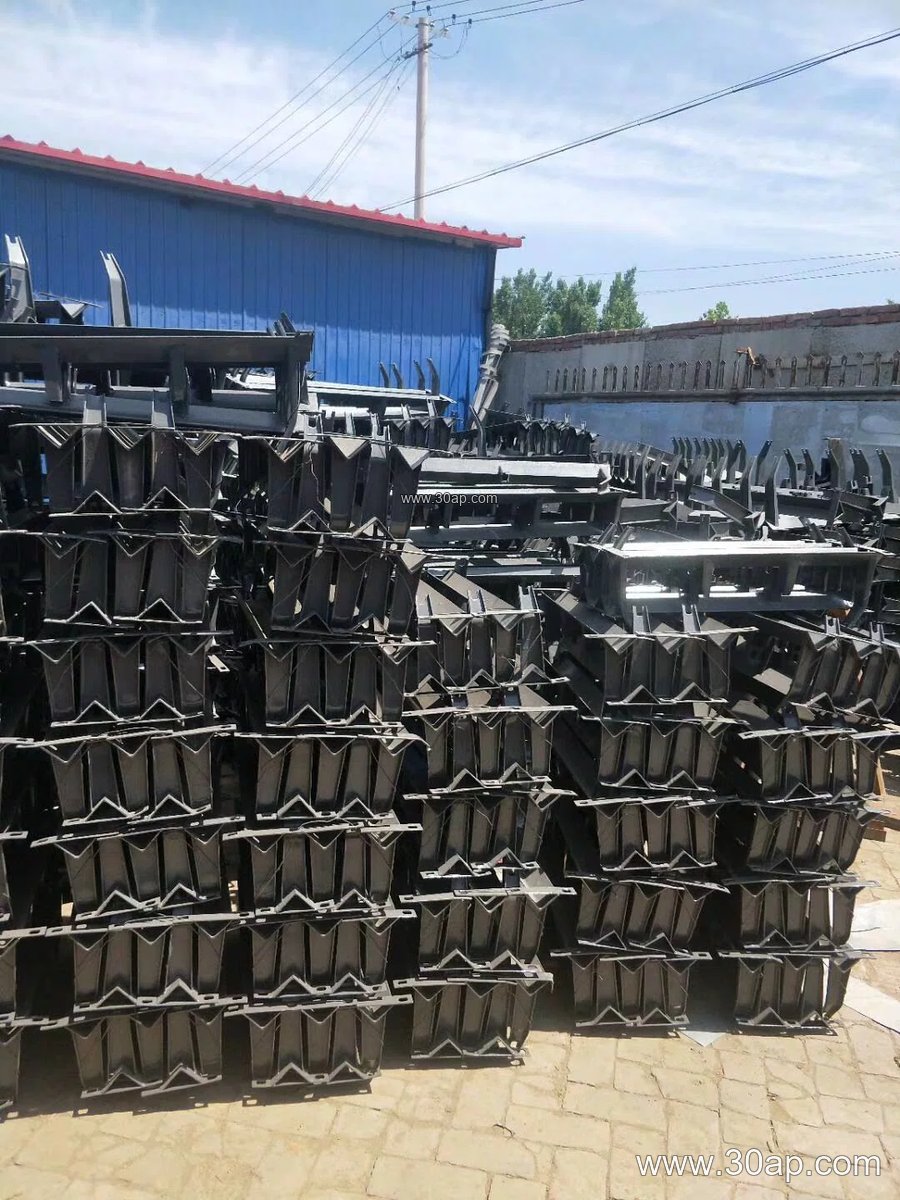
Because the bracket works with the belt edge, it must be sturdy enough to resist vibration without being so rigid that it damages the belt if a splice passes. A common approach is to use a bracket with a rubber buffer or a spring-loaded arm, but many plants rely on a simple bolted design with shims for fine adjustment.
Matching the Bracket to Belt Width and Idler Size
There is no single size that fits every conveyor. The bracket must match the belt width and the guide roller diameter. For reference, common belt widths include B500, B650, B800, B1000, B1200, B1400, B1600, B1800, B2000, B2200. Guide roller diameters often follow the same series as carrying idlers: Ø89, Ø108, Ø133, Ø159, Ø194. The table below shows typical combinations, but these are examples only—final choice depends on the conveyor design and the load.
| Belt Width | Common Guide Roller Diameter | Typical Bracket Material |
|---|---|---|
| B500 | Ø89 | Angle steel |
| B650 | Ø89 or Ø108 | Angle steel |
| B800 | Ø108 | Channel steel |
| B1000 | Ø108 or Ø133 | Channel steel |
| B1200 | Ø133 | Folded plate |
| B1400 | Ø133 or Ø159 | Folded plate |
| B1600 | Ø159 | Channel steel |
| B1800 | Ø159 or Ø194 | Heavy channel |
| B2000 | Ø194 | Heavy channel |
| B2200 | Ø194 | Heavy channel |
Mounting hole spacing and crossbeam length change with belt width and trough angle, so they should be confirmed from the conveyor drawing rather than assumed. For a transition bracket or a troughing bracket, the trough angle—20°, 30°, 35°, or 45°—affects the bracket geometry. A guide idler bracket is different: it usually sits at the belt edge and does not set the trough angle. That is why you should not use a troughing bracket as a substitute for a guide bracket.
Where It Is Used
You will find guide idler brackets in crushing and screening plants, cement plants, power plant coal yards, and aggregate yards. They are common on conveyors carrying abrasive rock or ore, where a wandering belt quickly wears the edge. In a sand and gravel line, a bracket may be installed before the discharge pulley to keep the belt centered as it leaves the last idler roller. In a steel plant or sinter plant, the bracket helps protect the belt from rubbing the chute structure.
The bracket also works with the conveyor belt itself. A stiff, heavy belt such as a steel cord conveyor belt or a thick abrasion resistant conveyor belt may need a larger guide roller and a stronger bracket. A fabric core belt like an EP conveyor belt or NN conveyor belt may need less side force. The bracket does not replace the function of a self-aligning idler or a training idler; it complements them.
Buyer Checklist
- Confirm belt width and belt type—for example, an EP conveyor belt, a steel cord conveyor belt, or a flame retardant conveyor belt for underground coal mining.
- Specify guide roller diameter and the mounting hole pattern from the conveyor drawing.
- Choose the material and finish for the environment: dusty quarry, wet coal yard, or high-temperature cement plant.
- Check that the bracket allows adjustment for wear and belt stretch.
- Ask for the bracket to be supplied with the correct fasteners and, if needed, a matching guide roller.
A well-chosen guide idler bracket is a low-cost way to extend belt life and reduce downtime. For more on conveyor components, visit www.beltconveyorparts.com for idler roller and conveyor bracket information.