What a Mining Conveyor Idler Does Underground and on the Surface
A mining conveyor idler is the rotating support that carries the belt and its load along the entire run. In a coal mine, an iron ore pit, or a quarry feeding a crusher, these rollers are the most numerous wear parts on the line. Their job sounds simple: hold up the belt, keep it tracking, and let it roll with as little drag as possible. In practice, the idler roller must survive dust, grit, water, and impact from falling rock, which is why the housing, bearing, and shell design matter as much as the frame.
Because a typical conveyor may use hundreds of them, idler quality directly affects energy draw and downtime. A seized roller can wear through a conveyor belt in a short time, and replacing a belt underground costs far more than replacing the roller that caused the damage.
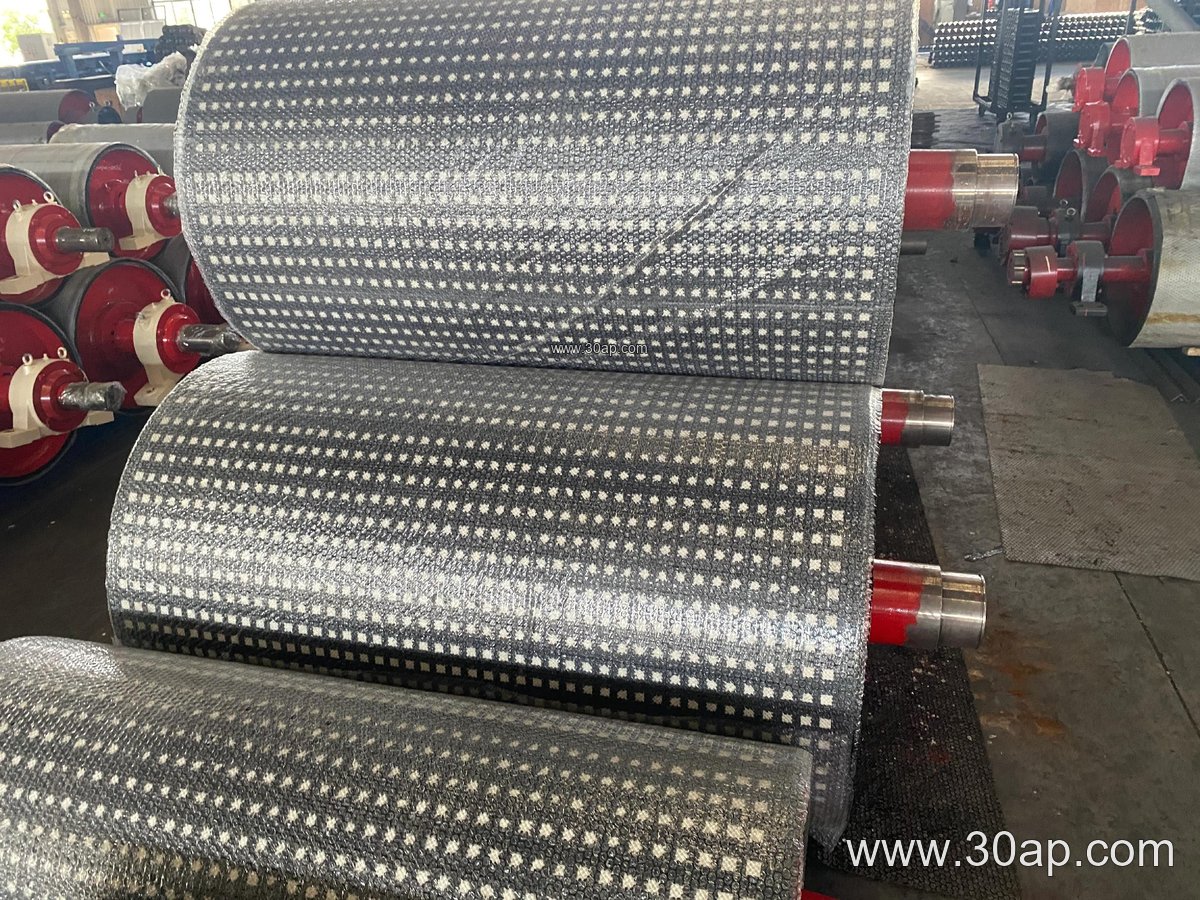
Construction of the Idler Roller
The core parts are the shell, the shaft, the bearing housing, and the seal. Shells are usually steel tube, with nylon, ceramic, or rubber-covered options where abrasion or build-up is a problem. Bearings run in the common 6204 to 6310 range depending on load and shaft size, and the labyrinth seal is what keeps fines out. A good seal is often the difference between a roller that lasts years and one that fails in months.
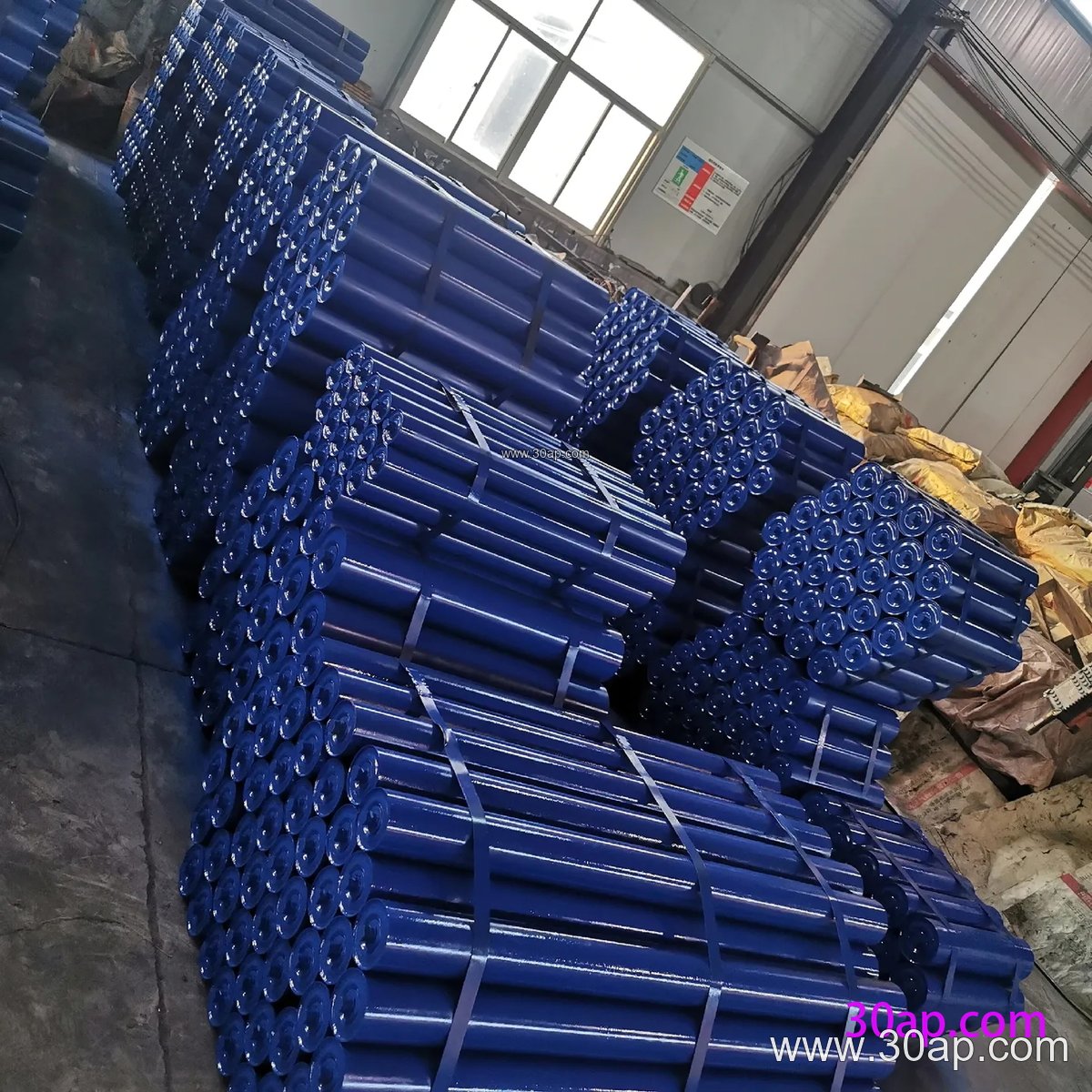
Roll diameter is chosen from belt width, belt speed, and load, not from a single fixed rule. Typical diameters include Ø89, Ø108, Ø127, Ø133, Ø159, and Ø178, with larger sizes for high-tonnage main lines. Shaft diameter follows the calculated load and the bearing selected, so it should never be guessed from belt width alone.
Common Idler Types and Where They Sit
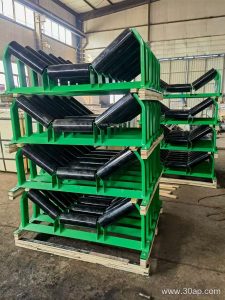
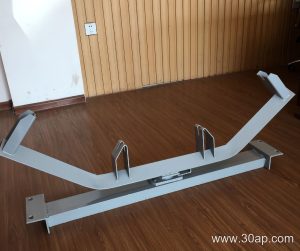
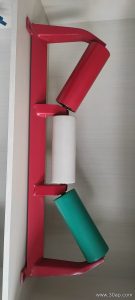
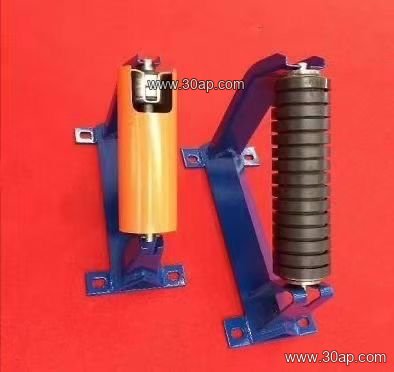
Troughing idlers form the carrying side, usually in two- or three-roll sets with trough angles of 20, 30, 35, or 45 degrees. A 35-degree three-roll set is a common choice for bulk material, while 45 degrees suits fine, free-flowing loads. Impact idlers with rubber rings go under the loading point to absorb the drop from a crusher or transfer chute. On the return side, flat or V-return rollers support the empty belt, and self-aligning types correct tracking on long runs.
| Idler Type | Typical Position | Notes |
|---|---|---|
| Troughing idler, 3-roll | Carrying side | 20–45 degree trough angle |
| Impact idler, rubber ring | Load point | Absorbs lump impact |
| Flat or V-return idler | Return side | Supports empty belt |
| Self-aligning idler | Long straight runs | Corrects belt drift |
Roll length changes with belt width and trough form. As a rough reference, a three-roll troughing set may use rolls near 250 mm for B650, 380 mm for B1000, and 530 mm for B1400, but side rolls and center rolls can differ. These figures are examples only and should be confirmed against the actual conveyor design.
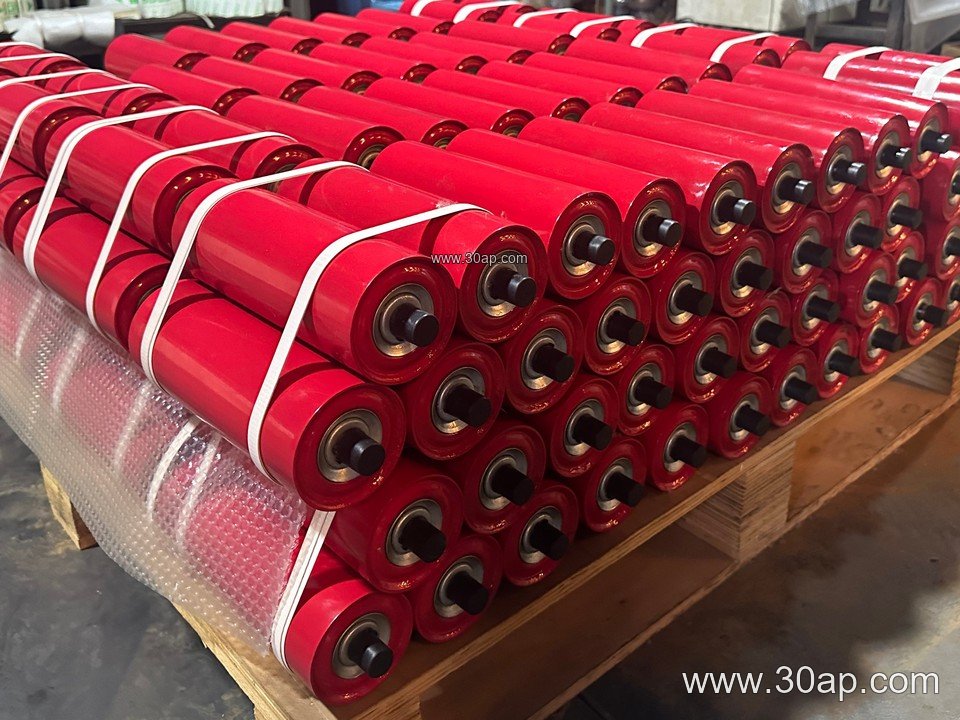
Matching Idlers to the Belt and the Duty
The idler is only one part of the system. A heavy-duty mining conveyor belt such as an EP200 or EP300 fabric core belt, or a steel cord belt on a long overland run, transfers its load through the rollers, so roller spacing and roll diameter must suit belt stiffness. A flame retardant conveyor belt used in an underground coal mining conveyor belt installation also calls for rollers with reliable sealing, since dust and moisture attack bearings continuously.
In a cement plant or power plant coal handling line, heat and fines are the main concerns, and abrasion resistant conveyor belt grades pair well with ceramic or rubber-covered rollers. At a port or ship loading terminal, wide belts of 1800 mm or 2000 mm need correspondingly larger frames and heavier shafts.
Buyers should ask for the load rating, seal type, bearing brand or grade, shell thickness, and surface treatment, and should confirm that the idler frame matches the conveyor bracket and stringer spacing. Ordering a replacement set by belt width alone is a common mistake. More selection notes are available at www.example.com/mining-conveyor-idler and related pages on conveyor components.
Maintenance and Buying Checklist
- Check for seized or noisy rollers during each shift walk-around.
- Replace idlers in matched sets where alignment matters.
- Keep spare impact rollers at every transfer point.
- Confirm roller diameter, length, shaft, and bracket before ordering.
- Store rollers dry and upright to protect seals.
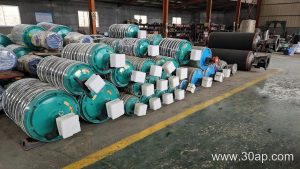
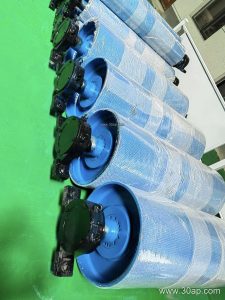
Spare rollers, conveyor brackets, and pulleys should be stocked together so a single failure does not stop the whole line. Further reference material on idler roller selection is published at www.example.com/idler-roller and www.example.com/conveyor-pulley for cross-checking drive and tail components.