What a 1600mm Conveyor Belt Is
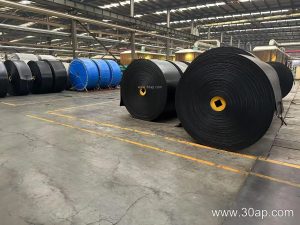
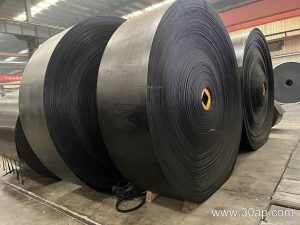
A 1600mm conveyor belt is a wide-profile bulk material belt built for high-capacity conveying lines where tonnage per hour matters as much as the material being moved. In the trade, the same product is often called a 1600mm wide conveyor belt, and both names describe the same thing: a belt with a nominal width of 1600 millimeters. This width sits in the heavy end of standard belt widths, above 1200mm and 1400mm belts and below 1800mm and 2000mm designs, so it is usually chosen where a single line must carry a large cross-section of material without using two parallel conveyors.
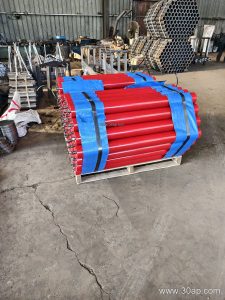
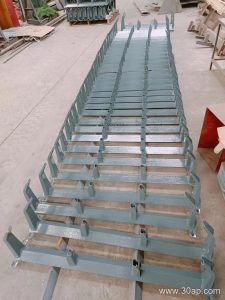
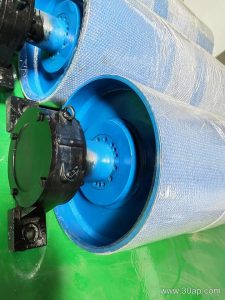
Because of that capacity, a 1600mm conveyor belt is common in mines, coal preparation plants, cement works, power stations, sand and aggregate yards, ports and crushing circuits. The belt itself is only one part of the system. Its performance depends on how the carcass, covers, pulleys, idler rollers and conveyor brackets are matched to the duty.
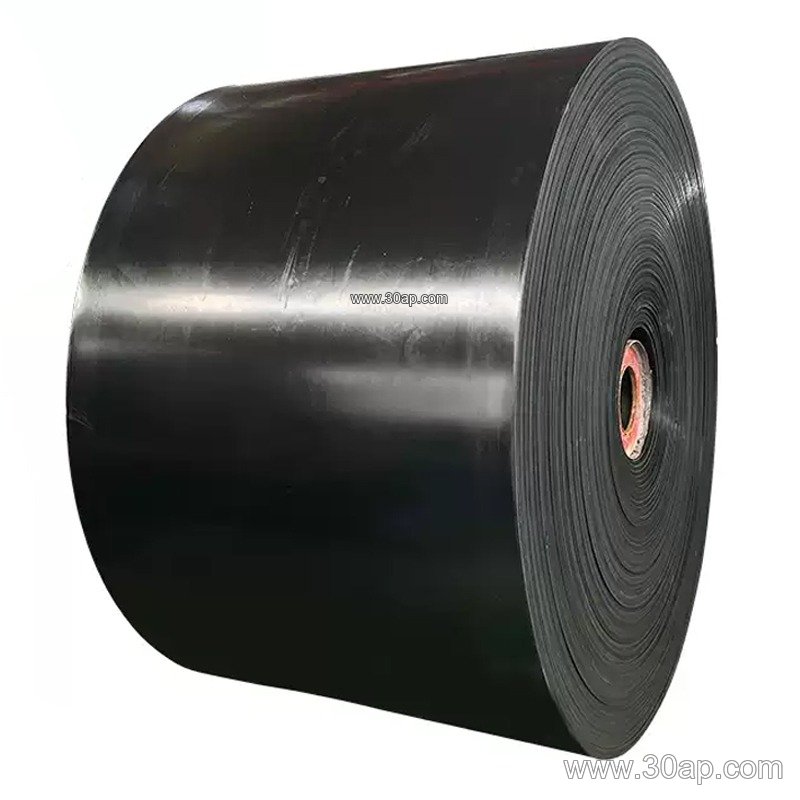
Construction and Common Specifications
The belt is a composite: a load-bearing carcass, top and bottom rubber covers, and often an edge treatment. For a 1600mm width, fabric-core and steel-cord constructions are both used, and the choice follows the tension and the impact load rather than the width alone.
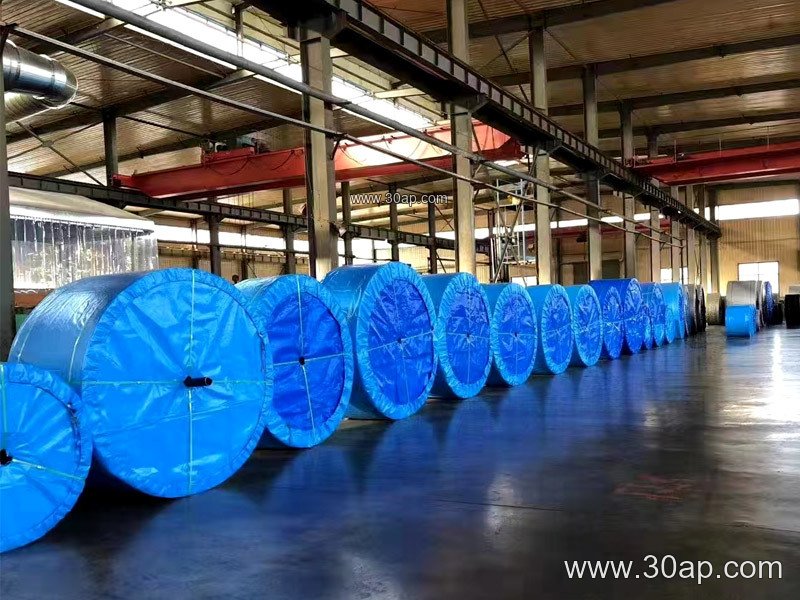
| Element | Common options | Notes |
|---|---|---|
| Carcass type | EP conveyor belt, NN conveyor belt, steel cord | EP and NN are fabric core; steel cord suits long, high-tension runs |
| Strength grade | EP200 to EP2000; ST1000 to ST3150 | Selected by calculated belt tension, not by width |
| Number of plies | 2 to 6 plies | Fabric core; heavier duties tend toward more plies |
| Top and bottom cover | 4+2, 5+2, 6+2, 8+3 mm | Thicker covers for abrasion and impact |
| Surface form | Smooth, chevron, corrugated sidewall, skirted | Chevron and sidewall types help on inclines |
| Special grades | Heat resistant, oil resistant, flame retardant, cold resistant, anti-static | Matched to the material and the environment |
A 1600mm belt in a multi-ply fabric core build is often specified as a Multi-Ply Fabric Core Conveyor Belt when the line needs good troughing and resistance to edge damage. Where the route is long and the tension high, a Steel Cord Conveyor Belt may be the more economical structure. For underground coal work, PVG conveyor belt grades are frequently used alongside flame retardant requirements. None of these choices is fixed by the 1600mm figure; they follow the conveyor design.
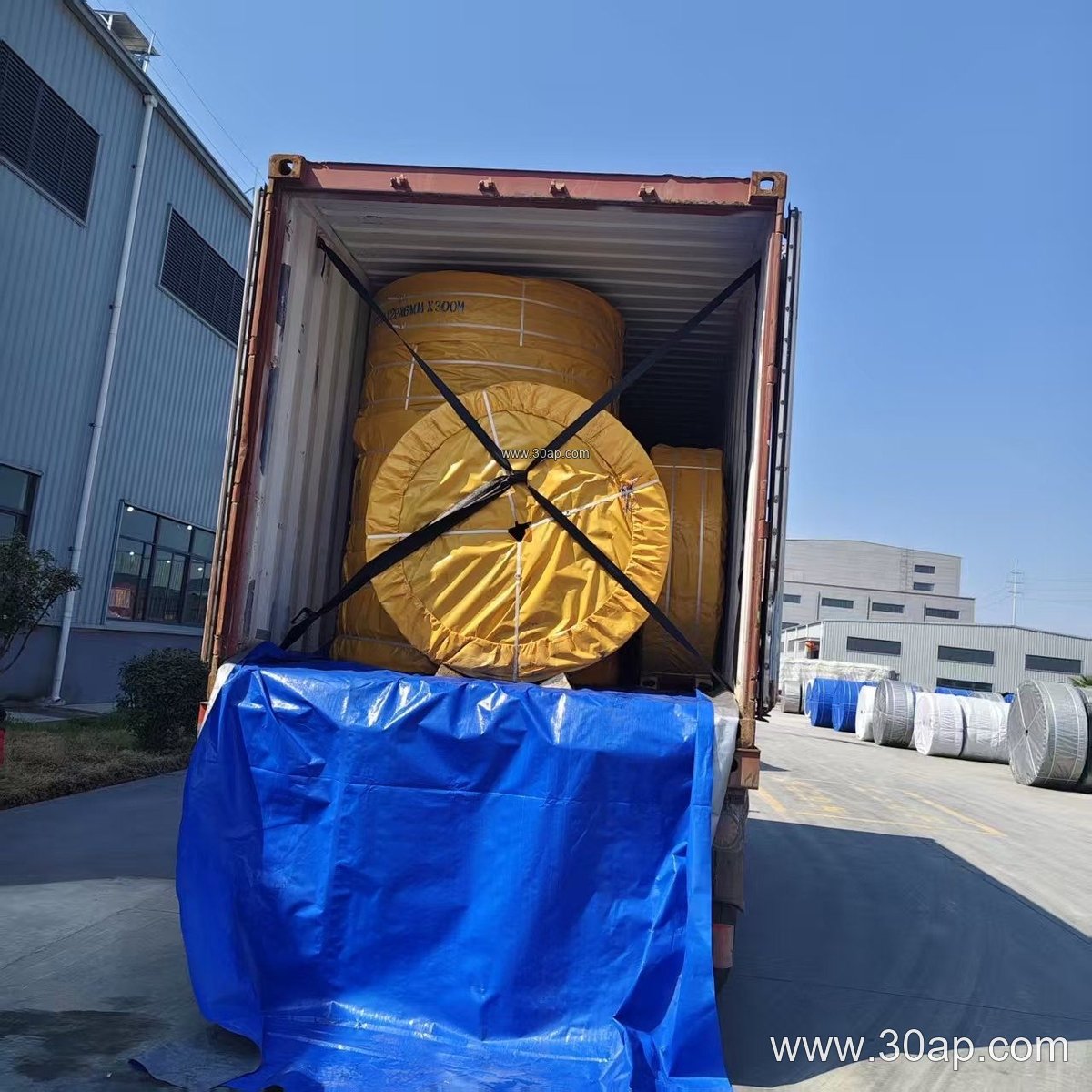
Where the Width Fits in a Conveying System
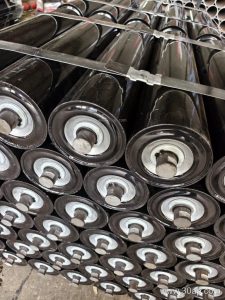
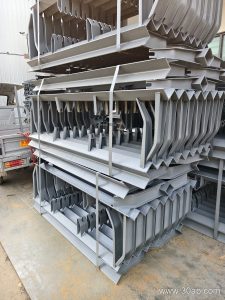
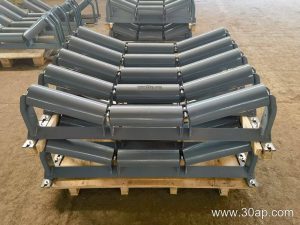
A 1600mm conveyor belt is usually carried on three-roll or five-roll idler sets, with the trough angle chosen to suit the material’s angle of repose. The drive pulley, tail pulley and bend pulleys are separate components with their own diameters, and none of them is interchangeable with another. Pulley diameter is set by the belt tension, the carcass and the wrap angle, so a 1600mm belt can run over a range of pulley sizes depending on the design. The same applies to idler roller diameter and shaft size, and to the conveyor bracket that fixes the idlers to the frame.
On a large mining conveyor belt line, the belt may run several kilometers between transfer points, and the 1600mm width keeps the material bed deep and stable. In a quarry conveyor belt or crusher conveyor belt duty, the same width handles coarse rock with a thick abrasion resistant cover and impact-resistant carcass. At a power plant or cement plant, a heat resistant conveyor belt grade may be needed near kilns and clinker coolers, while a coal conveyor belt installation will normally call for flame retardant and anti-static properties.
Buyer Checklist
- Confirm the actual duty: material, lump size, tonnage per hour, incline and loading method.
- Give the belt tension calculation to the supplier so the carcass grade and ply count can be checked.
- State the environment: underground, outdoor, hot, oily, wet or cold. This drives the cover compound.
- Specify cover thickness and surface form, including whether a chevron or corrugated sidewall profile is needed.
- Check the pulley diameters, idler spacing and transition distance so the 1600mm belt troughs correctly.
- Ask about splicing: an endless conveyor belt joint or a mechanical splice changes the lead time and the maintenance plan.
- Plan spare idler rollers and at least one spare pulley so a stoppage does not idle the whole line.
Width alone does not define a belt. A well-specified 1600mm conveyor belt is the result of matching carcass, covers and surface form to the conveyor’s tension, the material and the site conditions, then keeping the pulleys, idlers and brackets in good alignment so the wide belt runs true.