What a Carrying Idler Set Does on a Belt Conveyor
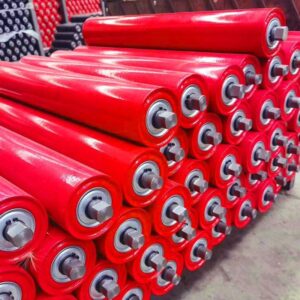
A carrying idler set is the group of rollers mounted on the load side of a conveyor to support the belt and the material riding on it. On a typical troughed line, the set holds three rolls in a shallow V or trough shape, so a loaded conveyor belt sits deep enough to keep bulk material centered. In a quarry, a coal preparation plant, or a cement plant, these assemblies are the parts the belt touches most often, and their condition directly affects belt life, power draw, and spillage.
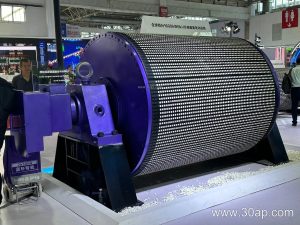
The same product is also called a troughing idler set or simply an upper idler group, and those names describe the same assembly. Do not confuse it with a return idler set under the belt, or with a conveyor pulley at the head or tail, which drives or redirects the belt rather than supporting it.
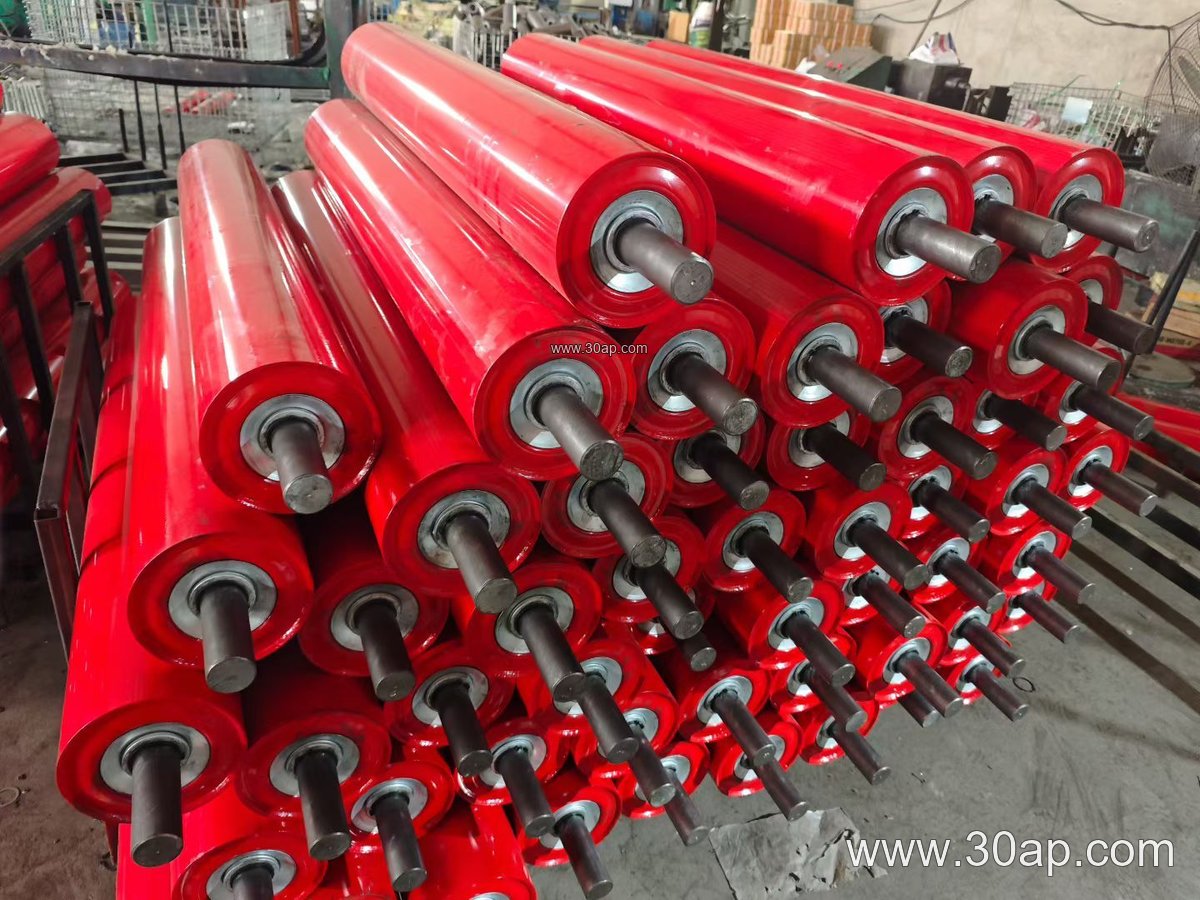
How the Assembly Is Built
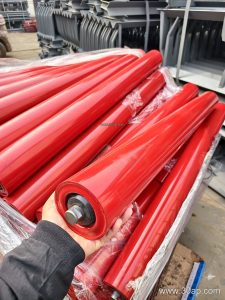
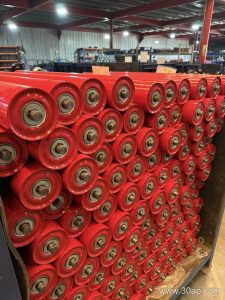
Each roll in a carrying idler set usually has a steel tube shell, a shaft, bearing housings, and a sealing arrangement at both ends. Common roll diameters include Ø89, Ø108, Ø127, Ø133, and Ø159, with larger sizes such as Ø178 and Ø194 used where loads are heavy. Bearings are often 6204, 6205, 6305, 6306, 6308, or 6310, and a given roll diameter can accept more than one bearing size depending on the design.
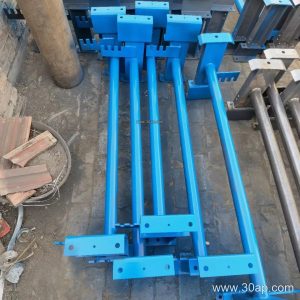
The rolls sit in a frame or bracket that fixes the trough angle and the spacing between rolls. A three-roll set is the most common form, while two-roll and single-roll designs appear on narrower belts or special positions. Roll length follows belt width, trough angle, and frame type; for example, a three-roll arrangement at B800 may use rolls around 315 mm long, and B1200 rolls may be around 465 mm. Side rolls and the center roll can differ, so these figures are references, not fixed rules.
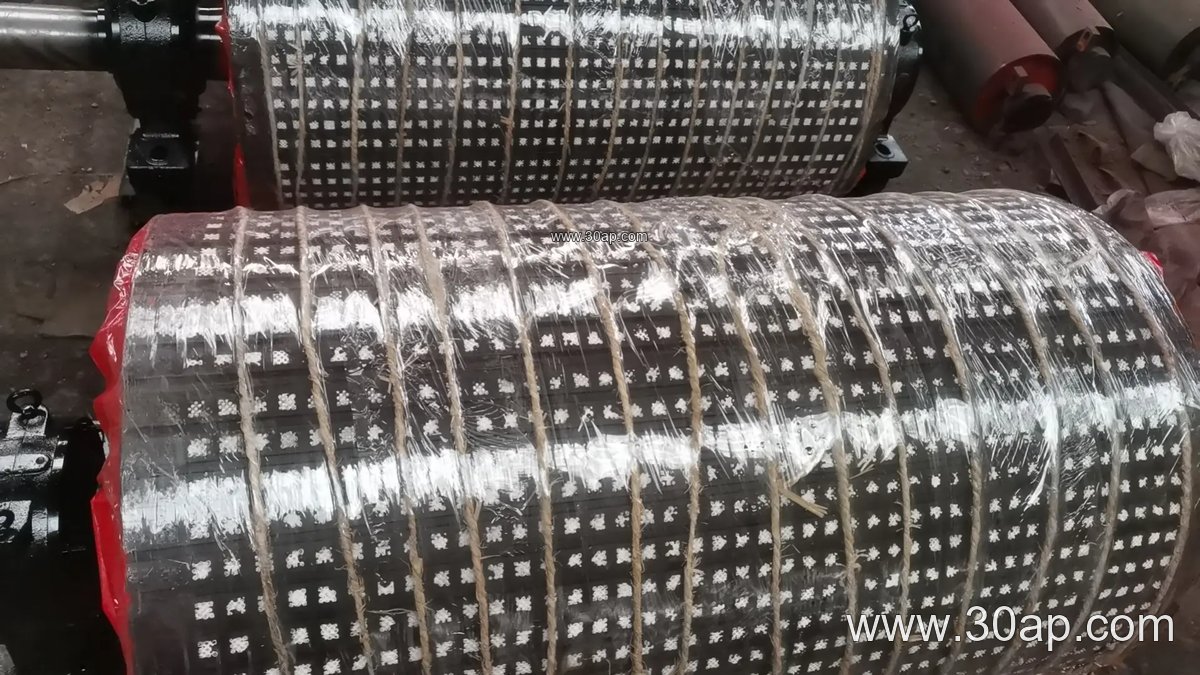
Common Reference Data
| Item | Typical Options |
|---|---|
| Belt width | B500, B650, B800, B1000, B1200, B1400, B1600, B1800 |
| Roll diameter | Ø76, Ø89, Ø102, Ø108, Ø127, Ø133, Ø159 |
| Trough angle | 20°, 30°, 35°, 45° |
| Roll surface | Steel tube, nylon, ceramic, rubber ring |
| Roll length at B1000 | About 380 mm in a common three-roll set |
Values above are common examples only. Final dimensions are determined by conveyor design, and no single belt width should be assumed to match one pulley diameter or one shaft size.
Trough Angle and Material Behavior
The trough angle shapes how the belt cradles the load. A 20° set suits light, free-flowing material, while 35° and 45° sets are chosen where capacity per unit width matters and the belt is flexible enough to bend without distress. Steep angles reduce spillage on a fully loaded belt but raise bending stress at the roll edges, so transitions to flat positions need care. On a long overland line carrying ore or aggregate, a moderate 30° or 35° set is often a practical balance.
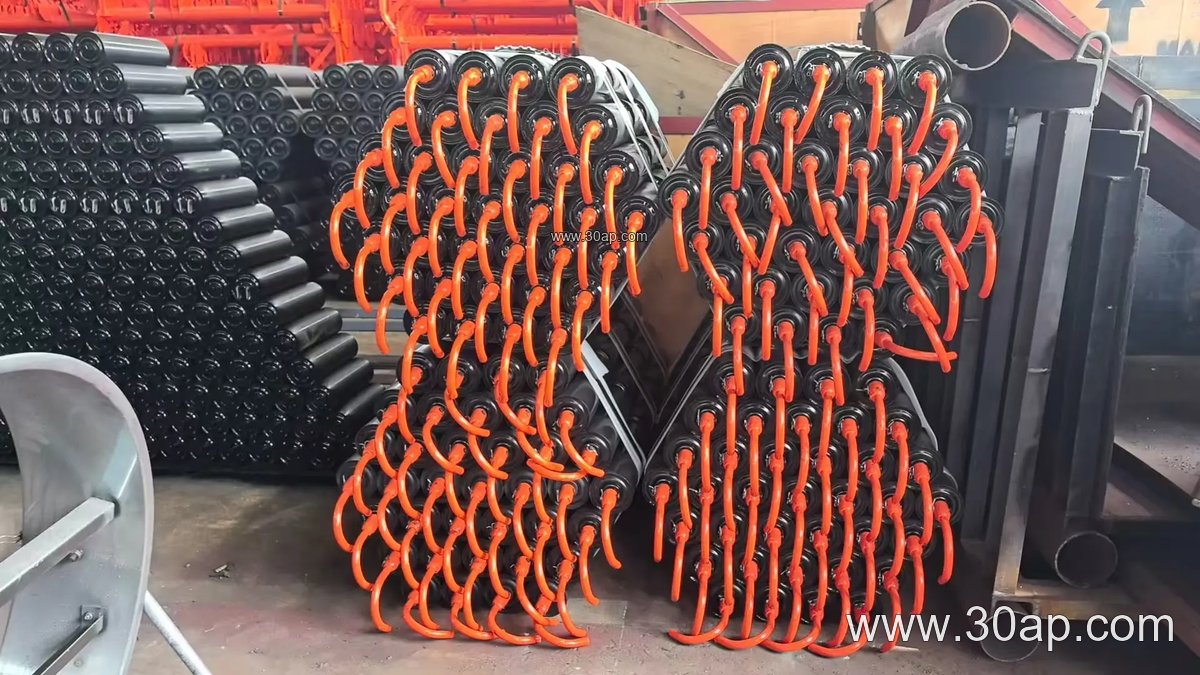
Where These Sets Are Used
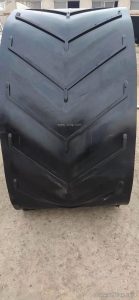
You will find carrying idler sets on nearly every bulk handling line: a crusher discharge feeding a screening plant, a coal yard conveyor, a power plant coal handling system, and a port ship loader. They also appear in a tunnel muck line and in fertilizer or grain handling, where cleanliness and smooth running matter. The belt itself may be a heavy-duty mining conveyor belt, an abrasion resistant conveyor belt for sharp rock, or a flame retardant conveyor belt in a coal mining conveyor. Matching the idler set to the belt and the material keeps wear even across the full width.
Choosing and Maintaining a Set
Buyers should confirm belt width, trough angle, roll diameter, shaft and bearing arrangement, frame fixing centers, and the environment. Dusty, wet, or corrosive sites call for better sealing; impact zones at a transfer point are better served by impact idlers rather than standard carrying rolls, and self-aligning idlers are a separate choice for tracking problems. Check that the frame fits the existing conveyor bracket and that roll length suits the belt width and trough geometry.
- Inspect rolls for seizure, flat spots, and worn shells during routine walks.
- Keep seals clean; grit entering a bearing is a common cause of failure.
- Replace damaged rolls in complete sets where alignment matters.
- Confirm spare parts against the original drawing rather than by belt width alone.
A well-matched carrying idler set protects the conveyor belt, reduces spillage, and keeps a bulk line running with fewer stoppages. For related components such as the belt, conveyor pulley, and supporting frame, use the same drawing-based approach so the whole conveyor works as one system.