What Is a Five-Roll Idler Bracket
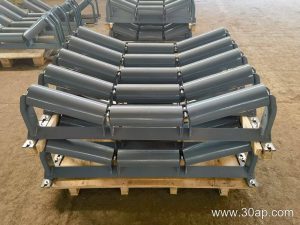
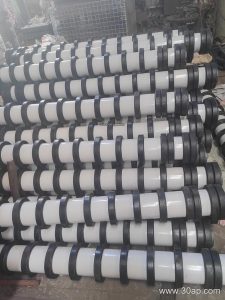
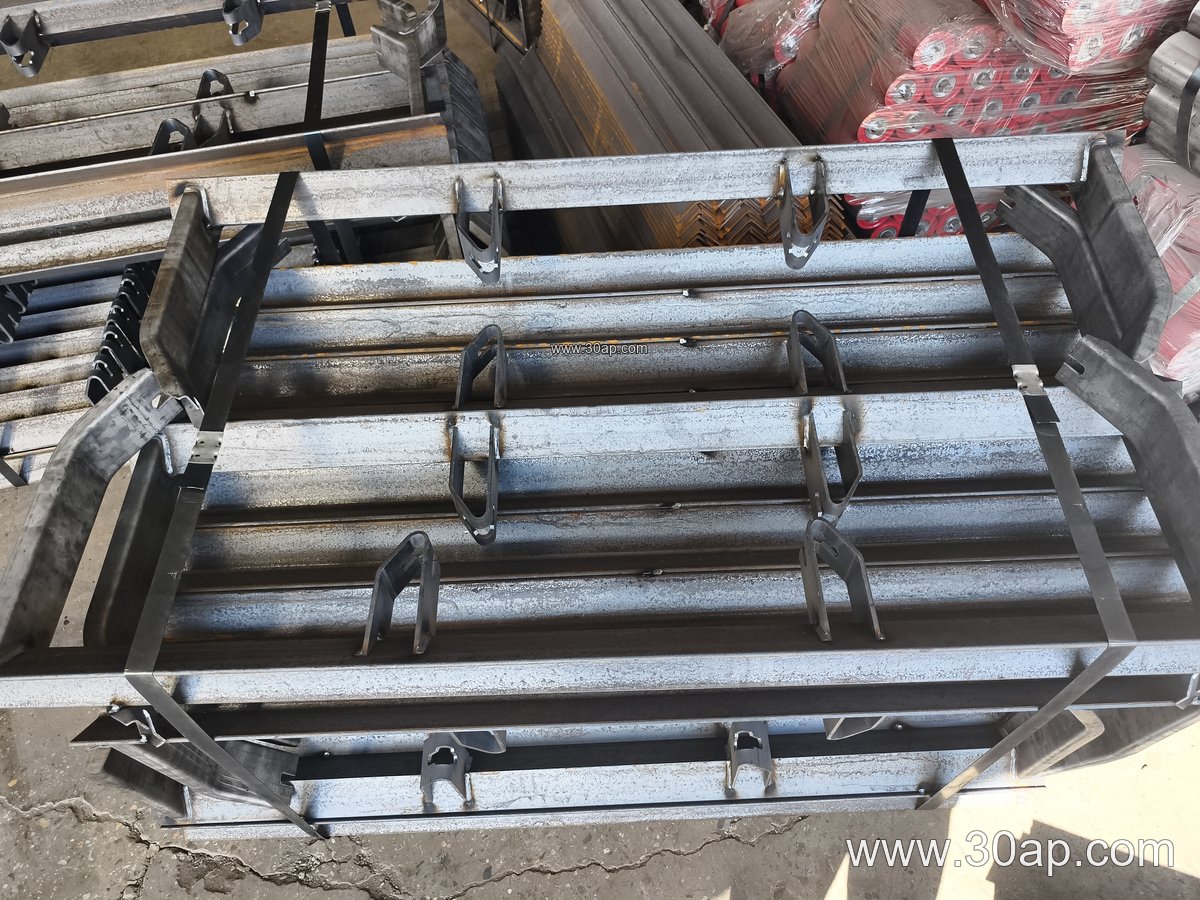
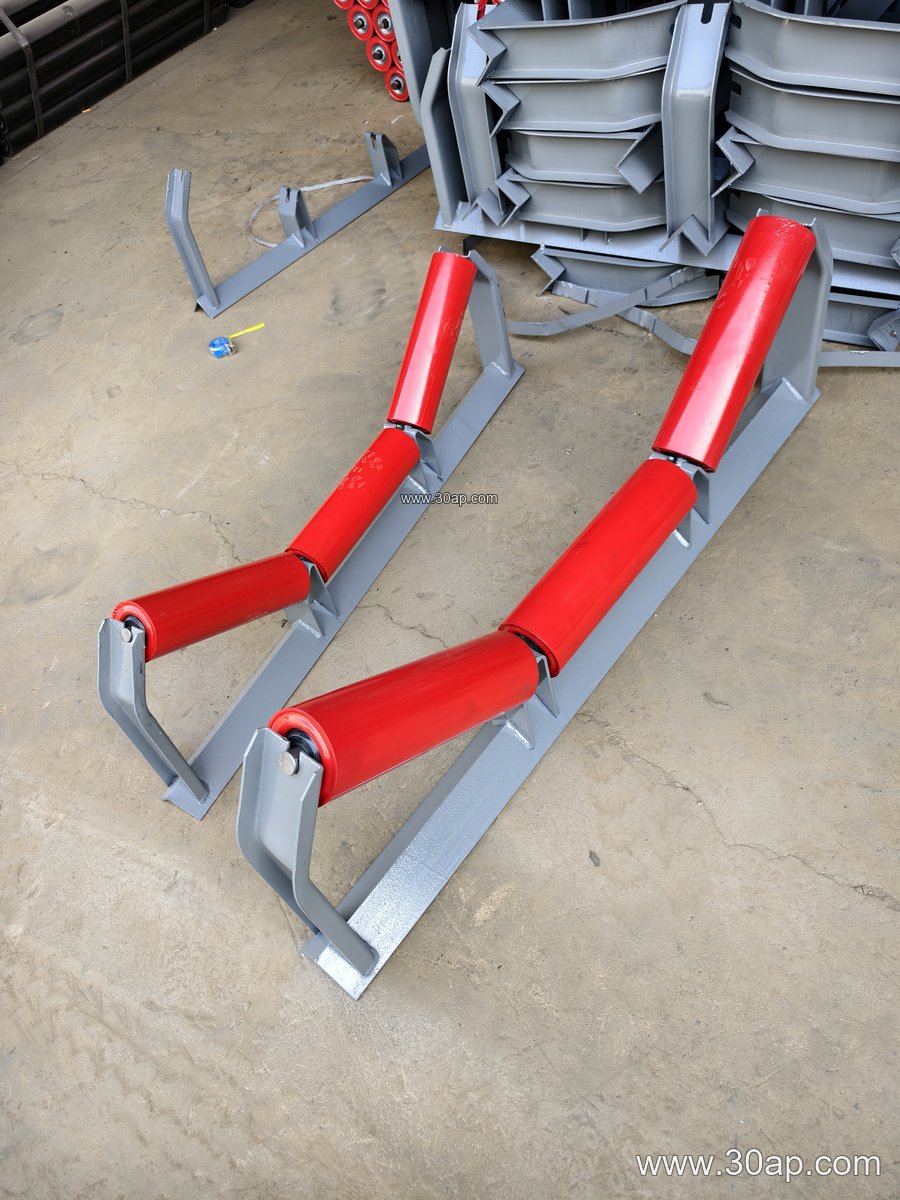
A five-roll idler bracket is a support frame that carries five idler rollers in a troughed arrangement, typically three rolls forming the upper trough and two additional rolls at the outer edges to increase the contact arc with the conveyor belt. This bracket is often referred to as a five-roll idler support or five-roll troughing bracket. It is used where wider belts and higher loads demand better belt support and longer idler life. Unlike a standard three-roll bracket, the five-roll design distributes the load more evenly across the belt width, reducing stress on the belt and improving tracking in bulk material handling operations such as quarry lines, cement plants, and power station coal conveying.
Construction and Materials
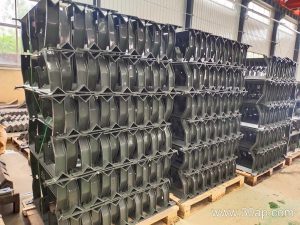
The bracket is commonly fabricated from angle steel, channel steel, or folded steel plate, with welded or bolted joints for rigidity. The roll mounting positions are designed to hold a series of idler rollers at specific trough angles. Typical materials include mild steel with protective coating or galvanized finish for corrosion resistance. The bracket must withstand continuous vibration and impact from material loading, so weld quality and dimensional accuracy are critical. Some designs include adjustable slots to change the trough angle or to accommodate different roll diameters.
Typical Sizes and Configurations
Five-roll idler brackets are available for a range of belt widths and roll diameters. Common belt width designations include B500, B650, B800, B1000, B1200, B1400, B1600, B1800, B2000, B2200, and wider. The trough angle is usually 20, 30, 35, or 45 degrees, and adjustable brackets can be set between these angles. Idler roll diameters often used are Ø89, Ø108, Ø133, Ø159, and Ø194 mm. The table below shows representative combinations, but final selection depends on belt speed, material lump size, and load conditions.
| Belt Width (mm) | Typical Trough Angle (degrees) | Common Roll Diameter (mm) | Application Example |
|---|---|---|---|
| B500 | 20, 30 | Ø89 | Small aggregate conveyors |
| B650 | 30, 35 | Ø89, Ø108 | Stone crushing lines |
| B800 | 30, 35, 45 | Ø108, Ø133 | Coal handling in power plants |
| B1000 | 35, 45 | Ø108, Ø133, Ø159 | Cement plant raw material transport |
| B1200 | 35, 45 | Ø133, Ø159 | Iron ore mining conveyors |
| B1400 | 35, 45 | Ø133, Ø159, Ø194 | Port bulk loading systems |
| B1600 | 35, 45 | Ø159, Ø194 | Large quarry and mine conveyors |
| B1800 | 35, 45 | Ø159, Ø194 | Heavy-duty ore transport |
| B2000 | 35, 45 | Ø159, Ø194 | High-capacity bulk terminals |
Note that these are typical references; actual bracket dimensions, mounting hole spacing, and crossbeam length are determined by the specific conveyor design. No single belt width is tied to one fixed roll diameter or trough angle.
Where It Is Used
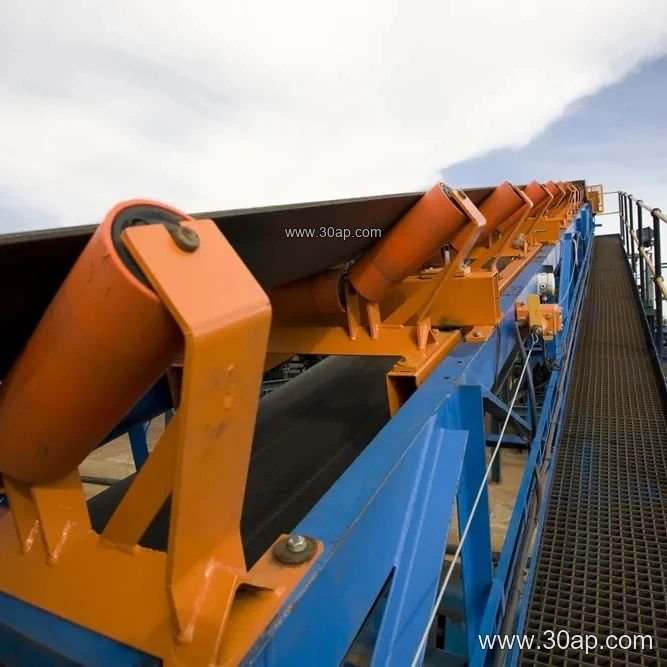
The five-roll idler bracket is found in demanding conveyor applications where belt width exceeds 1000 mm and material loads are heavy. In a limestone quarry, for instance, it supports the conveyor belt along the main haulage line, working together with impact idlers at the loading point and return rollers on the return strand. In a coal-fired power plant, it helps maintain proper belt troughing on coal conveyors, reducing spillage and extending the life of the rubber conveyor belt. Other industries include iron ore mining, cement clinker transport, and port ship loading facilities. The bracket is often paired with a fabric core conveyor belt or steel cord conveyor belt, depending on the tensile strength required.
Selection and Maintenance Tips
When choosing a five-roll idler bracket, consider the belt width, the required trough angle, and the roll diameter that matches the idler roller series. The bracket must align with the conveyor frame and provide correct spacing between rolls to avoid pinching the belt. Adjustable brackets are useful where belt tracking needs fine-tuning or where future changes in belt width are expected. During maintenance, check for loose bolts, weld cracks, and corrosion, especially in wet or dusty environments. Replacing worn idler rollers promptly prevents bracket overload and belt damage. For high-abrasion materials, use abrasion resistant conveyor belt to reduce wear on the belt and bracket assembly.
Related Conveyor Components
To complete the conveyor system, the five-roll idler bracket works with conveyor pulleys, conveyor brackets, and various conveyor belt types. For example, a heavy-duty mining conveyor belt may require a robust bracket design with reinforced crossbeams. In food or chemical plants, a food grade conveyor belt or chemical resistant conveyor belt may be used with stainless steel brackets. The key is to match the bracket load rating with the belt tension and material weight. Always consult the conveyor designer for exact specifications.