What the Head Pulley Assembly Does
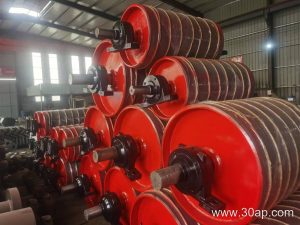
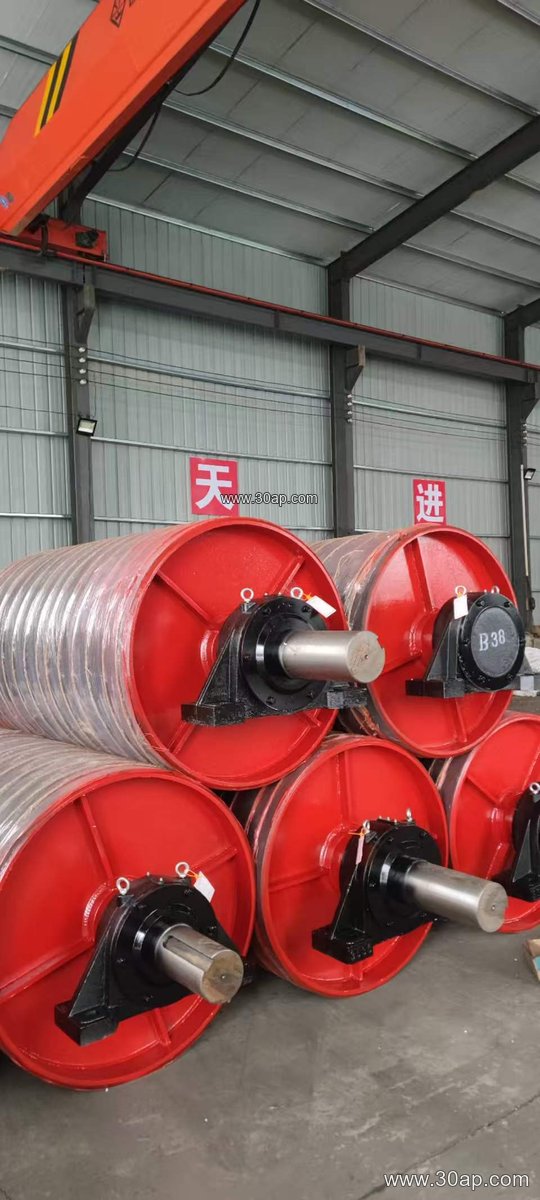
The head pulley assembly is the discharge end of a belt conveyor. It is the drum that the conveyor belt wraps around at the delivery point, and it is normally the part that pulls the belt forward. Because it carries the highest belt tension and receives the material discharge, this assembly is more than a bare shell. It combines the pulley body, shaft, bearings, bearing housings, locking elements, and usually a lagged surface, mounted on a heavy frame or conveyor bracket at the head of the structure.
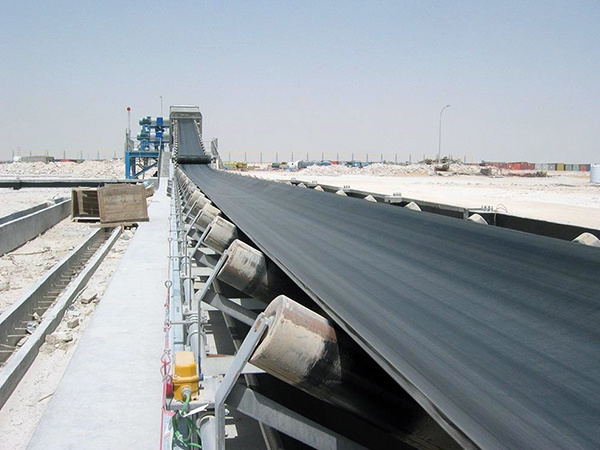
In a quarry or aggregate line, the head pulley assembly sits above the stockpile or transfer chute, so its condition directly affects belt tracking and discharge quality. In a coal mining conveyor or power plant coal handling system, the same assembly must cope with dust, moisture, and continuous running.
Construction Details That Matter
A typical unit is built from a rolled steel shell welded to end discs, with a through shaft or stub shafts pressed and keyed in place. Larger drums often use a welded hub and shrink-fit connection to transmit torque reliably. Bearings are usually self-aligning spherical roller types in cast or fabricated housings, greased through accessible fittings.
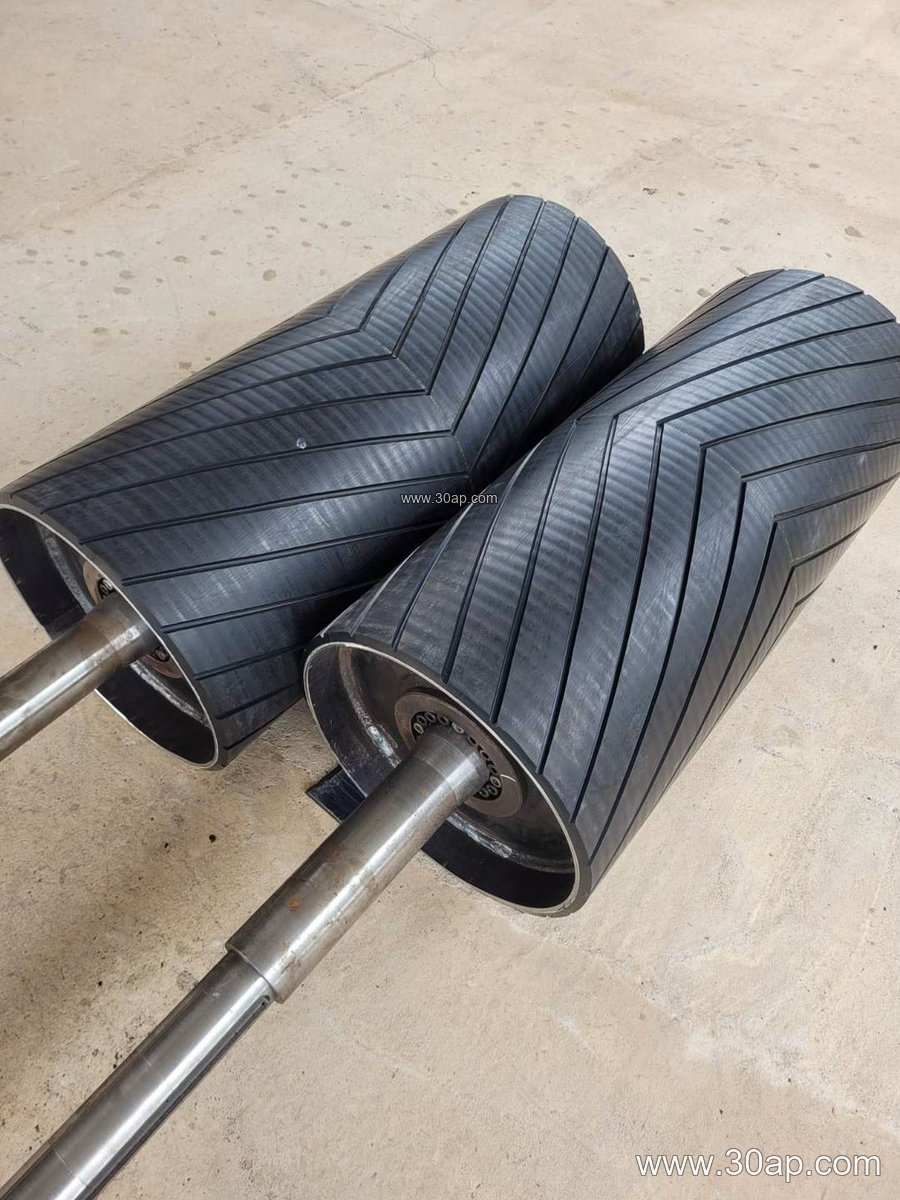
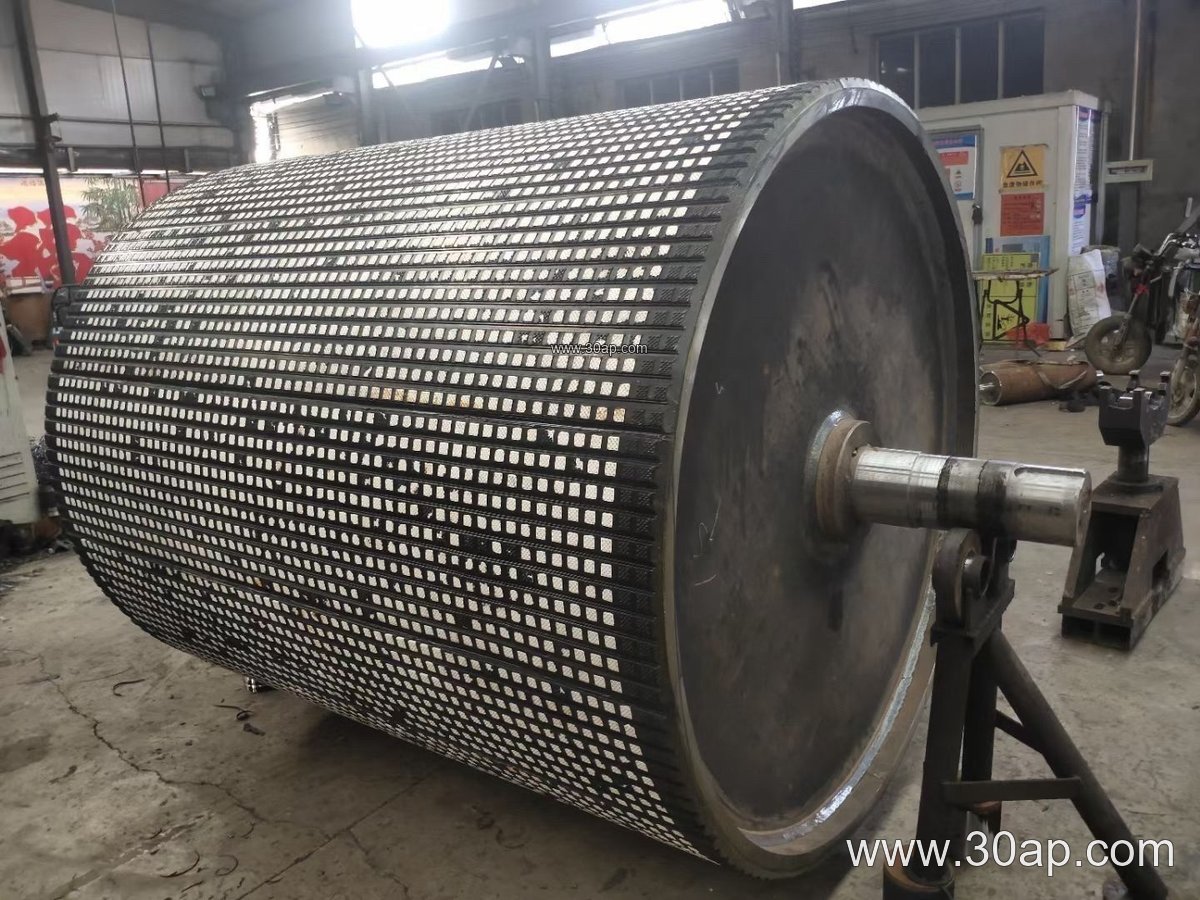
The contact surface is where many specifications are decided. Plain finish suits light duty and dry conditions. Rubber lagging, applied by hot vulcanizing or cold bonding, raises friction between drum and belt and protects the shell. Diamond or herringbone grooves help shed water and fines; ceramic lagging is chosen where abrasion is severe. Common lagging thicknesses are 8, 10, 12, 15, and 20 mm, selected according to the duty and the belt it drives.
Sizes and Typical Configurations
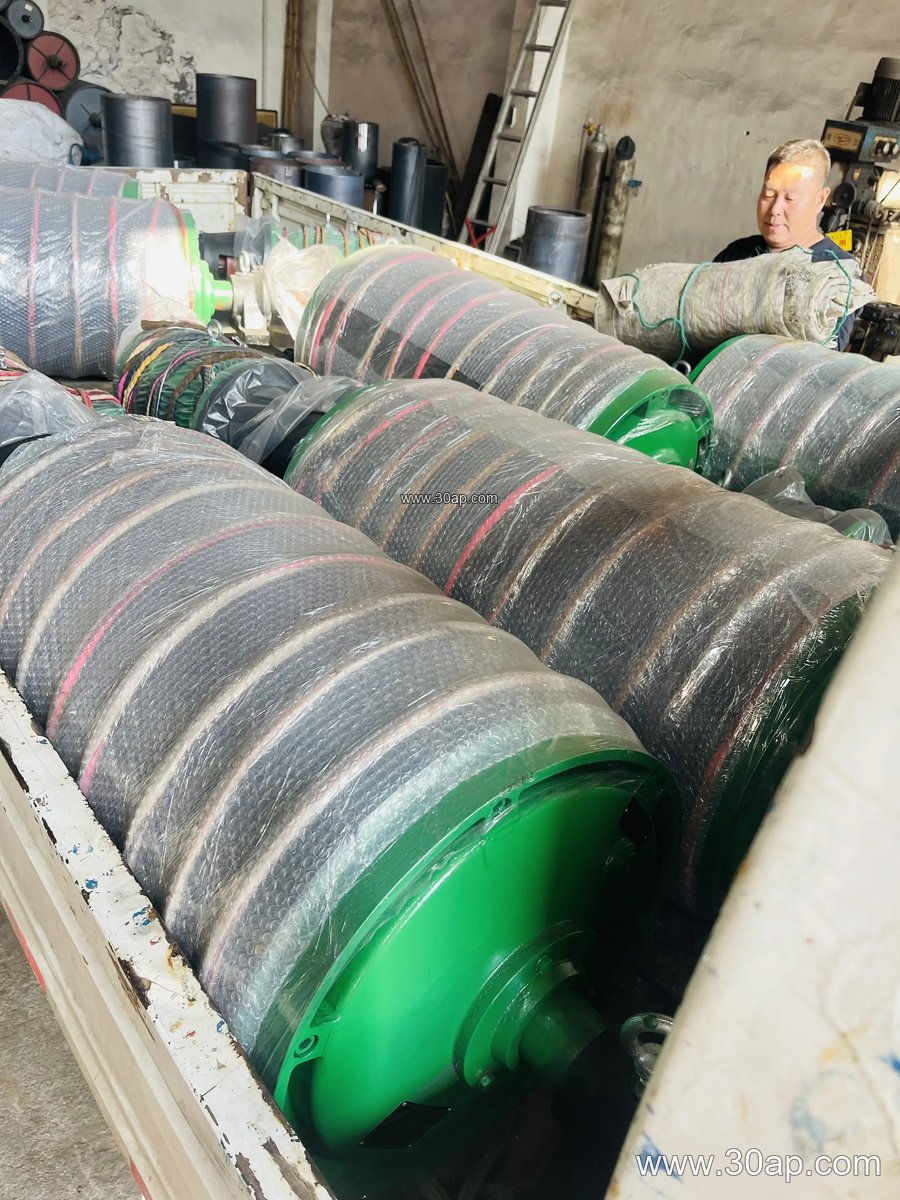
Drum diameter and face width are matched to belt width and tension, not fixed by a single rule. The drum face is normally a little wider than the belt. The table below gives common pairings for reference only; final sizes follow the conveyor design.
- B400 belt – about 500 mm face, diameters from Ø200 upward
- B500 belt – about 600 mm face, diameters from Ø250 upward
- B650 belt – about 750 mm face, Ø315 or Ø400 common
- B800 belt – about 950 mm face, Ø400 to Ø500 typical
- B1000 belt – about 1150 mm face, Ø500 to Ø630
- B1200 belt – about 1400 mm face, Ø630 to Ø800
- B1400 belt – about 1600 mm face, Ø800 to Ø1000
- B1600 belt – about 1800 mm face, Ø1000 to Ø1250
- B1800 belt – about 2000 mm face, Ø1250 to Ø1400
- B2000 belt – about 2200 mm face, Ø1400 to Ø1600
Shaft diameter is set by torque and load, with common sizes from Ø50 to Ø200. A B1200 x Ø1000 assembly and a B800 x Ø500 assembly are both realistic, but neither belt width forces one shaft size. A drive pulley at the head may also be supplied as a motorized or electric drum, which removes the external gearbox and drive base.
Where It Fits in the Plant
The assembly appears at the discharge of nearly every belt conveyor: crushing and screening plants, cement clinker lines, iron ore and copper ore handling, port bulk terminals, and fertilizer or grain silos. On a long overland conveyor, the head drum works together with the conveyor belt, idler rollers, and return rollers to keep the carcass running straight. Heat resistant conveyor belt grades are common near sinter plants and clinker coolers, while flame retardant conveyor belt grades are specified in underground coal mining conveyor systems.
Do not confuse this part with a tail pulley or a bend pulley. A tail pulley turns at the loading end, a bend pulley only changes belt direction, and a drive pulley provides traction. Only the head position combines discharge and, usually, drive duty. A snub or pressure pulley may be added nearby, but it is a separate component.
Buyer Checklist
- Confirm belt width, drum diameter, face width, and shaft size from the conveyor drawing.
- State the lagging type and thickness, and whether grooves or ceramic tiles are needed.
- Specify bearing type, housing style, and lubrication arrangement.
- Check the mounting interface against the conveyor bracket and frame dimensions.
- Ask for dynamic balance and runout data where belt speed is high.
- Plan spare lagging and bearings, since this drum is difficult to access on a live line.
For more conveyor components, visit stbeltconveyor.com for conveyor pulley and drum guidance, and check beltmatch.com for matching conveyor belt and roller information. A well-specified head pulley assembly keeps discharge clean, tracking stable, and downtime low across mining, cement, and bulk handling operations.