What a Polyurethane Idler Is and Why It Stands Out
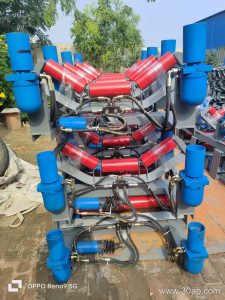
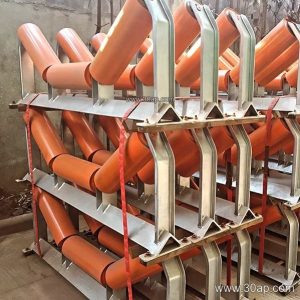
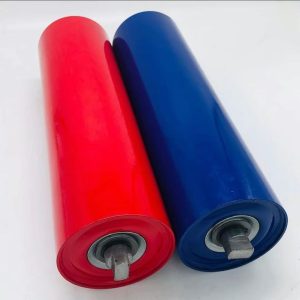
A polyurethane idler is a conveyor idler roller whose outer surface is made from polyurethane rather than plain steel, rubber, or nylon. The core is typically a steel tube fitted with bearing housings and a shaft, and the polyurethane layer is bonded or cast onto the shell. This construction gives the idler a combination of properties that many bulk handling operations find useful: good abrasion resistance, low noise, resistance to many oils and chemicals, and a surface that tends to shed sticky material rather than build up on it. When buyers ask for a polyurethane idler, they are usually looking at the roller as a wear part that sits under the conveyor belt and supports it along the carrying or return run. It is still an idler roller, not a drive pulley, tail pulley, or bend pulley, and those components serve entirely different roles in a conveyor.
Because the polyurethane cover is softer than steel but tougher than many rubber compounds, it can reduce impact noise and vibration in the line. In a quarry conveyor or a cement plant, that difference is often noticeable when the belt is running empty or carrying light material. For heavier, sharper loads, a rubber disc impact idler may still be the better choice, but the polyurethane version has its own place where abrasion and material carryback are the main concerns.
How the Roller Is Built
The typical build starts with a steel tube that provides stiffness and load capacity. Bearing seats are machined at each end, and commonly available bearing sizes such as 6204, 6205, 6305, 6306, 6308, or 6310 are fitted depending on the roller diameter and load rating. The polyurethane layer is then applied to the outside. In some designs the cover is a smooth sleeve; in others it is grooved or profiled to improve grip or to help shed fines. Shaft ends are usually flattened or machined for mounting in the conveyor bracket.
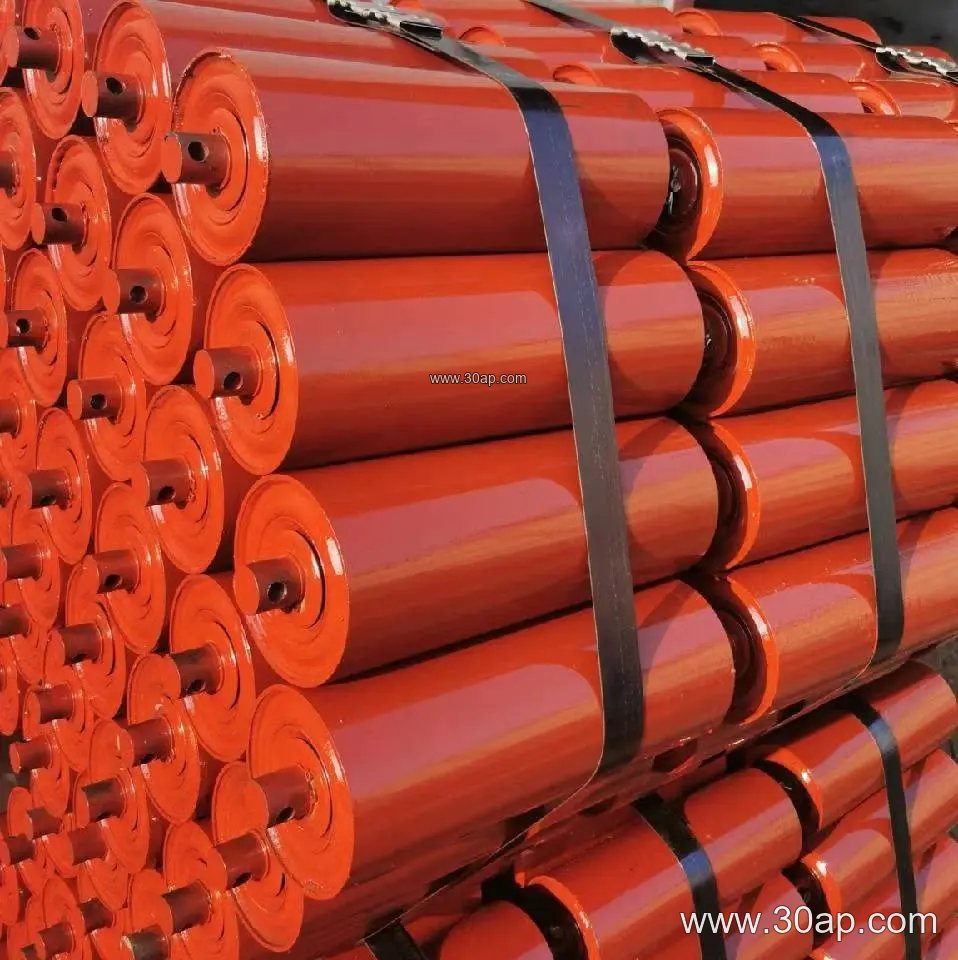
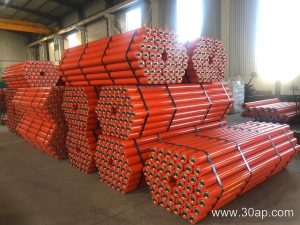
Roller diameter is selected from a range that commonly includes Ø63, Ø76, Ø89, Ø102, Ø108, Ø127, Ø133, Ø159, Ø178, Ø194, and Ø219 mm. The correct diameter is not fixed by belt width alone; it depends on belt speed, load, and the idler frame design. Belt widths from B400 up to B2400 are used in various plants, and the roller length changes with belt width, trough angle, and whether the station is a single-roll, two-roll, or three-roll troughing set. For example, a three-roll troughing station at B800 often uses a roller length around 315 mm, while B1200 may use around 465 mm. These are common references, not universal rules, and side rollers can differ from the center roller.
Where Polyurethane Idlers Fit in a Plant
These idlers are found in a wide range of bulk material handling lines. In a limestone quarry or aggregate conveyor, they may be used on the return run where fines and dust tend to cling. In a coal mining conveyor or a power plant coal handling system, the low noise and non-sparking nature of the polyurethane surface can be an advantage, though flame retardant properties should be confirmed with the supplier for underground use. Cement plants often use them in dusty transfer points, and fertilizer or chemical plants may choose them where mild chemical resistance is needed.
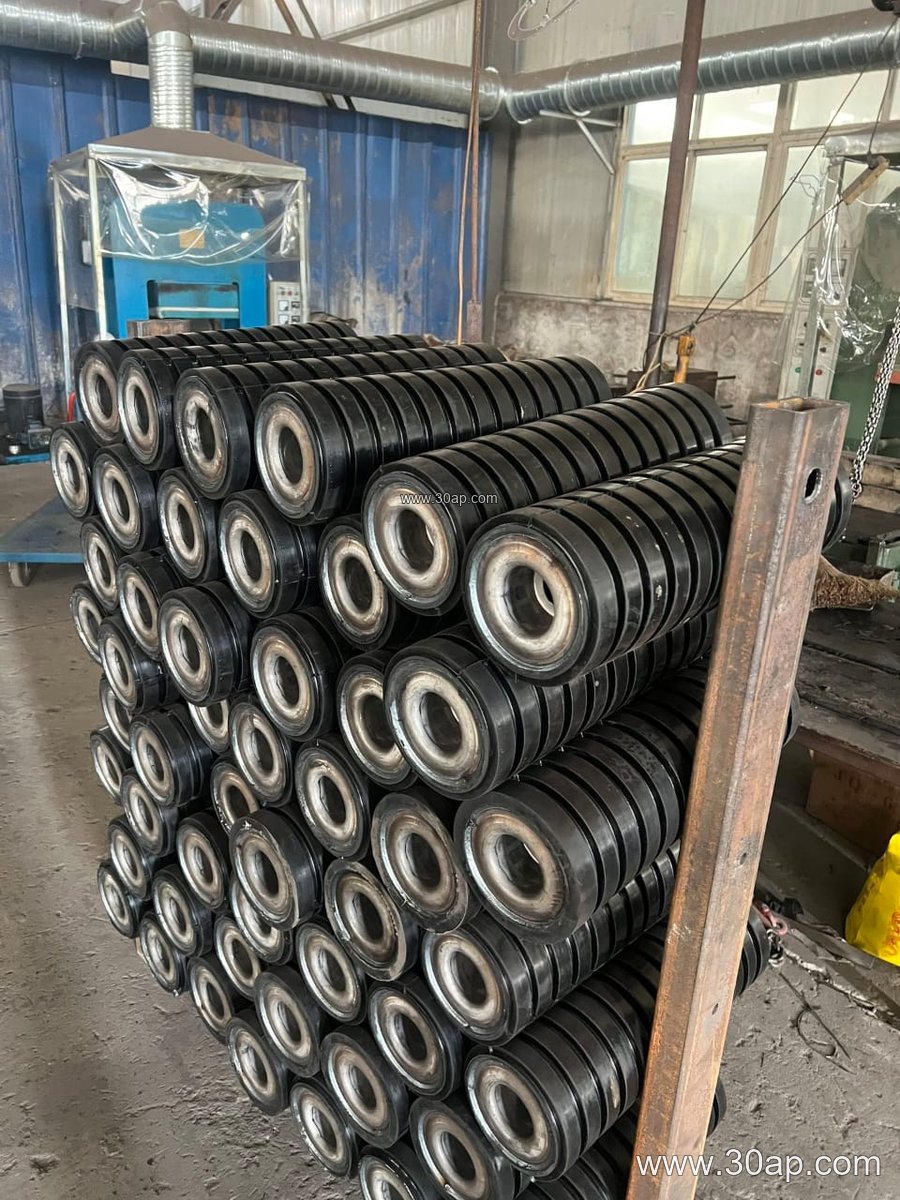
They are also seen in sand and gravel operations, recycling lines, and port conveyor systems handling bulk material. In each case, the polyurethane idler works alongside the conveyor belt, conveyor pulley, and conveyor bracket, but it does not replace the drive or tail pulley. The idler simply supports the belt and helps it track smoothly.
Selection and Maintenance Notes for Buyers
When specifying a polyurethane idler, buyers should confirm the belt width, the trough angle (20, 30, 35, or 45 degrees are common), the idler station type, and the required roller diameter. Trough angle affects how the belt forms its load profile, and the idler length must match the frame. Bearing selection should follow the load and speed, not just the roller diameter. It is also worth stating the environment: a washdown area, a high-temperature zone near a kiln, or an oil-exposed transfer point may call for a different cover compound or a different idler type altogether.
Inspection is straightforward. Check for worn polyurethane surfaces, flat spots, or loose bearings during routine walkarounds. Because polyurethane can soften at elevated temperatures, avoid using standard polyurethane idlers in very hot zones unless the supplier confirms suitability. For heavy impact at loading points, a rubber disc buffer idler may be more appropriate. For general carrying and return duty where abrasion and material build-up are concerns, the polyurethane idler is a practical option that can extend service intervals and reduce noise in mines, quarries, cement works, and power stations.