What a Drive Rubber Lagged Pulley Does
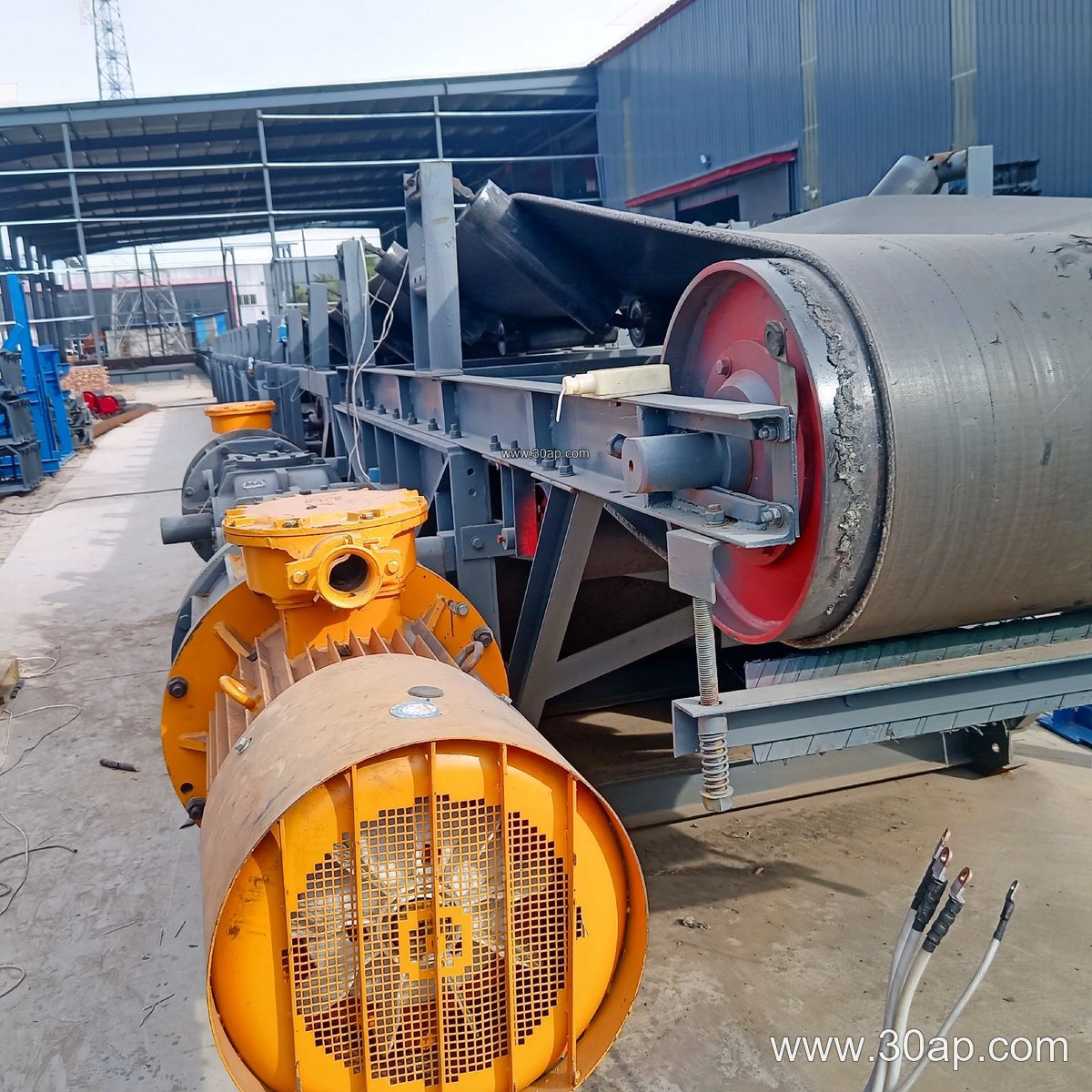
A drive rubber lagged pulley is the powered drum at the head of a conveyor that transfers torque to the belt. The rubber lagging raises friction between the drum and the conveyor belt, reducing slip under load. This matters in bulk handling where starting torque is high and belts carry heavy material. You will find these pulleys in limestone quarries, coal washing plants, and cement clinker lines, often paired with a fabric core conveyor belt or steel cord conveyor belt depending on tension requirements.
Construction and Lagging Options
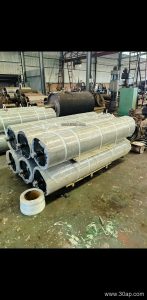
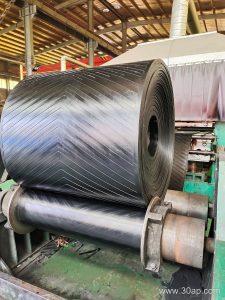
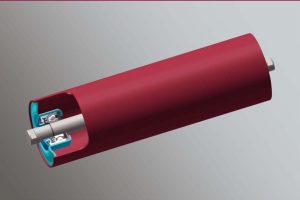
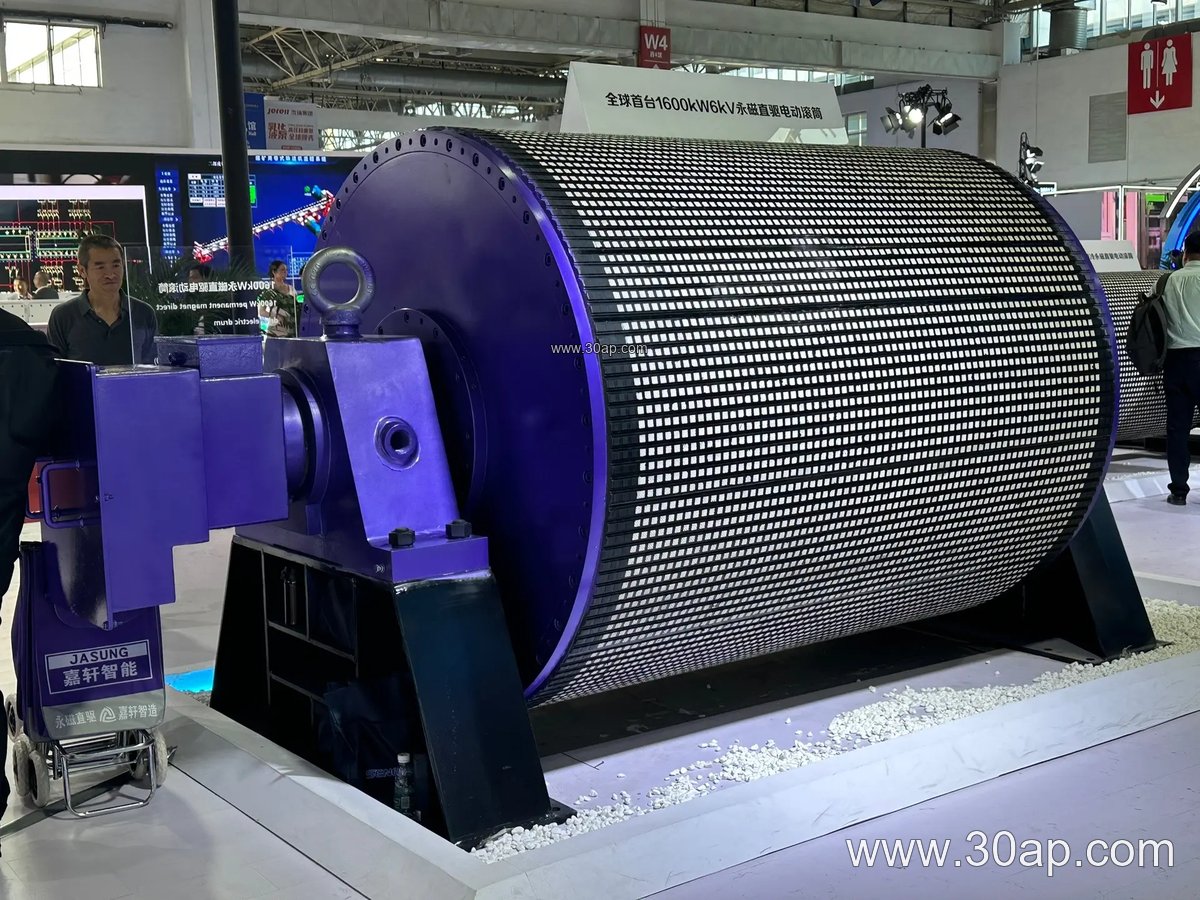
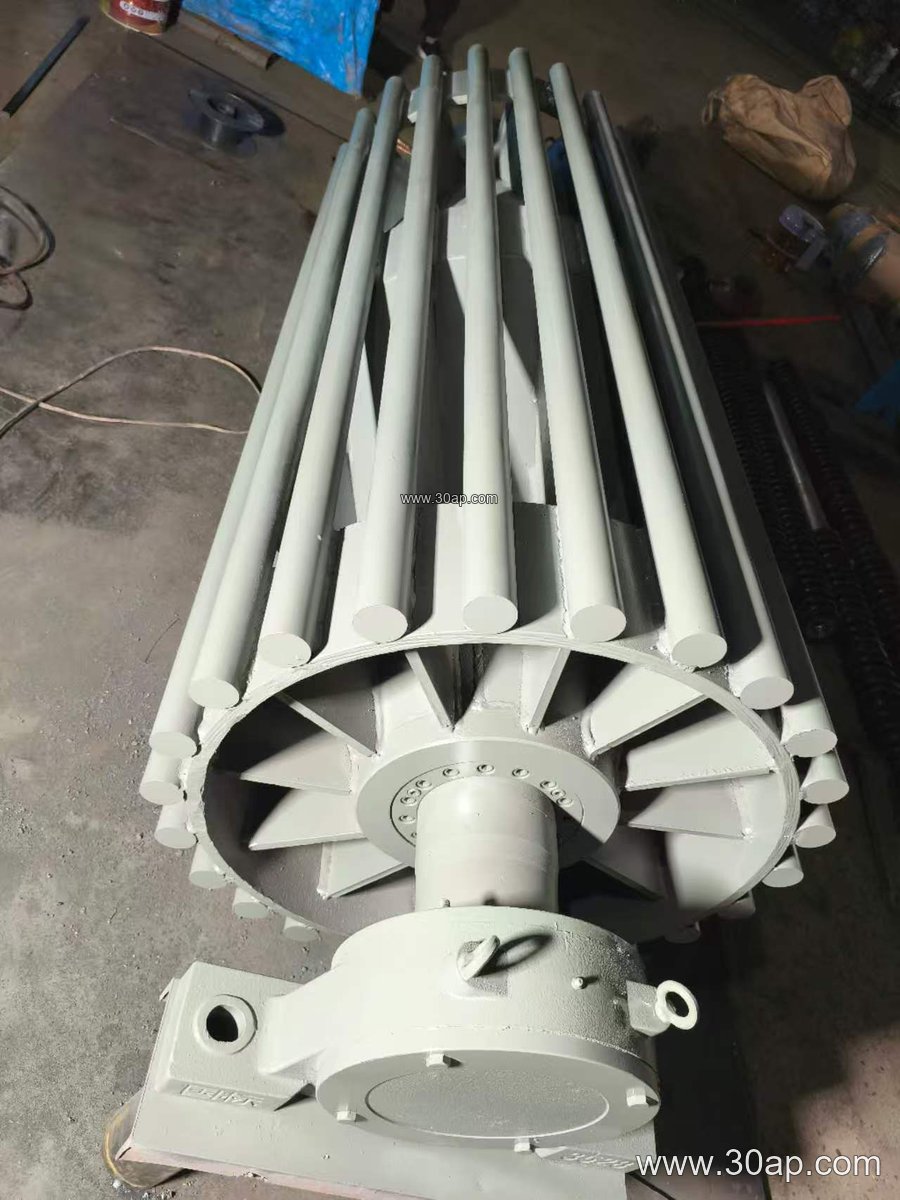
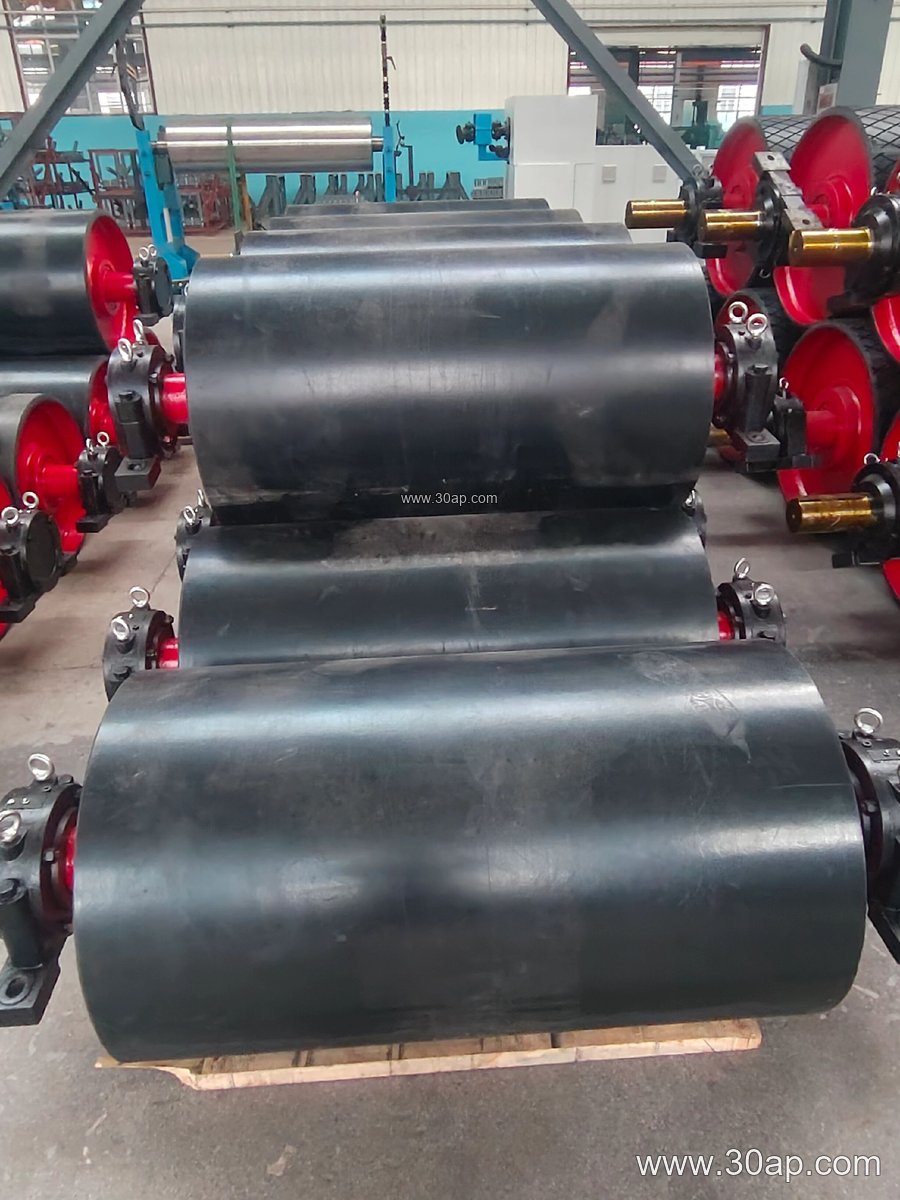
The pulley body is typically a steel cylinder with welded end discs and a shaft. Lagging is applied in several ways: hot vulcanized rubber, cold bonded rubber, or cast rubber. Surface patterns include plain, diamond, and herringbone. Diamond lagging improves water shedding, while herringbone suits bidirectional belts. Thickness commonly ranges from 8 mm to 20 mm. The drum face width is usually wider than the belt: for example, a B800 belt may run on a 950 mm face, and a B1200 belt on a 1400 mm face.
Common Size Combinations
| Belt Width | Typical Pulley Diameter | Common Lagging Thickness |
|---|---|---|
| B500 | Ø400–Ø500 | 8–12 mm |
| B800 | Ø500–Ø630 | 10–15 mm |
| B1000 | Ø630–Ø800 | 12–15 mm |
| B1200 | Ø800–Ø1000 | 15–20 mm |
| B1400 | Ø1000–Ø1250 | 15–20 mm |
These are reference ranges, not fixed rules. Shaft diameter is determined by torque and load, often Ø80 to Ø200, and should not be guessed from belt width alone.
Where It Fits in the Conveyor
The drive pulley sits at the discharge end, pulling the loaded belt. It is not interchangeable with a tail pulley or bend pulley, which serve different positions. A tail pulley redirects the return belt, while a bend pulley changes belt direction without driving. In a quarry conveyor line, the drive rubber lagged pulley works together with conveyor idler rollers, conveyor brackets, and the belt itself to keep material moving from crusher to screen. For high-abrasion ore, an abrasion resistant conveyor belt reduces wear on both belt and lagging.
Buyer Checklist
- Confirm belt width and required pulley face width.
- Specify lagging type and thickness for the environment: diamond for wet conditions, plain for general use.
- Provide belt tension and starting torque so the shaft and bearing size can be calculated.
- Check compatibility with the conveyor belt: a heavy-duty mining conveyor belt may need a larger diameter to reduce bend stress.
- For coal mining, consider flame retardant conveyor belt and anti-static conveyor belt to match site safety requirements.
At www.sdbrbelt.com, drive rubber lagged pulley specifications are matched to the conveyor belt and idler roller layout. Review the belt tension and material characteristics before finalizing the pulley diameter and lagging pattern.
Maintenance and Long-Term Performance
Inspect lagging for wear, glazing, or separation. Worn diamond pattern reduces grip and can cause belt slip, especially in cement plant or power plant coal handling. Keep the pulley face clean and aligned with the conveyor belt. When replacing lagging, verify that the new thickness matches the original design so belt path and take-up travel remain correct. A properly maintained drive rubber lagged pulley extends the service life of the conveyor belt and reduces unplanned downtime in sand and gravel plants, iron ore terminals, and fertilizer handling lines.