What a Mining Impact Idler Does
A mining impact idler is a heavy-duty carrying roller installed at the loading zone of a belt conveyor, where crushed rock, ore or coal drops onto the belt. Its job is not to carry the full length of the load, but to absorb the energy of falling material before that energy reaches the conveyor belt. In a quarry, an iron ore concentrator or a coal preparation plant, the drop height and lump size at the transfer chute can be severe. A standard troughing idler placed there would pass nearly all of that shock into the belt carcass and the frame. The impact idler, often built as a rubber disc impact roller, softens the hit and spreads it over a longer section of belt.
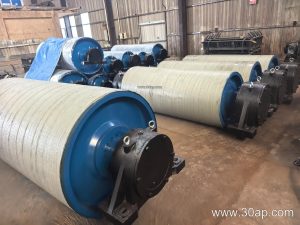
This roller belongs to the same family as the ordinary carrying idler, so it is correctly described as an impact idler roller or simply an impact roller. It is not a substitute for a drive pulley, tail pulley or bend pulley; those parts transmit and redirect belt tension, while the impact idler only supports the belt at the load point. Buyers sometimes confuse the two, so it helps to keep the function clear from the start.
Construction and Common Forms
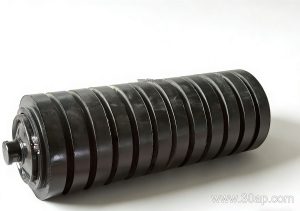
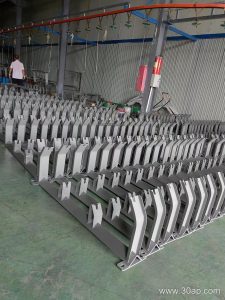
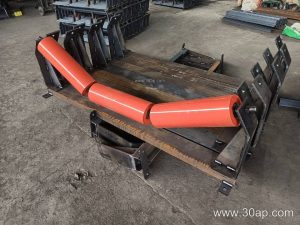
The core of the design is a steel tube or shaft fitted with a series of rubber rings or discs. The resilient rings sit slightly proud of the metal body, so the falling material compresses rubber rather than striking steel. Many designs use a sealed bearing housed inside the end disc, with common bearing sizes such as 6205, 6305 or 6308 depending on shaft and load. The roller surface may be plain rubber, grooved rubber or a combination of rubber rings on a steel shell. Frames are usually welded and bolted to the conveyor bracket or stringer, and the assembly is normally supplied as a two-roll or three-roll troughing set.
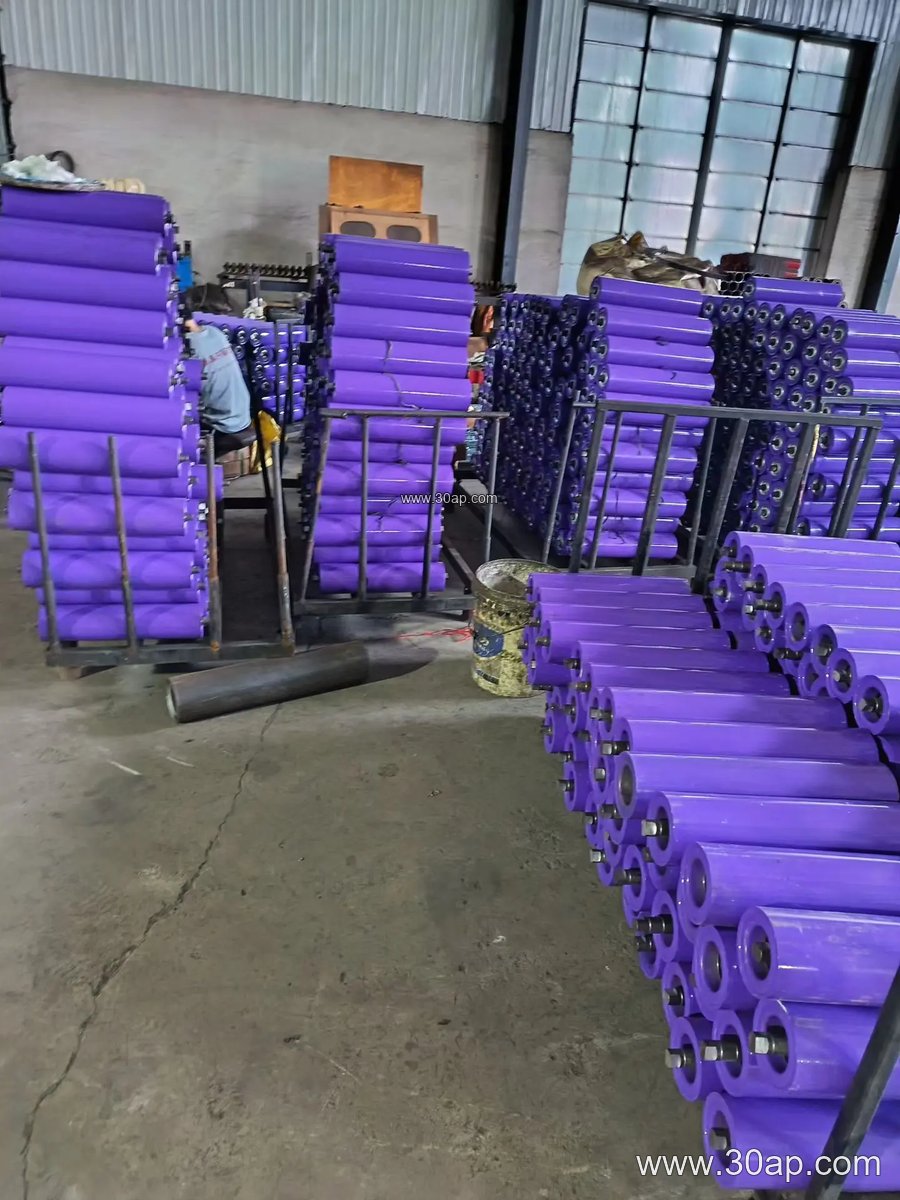
- Roller diameter options commonly include Ø89, Ø108, Ø127, Ø133, Ø159 and Ø178 mm.
- Belt widths served range from B500 and B650 up to B1800 and B2000 on larger installations.
- Trough angles are usually 20, 30, 35 or 45 degrees, selected to suit the material and belt.
- Rubber ring hardness and disc spacing are chosen according to lump size and drop height.
Because the idler must match the existing frame, the roll length is set by belt width, trough angle and the number of rolls in the set. A three-roll set on a B800 belt might use rolls around 315 mm long, while a B1200 set may use roughly 465 mm rolls. These are typical references, not fixed pairings, and side rolls can differ from the centre roll.
Where It Fits in the Plant
The most common location is directly under the discharge chute of a crusher, screen or transfer tower. In a stone crushing line, the primary jaw or impact crusher outlet is a classic point for impact rollers. In a cement plant, the clinker or limestone transfer from a belt to a stockpile conveyor is another. Power plant coal handling systems also use them where coal drops from one conveyor to the next. Underground coal mining conveyors may use flame retardant belt and matching impact rollers to reduce fire risk, and the same logic applies at a port or ship loading terminal where large lumps fall onto a receiving belt.
Downstream of the impact zone, a conveyor belt such as an EP conveyor belt or a steel cord conveyor belt carries the material at speed. The impact idler only protects the first few metres; the rest of the line uses standard troughing, transition and return idlers. A skirted conveyor belt or corrugated sidewall belt may need a different frame arrangement at the load point, so the impact set should be specified together with the belt type.
Selection Notes for Buyers
Three questions drive the choice. First, what is the maximum lump size and the drop height? Second, what belt width and trough angle does the existing frame use? Third, what environment will the roller work in — wet, dusty, corrosive or hot? A rubber disc impact roller is a poor fit for very hot material such as cement clinker straight from the kiln, where a heat resistant conveyor belt and a different support arrangement may be needed. In cold climates, rubber hardness changes, so the compound should be discussed with the supplier.
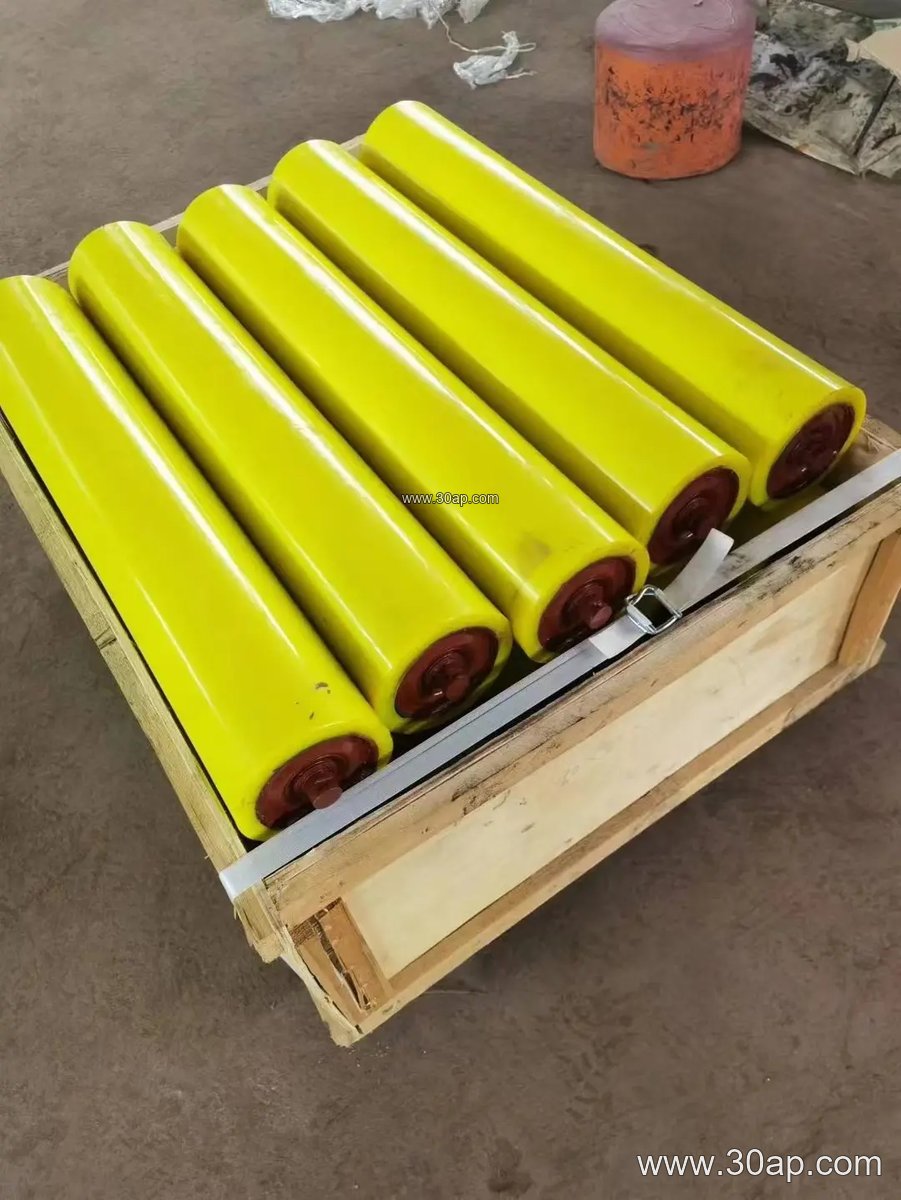
Buyers should also check shaft diameter, bearing type, frame hole spacing and whether the set is fixed or suspended. Sealing quality matters in wet washing plants and in dusty coal preparation buildings, because grit entering the bearing shortens life quickly. Spare rubber rings should be available if the design allows replacement without changing the whole roller.
Maintenance and Comparison
Inspection is simple: look for worn or missing rubber rings, loose discs, seized bearings and belt sag at the load point. Replace worn rings before the steel body contacts the belt. Keep the chute centred so material does not strike one side only.
Compared with a standard troughing idler, the impact version costs more and has a larger outside diameter for the same shaft, but it protects the belt carcass. Compared with a self-aligning idler, it does not correct belt tracking; it absorbs shock. The two are used for different problems and should not be swapped. For a full conveyor package, impact idlers are usually ordered alongside the carrying idlers, return rollers, pulleys and conveyor brackets so that frames and hole patterns match.