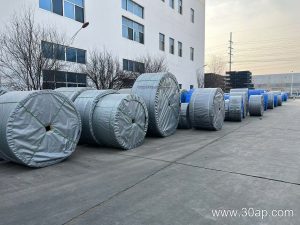
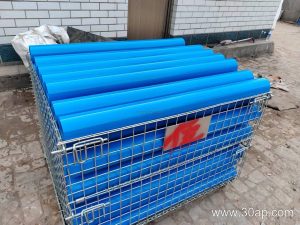
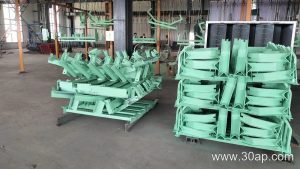
What a 1500mm Wide Conveyor Belt Is
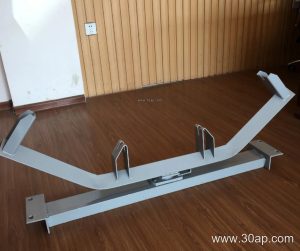
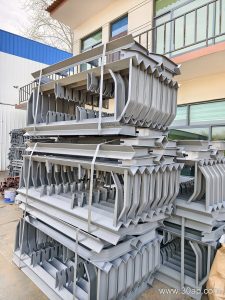
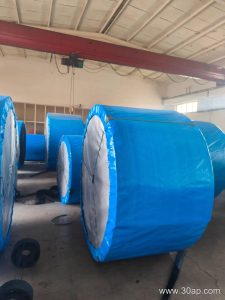
A 1500mm wide conveyor belt is a heavy-duty belting product built for conveyor systems that need to move large volumes of bulk material in a single pass. With a nominal width of 1500 millimeters, it sits in the wide-belt category, above common 1000mm and 1200mm sizes and below extra-wide 1800mm and 2000mm constructions. In quarry, cement, power plant and mining circuits, this width is often chosen when tonnage per hour matters more than a narrow, low-profile layout. The belt itself is the load-carrying surface, while the conveyor pulley, idler roller and conveyor bracket set the path and support the carcass.
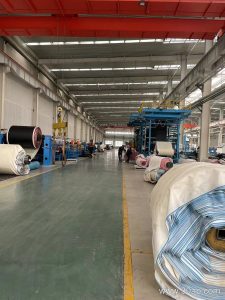
The product is supplied as an EP Conveyor Belt, an NN Conveyor Belt, or a steel cord design depending on tension and impact requirements. Each variant keeps the same 1500mm width but differs in carcass, cover grade and splice method.
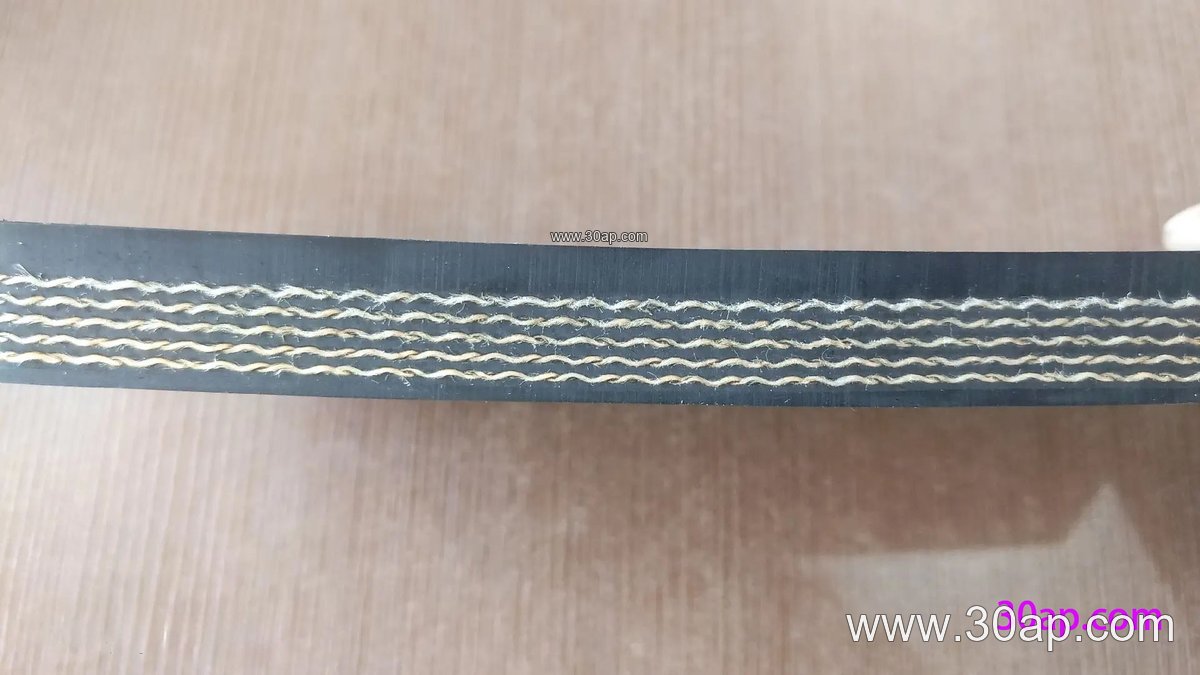
Construction and Material Options
Most 1500mm wide belting uses a fabric core or steel cord carcass covered with rubber. Fabric constructions commonly run 2 to 6 plies, and the cover compound is selected for the duty: abrasion resistant, heat resistant, oil resistant, flame retardant or anti-static. A rubber conveyor belt for a coal mining conveyor line may need flame retardant and anti-static properties, while a cement plant conveyor belt often favors abrasion resistance and heat tolerance.
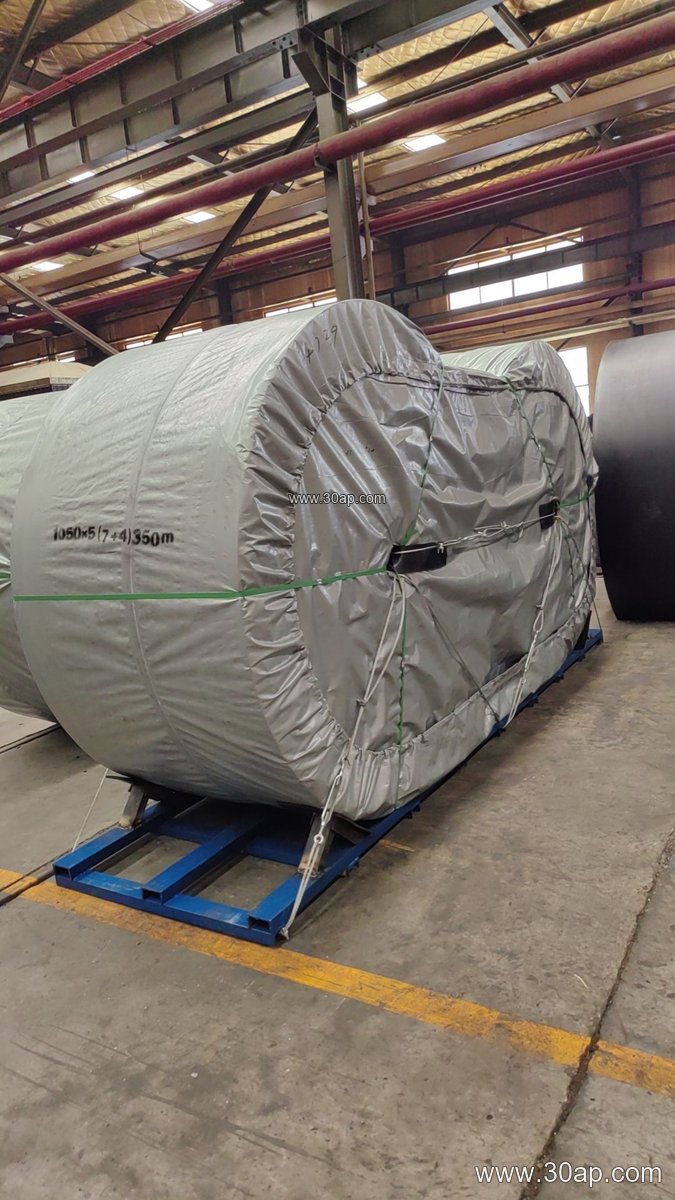
Common strength classes and cover builds are shown below as reference values. Actual selection depends on the conveyor design, material density and loading conditions.
| Property | Typical Reference Range |
|---|---|
| Belt width | 1500 mm (B1500) |
| Fabric strength grades | EP200, EP315, EP400, EP500, EP630, EP800, EP1000, EP1250 |
| Carcass plies | 2 to 6 layers |
| Cover thickness | 3+1.5, 4+2, 5+2, 6+2, 8+3 mm |
| Steel cord grades | ST1000, ST1250, ST1600, ST2000 |
| Surface forms | smooth, chevron, skirted, corrugated sidewall |
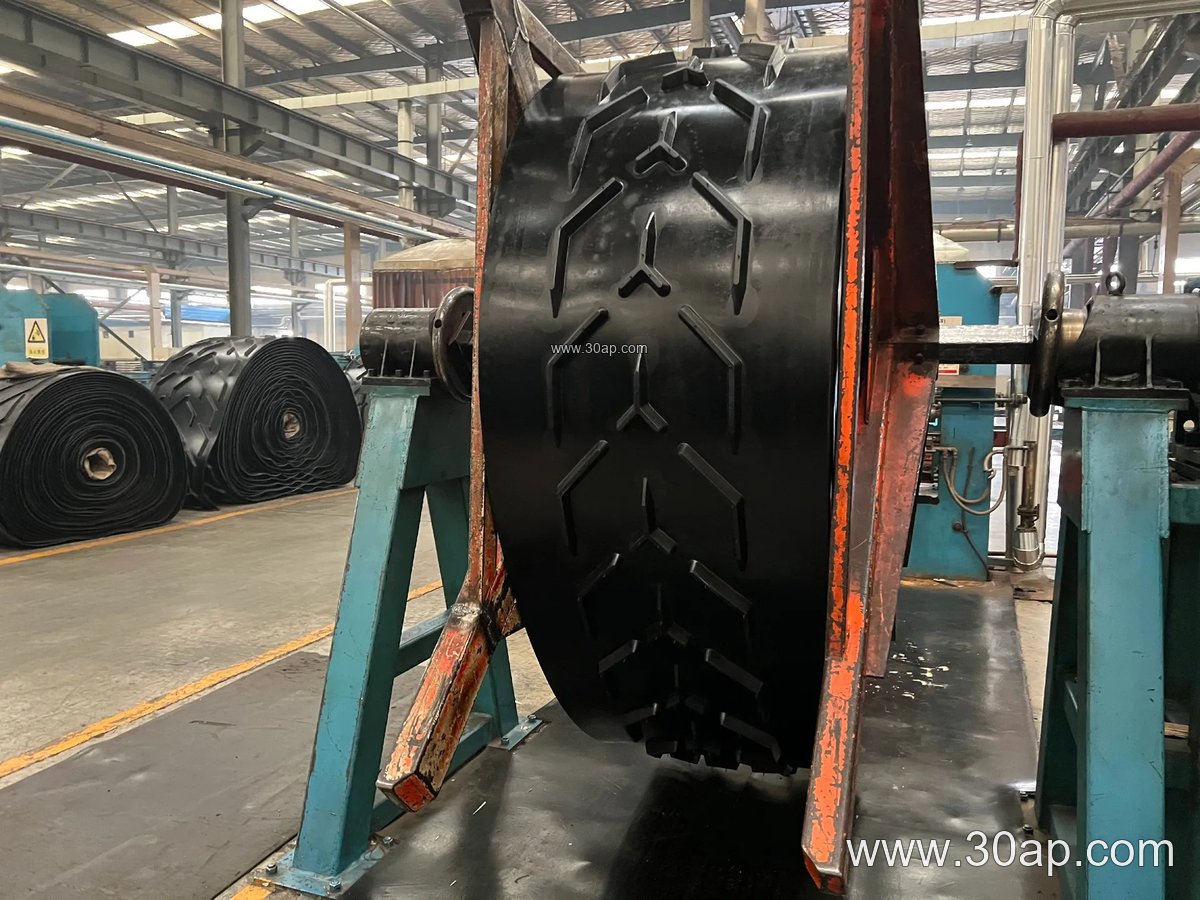
For steep inclines, a chevron conveyor belt or corrugated sidewall conveyor belt can be produced in the same 1500mm width. For enclosed routes, a pipe conveyor belt is a different concept and should not be treated as a direct substitute.
Where the 1500mm Width Fits
This belt size appears in primary and secondary crushing circuits, stockyard reclaim, ship loading and long overland conveying. In an iron ore conveyor or copper ore conveyor, the wide profile reduces the number of parallel lines needed for a given throughput. Aggregate conveyor belts in sand making plants and stone crushing plants also use 1500mm belting when feed lumps are large and impact loads are high.
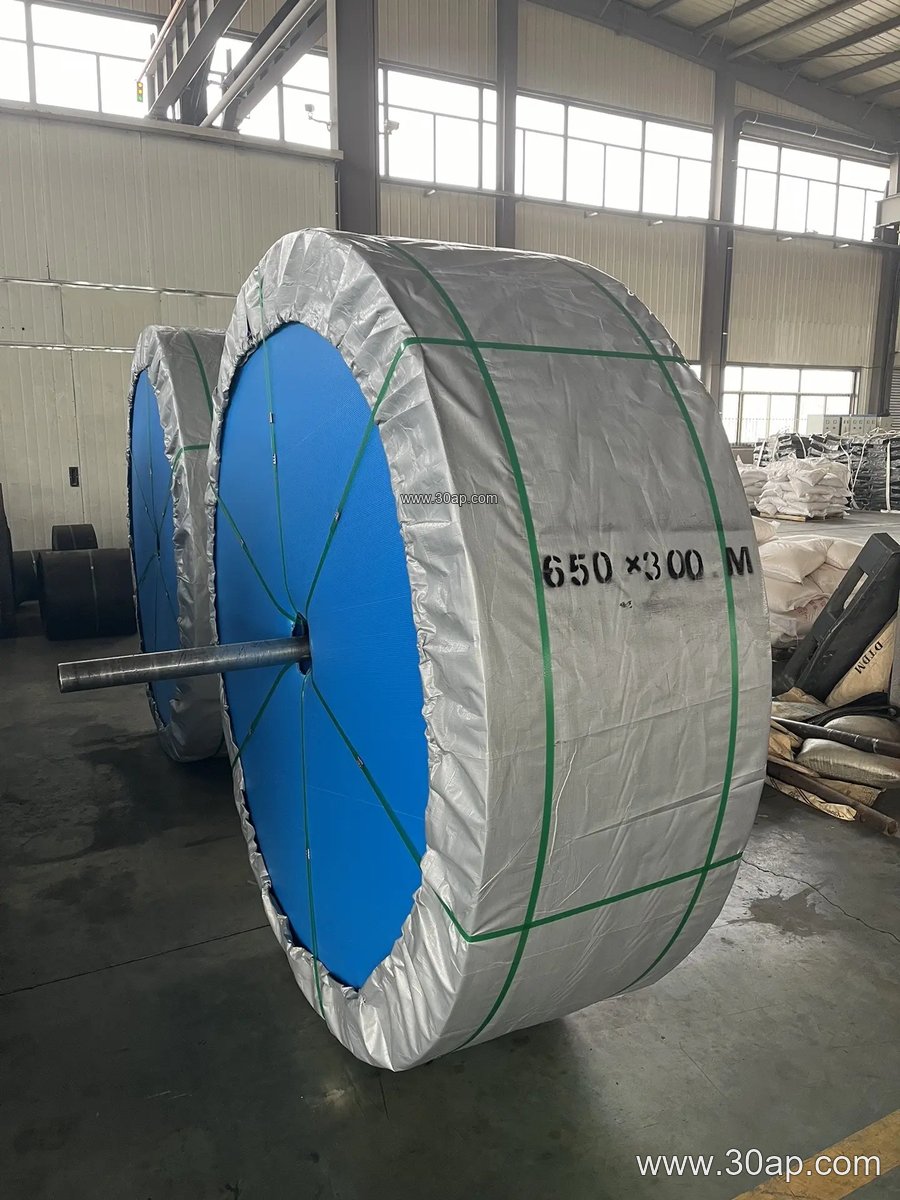
Underground coal mining conveyor belts may use PVG or PVC constructions in flame retardant grades, while surface coal handling often uses EP or steel cord belting. Power plant conveyor belts handling coal and limestone, and port conveyor belts at ship loading terminals, are other common homes for this width.
Selection Points for Buyers
- Confirm the required strength class from the conveyor tension calculation, not from belt width alone.
- Match the cover grade to the material: abrasive rock, hot clinker, oily scrap or food-grade product.
- Check pulley and idler roller compatibility; a 1500mm belt does not imply one fixed pulley diameter or shaft size.
- Decide between endless conveyor belt splicing on site and mechanical fastening, based on belt type and access.
- Review impact resistance at transfer points, especially for rock conveyor and crusher conveyor duties.
- Consider cold resistant or heat resistant grades where the site climate or material temperature demands it.
A heavy-duty mining conveyor belt in 1500mm width may weigh considerably more per meter than a narrower belt, so lifting equipment and splicing tools should be planned accordingly. The conveyor bracket and frame must also be rated for the added belt mass and tension.
Maintenance and Long-Term Use
Track wear on the top cover, edges and splice area. Edge damage on a wide belt can propagate quickly, so training idlers and alignment checks deserve attention. Keep the conveyor pulley lagging and idler roller surfaces clean to reduce slip and belt tracking problems. For heat resistant or flame retardant belting, confirm that repair materials match the original compound.
Buyers should request the manufacturer’s data sheet for the specific 1500mm wide conveyor belt, including carcass type, cover grade, strength class and recommended minimum pulley diameter. Width alone does not define performance; the combination of carcass, cover and splice determines service life in mining, cement, power and quarry operations.