What a Mining Conveyor Bracket Does
A mining conveyor bracket is the structural component that holds idler rollers in the correct position under and along a conveyor belt. Rather than carrying the load itself, it forms the stable frame that keeps each idler roller aligned so the belt can track smoothly and move bulk material without spillage. In a typical heavy-duty mining conveyor, brackets appear in sets: troughing brackets on the carrying side, return brackets underneath, and transition or impact brackets at transfer points. Getting these brackets right is one of the quieter factors behind reliable performance in a coal mine, iron ore pit, aggregate quarry, or power plant coal yard.
How the Bracket Is Built
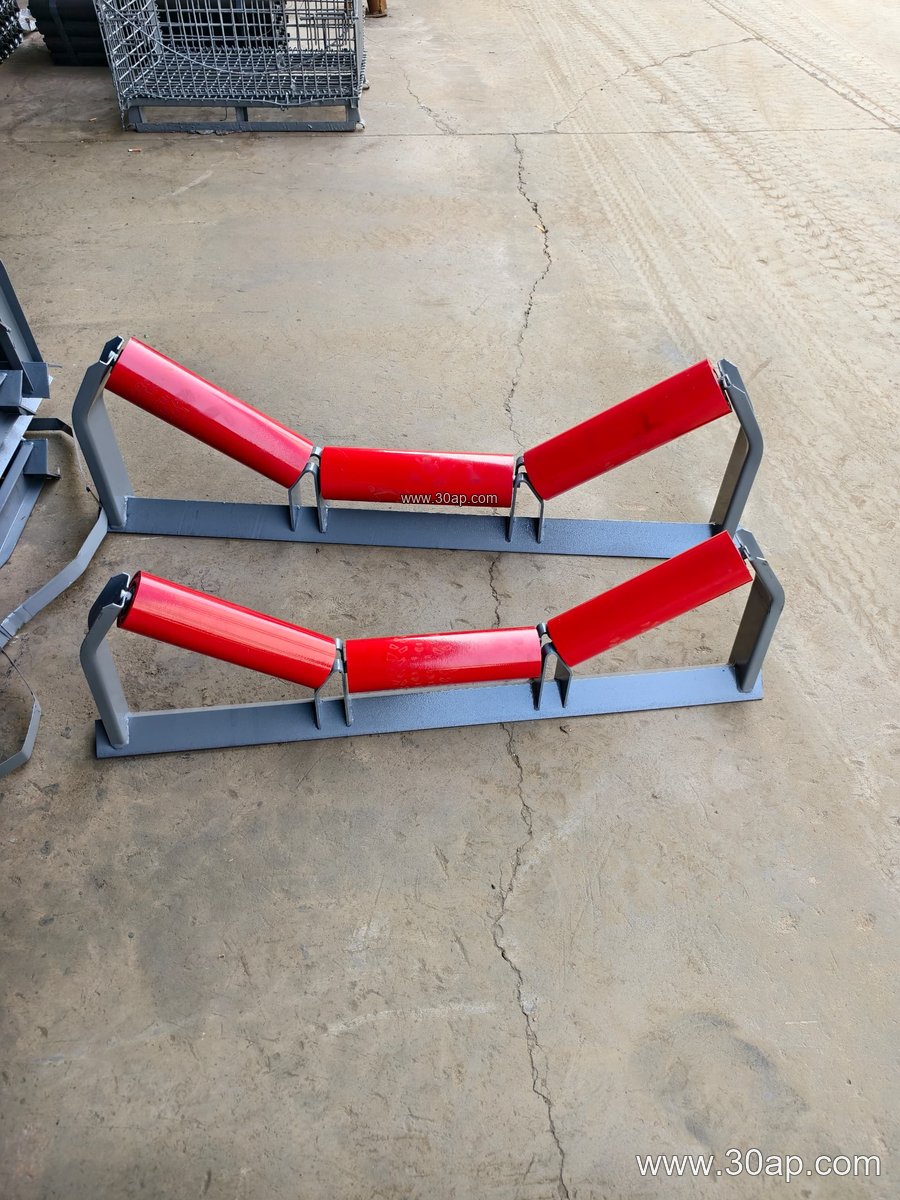
Most brackets are fabricated from angle steel, channel steel, or folded steel plate. The choice depends on load, belt width, and the abuse expected at the installation point. A troughing bracket usually carries three idlers arranged at a fixed trough angle, while a return bracket supports a single flat or V-shaped roller set. Adjustable brackets allow the trough angle to be changed on site, which is useful during commissioning or when a belt is later re-tensioned. Welds, bolt holes, and mounting slots must be clean and consistent, because even a small misalignment shows up as belt wander or edge wear over time.
Where It Fits on the Conveyor
Brackets are used wherever a conveyor changes direction, receives material, or needs support over a long span. Common locations include:
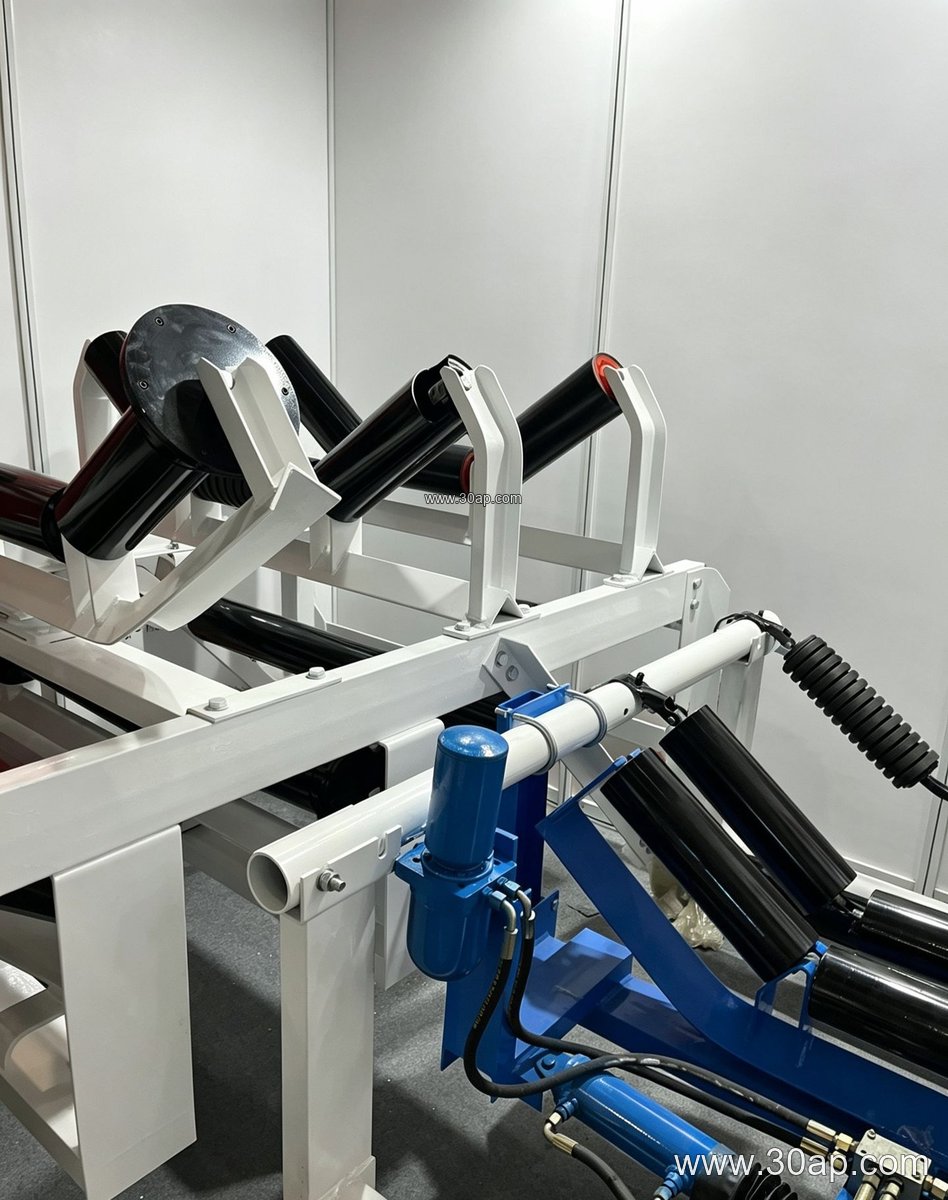
- Troughing stations along the carrying run
- Transition zones near the tail and discharge points
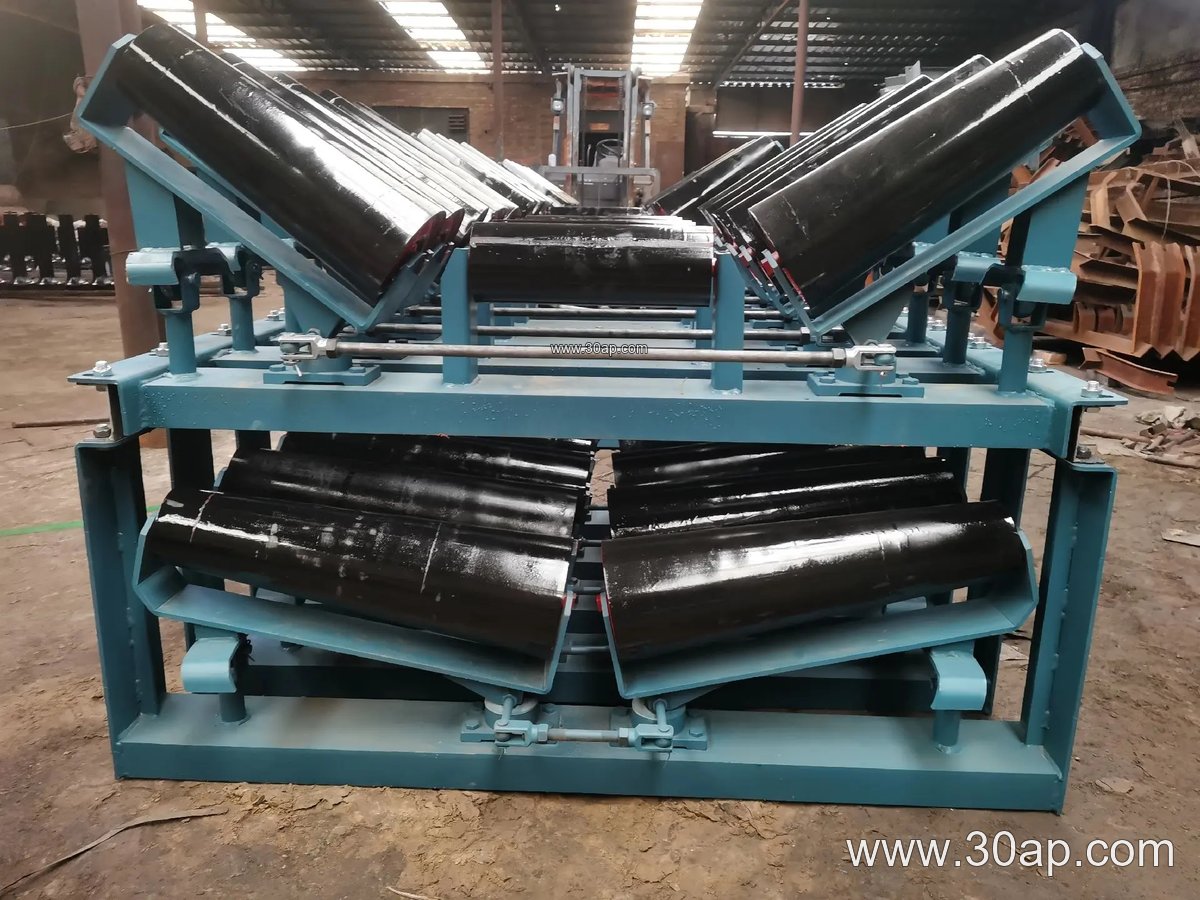
- Impact stations below a crusher or transfer chute
- Return runs, often with V-shaped rollers
- Curves and bends where belt tracking is sensitive
In a cement plant, a limestone feed line may use reinforced brackets near the crusher discharge, while a longer overland section in a sand and gravel operation relies on evenly spaced standard brackets. The same bracket family appears in port loading conveyors and steel plant sinter lines, though the loading conditions differ.
Matching Brackets to Belt and Idler Size
Belt width and idler diameter are the first reference points when selecting a bracket. Typical belt widths range from B500 up to B2000 and beyond, and idler diameters commonly fall around Ø89, Ø108, Ø133, Ø159, or Ø194. Trough angles are usually 20, 30, 35, or 45 degrees, and forward-leaning brackets may tilt about 1.5 to 2 degrees to help center the belt. These are reference ranges, not fixed pairings: a B800 belt, for example, might run with 30 or 35 degrees and a Ø108 idler depending on the design. Mounting hole spacing and crossbeam length change with belt width and trough angle, so they should always be confirmed against the conveyor drawing rather than assumed.
| Reference Item | Common Range | Notes |
|---|---|---|
| Belt width | B500 to B2000 | Match to conveyor design |
| Trough angle | 20°, 30°, 35°, 45° | Adjustable brackets allow changes |
| Idler diameter | Ø89 to Ø194 | Selected by load and belt speed |
| Material | Angle steel, channel steel, folded plate | By load and environment |
Buyer Checklist
Before ordering, confirm the belt width, trough angle, idler diameter, and mounting dimensions. Ask how the bracket will be protected against corrosion in wet or dusty service, and whether the design allows shimming or adjustment after installation. On a coal mining conveyor belt system, flame retardant and anti-static properties matter for the belt itself, but the bracket still needs to be robust enough to resist impact and vibration. Buyers working with an EP conveyor belt or a steel cord conveyor belt on long hauls should check that bracket spacing suits the belt sag and load. It also helps to review how the bracket interfaces with the conveyor pulley alignment at transfer points, since poor alignment there can shorten belt life.
Installation and Maintenance Notes
Install brackets square to the conveyor centerline and torque fasteners to the specified value. Check idler rotation after fitting; a binding roller often points to a twisted bracket rather than a faulty idler. During routine inspections, look for loose bolts, bent frames, and worn mounting slots. Replacing a single damaged bracket early is cheaper than replacing a section of belt later. For more on compatible components, see the conveyor bracket and idler roller ranges at www.example.com/conveyor-bracket, along with belt options at www.example.com/mining-conveyor-belt and pulley guidance at www.example.com/conveyor-pulley. A well-chosen mining conveyor bracket is a small part of the system, but it keeps every roller doing its job.