What a Conveyor Support Bracket Does
A conveyor support bracket is the structural interface that holds idler rollers in the correct position along a conveyor frame. Often called a conveyor bracket or idler support bracket, it carries the weight of the belt and material, maintains the trough angle, and keeps the roller alignment stable. In quarry, mining, and cement plant lines, these brackets are as important as the belt itself — a loose or misaligned support can cause belt tracking problems and premature wear.
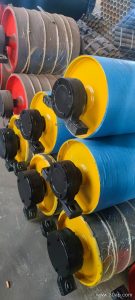
The bracket works together with the conveyor belt and idler roller to form the load-carrying section. While a conveyor pulley drives or redirects the belt, the support bracket holds the rollers that shape the belt into a trough. Drive, tail, and bend pulleys are not interchangeable with brackets — each plays a distinct role.
Construction and Common Forms
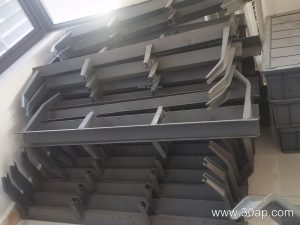
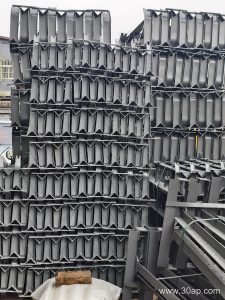
Most brackets are fabricated from angle steel, channel steel, or folded steel plate. The material and thickness are selected according to the load and belt width. Typical types include troughing brackets, transition brackets, return brackets, V-return brackets, impact brackets, self-aligning brackets, and adjustable brackets. Adjustable versions allow the trough angle to be set between common values such as 20°, 30°, 35°, and 45°, while forward-leaning designs often use a small tilt of about 1.5° to 2° to help belt tracking.
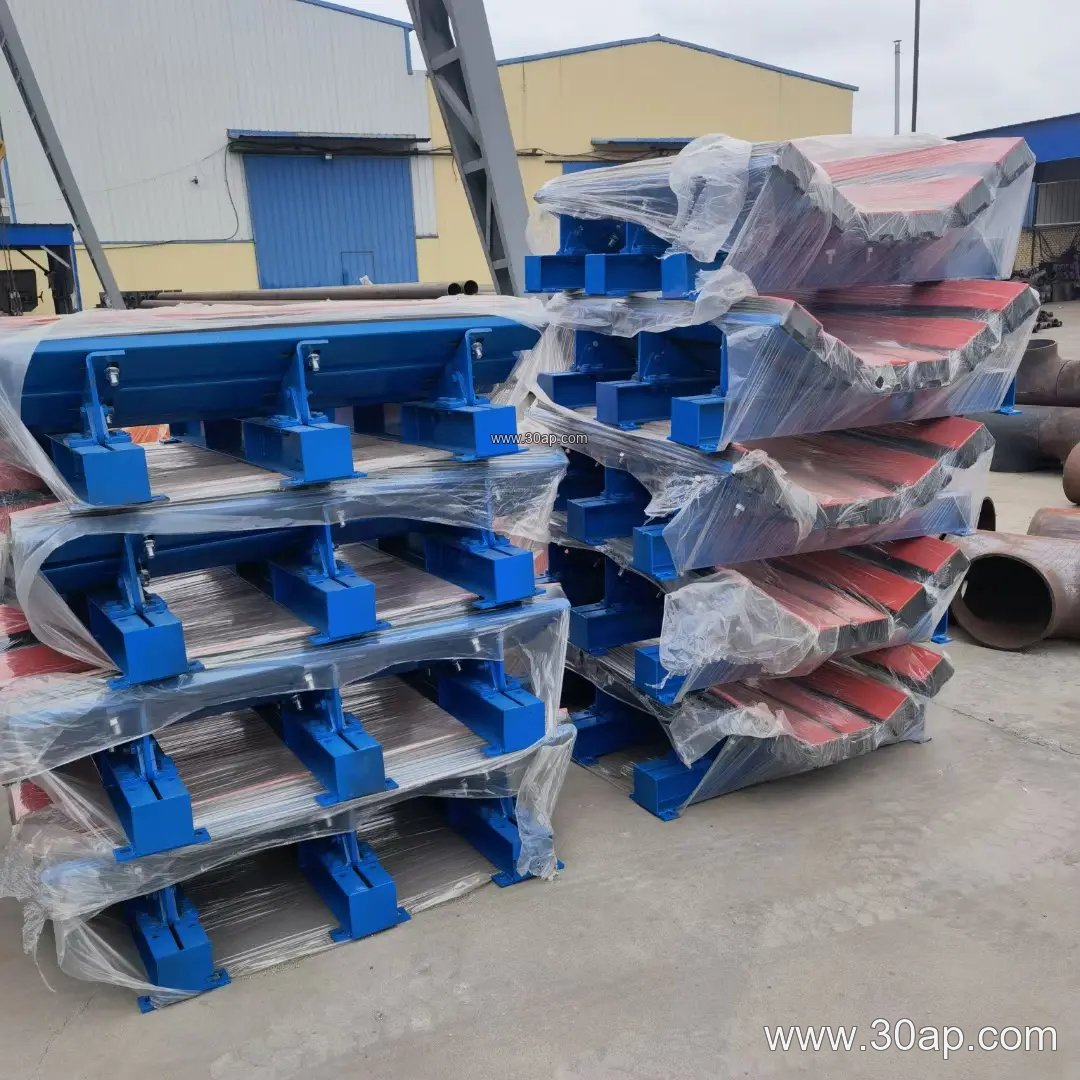
Typical bracket configurations
| Type | Common use | Notes |
|---|---|---|
| Troughing bracket | Carrying side | Sets 3-roll trough angle |
| Transition bracket | Near pulleys | Gradual change in trough angle |
| Return bracket | Return side | Supports flat or V-return rollers |
| Impact bracket | Load point | Extra support for impact rollers |
| Self-aligning bracket | Tracking control | Pivots to correct belt drift |
Mounting hole spacing and crossbeam length are not fixed — they vary with belt width and trough angle. A bracket for B800, 35°, Ø108 is not the same as one for B1200, 45°, Ø133. Buyers should always confirm the hole pattern with the frame drawing.
Where It Fits in the System
In a coal mining conveyor or a power plant coal handling line, the bracket sits on the stringer or frame and supports the idler roller. The choice of bracket affects how well the flame retardant conveyor belt or abrasion resistant conveyor belt is supported. For heavy-duty mining conveyor belts, such as steel cord conveyor belt or high abrasion resistant conveyor belt, brackets need adequate stiffness to prevent sag between idlers.
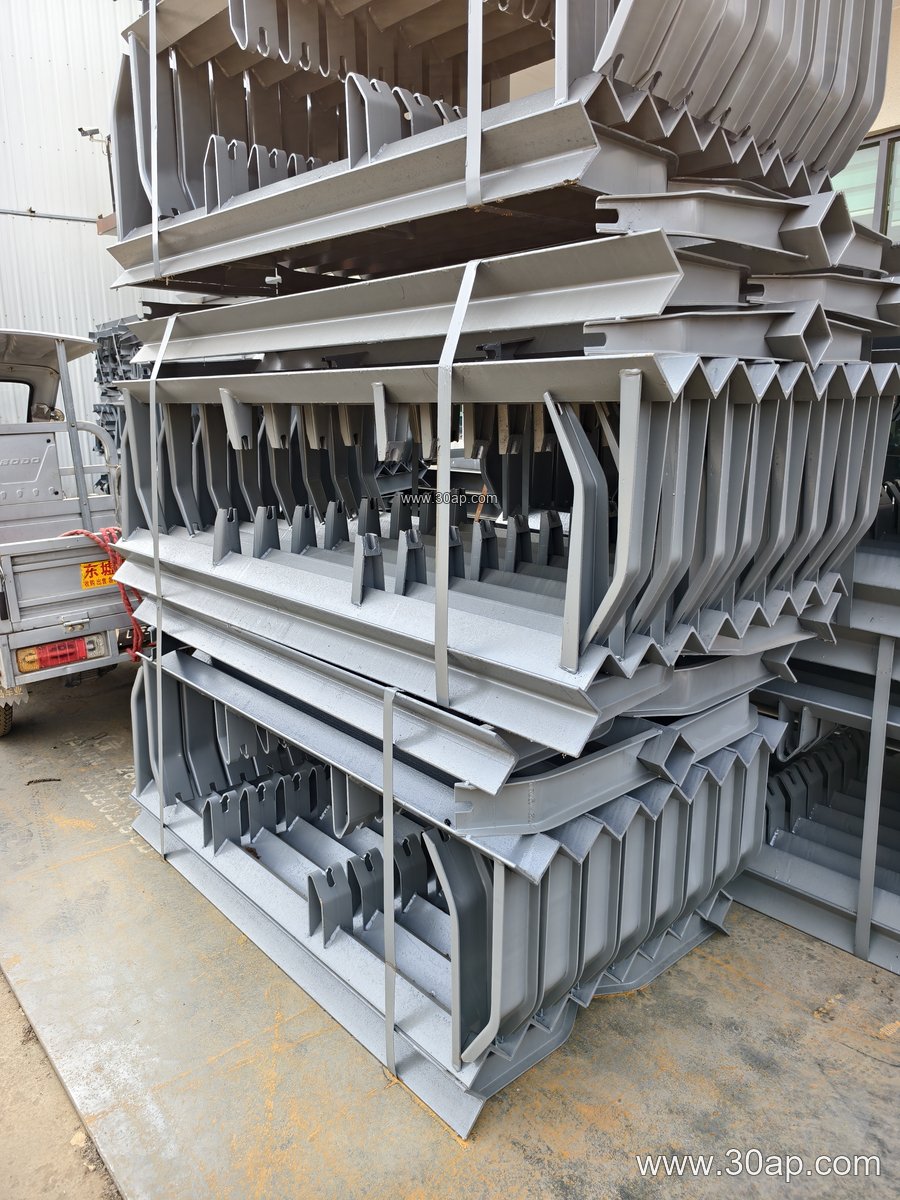
In a limestone quarry or aggregate conveyor line, brackets are exposed to dust and vibration. A sturdy conveyor bracket made from channel steel often lasts longer than a light folded-plate design. In cement plants, heat resistant conveyor belt may be used near clinker areas, and brackets should be positioned to avoid heat buildup around the roller.
Selection and Maintenance Tips
Selecting the right support bracket starts with the belt width, trough angle, and roller diameter. Common belt widths range from B500 to B2200, roller diameters from Ø89 to Ø194, and trough angles from 20° to 45°. Use these as reference values, not as fixed combinations. For example, B650, 30°, Ø89 may suit a light-duty line, while B1400, 45°, Ø159 is more typical for a heavy-duty mining conveyor. Never assume one belt width matches only one pulley diameter or one roller size.
- Check that the bracket material matches the load and environment.
- Confirm hole spacing and crossbeam length against the frame drawing.
- Use adjustable brackets where trough angle may need fine-tuning.
- Inspect for corrosion and loose bolts during routine maintenance.
- Match bracket type to the roller type — impact brackets for load points, return brackets for the return side.
For buyers working with EP conveyor belt, NN conveyor belt, or steel cord conveyor belt, the support bracket is a small but critical part of the whole system. A well-chosen conveyor bracket helps the belt run true, extends roller life, and reduces downtime in demanding industries such as mining, quarrying, and power generation.