What a High-Angle Conveyor Trough Idler Does
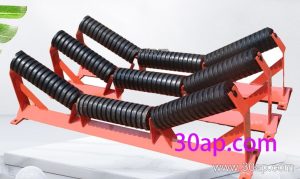
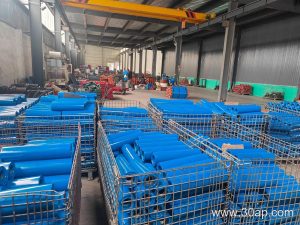
A high-angle conveyor trough idler is a carrying idler set that supports the conveyor belt on the loaded side of a steeply inclined conveyor. Its trough shape holds bulk material in the center of the belt when the incline is too steep for a flat or lightly troughed run. In a quarry or a cement plant, this idler keeps crushed rock and clinker from spilling backward down the slope. The same idler concept is used in coal mining conveyor systems and power plant coal handling lines where space limits the conveyor length and the belt must climb quickly.
The product is also called a steep-angle trough idler or high-incline carrying idler. These names describe the same carrying idler set; they do not refer to a drive pulley, tail pulley, or bend pulley. Drive, tail, and bend pulleys have different roles in the conveyor and are not interchangeable with this idler.
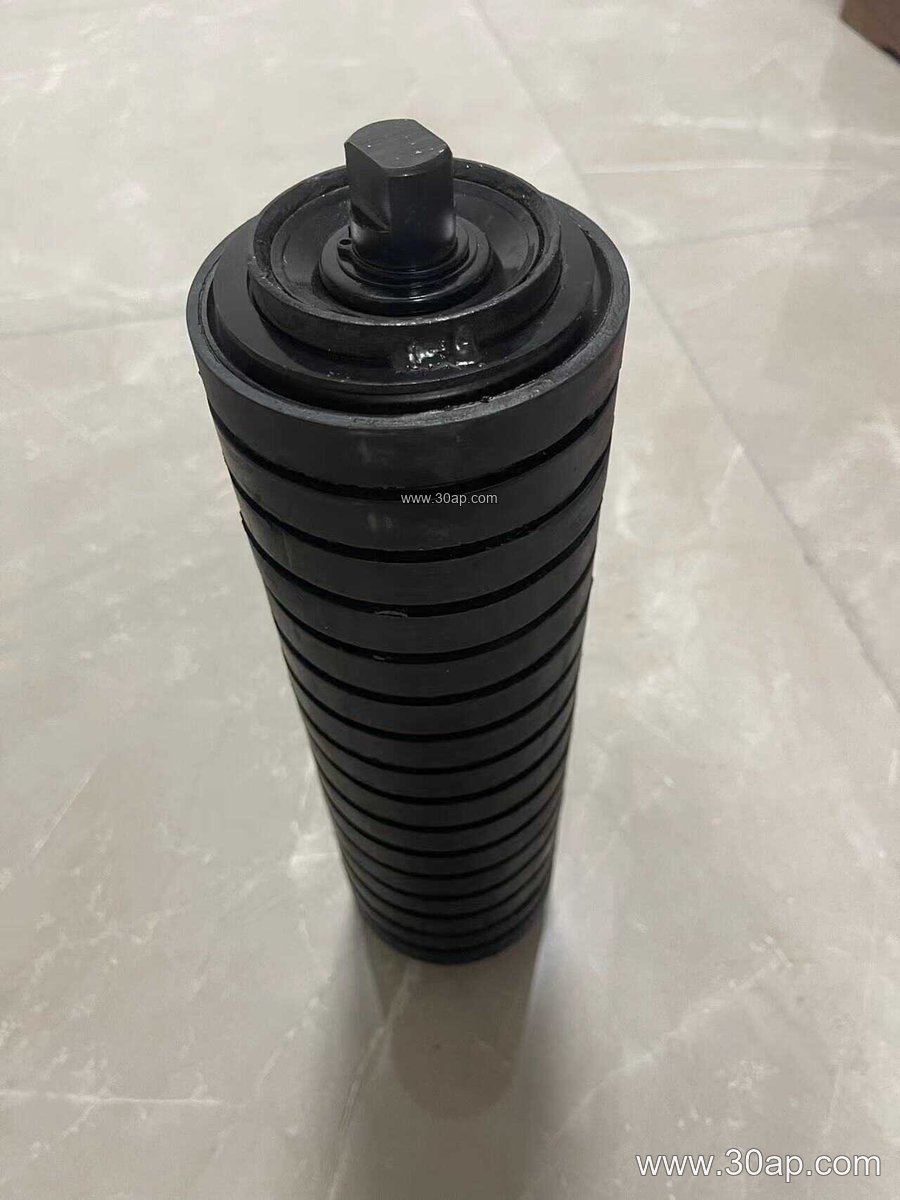
Construction and Trough Geometry
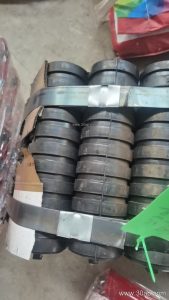
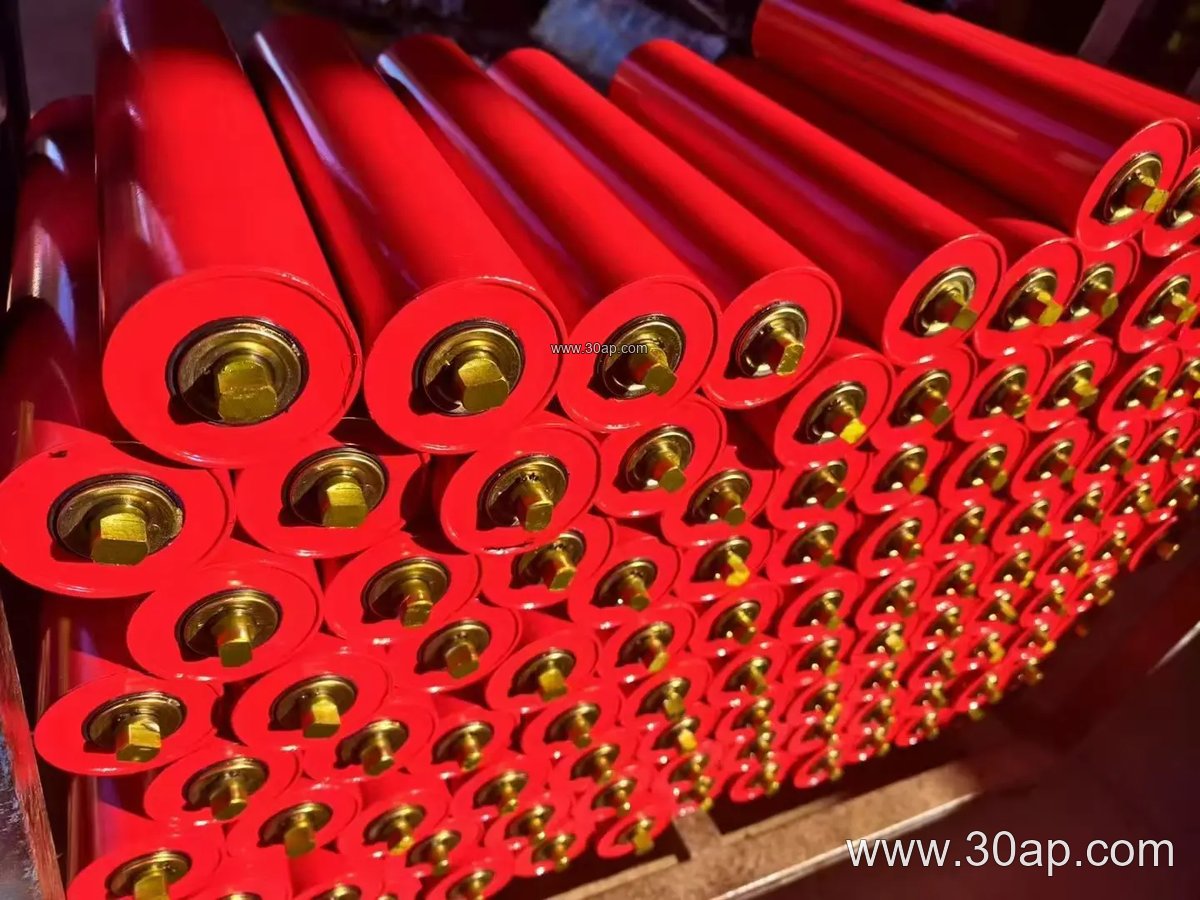
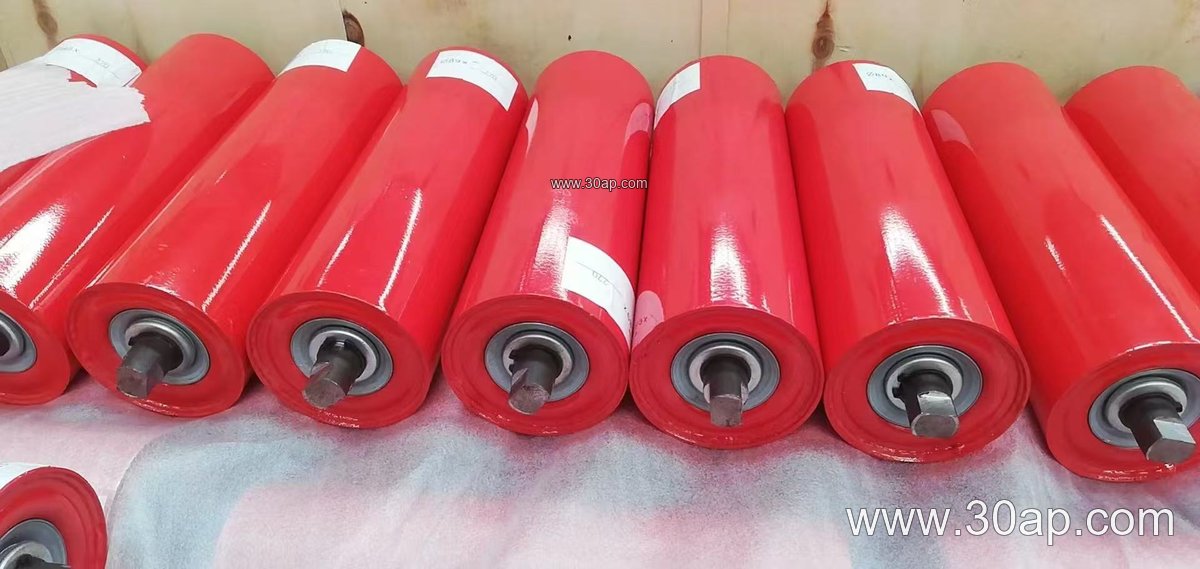
A typical high-angle conveyor trough idler uses a three-roll trough set, with two side rolls angled upward and one center roll. Common trough angles are 20, 30, 35, and 45 degrees. The steeper angles help contain material on a high incline, but they also increase belt edge pressure, so the idler and belt must be matched carefully. The rolls are usually made from steel tube, and the roll surface may be plain steel, nylon, ceramic, or rubber rings depending on the duty. Rubber ring rolls are often chosen where impact and abrasion are present.
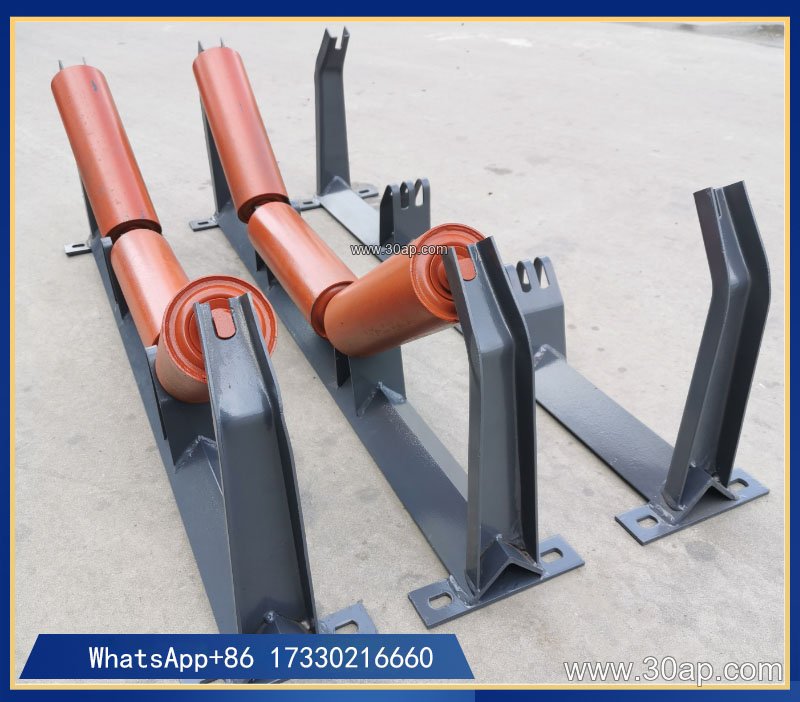
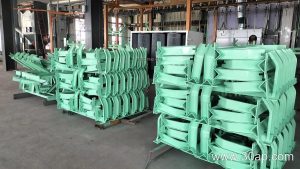
Bearings are selected by load and speed rather than by belt width alone. Common bearing sizes include 6204, 6205, 6305, 6306, 6308, and 6310. Sealing is important in dusty sites such as a limestone mine or a sand and aggregate line, because fine dust shortens bearing life. The idler frame and brackets should be checked for fit with the conveyor bracket and stringer spacing on the actual conveyor.
Where It Fits in the Conveyor
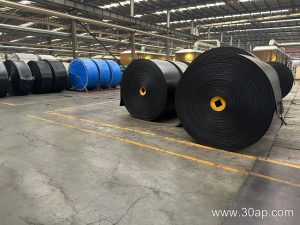
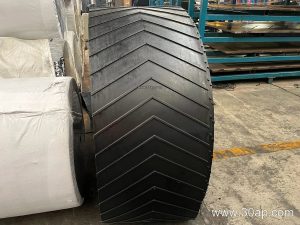
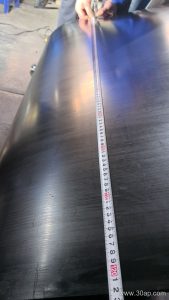
This idler belongs to the carrying side of the conveyor, usually after the feed point and along the incline. It should not be confused with return idlers, impact idlers, or self-aligning idlers, although those types may appear on the same conveyor for other duties. A high-angle trough idler may be used together with a chevron conveyor belt or a corrugated sidewall conveyor belt when the material needs extra grip or edge containment. On a coal mining conveyor belt or an underground mining conveyor, flame retardant and anti-static belt grades are often specified alongside the idler set.
Typical service locations include a quarry conveyor, a cement plant raw material line, a power plant coal conveyor, and a steel plant sinter feed. In each case, the idler supports the belt and keeps the material profile stable on the incline.
Common Reference Dimensions
The table below gives common reference dimensions for trough idler sets. These are examples, not fixed matches for every conveyor. Roll length changes with belt width, trough angle, and idler arrangement.
| Belt width | Common roll length, three-roll trough | Typical trough angle | Common roll diameter |
|---|---|---|---|
| B500 | about 200 mm | 20 to 35 degrees | Ø63 to Ø89 mm |
| B650 | about 250 mm | 20 to 35 degrees | Ø76 to Ø108 mm |
| B800 | about 315 mm | 30 to 45 degrees | Ø89 to Ø133 mm |
| B1000 | about 380 mm | 30 to 45 degrees | Ø102 to Ø159 mm |
| B1200 | about 465 mm | 30 to 45 degrees | Ø108 to Ø178 mm |
| B1400 | about 530 mm | 30 to 45 degrees | Ø127 to Ø194 mm |
| B1600 | about 600 mm | 30 to 45 degrees | Ø133 to Ø219 mm |
| B1800 | about 670 mm | 35 to 45 degrees | Ø159 to Ø219 mm |
| B2000 | about 750 mm | 35 to 45 degrees | Ø178 to Ø219 mm |
Side roll and center roll lengths can differ. A larger roll diameter is not automatically required for a wider belt; the load, speed, and idler spacing decide the final selection.
Buyer Checklist
- Confirm the belt width and the actual trough angle required at the incline.
- Check the idler frame height and conveyor bracket dimensions before ordering.
- Match the roll surface to the material: rubber rings for impact, ceramic for heavy abrasion, steel for general duty.
- Review bearing size and sealing against dust and water exposure.
- Confirm belt grade compatibility, such as EP conveyor belt, NN conveyor belt, or steel cord conveyor belt, with the idler load rating.
- Ask for roll length, shaft size, and bearing number as separate data, not as one fixed package.
For a high-angle run, the idler set should be reviewed together with the belt, the conveyor pulley arrangement, and the transition distance from the feed point. A well-matched trough idler keeps the belt stable, reduces spillage, and supports reliable operation in demanding industries such as mining, cement, power generation, and aggregate processing.