What a Comb Idler Is and Where It Fits
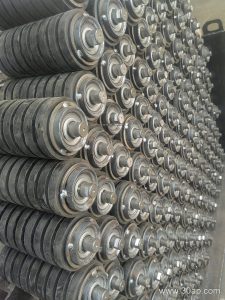
A comb idler is a carrying idler whose shell is fitted with a series of rubber or elastomer discs, often called comb rings, spaced along the roller body. The rings look like the teeth of a comb, which is where the name comes from. In a trough idler set, the comb idler usually takes the centre position, while the side rollers are conventional steel or nylon rollers. The product is also known by its descriptive equivalent, the rubber disc idler, and both terms refer to the same carrying roller with ringed elastomer covering.
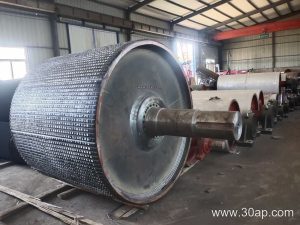
The roller is not interchangeable with a drive pulley, a tail pulley or a bend pulley. Those are conveyor pulleys that transmit or redirect belt tension at the ends of a conveyor. A comb idler is a free-rotating support element mounted on a conveyor bracket along the carrying run.
How the Roller Is Built
The core is a steel tube with welded end caps and a through shaft, and the shaft sits in bearing housings at each end. Standard bearings such as 6204, 6205, 6305, 6306 or 6308 are common, and the bearing size is matched to the shaft and load rather than to any single shell diameter. The elastomer discs are pressed or bonded onto the shell at defined intervals, and the gaps between them allow fines and moisture to fall away instead of packing around the roller.
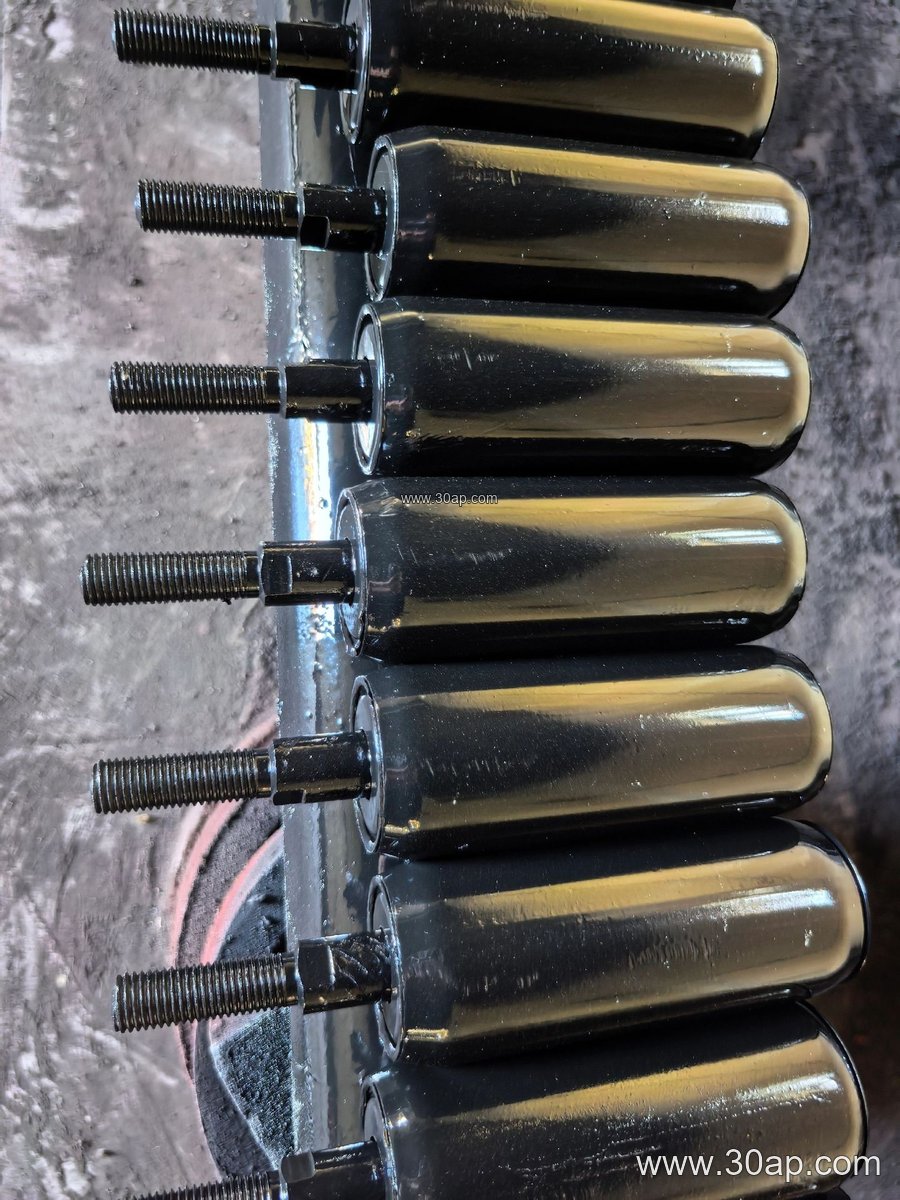
Because the rings are flexible, they absorb part of the impact energy from lumpy material at transfer points. That is why the comb design often appears where a rubber conveyor belt receives crushed rock, ore or clinker and where a plain steel shell would wear quickly or bounce under load.
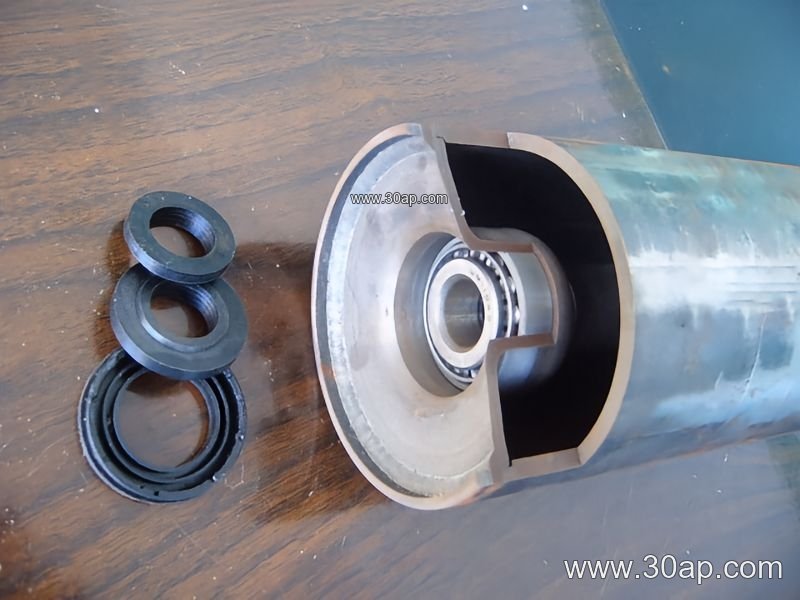
Comb Idler Compared with a Buffer Idler
A buffer idler is the general category for impact-absorbing rollers, and the rubber ring buffer idler is one of its common forms. The comb idler belongs to this family in behaviour but is distinguished by the pronounced, widely spaced discs that give it its name. Both are used at loading zones, yet a comb idler is frequently chosen where sticky or wet material would otherwise build up between rings. A standard troughing idler, by contrast, offers a continuous steel or nylon surface and is better suited to clean, well-sized bulk material along the main run.
Typical Service Conditions
These rollers appear in quarry and aggregate lines under crusher discharge conveyors, in cement plants at clinker and limestone transfer points, in coal handling systems at power stations, and in iron ore or copper ore receiving stations. They also suit tunnel spoil removal and fertilizer or grain handling where a cushioned, self-cleaning surface helps.
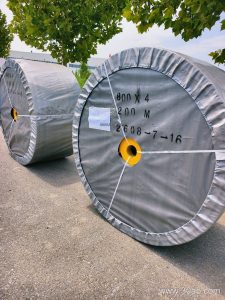
When the belt itself is selected, the comb idler works with whatever carcass the duty requires, whether that is an abrasion resistant conveyor belt for sharp aggregate, a flame retardant conveyor belt for coal mining conveyors, or a heat resistant conveyor belt near hot clinker. Matching the roller to the belt and the material is more important than matching it to a catalogue number alone.
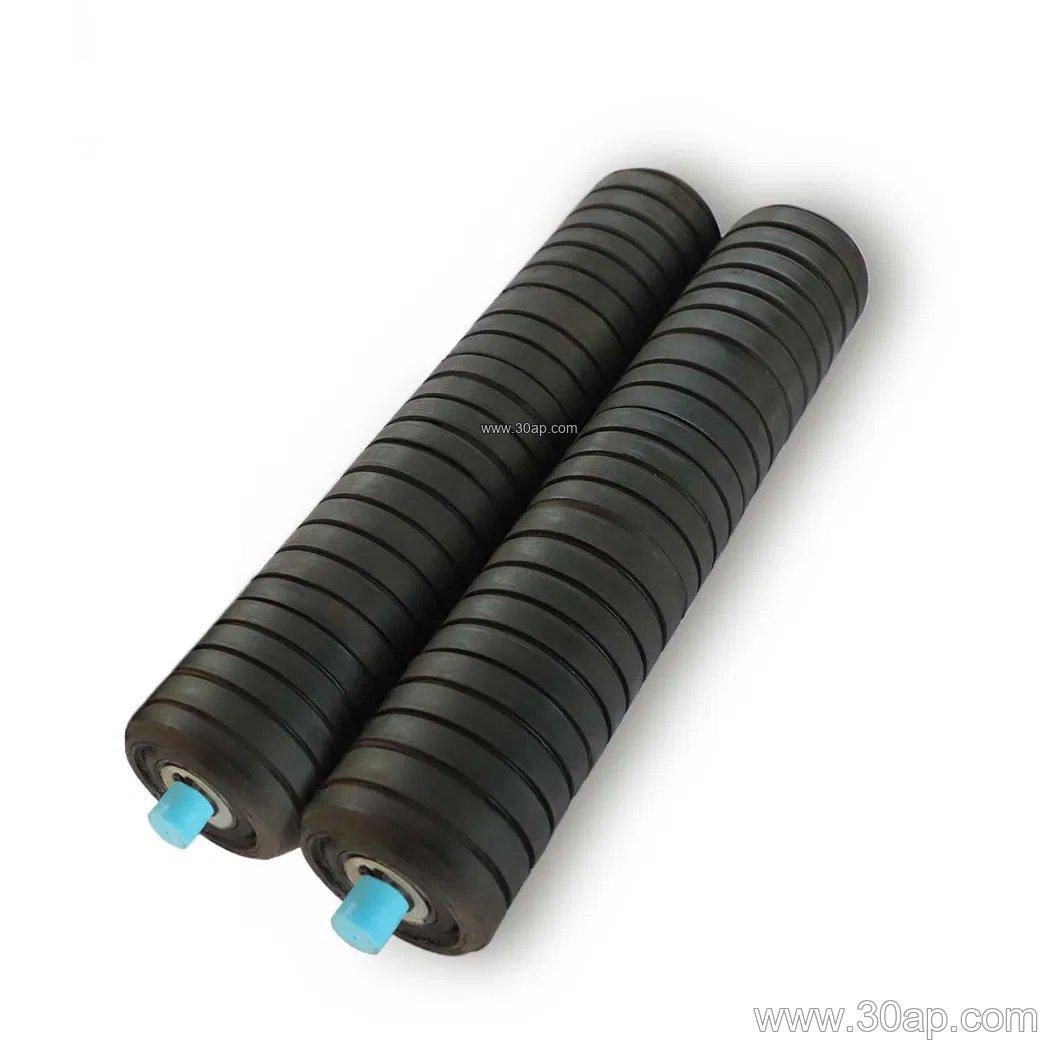
Common Reference Dimensions
The figures below are typical references, not fixed combinations. Roller length changes with belt width, trough angle and the number of rollers in the set, and the centre roller of a three-roll trough set is usually shorter than the side rollers.
| Reference item | Typical range or example |
|---|---|
| Roller diameter | Ø89, Ø102, Ø108, Ø127, Ø133, Ø159 mm |
| Belt width | B500, B650, B800, B1000, B1200, B1400, B1600 mm |
| Centre roller length, three-roll trough | about 200 mm at B500 up to about 600 mm at B1600 |
| Trough angle | 20, 30, 35 or 45 degrees |
| Bearing | 6204, 6205, 6305, 6306, 6308 |
| Ring material | rubber, abrasion resistant rubber compound |
Do not assume that one belt width fixes one roller diameter or one shaft size. A B800 conveyor may run Ø89 rollers in a light duty set or Ø127 rollers in a heavy duty set, and the shaft diameter follows the load calculation rather than the belt width alone.
Selection Points for Buyers
- Confirm the trough angle and whether the comb roller is the centre roll or a full set of ringed rolls.
- State the material being carried, its lump size and whether it is wet or sticky.
- Give the belt width and belt speed so the roller can be checked for rotational speed and load.
- Specify the bearing and sealing arrangement expected for dusty or washdown conditions.
- Check that the mounting dimensions suit the existing conveyor bracket and frame spacing.
The comb idler is a small component, but on a busy transfer point it influences belt life, spillage and maintenance intervals. Choosing the right ring hardness, spacing and bearing protection is what separates a long-serving roller from one that fails early.