What a Ceramic Lagged Pulley Does
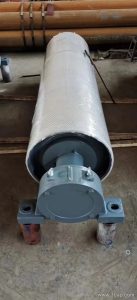
A ceramic lagged pulley is a conveyor pulley whose shell carries a bonded layer of ceramic tiles set in a rubber matrix. The ceramic studs sit slightly proud of the rubber, so the belt runs on thousands of small, hard contact points instead of a smooth rubber face. That difference matters most on drive pulleys, where the aim is to transmit torque without slip when the belt is wet, dusty, or carrying abrasive bulk material.
In practice, this pulley is a wear solution as much as a traction solution. In a quarry, a limestone mine, or a crushing and screening line, fine grit and moisture work their way between belt and shell. Plain rubber can polish and glaze; the ceramic surface keeps biting. Many plants pair it with an abrasion resistant conveyor belt and heavy-duty idler roller sets so the whole conveyor pulley station matches the duty.
How the Ceramic Layer Is Built
The shell is usually a welded steel drum, machined and balanced, then covered with a rubber bonding layer into which ceramic tiles are vulcanized. Tile shapes and layouts vary: square studs, interlocking blocks, and grooved patterns are common. The rubber between the tiles flexes and cleans itself as the pulley turns, which helps shed sticky fines.
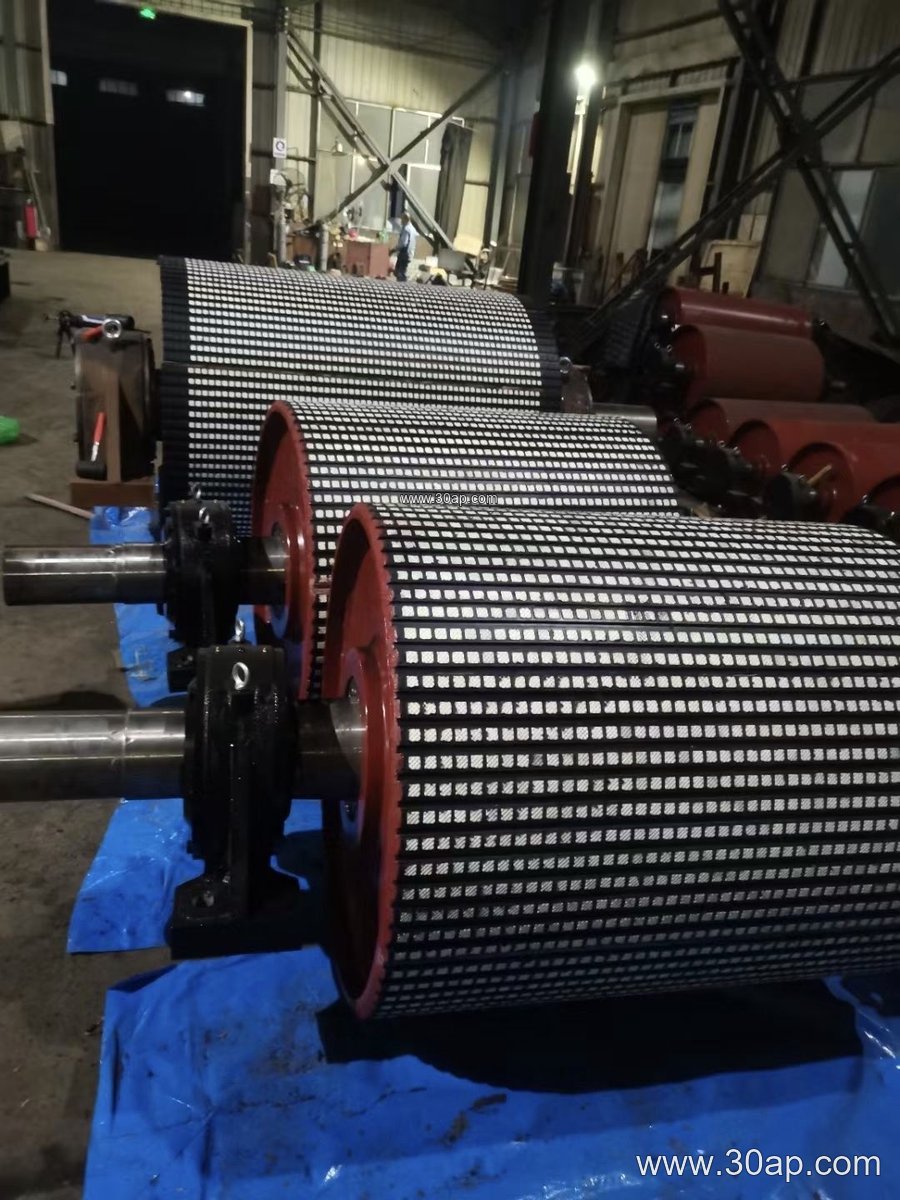
A typical build sequence looks like this:
- Shell fabrication, machining, and dynamic balancing
- Bonding layer applied and prepared
- Ceramic tiles pressed into position and cured
- End disc, hub, and shaft assembly
- Final inspection of tile height and surface uniformity
Common lagging thicknesses are 8, 10, 12, 15, and 20 mm, with 15 mm often chosen for heavy drive duty. Thicker lagging is not automatically better; it must suit the pulley diameter and the belt tension available.
Where It Fits on the Conveyor
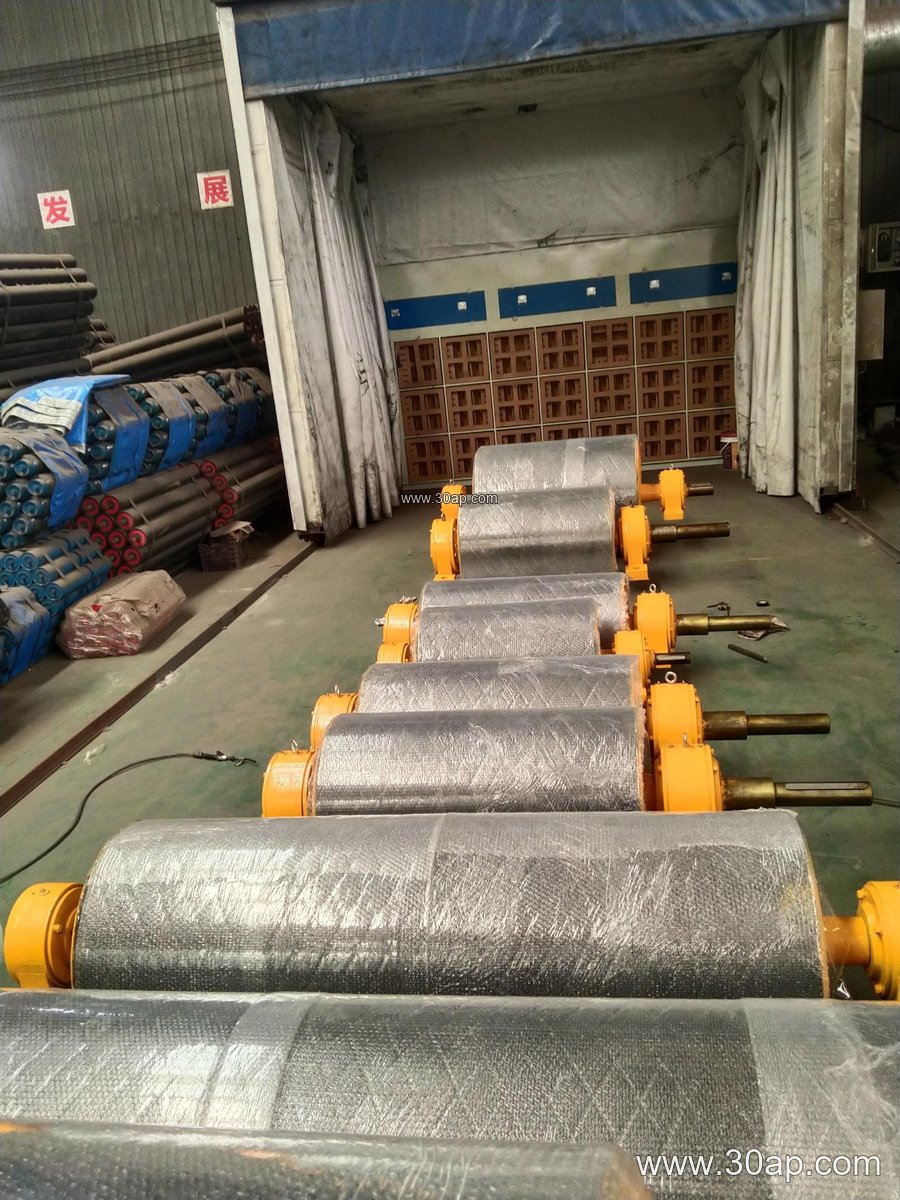
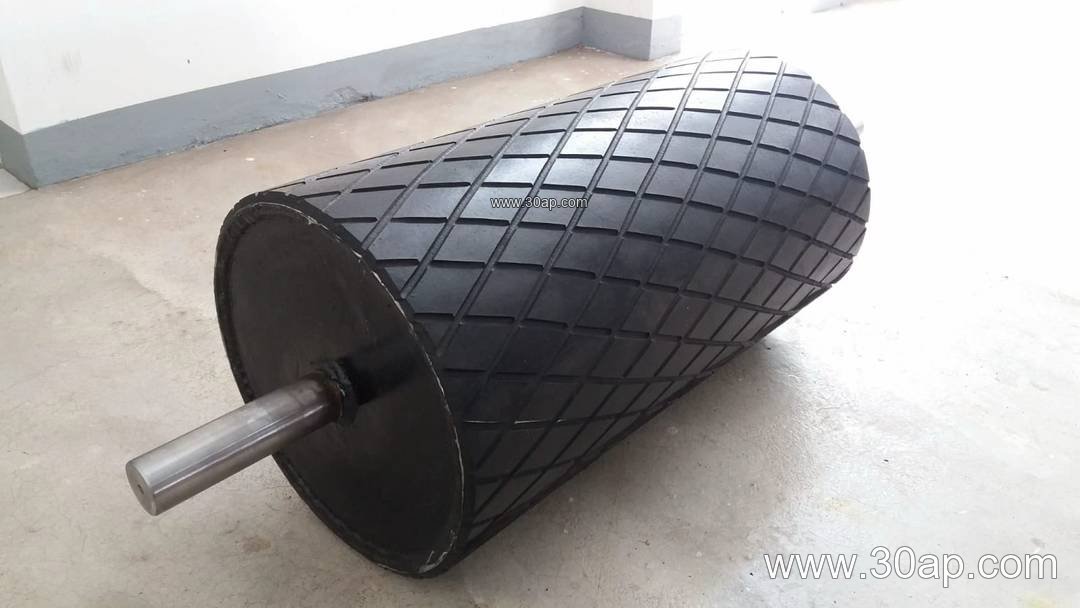
The most common position is the head or drive pulley, especially on incline conveyors in coal mining, cement clinker handling, and power plant coal feed. A tail pulley rarely needs ceramic because it carries little torque, and a bend pulley usually works fine with plain or diamond rubber lagging. That comparison is worth making during selection: ceramic is a targeted upgrade for the pulley that actually pulls.
Tension and take-up pulleys sometimes use ceramic where the belt is wet or where slip has been a recurring problem. On long overland lines carrying iron ore or copper ore, a ceramic drive pulley combined with a steel cord conveyor belt or a high strength EP conveyor belt can reduce the slip margin needed.
Matching Pulley Size to the Belt
Belt width and pulley diameter are separate decisions. Shell width is normally a little wider than the belt, and diameter follows the torque, belt tension, and wrap angle. A few common reference combinations are shown below; these are examples, not fixed pairings.
| Belt Width | Typical Shell Width | Example Diameter | Example Lagging |
|---|---|---|---|
| B800 | about 950 mm | Ø500 | 12 mm ceramic |
| B1000 | about 1150 mm | Ø630 | 15 mm ceramic |
| B1200 | about 1400 mm | Ø1000 | 15 mm ceramic |
| B1400 | about 1600 mm | Ø800 | 15 mm ceramic |
| B1600 | about 1800 mm | Ø1250 | 20 mm ceramic |
Shaft diameter is set by torque and bearing load, not by belt width alone. Common shaft sizes run from Ø80 to Ø200 on medium and large pulleys, and the final value should come from the pulley design calculation.
Buyer Checklist
Before ordering, confirm the pulley position, belt width, required diameter, lagging thickness, shaft size, bearing type, and the conveyor bracket interface. Ask how the tiles are bonded and whether the surface is flat-stud or grooved, since the pattern affects cleaning behavior. Check that the lagging is compatible with the belt: a flame retardant conveyor belt in an underground coal mine may call for a lagging compound with matching fire performance, while a food grade conveyor belt application usually rules ceramic out entirely.
During operation, inspect tile edges for chipping and watch for embedded material. Ceramic lagging lasts well but is not indestructible; impact from tramp metal can crack tiles. Keeping the belt tracking straight and the skirt rubber adjusted protects the investment. For more conveyor pulley and belt guidance, visit beltconveyorpro.com and review滚筒 options before finalizing the drive station design.