What a Carbon Steel Idler Does on a Conveyor
A carbon steel idler is the rotating support that carries the conveyor belt and the material load along the length of a conveyor. In many plants the same component is simply called a steel idler roller, and the two names describe the same product. The idler does not drive the belt; it reduces friction under the belt so the drive can move the load efficiently. Because carbon steel offers a good balance of strength, stiffness, and cost, it is a common shell material for idlers in bulk handling duty.
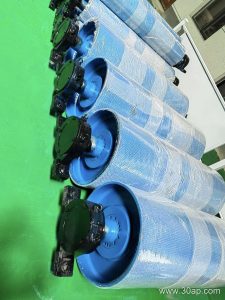
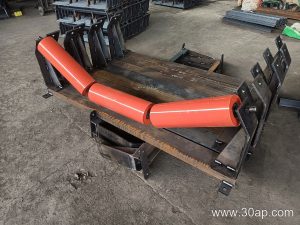
On a typical conveyor, several idlers form a set. A three-roll troughing set shapes the belt into a trough so loose material stays centered, while return idlers support the empty side of the belt. The carbon steel idler works together with the conveyor pulley at the head and tail, the conveyor bracket that fixes each set to the frame, and the belt itself. A mine or quarry line may run hundreds of idlers, so small differences in build quality add up over time. See more conveyor components at ppipulley.com.
How a Steel Idler Roller Is Built
The usual construction starts with a steel tube shell, cut to length and machined at both ends. Bearing housings are pressed or welded into the tube, and sealed bearings sit inside. A shaft runs through the assembly, and the ends are fitted with a sealing arrangement that keeps dust and water away from the bearings. The seal design matters as much as the tube thickness, because most idler failures begin with contaminated bearings rather than a worn shell.
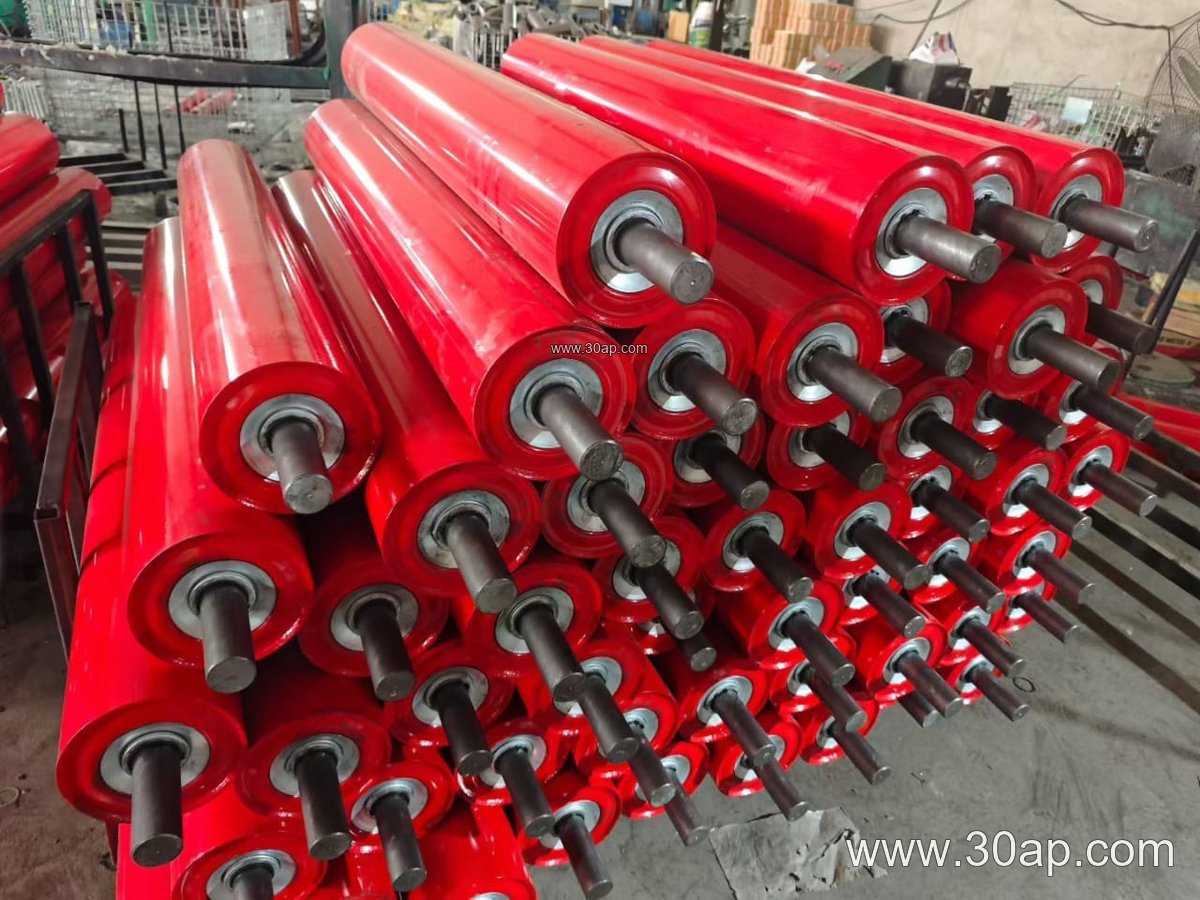
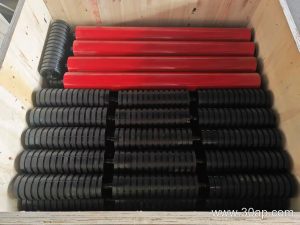
Common roll diameters include Ø63, Ø76, Ø89, Ø102, Ø108, Ø127, Ø133, Ø159, Ø178, and Ø194 mm, with larger sizes for heavy applications. Bearing numbers such as 6204, 6205, 6305, 6306, and 6308 appear frequently, but bearing selection should follow load, speed, and expected life rather than a fixed rule. Shell surfaces may be plain steel, or covered with rubber rings for impact zones. For abrasive or sticky material, a spiral or rubber-disc roll can help shed buildup. All of these remain carbon steel idlers; the surface treatment is a variation, not a different product family.
Matching Idlers to Belt Width and Trough Angle
Idler length follows belt width, trough angle, and the number of rolls in the set. A three-roll troughing set on a B800 belt commonly uses rolls around 315 mm long, while a B1200 belt may call for roughly 465 mm rolls. These are typical examples only, and the center roll and side rolls can differ. The table below lists common reference values for planning discussion, not fixed supply promises.
| Belt width | Typical roll length, three-roll troughing set | Common trough angles |
|---|---|---|
| B500 | approx. 200 mm | 20°, 30°, 35° |
| B650 | approx. 250 mm | 20°, 30°, 35°, 45° |
| B800 | approx. 315 mm | 20°, 30°, 35°, 45° |
| B1000 | approx. 380 mm | 30°, 35°, 45° |
| B1200 | approx. 465 mm | 30°, 35°, 45° |
| B1400 | approx. 530 mm | 30°, 35°, 45° |
| B1600 | approx. 600 mm | 30°, 35°, 45° |
| B1800 | approx. 670 mm | 30°, 35°, 45° |
A deeper trough angle improves material containment on a fast, fully loaded belt, but it also increases belt flexing over the side rolls. For transition zones near a conveyor pulley, transition idlers with gradually changing angles help avoid belt edge stress. Forward-leaning rolls of about 1.5° to 2° are sometimes used in training idlers to help keep the belt aligned.
Where Carbon Steel Idlers Are Used
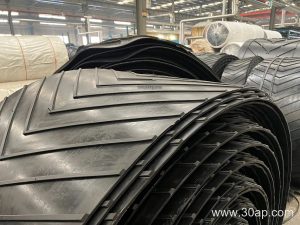
You will find these idlers in a coal handling system feeding a power plant, in a limestone quarry moving crushed rock to the stockpile, and in a cement plant transporting clinker or raw meal. Sand and gravel lines, iron ore concentrators, and port ship loaders also rely on robust roller sets. The belt side of the system may use an abrasion resistant conveyor belt for sharp stone or a heat resistant conveyor belt near hot material, and the idler selection should reflect that environment. Dusty coal yards often pair flame retardant conveyor belts with sealed idlers to reduce fire risk and bearing wear. Learn more at ppipulley.com.
Buyer Checklist Before Ordering
- Confirm belt width, trough angle, and whether the set is two-roll or three-roll.
- State the roll diameter and required shaft end type so the idler fits the existing conveyor bracket.
- Describe the material: lump size, moisture, temperature, and whether it is abrasive or corrosive.
- Ask about seal type and bearing grade, since these drive service life in dusty conditions.
- For impact points under a crusher or transfer chute, specify cushion idlers or rubber-ring rolls instead of standard troughing rolls.
- Keep a small stock of common sizes to reduce downtime when a single roll seizes.
Routine inspection of idler rotation, noise, and buildup prevents belt damage and keeps the whole conveyor pulley and belt system running smoothly. A well-chosen carbon steel idler is a low-cost part that protects far more expensive components downstream.