What the Head Pulley Does
The head pulley is the drum at the discharge end of a belt conveyor, and in most installations it is also the drive pulley. It grips the conveyor belt, pulls the loaded strand toward the head, and throws material off as the belt turns over. Because it carries the full belt tension and transmits the drive torque, it is one of the most heavily loaded components on the machine. In a quarry, a limestone mine, or a sand and aggregate line, a worn or undersized head pulley shows up quickly as belt slip, tracking problems, or shortened belt life.
People sometimes call this part the drive drum, head drum, or discharge drum. Those names point to the same item, while the tail pulley, bend pulley, and take-up pulley are separate positions with different duties. A bend pulley only changes belt direction, and a tail pulley supports the return end, so neither can stand in for the head pulley in a drive calculation.
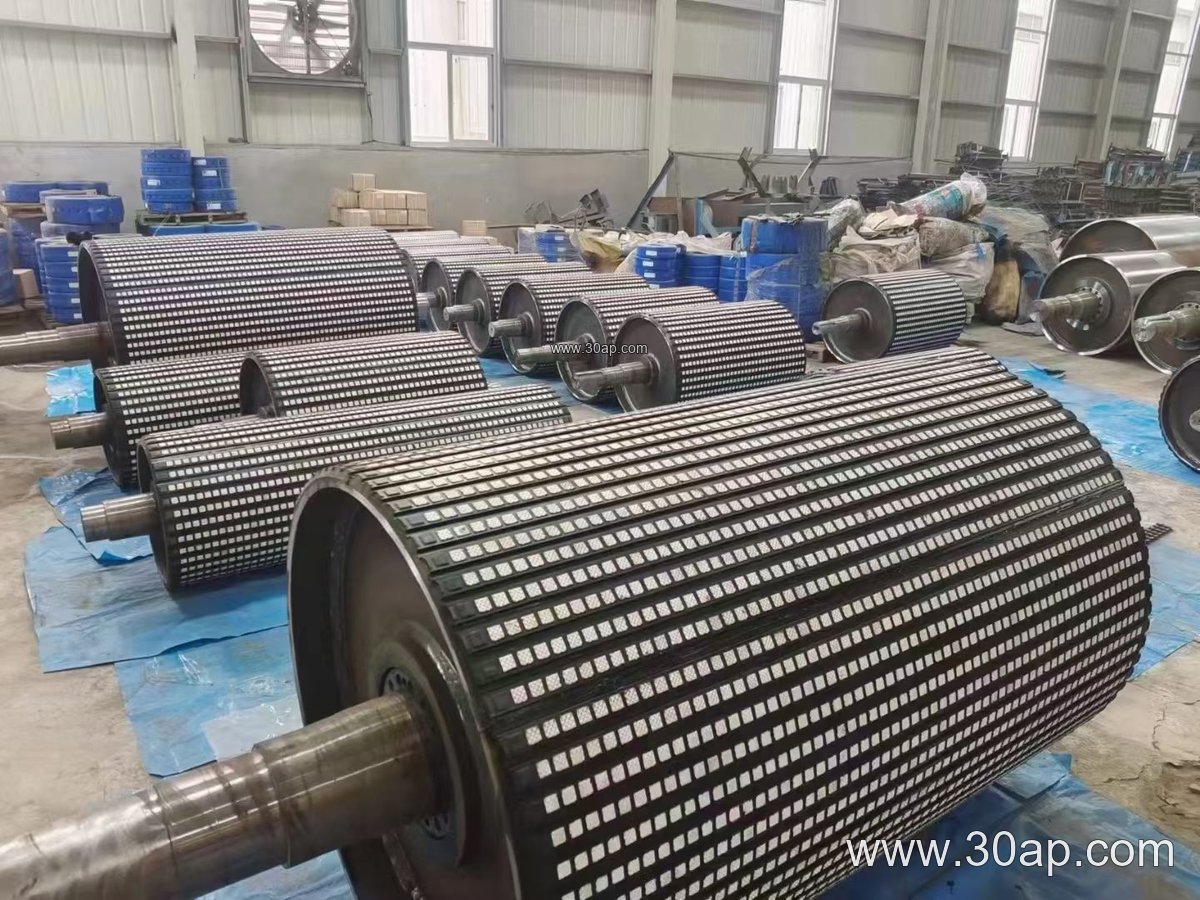
Construction and Surface Options
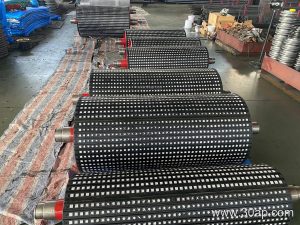
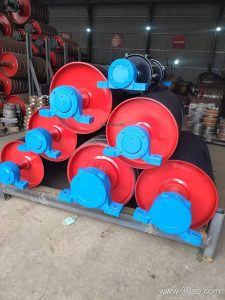
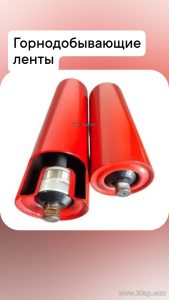
A typical head pulley is a welded steel shell with end discs, a hub, and a shaft that runs on spherical roller bearings in pillow blocks. The shell may be machined smooth or covered with rubber, and the lagging choice matters as much as the drum size. Common surface forms include plain finish, hot-vulcanized rubber, cold-bonded rubber, diamond grooving, herringbone grooving, and ceramic lagging. Lagging thickness is often 8, 10, 12, 15, or 20 mm depending on the duty.
- Plain shell: light duty, clean and dry conditions
- Diamond or herringbone lagging: improved grip where the belt may see moisture or fines
- Ceramic lagging: high abrasion areas such as iron ore or copper ore transfer points
- Rubber lagging: general grip and protection of the belt cover
The shaft diameter is set by torque and load, not by belt width alone. Typical shaft sizes range from Ø50 up to Ø200 mm on larger units, but a B800 conveyor does not automatically receive one fixed shaft size. Diameters commonly run from Ø200 to Ø1800 mm, and the shell face is usually wider than the belt, for example about 950 mm face for a B800 belt or about 1400 mm for B1200.
Where It Fits in the Plant
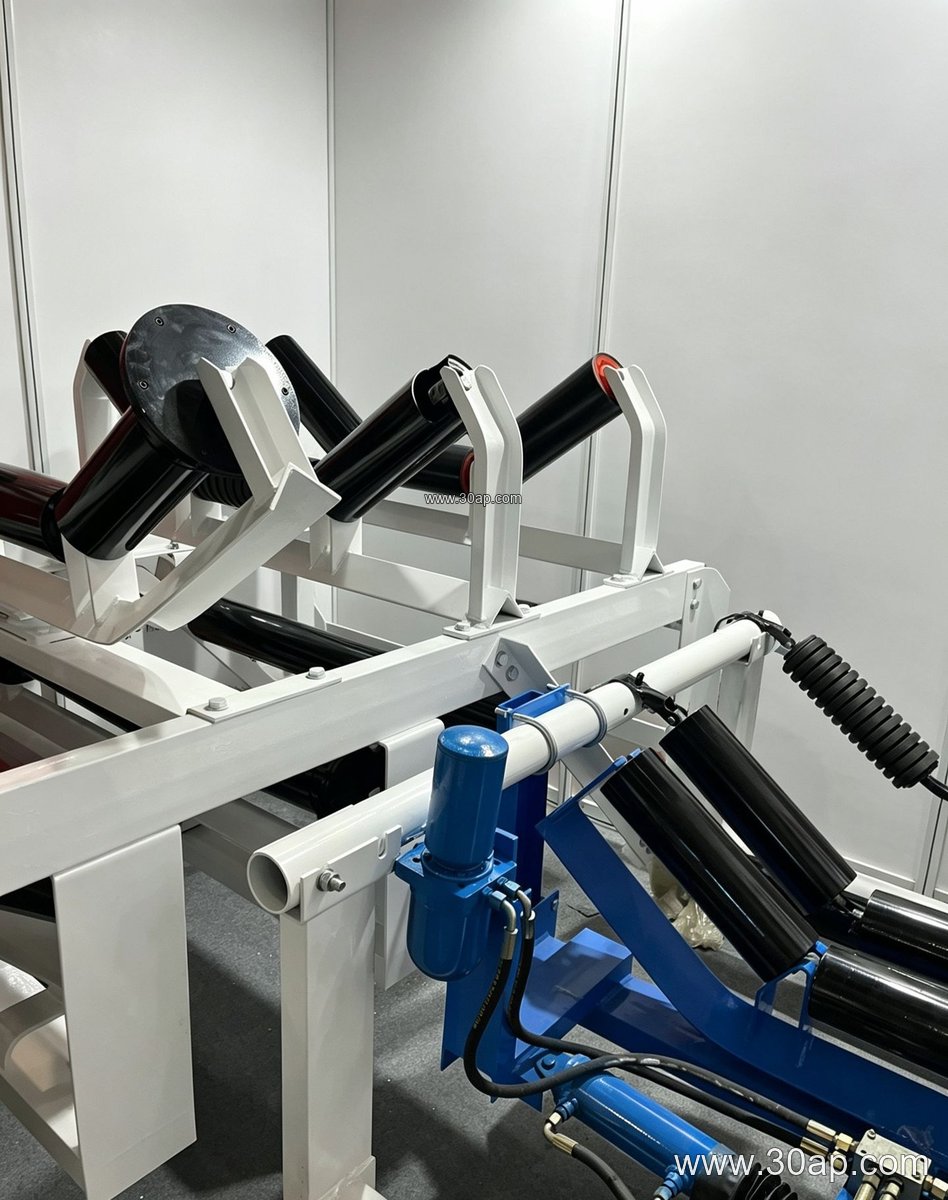
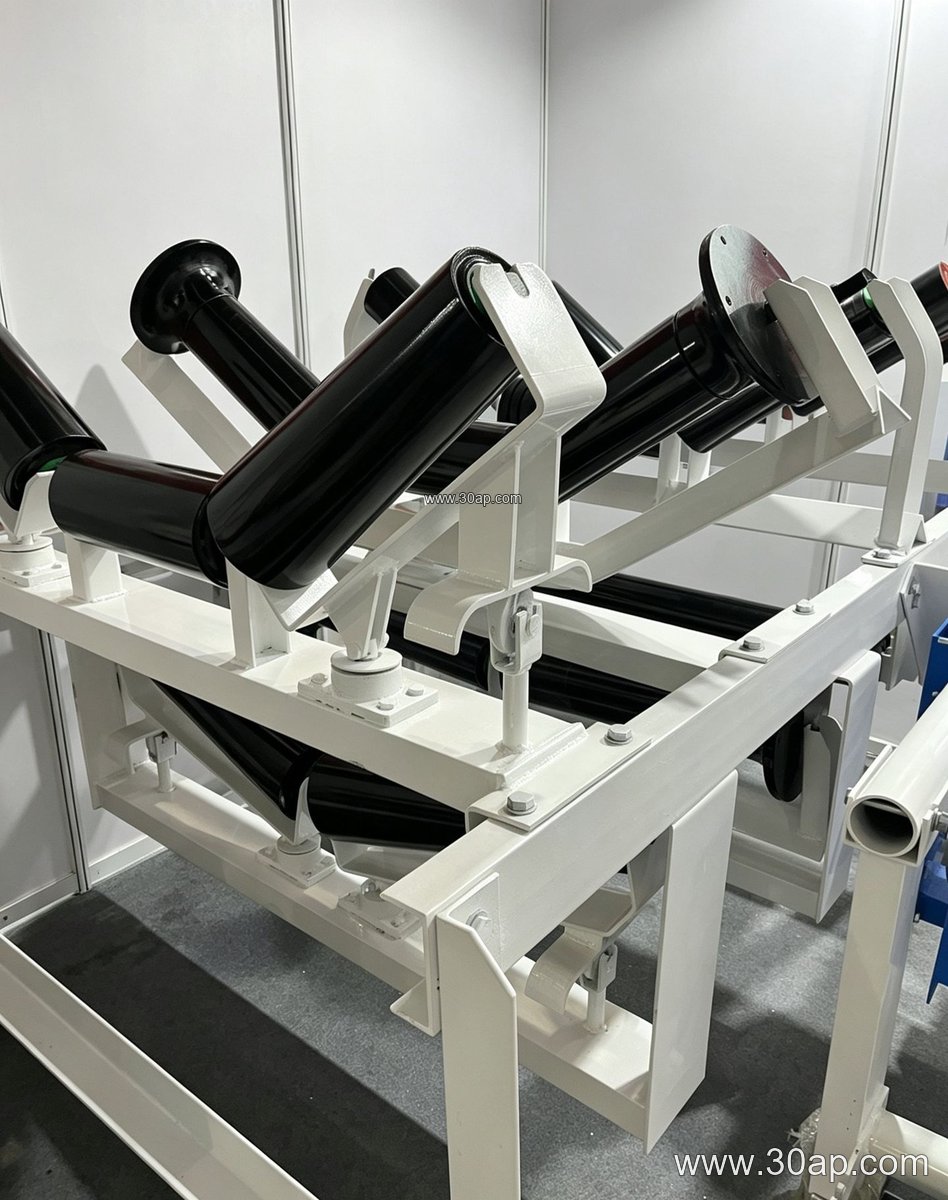
Head pulleys appear wherever a conveyor discharges: the primary crusher feed in a stone crushing plant, the transfer tower of a coal mining conveyor, the clinker transport in a cement plant, or the coal yard of a power plant. In a steel plant they may sit on sinter or ore conveyors, and in a port they handle bulk material at ship loading points. The pulley works together with the conveyor belt, the idler roller sets along the carry and return strands, and the conveyor bracket that holds the bearing housings in alignment.
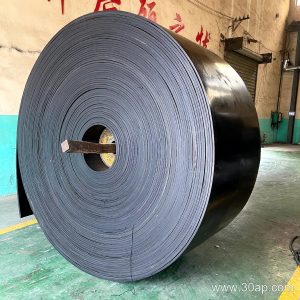
On a heavy-duty mining conveyor, the head pulley may be paired with a steel cord conveyor belt or a high abrasion resistant conveyor belt. In an underground coal mining conveyor, flame retardant conveyor belt and anti-static conveyor belt grades are usual, and the pulley lagging must suit the same environment. For long overland lines, an EP conveyor belt or multi-ply fabric core conveyor belt may run over the same drum, so the lagging and crown should be chosen for the actual belt construction.
Buyer Checklist
Before ordering, confirm the belt width, the required diameter, the shaft size and bearing type, the lagging pattern and thickness, and the expected belt speed and tension. Check whether the pulley will be welded or bolted to the hub, and whether the bearing blocks need a take-up slide. A common reference combination is B800 with Ø500, or B1200 with Ø1000, but these are examples rather than fixed pairings.
- Belt width and pulley face width
- Drum diameter and shell thickness
- Shaft diameter, keyway, and bearing centers
- Lagging type and thickness
- Balance class and runout tolerance
- Painting and corrosion protection
Maintenance is mostly about alignment and lagging wear. Check that the drum is square to the belt centerline, watch for rubber lifting at the edges, and re-torque bearing bolts after the first weeks of running. A well-matched head pulley keeps the belt centered, protects the splice, and reduces the load on every idler roller downstream.
For related conveyor components such as rubber conveyor belt, EP conveyor belt, and conveyor pulley assemblies, match the drum to the actual belt grade and duty rather than to a catalog guess.