What a High-Angle Conveyor Idler Does
On a steep incline, the conveyor belt tends to sag between support points and the load wants to slide back. A high-angle conveyor idler is the troughing assembly that keeps the belt supported, cupped, and tracking squarely on those demanding sections. In many plants it is simply called an inclined troughing idler or steep-section carrying idler, but it is still a carrying idler, not a pulley. Drive pulleys, tail pulleys, and bend pulleys are separate components and cannot be substituted for it.
The idler works together with the conveyor belt and the surrounding structure. A properly matched set of troughing rolls reduces spillage, protects the belt edges, and keeps material centered on steep lifts found in limestone quarries, iron ore plants, and cement kilns feed lines.
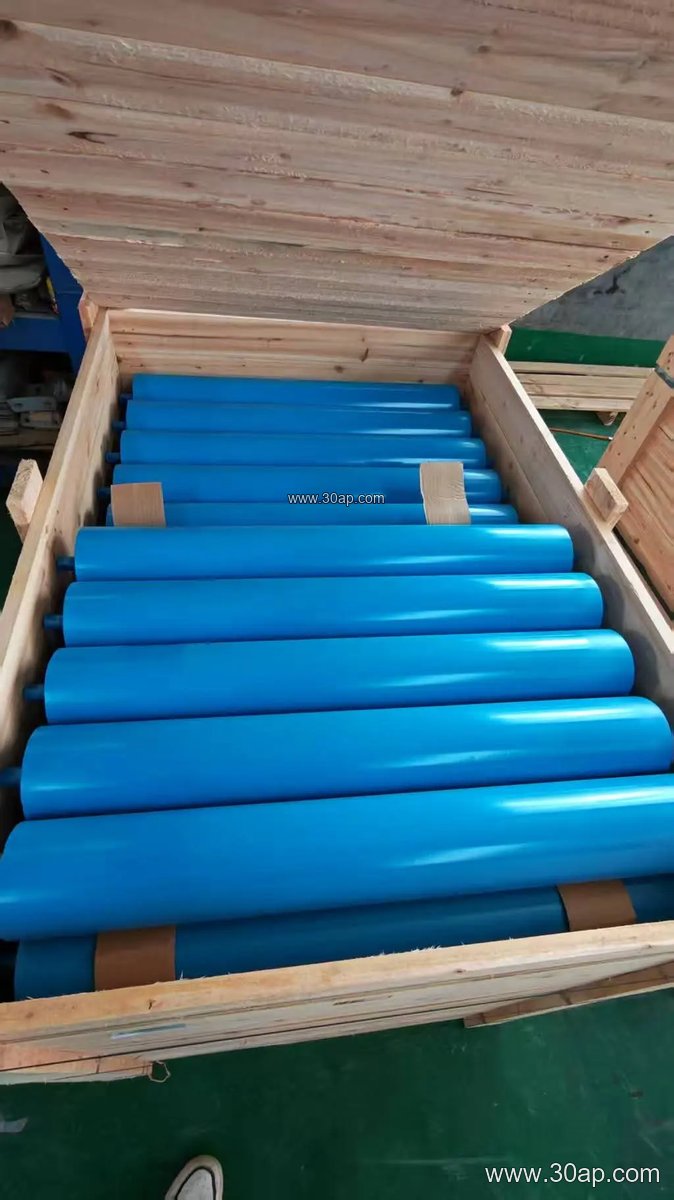
How the Assembly Is Built
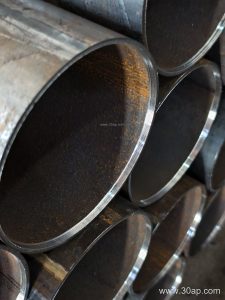
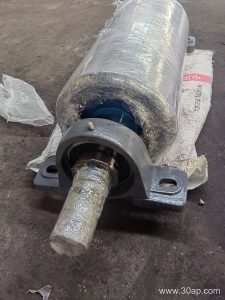
A typical unit uses three rolls set at a trough angle, mounted in a rigid frame with a conveyor bracket at each end. The roll shell may be steel tube, nylon, ceramic, or rubber-covered, depending on whether the duty is abrasive, sticky, or impact-heavy. Bearings such as 6204, 6205, 6305, 6306, 6308, or 6310 are common, but bearing choice follows load and speed rather than a single fixed roll diameter.
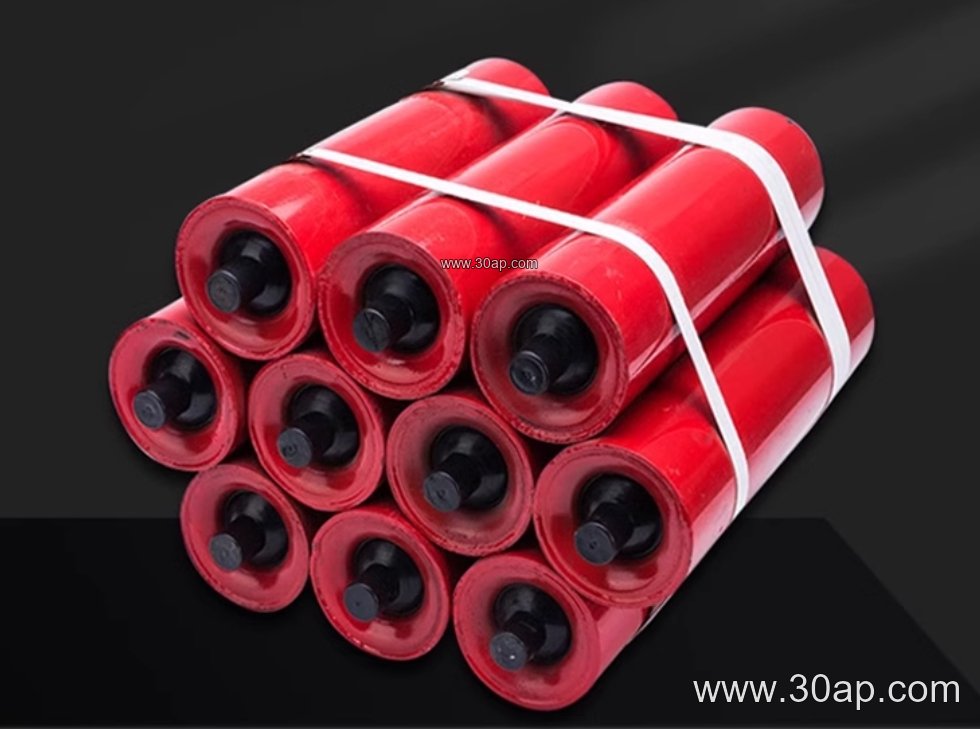
- Trough angles commonly run 20, 30, 35, or 45 degrees; steeper angles suit higher incline sections where material must stay centered.
- Roll diameters from Ø63 up to Ø219 mm appear across light and heavy-duty designs.
- Roll length varies with belt width, trough angle, and the number of rolls in the set.
- Seals and bearing housings are the parts that decide service life in dusty conditions.
For reference only, common three-roll arrangements may use roll lengths near 200 mm on B500, 250 mm on B650, 315 mm on B800, 380 mm on B1000, 465 mm on B1200, 530 mm on B1400, 600 mm on B1600, 670 mm on B1800, and 750 mm on B2000. Side rolls and center rolls can differ, and these are examples rather than fixed pairings.
Where It Fits on the Line
High-angle idlers are usually placed on the carrying side of an incline, between the feed point and the head end. In a coal washing plant they support a flame retardant conveyor belt on the rising main line; in a power plant coal yard they carry a heavy-duty mining conveyor belt up to the bunker. In aggregate plants they often sit behind a crusher conveyor belt where the incline begins.
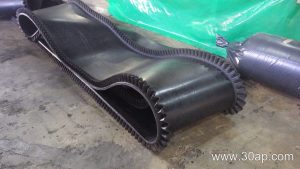
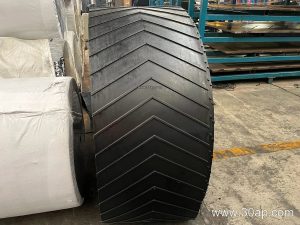
On very steep runs, the belt itself may be a corrugated sidewall conveyor belt or a chevron conveyor belt to stop rollback. The idler still does its job of holding the belt profile, and the two choices complement each other. For long overland lifts, a steel cord conveyor belt may be combined with closely spaced idlers, while shorter transfers often use an EP conveyor belt or NN conveyor belt.
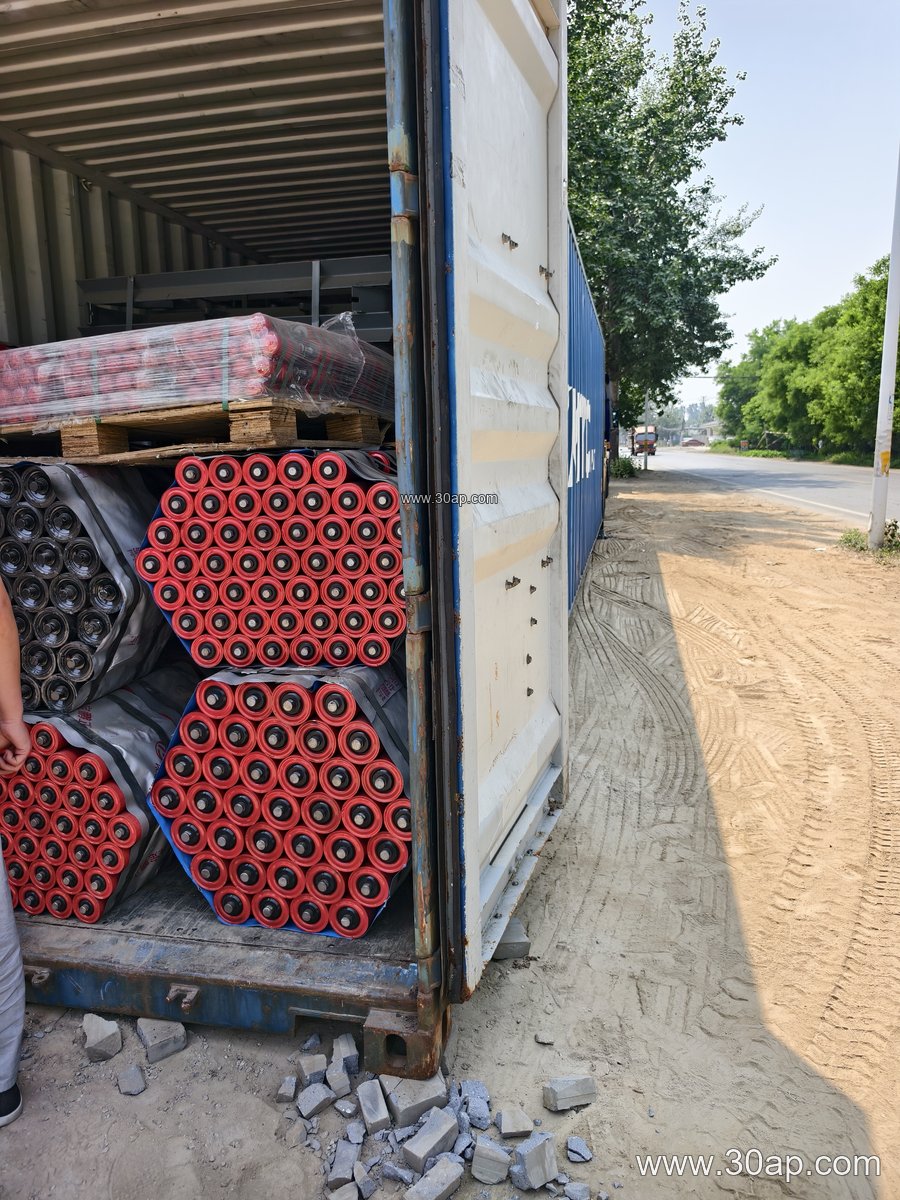
Choosing the Right Roll and Frame
Buyers should confirm belt width, trough angle, roll diameter, shaft end type, and mounting bracket dimensions before ordering. A wide belt such as 1200 mm or 1400 mm needs a frame matched to the actual belt, not a guess based on shaft size. Ask for the bearing designation and seal type, because a dusty quarry or a wet tunnel outfall punishes poor sealing quickly.
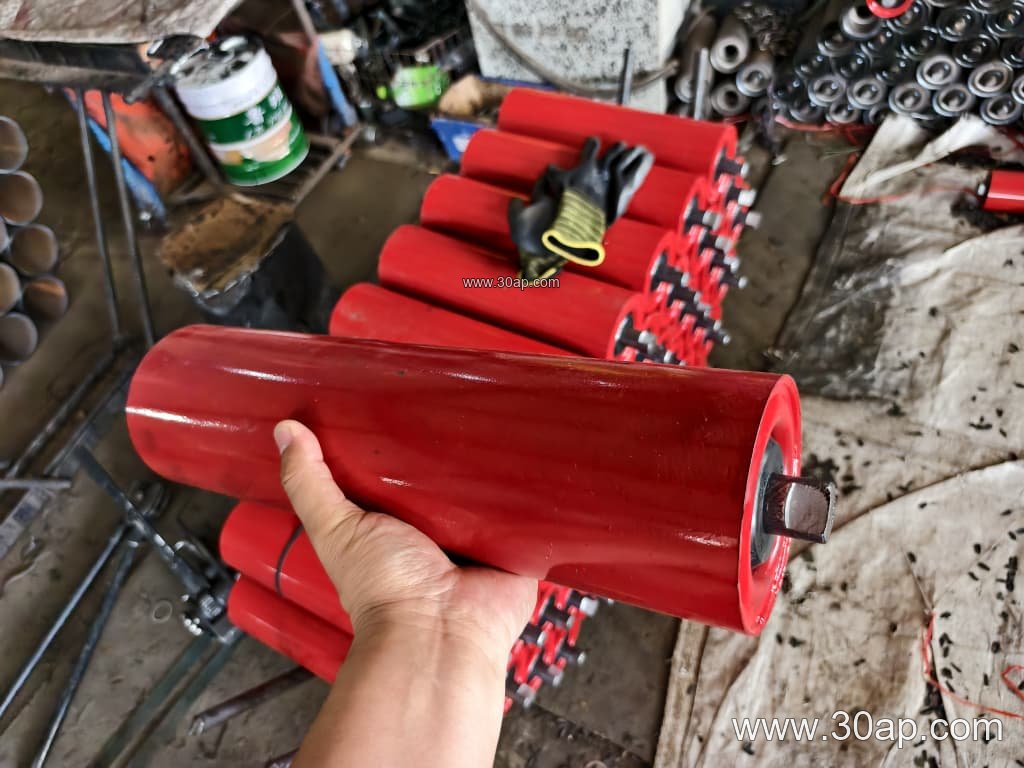
Check that the frame fits the existing conveyor bracket and that the roll surface suits the material. Abrasion resistant conveyor belt running over steel rolls behaves differently from a sticky product on rubber-covered rolls. In food or fertilizer plants, a food grade conveyor belt may call for smoother, cleaner roll surfaces.
Installation and Maintenance Notes
Align the idler frame square to the belt centerline and check clearance at the transition zones. A misaligned high-angle conveyor idler can cause edge wear and belt wander even when the rolls themselves are fine. Rotate each roll by hand after installation and listen for roughness.
During routine inspection, look for seized rolls, worn shells, and loose brackets. Replace damaged units in matched sets where possible so the belt keeps an even profile. Keeping spare rolls on site is practical in continuous operations such as sinter plants and port ship loading lines, where a stopped incline halts the whole flow.